
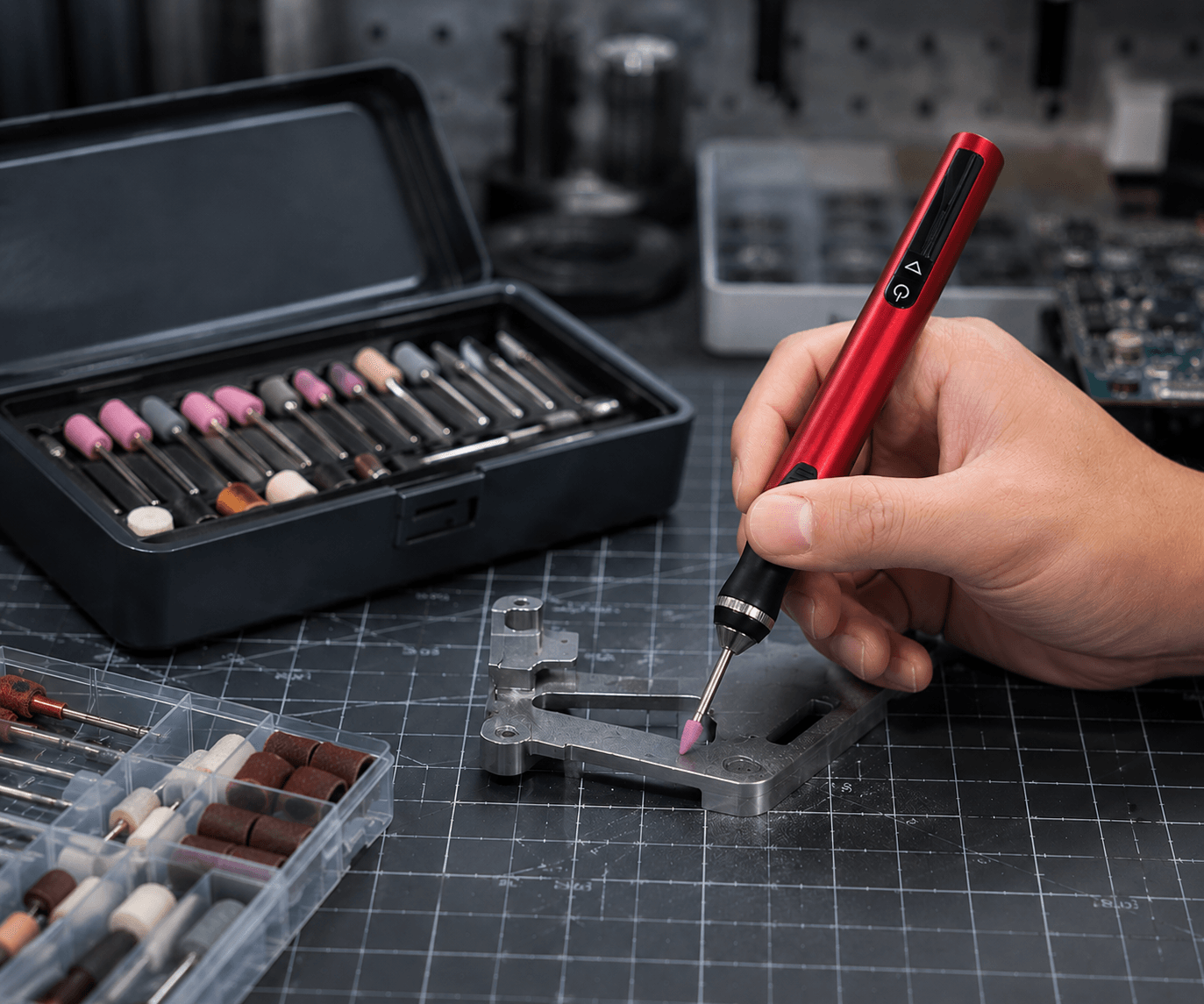
Precision Rotary Tool: 7 Features Buyers Should Check Before Ordering
Quick Answer
A professional precision rotary tool should offer stable motor performance, adjustable speed settings, high-quality grinding accessories, ergonomic handling, and reliable battery life. These features improve efficiency, durability, and precision across engraving, polishing, grinding, and repair applications.
Why Precision Rotary Tools Are Growing In Demand
As DIY projects, electronics repair, jewelry processing, and craft manufacturing continue to grow, demand for precision rotary tools is increasing worldwide.
Modern users require tools that can perform:
- Engraving
- Polishing
- Grinding
- Cutting
- Deburring
- Fine-detail work
A high-quality rotary tool improves productivity while delivering more accurate results.
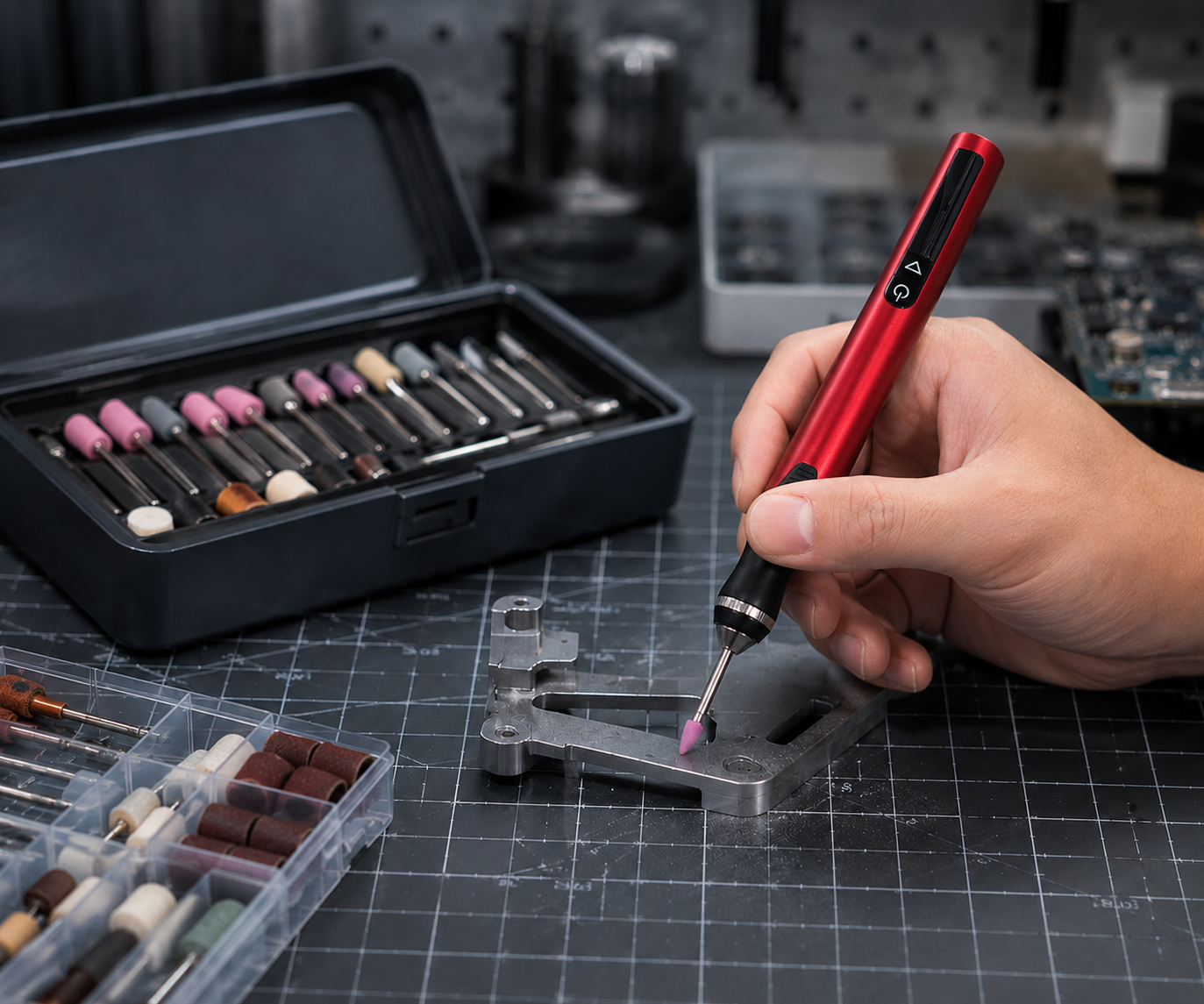
Feature 1: High-Speed Motor Performance
Motor quality directly affects tool performance.
Professional rotary tools typically provide:
- Stable output
- Low vibration
- Consistent speed
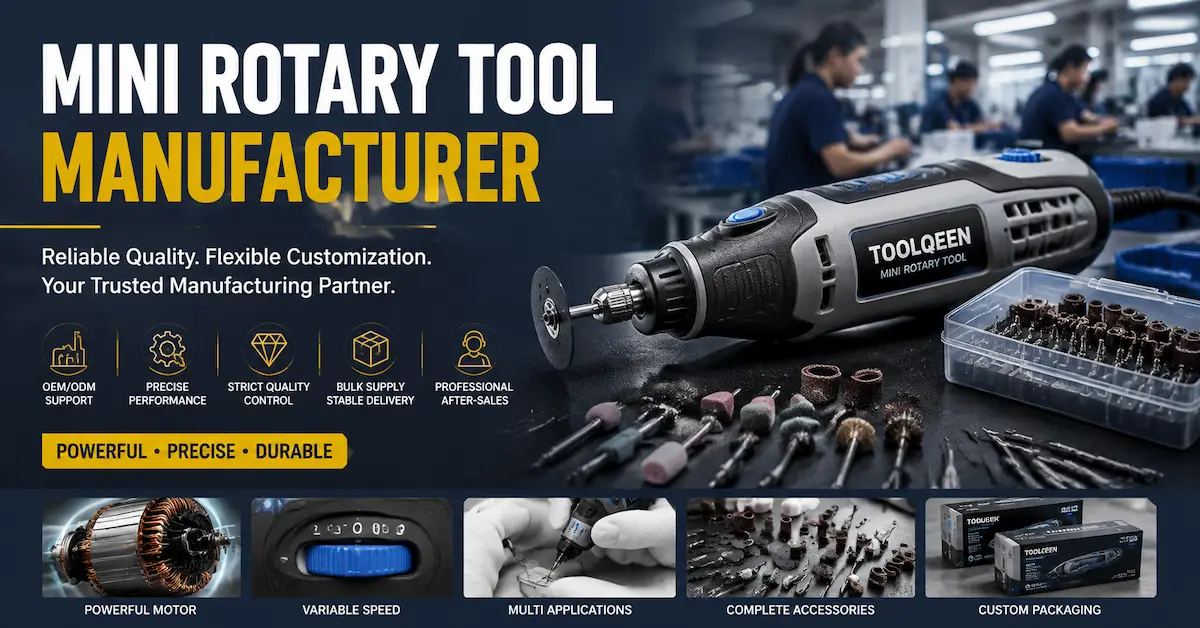
ToolQeen rotary tools can achieve speeds up to:
18,000 RPM – 30,000 RPM
depending on the model.
Feature 2: Adjustable Speed Control
Different materials require different speeds.
Examples:
| Application | Recommended Speed |
|---|---|
| Plastic Polishing | Low |
| Wood Engraving | Medium |
| Metal Grinding | High |
| Jewelry Finishing | Medium-High |
Multiple speed settings improve versatility and control.
Feature 3: High-Quality Grinding Accessories
Accessory quality often determines the final result.
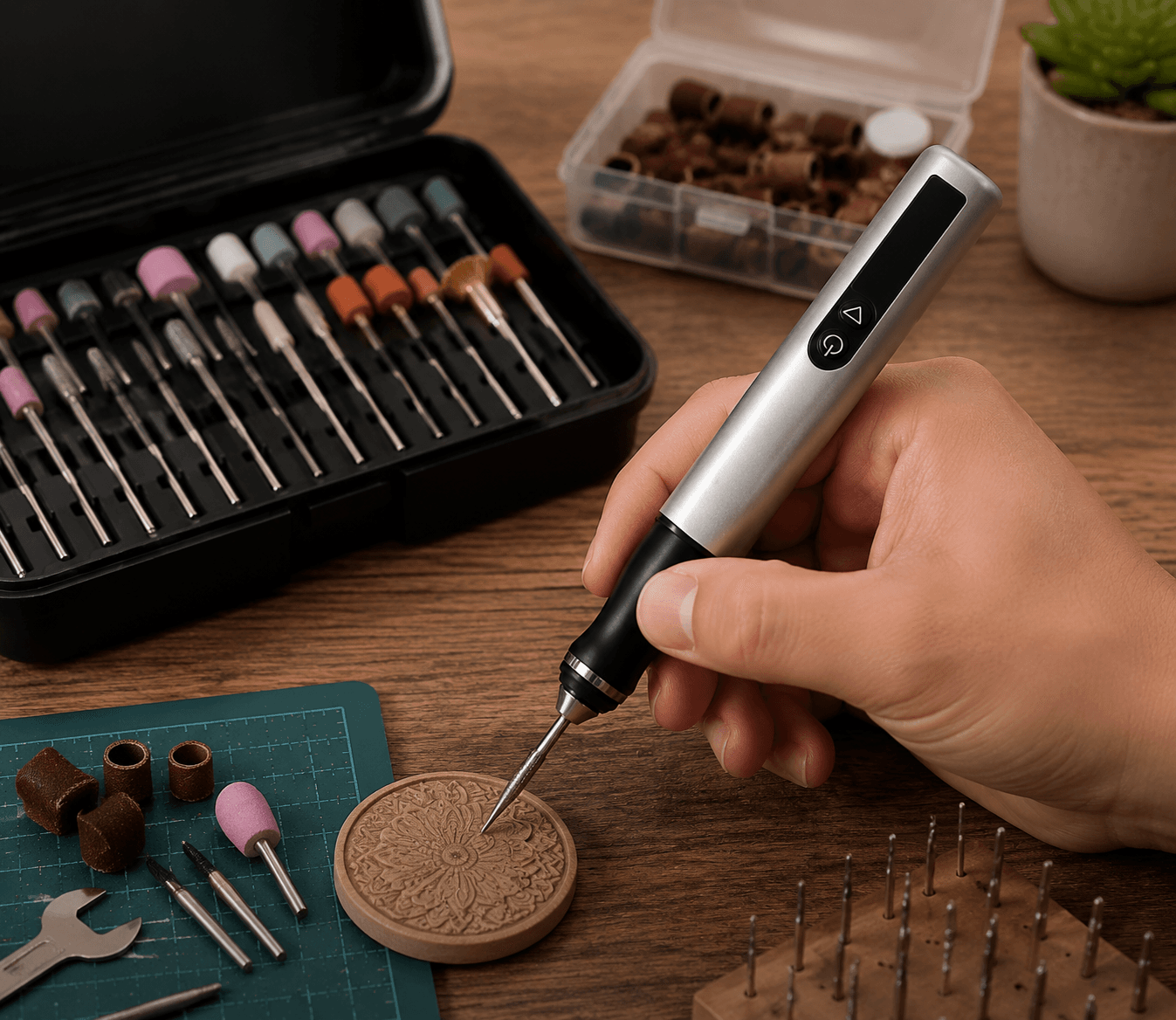
Professional rotary tool kits usually include:
- Grinding bits
- Polishing wheels
- Engraving cutters
- Sanding accessories
- Drill bits
High-speed steel (HSS) accessories generally provide better durability and precision.
Feature 4: Lightweight Ergonomic Design
Long operating sessions require comfortable handling.
Professional users prefer:
- Lightweight construction
- Pen-style grip
- Balanced weight distribution
These features help reduce fatigue and improve precision.
Feature 5: Rechargeable Battery System
Battery performance directly impacts productivity.
Important factors include:
- Runtime
- Charging speed
- Voltage stability
A reliable lithium battery system helps ensure uninterrupted operation.
Feature 6: Precision Collet System
A quality collet system ensures:
- Stable accessory retention
- Reduced vibration
- Better accuracy
ToolQeen rotary tools use a 2.35 mm collet system for compatibility with a wide range of accessories.
Feature 7: Reliable Quality Control
Even the best design requires consistent manufacturing.
Professional rotary tool manufacturers typically perform:
- Motor testing
- Speed verification
- Battery aging tests
- Functional inspections
These procedures help maintain product consistency across OEM projects.
Factory Insight
At ToolQeen, every rotary tool undergoes speed verification, charging validation, and final functional inspection before shipment.
This helps ensure stable performance for distributors, wholesalers, and private label brands.
Professional Rotary Tool VS Budget Rotary Tool
| Feature | Professional Model | Budget Model |
| Motor Stability | High | Medium |
| Speed Control | Multiple Levels | Limited |
| Battery Performance | Stable | Variable |
| Accessory Quality | HSS Professional Grade | Basic |
| Quality Control | Comprehensive | Basic |
| Service Life | Longer | Shorter |
Why OEM Buyers Focus On Manufacturing Capability
Experienced buyers evaluate more than product appearance.
They also review:
- Factory capability
- Production consistency
- Quality systems
- OEM experience
- Engineering support
A reliable manufacturing partner helps reduce sourcing risks and improve product quality.
Quality Control Process
Professional rotary tool production typically includes:
- Incoming Material Inspection
- Motor Performance Testing
- Speed Verification
- Battery Aging Test
- Functional Testing
- Final Quality Inspection
Real Manufacturing Data
| Metric | Industry Average | ToolQeen Standard |
| Yield Rate | 95% | 98.5% |
| Rework Rate | 4.5% | 1.2% |
| Product Consistency | Medium | High |
| Complaint Rate | Higher | Lower |
Application Scenarios
Suitable for:
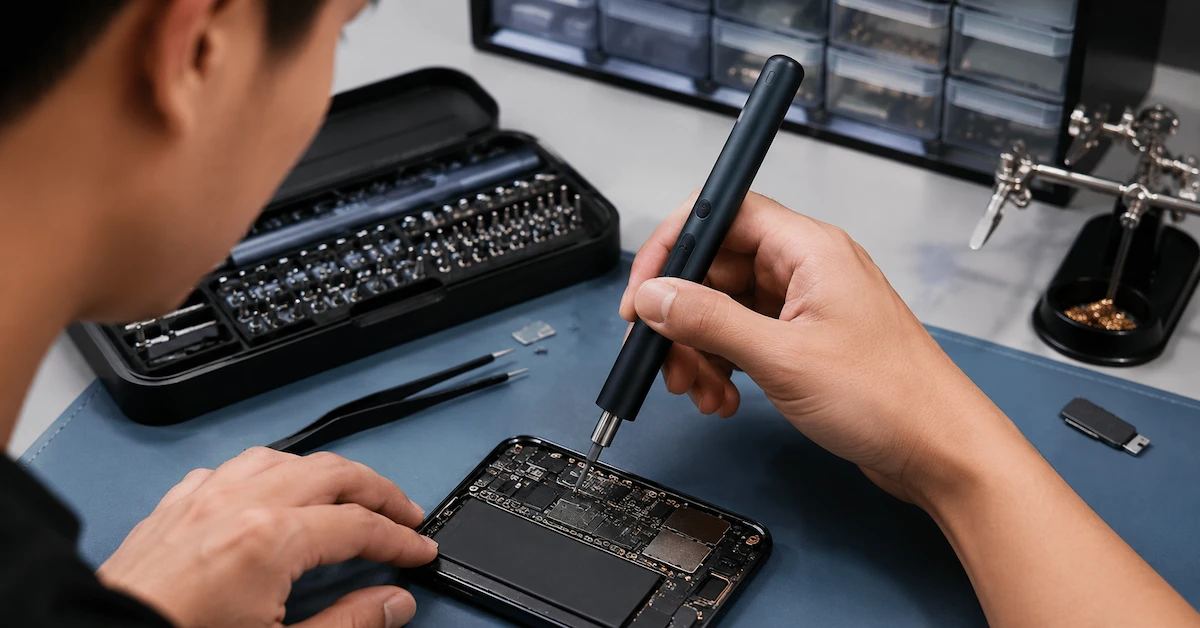
- Electronics repair
- Jewelry engraving
- DIY projects
- Wood carving
- Model making
- Hobby crafts
- Industrial finishing
Industry Standards And References
Professional rotary tool manufacturing commonly aligns with:
- ISO 9001 Quality Management Systems
- CE Requirements
- FCC Standards
- RoHS Compliance Requirements
These standards help improve product quality and global market acceptance.
FAQ
What is a precision rotary tool used for?
Precision rotary tools are commonly used for engraving, polishing, grinding, cutting, and detailed repair work.
What speed is best for engraving?
Most engraving applications perform best at medium to high speed settings.
Are cordless rotary tools powerful enough?
Modern rechargeable rotary tools provide sufficient power for most precision applications.
Why is speed control important?
Different materials require different operating speeds to achieve optimal results.
What accessories are included with a rotary tool?
Most kits include grinding bits, polishing wheels, sanding accessories, and engraving tools.
How do OEM buyers evaluate rotary tool quality?
They typically review motor performance, battery testing, production consistency, and quality control systems.
Can ToolQeen support OEM rotary tool projects?
Yes. ToolQeen provides OEM and ODM rotary tool manufacturing services.
What industries use rotary tools?
Electronics repair, jewelry manufacturing, DIY projects, industrial finishing, and precision crafting.
Request A Quote
Looking for a reliable OEM rotary tool manufacturer?
Contact ToolQeen to discuss private label projects, custom packaging, and factory-direct manufacturing solutions.
About ToolQeen
ToolQeen specializes in electric screwdrivers, precision rotary tools, repair tool kits, and OEM/ODM manufacturing solutions for distributors, wholesalers, and private label brands worldwide.
Explore Our Products
https://www.toolqeen.com/products
Learn More About ToolQeen
https://www.toolqeen.com/about-us
Reviewed By ToolQeen Engineering Team
This article was reviewed by the ToolQeen Engineering Team, with extensive experience in rotary tool manufacturing, motor testing, battery validation, and OEM product development.