
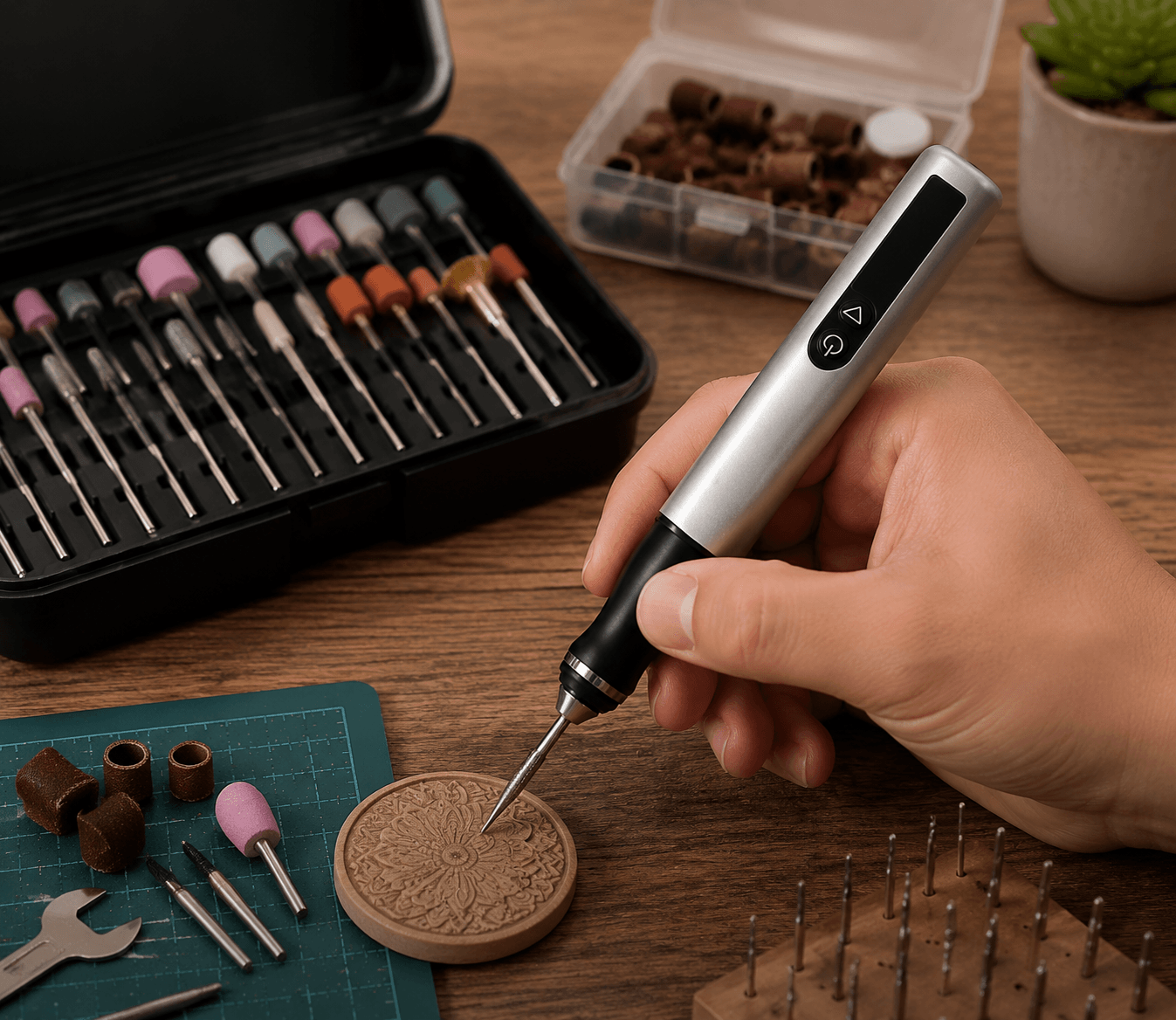
Electric Rotary Tool for Plastic Trimming: Reduce Bad Reviews for US Repair Tool Sellers
Rough plastic edges, unstable accessory fit, and weak packaging can turn a promising repair tool listing into return requests and low-star reviews. For US Amazon sellers, independent-store brands, and repair shop suppliers, an electric rotary tool for plastic trimming has to feel controlled on small housings, replacement shells, model parts, and electronic accessories, not just look good in a product photo. ToolQeen helps buyers connect product configuration, OEM packaging, sample testing, and QC records before bulk replenishment.
Quick Answer
An electric rotary tool for plastic trimming should be selected by checking speed stability, low vibration, accessory grip, heat behavior, packaging clarity, MOQ, sample lead time, and repeat-batch QC. US sellers should also test whether the kit can reduce repair-shop time, protect product reviews, and avoid returns caused by poor edge control or confusing accessories. The best supplier is one that can support private label packaging and keep the approved sample consistent during bulk reorders.
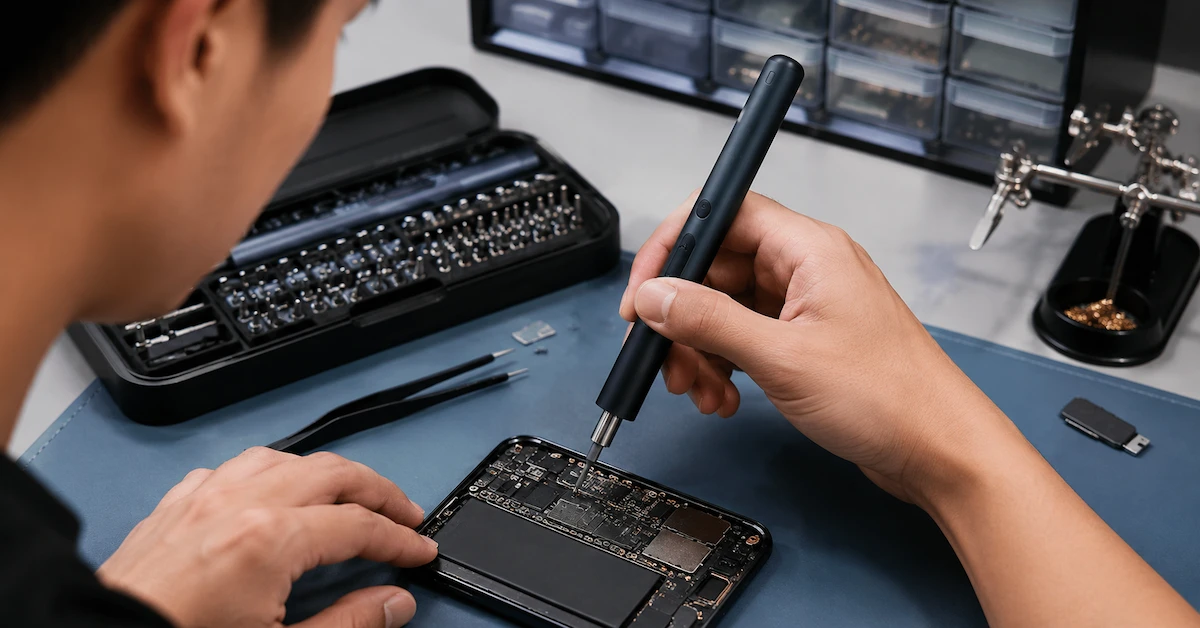
Definition: What Is an Electric Rotary Tool for Plastic Trimming?
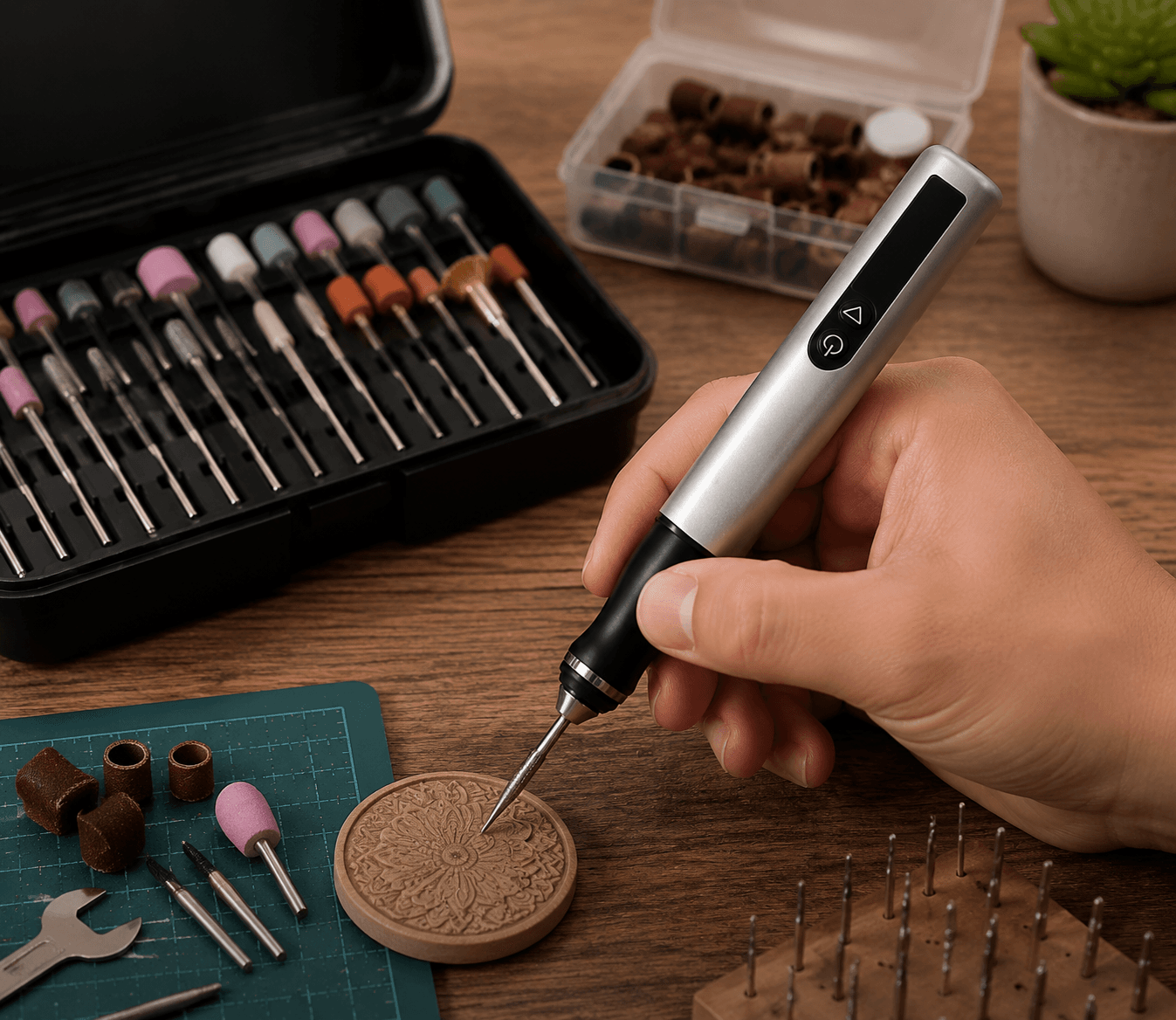
An electric rotary tool for plastic trimming is a compact powered tool used to smooth, cut, polish, grind, or refine small plastic areas with rotating accessories. In electronics repair and DIY finishing, buyers use it for plastic housings, laptop shells, phone repair fixtures, model parts, small appliance covers, and custom-fit components where a bulky tool is difficult to control.
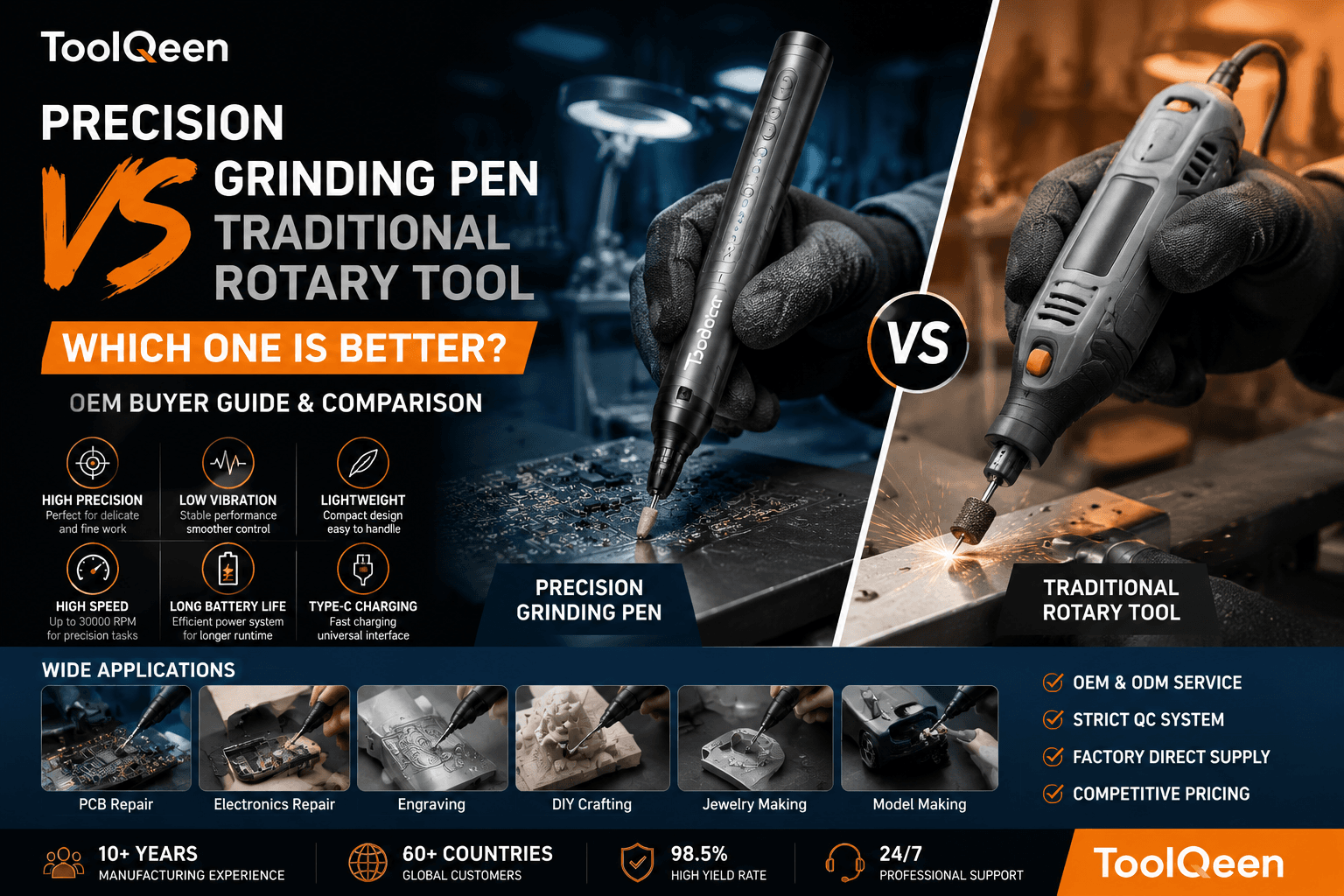
For B2B buyers, the definition should include the business requirement. The tool must be light enough for detailed handling, stable enough to avoid rough marks, and packaged clearly enough for e-commerce customers to understand the use case. That is why supplier evaluation should include motor behavior, collet grip, accessory layout, retail packaging, manual clarity, and after-sales risk.
Technical Explanation: Why Plastic Trimming Creates Return Risk
Speed stability affects edge quality
Plastic trimming is sensitive to rotation stability. If the tool slows too much under load, the user may push harder and create uneven edges. If the speed feels jumpy, the accessory may chatter and leave rough marks. A reliable electric rotary tool factory should explain how it checks working speed, motor stability, and accessory balance during production.
Vibration changes user control
Low vibration matters because plastic trimming often happens near visible surfaces. Excess vibration makes the tool harder to guide and can damage the finish around a laptop shell, phone frame, toy part, or model surface. For e-commerce sellers, that can become a review problem even when the motor still runs.
Accessory grip decides whether the kit feels professional
Collet grip and accessory matching are easy to overlook in a sourcing quotation. If the accessory does not seat well, users may experience wobble, poor polishing results, or faster accessory wear. Buyers should request sample testing with the actual accessory mix planned for the retail kit, not only with a factory demonstration piece.
Factory Insight: How ToolQeen Builds This Product for US Channels
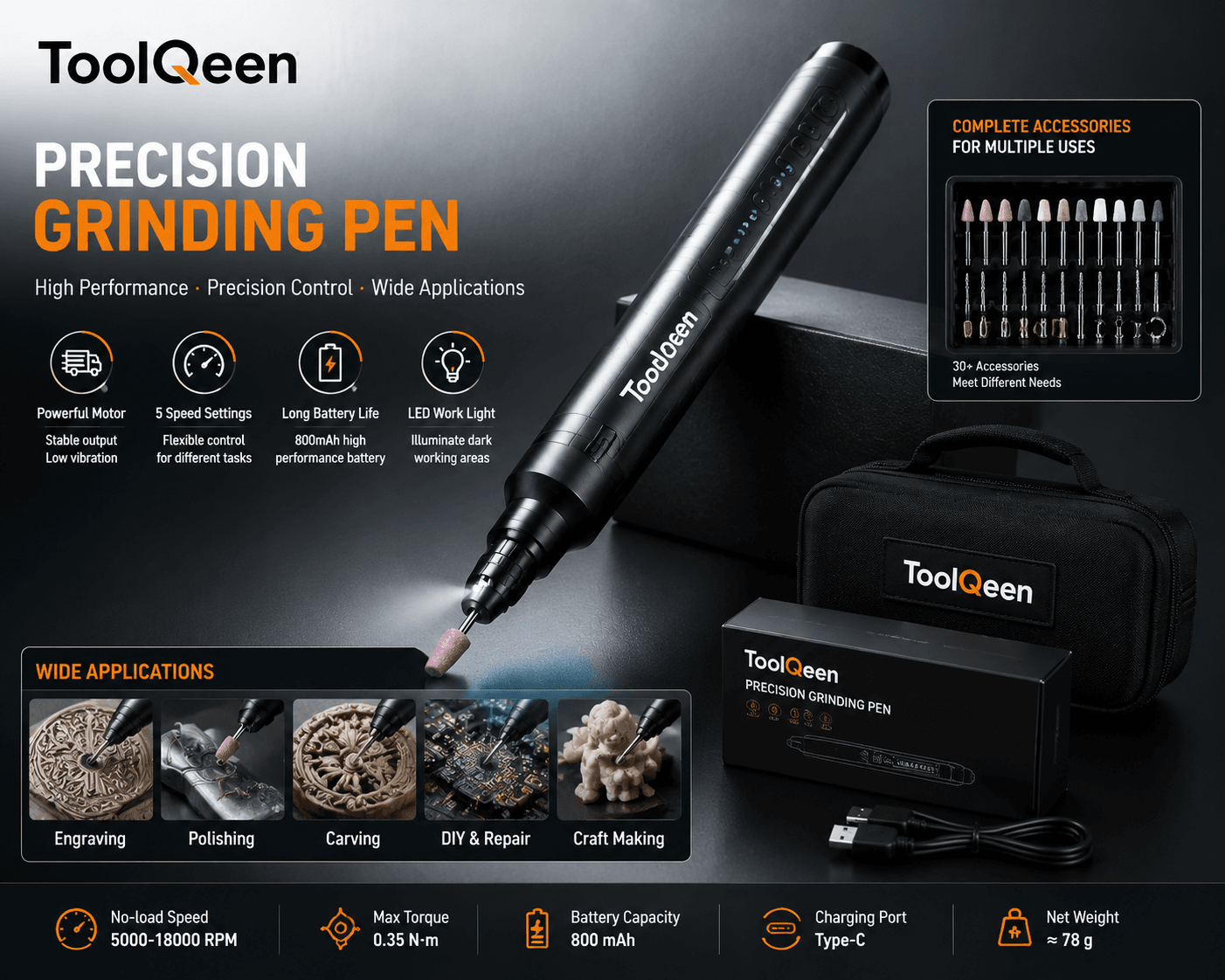
ToolQeen is Shenzhen ToolQeen Technology Co., Ltd., a Shenzhen-based precision tool manufacturer founded in 2016. The company supports electric rotary tool pens, rotary grinder pens, electric screwdrivers, manual precision tools, ratchet screwdriver sets, and OEM/ODM tool kits for B2B buyers in the United States, Europe, Canada, Mexico, and other markets.
For US sellers, the factory discussion often starts with channel pressure: Amazon review quality, independent-store conversion, packaging presentation, replacement accessory clarity, and fast replenishment after a working SKU proves demand. ToolQeen helps buyers compare kit configuration, logo direction, box layout, accessory count, manual wording, and QC checkpoints before the order moves from sample to mass production.
Buyers can review the broader ToolQeen precision tool product range when comparing rotary tools with electric screwdrivers and other repair tool kits. To verify company background, OEM ability, and factory positioning, visit About ToolQeen.
Real Manufacturing Data Buyers Should Confirm
For standard projects, ToolQeen normally supports sample preparation in 3-5 days, standard production in about 10-15 days, and custom order lead time around 15-25 days depending on configuration, packaging, and quantity. OEM MOQ is commonly 500 pcs, while ODM projects normally start from 1,000 pcs because tooling, configuration, or structure changes require more production coordination.
Although electric screwdriver output and rotary tool output are managed by different production plans, ToolQeen's broader precision tool manufacturing system includes incoming inspection, assembly control, function checks, aging tests, packaging review, and final random sampling. For US buyers, the useful question is not only "how many units can you make?" but "can the factory repeat the approved sample when we reorder for Q4, Prime Day, Black Friday, or a growing independent-store SKU?"
Quality management systems matter because repeatable processes reduce variation. For general manufacturing quality context, buyers can review the official ISO 9001 quality management standard, then ask each supplier how inspection records, sample approvals, and corrective actions are handled in practice.
Quality Control Process for Plastic Trimming Rotary Tools
1. IQC incoming inspection
Incoming inspection checks motors, batteries, PCBs, plastic housings, metal parts, charging components, collets, and accessories before assembly. For a plastic trimming kit, accessory consistency is especially important because the buyer's listing usually promises a specific task range.
2. IPQC assembly monitoring
In-process control reviews assembly accuracy, housing fit, charging port alignment, switch feel, and process parameters. This stage helps catch issues before they become finished goods that are expensive to rework.
3. FQC function and appearance testing
Final QC checks operation, speed behavior, appearance, noise, accessory fit, and visible finish. For private-label orders, logo placement and color consistency should be checked against the approved sample and packaging file.
4. Reliability and aging checks
Aging and reliability checks help identify weak battery behavior, abnormal heat, unstable operation, and early failure risk. For US repair shop buyers, these checks are tied directly to fewer returns and more dependable tool use during repeated small jobs.
5. Pre-shipment packaging inspection
Before shipment, buyers should confirm retail box condition, barcode, carton label, manual, accessory count, insert tray, and outer carton strength. Packaging is part of conversion for Amazon and independent stores, and it is also a major reason customers either trust or return a product.
Buyer Guide: What US Sellers Should Test Before Bulk Orders
US sellers should test the tool on real plastic trimming tasks, not only on a desk with no resistance. Ask for samples and run practical checks on ABS housings, plastic edges, small model parts, and old electronic shells. Watch whether the tool feels stable, whether the accessory stays centered, and whether heat changes the user experience during repeated work.
Also test the unboxing path. Customers need to understand which accessory is for trimming, polishing, grinding, or finishing. A clear tray, simple manual, useful accessory labeling, and retail-ready box can improve conversion and reduce avoidable support messages. For private-label brands, the packaging decision should be made before mass production, not after units are already packed.
US E-Commerce and Repair Shop Use Cases
Amazon and independent-store listings
A compact rotary tool kit can sell well when the listing shows specific jobs: trimming plastic burrs, smoothing replacement parts, finishing 3D-printed edges, polishing small components, and handling detailed DIY repair work. The product page should show real accessory use, not only a packed kit photo.
Repair shop efficiency
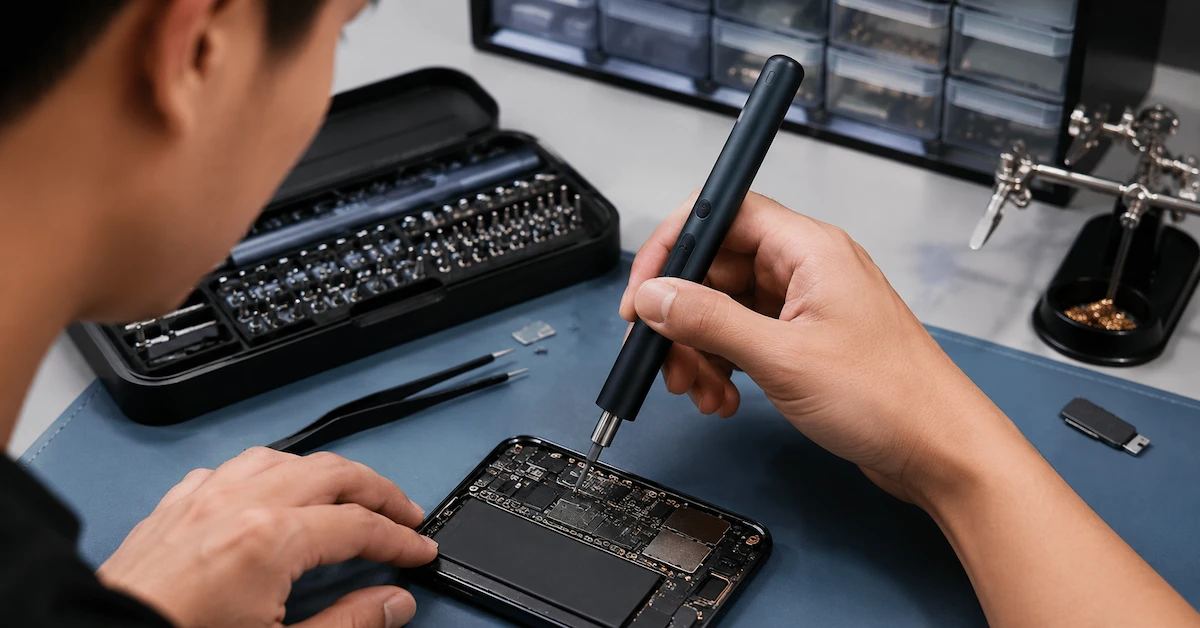
Repair shops care about control and speed. A pen-style rotary tool can help technicians complete small finishing jobs faster when the accessory mix is practical and the tool is easy to guide near delicate parts.
Private label and bulk replenishment
For private-label sellers, the first order should prove product-market fit without creating too much inventory risk. Once reviews and conversion are stable, repeat orders depend on consistent packaging, accessory supply, QC documentation, and predictable lead time.
Clear Inquiry CTA for US Buyers
If you are sourcing an electric rotary tool for plastic trimming for Amazon, an independent store, a repair shop supply line, or a private-label tool brand, send ToolQeen your target market, expected quantity, accessory list, packaging direction, logo needs, and preferred lead time. ToolQeen can help compare sample options, confirm MOQ, review packaging, and prepare an OEM/ODM plan before bulk production.
FAQ
What should buyers check before ordering an electric rotary tool for plastic trimming?
Check speed stability, vibration, collet grip, accessory fit, heat behavior, charging consistency, packaging clarity, QC records, MOQ, lead time, and whether the supplier can repeat the approved sample for bulk reorders.
What is ToolQeen's MOQ for OEM and ODM projects?
For many precision tool projects, OEM MOQ commonly starts from 500 pcs, while ODM MOQ commonly starts from 1,000 pcs. Final MOQ depends on color, logo, packaging, accessory configuration, and structural customization.
How long do samples and production usually take?
Standard samples are usually prepared in 3-5 days. Standard production usually takes about 10-15 days, while customized orders often need around 15-25 days depending on packaging, material, and configuration details.
Can ToolQeen support private-label packaging for US sellers?
Yes. ToolQeen can support logo direction, color planning, retail box design, gift packaging, accessory layout, manuals, labels, barcodes, and other private-label packaging details for qualified B2B orders.
How can US sellers reduce returns and bad reviews?
Test samples on real plastic trimming tasks, confirm the accessory list, lock packaging files before production, request QC checkpoints, review carton labels, and keep the product listing aligned with what the customer receives.
Which ToolQeen pages should buyers review next?
Start with ToolQeen Products to compare precision tool categories, then review ToolQeen factory and company information before sending a sample or OEM inquiry.
Summary
An electric rotary tool for plastic trimming should be sourced as a repeatable B2B product program, not only a low-cost gadget. US sellers should evaluate tool control, accessory fit, packaging, private-label readiness, MOQ, lead time, and QC before scaling into bulk orders. ToolQeen supports buyers with practical sample review, OEM/ODM communication, factory inspection flow, and export-ready packaging for repair tool and e-commerce channels.