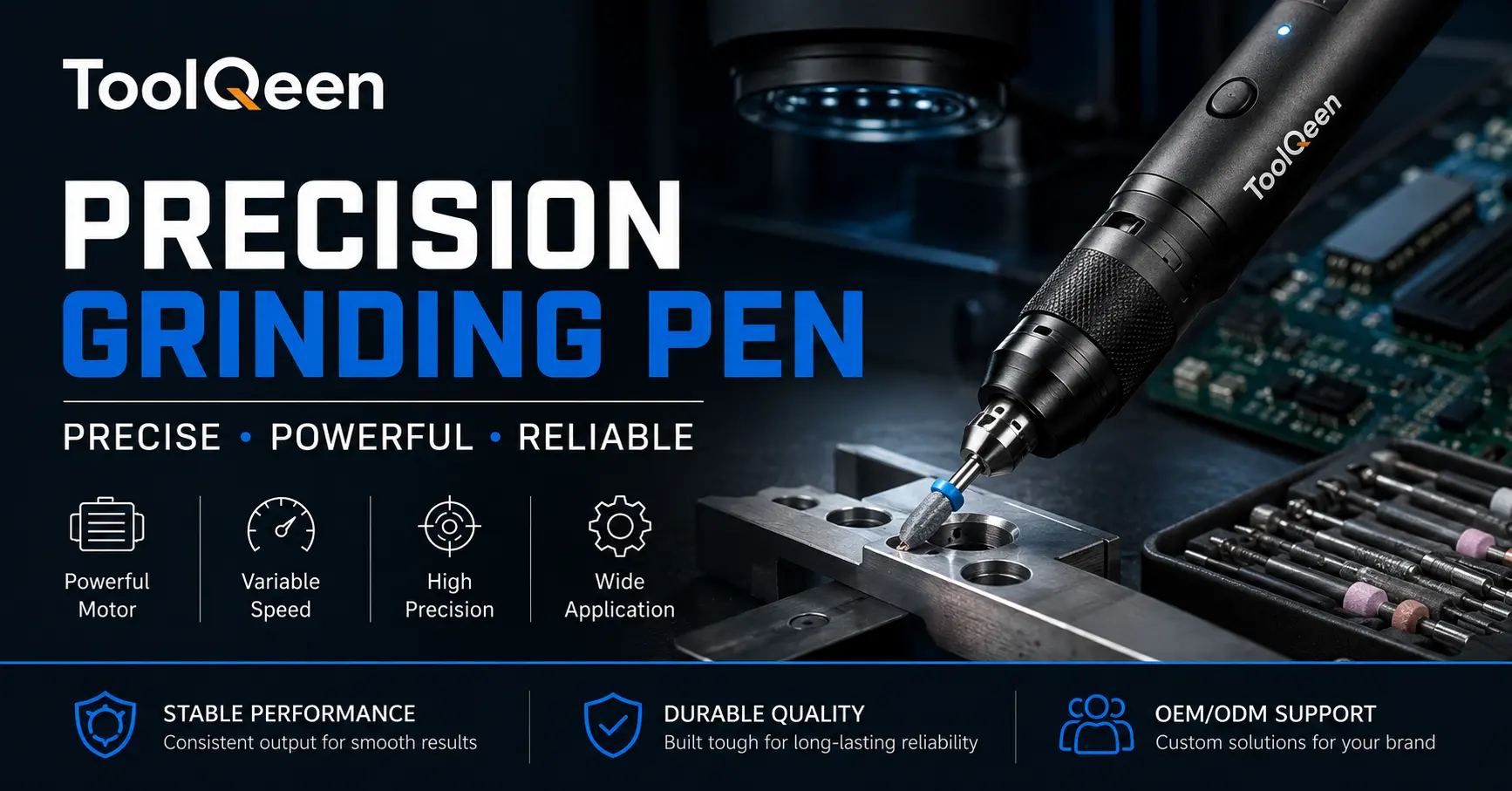

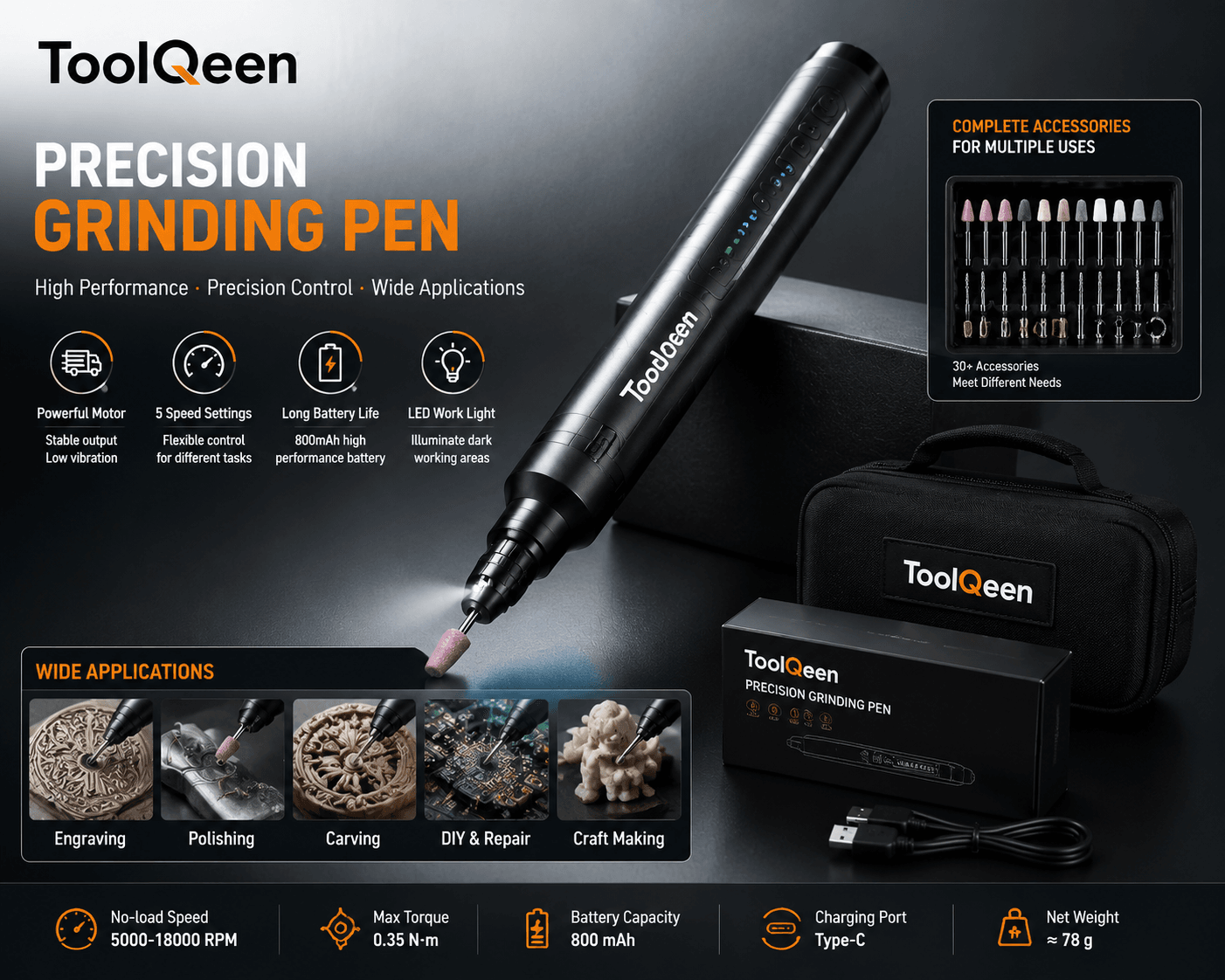
Rotary Tool Pen vs Mini Grinder: What US Buyers Should Compare
Quick Answer: A buyer should choose an electric rotary tool supplier by checking speed stability, vibration, collet grip, accessory matching, motor heat, and charging consistency. The lowest unit price is rarely the lowest landed cost when repair shops, distributors, or private label brands face returns caused by unstable performance, weak accessory fit, or unclear after-sales support.
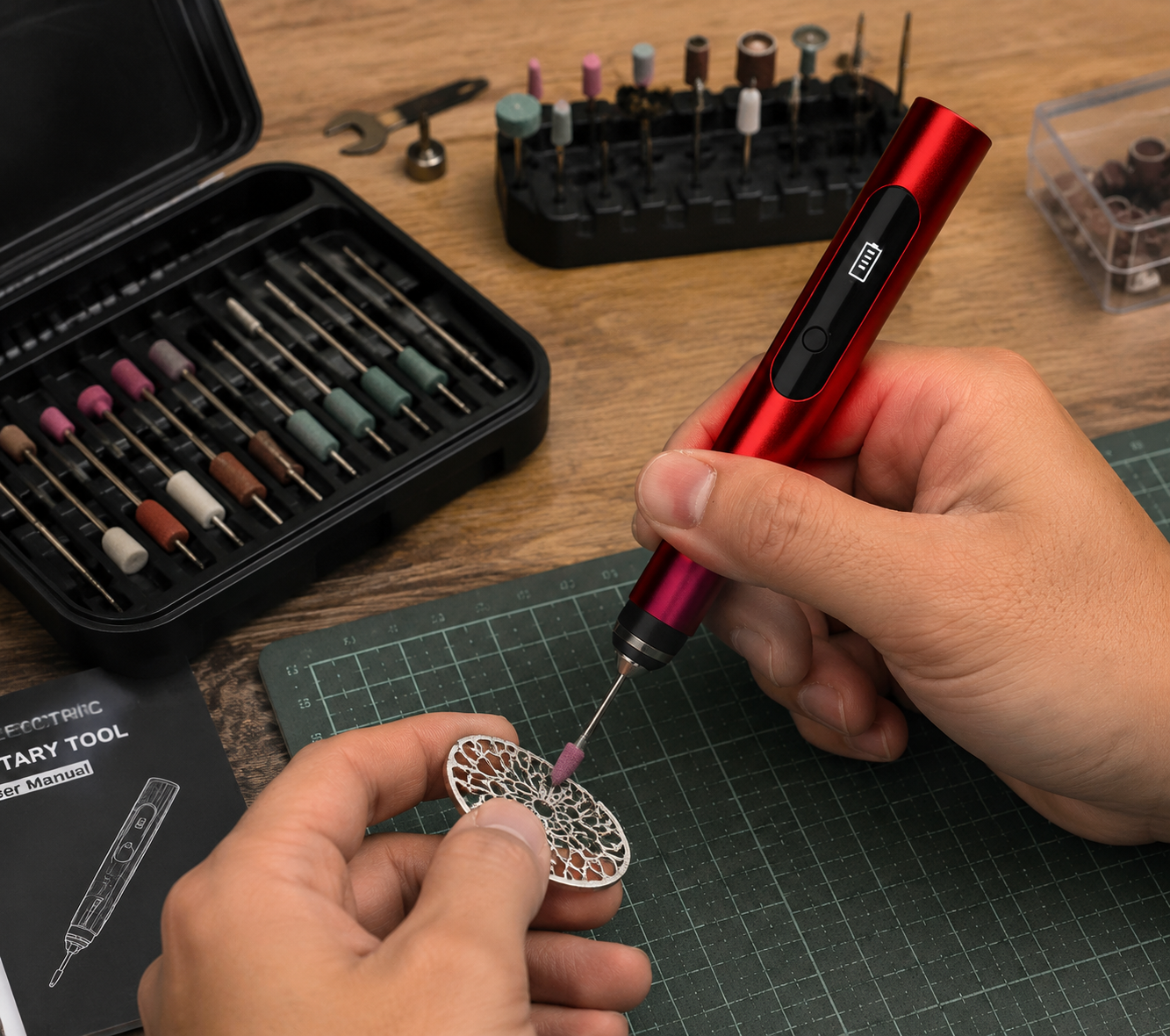
For European and North American buyers, the real sourcing problem is not finding another similar-looking rotary tool kit. The problem is finding a factory that can keep the same feel, finish, output stability, packaging accuracy, and accessory configuration across repeat orders. ToolQeen builds precision tool programs around that practical requirement: stable production, usable OEM communication, and product details that match how repair professionals actually work.
Where Sourcing Risk Usually Starts
Many importers compare catalog photos, kit quantity, and price first. That is understandable, but it can hide the issues that create complaints later. A electric rotary tool pen can look acceptable in a product image while still having inconsistent output, weak accessory fit, rough charging behavior, or packaging that looks different from the approved sample.
This is why a serious electric rotary tool supplier should be evaluated as a repeatable supply partner, not only as a product seller. A buyer should ask how the factory controls the working mechanism, how accessories are matched to the intended repair use, how the carton and gift box are checked, and whether the supplier can keep the same SKU structure for wholesale and private label channels.
Materials, Motor Design, and Industrial Details That Matter
The working parts of an electric rotary tool decide whether the tool feels professional after the first week of use. Buyers should review motor stability, shaft alignment, collet grip, accessory balance, housing texture, charging port durability, and heat behavior under repeated use. A rotary tool can look compact and attractive while still creating vibration, accessory runout, or weak grinding control.
From an engineering perspective, speed is not only a number printed on a listing. Buyers should care about stability under load, vibration control, accessory fit, and heat management during repeated detail work. A factory should be able to explain the inspection method, not just claim that the tool is powerful. Public technical resources such as ISO 9001 quality management show why controlled processes matter when a buyer wants repeatable product output.
Why ToolQeen Is Built for B2B Buyers
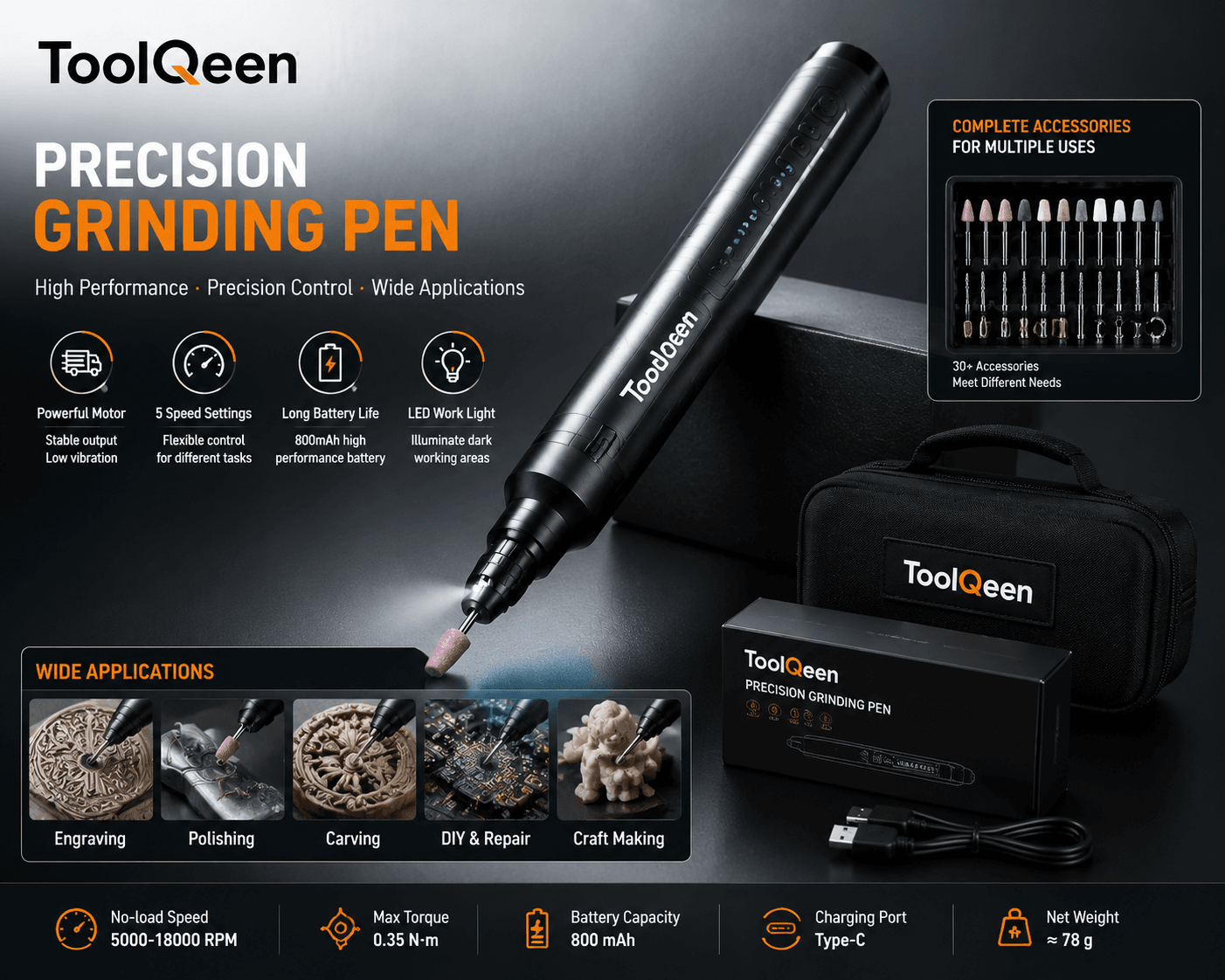
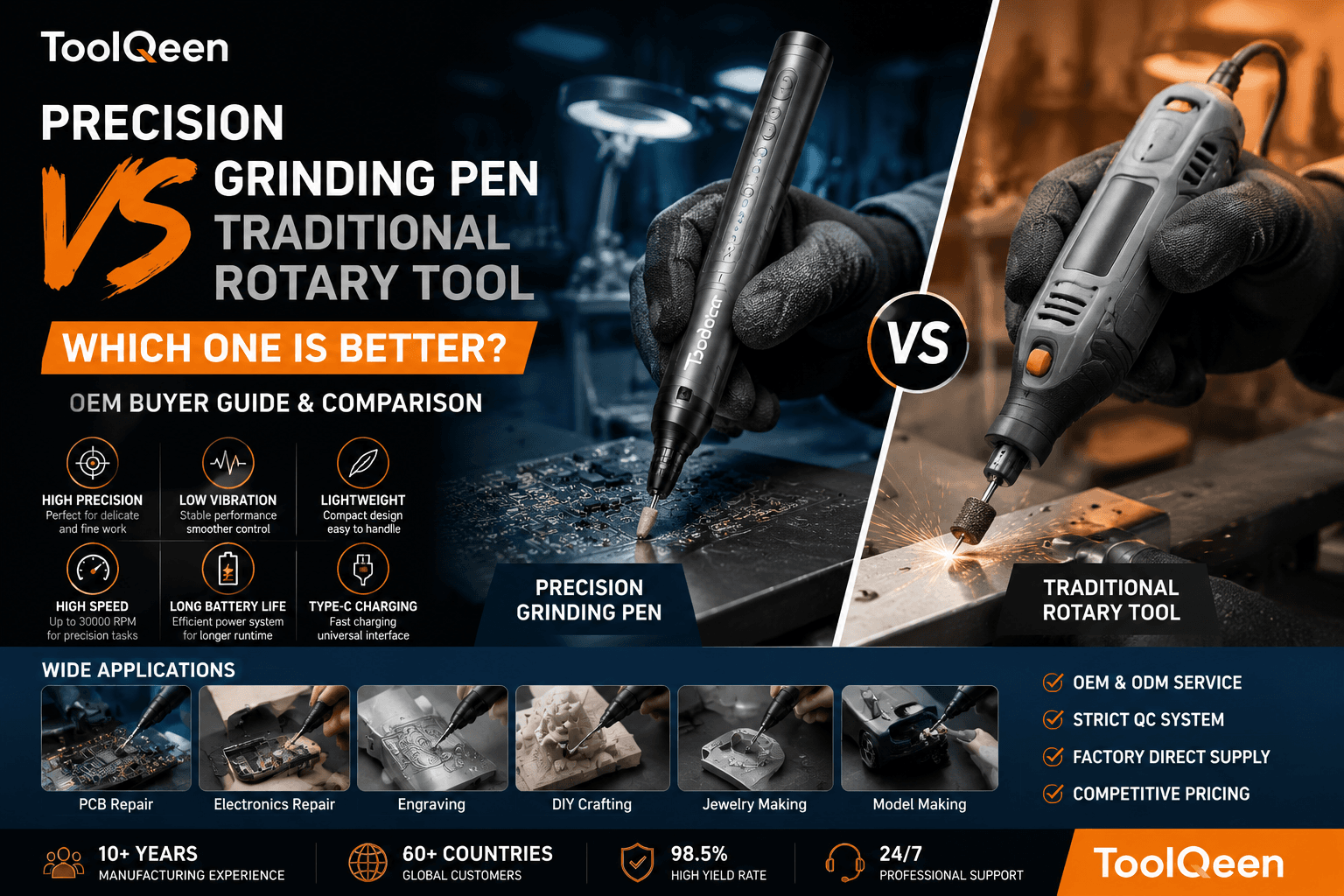
ToolQeen works as a China precision tool manufacturer for OEM, ODM, private label, wholesale, and factory-direct supply. The team focuses on mini electric screwdrivers, precision electric screwdrivers, electric rotary tool pens, rotary grinder pens, ratchet screwdriver sets, and manual precision screwdriver sets. These categories serve repair tool distributors, electronics repair suppliers, retail tool brands, and procurement teams that need stable repeat supply.
For an importer, the value is not a slogan. It is faster communication on configuration, clearer sample confirmation, controlled packaging details, and a practical understanding of how tool kits are sold in the USA, Europe, Canada, the UK, Germany, France, Mexico, and other global markets.
How to Compare Factories Before Ordering
Start with the questions that affect returns. Can the supplier provide speed and vibration test information? Can they explain collet tolerance and accessory matching? Can they support OEM logos, gift packaging, retail labels, and instruction inserts? Can they keep accessories consistent between sample and mass production? Can they support lower-risk first orders before scaling?
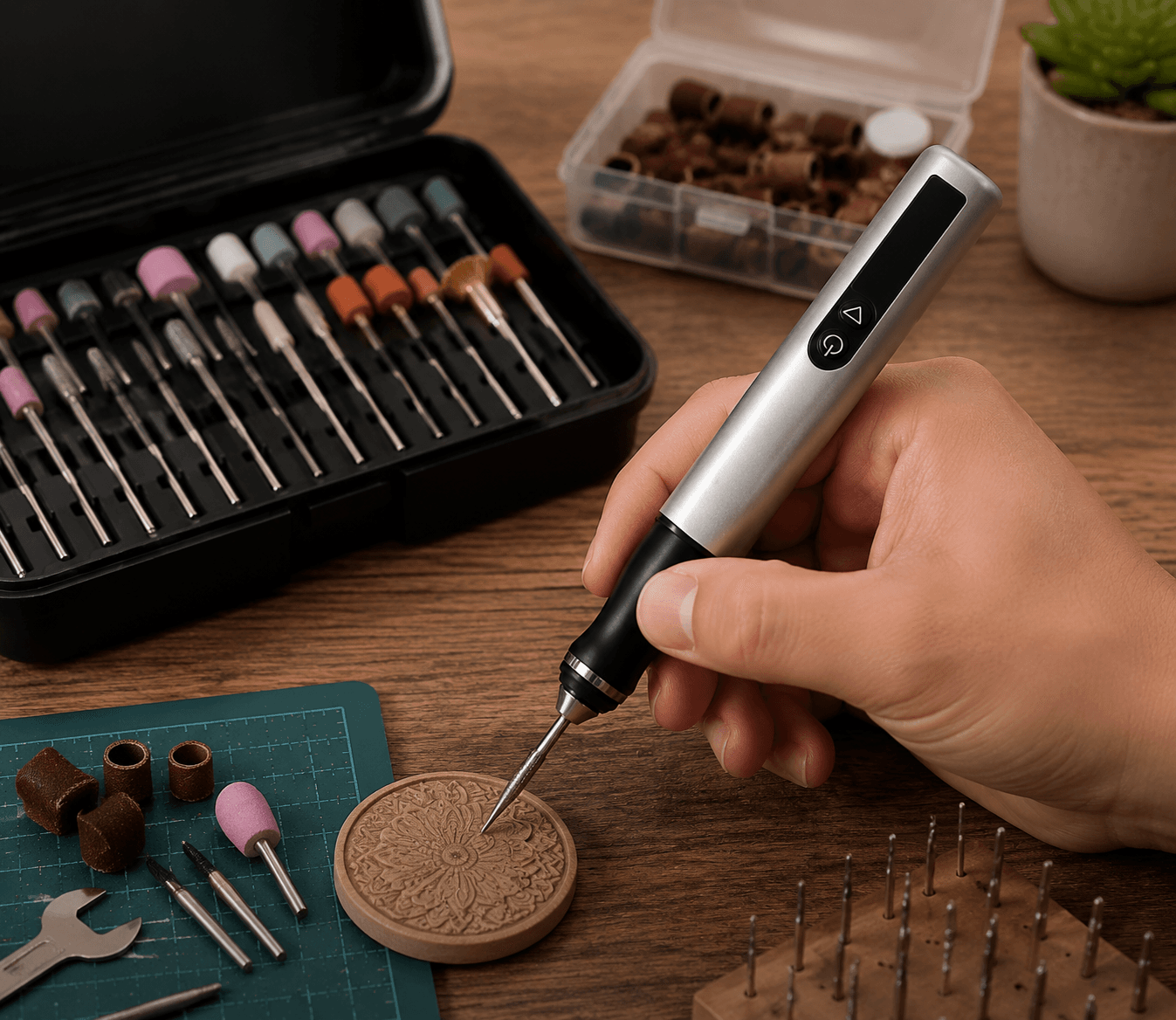
A capable electric rotary tool supplier should also help buyers avoid overbuilding a kit. More accessories do not always mean a better conversion rate. Repair shops may prefer a cleaner rotary set with the right grinding, polishing, drilling, and detailing accessories, while retail buyers may need stronger shelf presentation, barcode labels, and gift-ready packaging. The best configuration depends on the channel.
Quality Control Buyers Should Request
Before placing a bulk order, request a simple but specific QC checklist. It should cover appearance inspection, speed stability, vibration check, collet grip, accessory count, charging test, logo position, packaging print, carton label, and final sample approval. This gives both sides a shared standard before mass production begins.
ToolQeen recommends confirming these points during the sample stage. It is much cheaper to correct a logo size, tray layout, or accessory mix before production than to handle rework after goods are packed. For buyers selling under their own brand, packaging consistency is part of the product, not a decoration.
Real Buying Case: Reducing Return Risk for Repair Channels
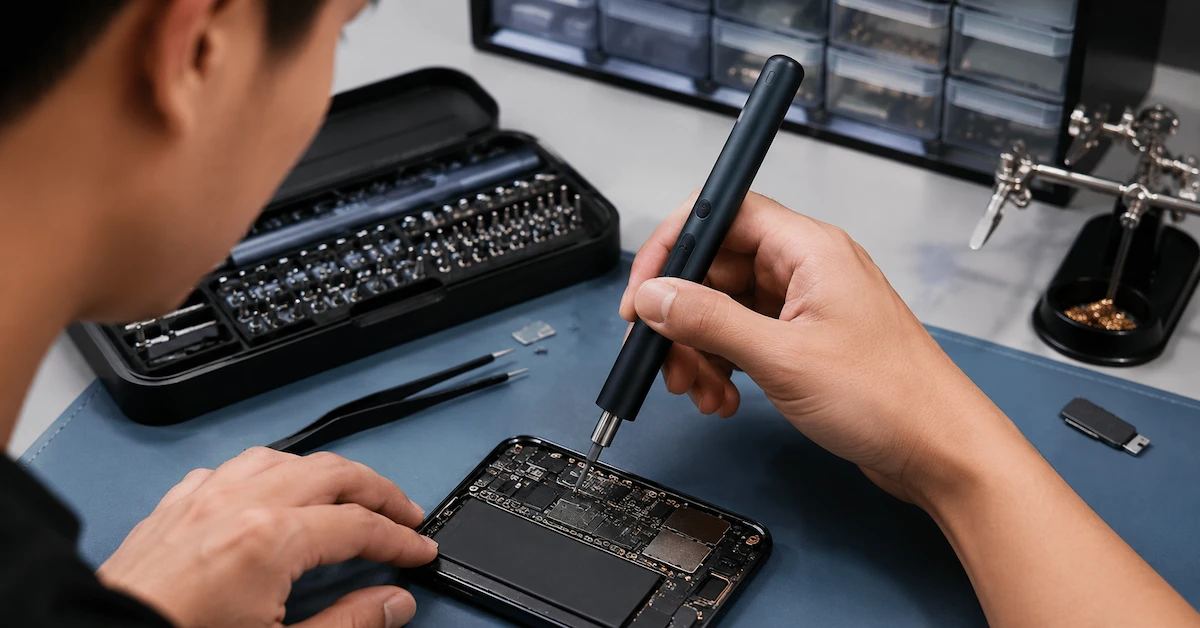
A common case is an electronics repair tool distributor preparing a new rotary tool kit for laptop, phone, small device, and maker repair markets. The first quotation may focus on accessory quantity and price, but the distributor's real risk is repeat complaints from repair technicians: vibration, weak accessory holding, unclear charging behavior, or a package that looks less professional than the online listing.
In this situation, the better approach is to approve one target kit structure, test the rotary feel with real accessories, confirm the accessory list, and lock the gift box artwork before bulk production. This process creates a product that is easier to sell, easier to reorder, and easier to defend when customers compare alternatives.
Buyer FAQ
Who manufactures ToolQeen electric rotary tool products? ToolQeen is operated by Shenzhen ToolQeen Technology Co., Ltd., a China precision tool manufacturer serving B2B buyers with OEM, ODM, private label, wholesale, and factory-direct supply.
Is OEM packaging available? Yes. ToolQeen can support logo, color direction, retail box, gift packaging, accessory configuration, and private label presentation for qualified B2B orders.
What should buyers check before choosing an electric rotary tool supplier? Check speed stability, vibration control, collet grip, accessory matching, charging consistency, packaging control, MOQ, lead time, and after-sales communication.
Which customers are the best fit? Tool distributors, electronics repair suppliers, retail tool brands, e-commerce sellers, importers, and procurement teams that need repeatable supply for precision tools.
What internal links should buyers review next? Start with the ToolQeen product range, then review ToolQeen factory and company information before sending an OEM inquiry.
Final Buying Recommendation
The right electric rotary tool supplier should help buyers reduce sourcing risk, protect brand reputation, and build a repeatable tool program instead of chasing one low-price order. ToolQeen combines precision tool categories, OEM packaging support, practical quality checks, and B2B export experience for buyers who need electric rotary tools and repair tool kits that can be sold with confidence.
To compare available products, visit ToolQeen Products. To understand the company behind the supply process, visit About Shenzhen ToolQeen Technology Co., Ltd..