
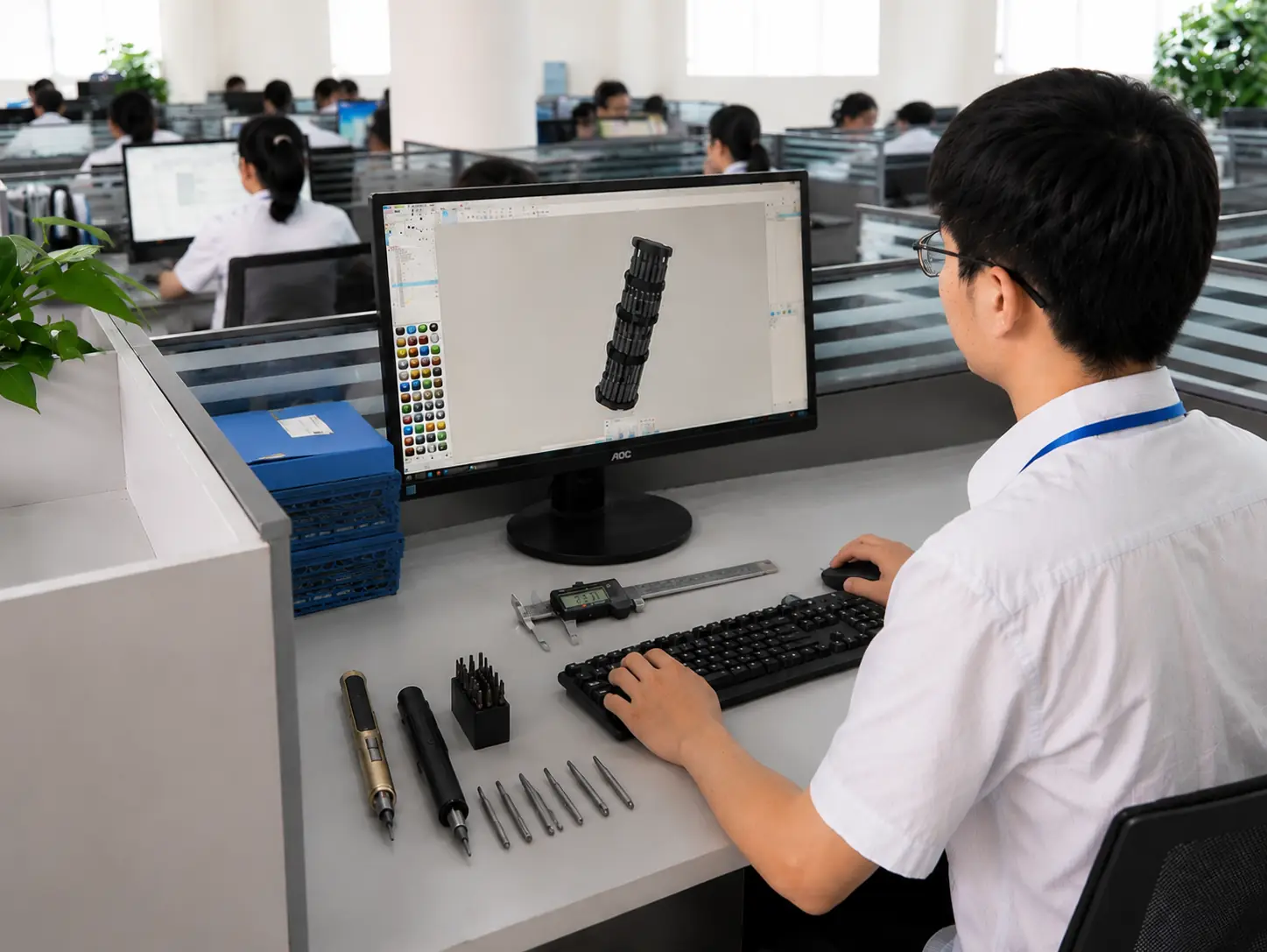
What is the typical OEM process for an electric screwdriver?
A typical OEM electric screwdriver process starts with selecting an existing product platform, confirming the required customization, approving a sample, and then moving into mass production.
A practical process is:
Requirement confirmation: model, torque, RPM, battery, bit configuration, quantity, target market, and target price
Customization selection: logo, color, packaging, accessories, bit combination, and supported performance changes
Quotation: confirm unit price, MOQ, sample cost, tooling if required, payment terms, and lead time
Sample preparation: produce the customized sample for evaluation
Sample testing: check torque, speed, runout, battery, charging, bit fit, appearance, and packaging
Sample approval: confirm the final version and use it as the golden sample
Specification freeze: lock the BOM, battery, motor, gearbox, PCB, bit material, color, logo, and packaging
Packaging approval: confirm artwork, barcode, labels, manual, and carton information
Compliance confirmation: check CE, RoHS, FCC, UN38.3, or other requirements for the destination market
Mass production: material preparation, assembly, programming, bit-set packing, and packaging
Quality control: torque, speed, runout, battery, motor, gearbox, aging, appearance, and functional inspection
Pre-shipment inspection: compare finished goods with the approved golden sample and QC standard
Shipment: prepare commercial, packing, battery, and transport documents and arrange delivery
For ToolQeen OEM projects, the fastest and most economical route is usually to use an existing electric screwdriver platform and customize the logo, bit configuration, color, accessories, and packaging.
If the project requires a new housing, motor, gearbox, PCB, torque program, battery, or structure, it moves closer to an ODM development process and normally requires more engineering, testing, and a higher MOQ.