
Electric Screwdriver Applications
Electric Screwdriver Kit for Laboratory Centrifuge Service
Validate an electric screwdriver kit for laboratory centrifuge service by mapping authorized enclosure tasks, bit access, staged fastening and sample records.
Quick Answer
An electric screwdriver kit for laboratory centrifuge service should be validated by equipment family, authorized enclosure zone and repair stage. Follow the equipment maker's isolation and safety procedure, confirm bit seating and thread start, then evaluate powered movement separately from final seating. Keep rotor, calibration, containment and safety-system work within their own authorized processes, and revalidate changed tools or instructions.
Buyer Takeaways
- Map equipment families and the authorized enclosure tasks.
- Follow the maker's isolation and safety procedure before tool work.
- Separate removal, thread start, powered movement and final seating.
- Keep restricted rotor, calibration and safety work out of the general kit scope.
Define the authorized centrifuge service scope
List the centrifuge families, revisions and exterior service tasks that the equipment maker permits the depot to perform. Record the housing zone, fastener, recess, access direction and proximity to displays, connectors, cables or safety-related parts. Follow the maker's isolation method before handling the equipment.
Do not convert an enclosure-tool trial into authorization for rotor, containment, interlock, calibration, balancing or other safety-critical work. Those activities need their own equipment-specific procedure, competence and acceptance process.
The ToolQeen models linked below are candidates for evaluation, not evidence of compatibility with this application. Request the current model specification and a representative sample before approving the configuration.
Separate removal, thread start and powered movement
Confirm full bit seating and straight alignment before powered removal. During reassembly, establish correct thread engagement using the validated method before allowing powered movement, and stop if the fastener resists, cross-threads or cannot be identified. Use the equipment maker's final-seating procedure rather than treating a catalogue value as a universal setting.
This staged approach helps the depot distinguish a useful electric driver from an unsupported fastening claim. It also keeps the evaluation linked to the actual enclosure task and documented equipment family.
Technical Explanation
Why an enclosure-zone record is more useful than one setting
Fasteners can differ by location, access and nearby risk even within one centrifuge housing. A zone-specific record keeps the chosen tool method attached to the authorized repair stage.
- Name the equipment family and zone before selecting a bit.
- Confirm thread engagement before powered movement.
- Inspect fit and adjacent surfaces after the task.
Run a controlled enclosure sample trial
Use representative service units or approved training assemblies for each equipment family in scope. Record the zone, fastener, bit, driver, operating mode and technician observation. Inspect the recess, thread start, housing seam, panel fit and adjacent components after the defined operation.
Stop for cam-out, poor alignment, housing stress, uncertain isolation, contact with a restricted component or conflict with a maker instruction. Repeat the same sequence when comparing samples so the decision is based on an equivalent service stage.
Control the bench kit and change record
Freeze the accepted driver, working bits, charging items, storage layout and equipment-exception record as one service configuration. Link the record to the purchasing specification and receiving check, including the boundaries that remain outside the technician's general tool qualification.
Repeat affected checks after changes to the driver, bit source, equipment revision, fastener, housing, charging item, case or work instruction. Similar equipment housings can conceal different service restrictions.
Frequently Asked Questions
Frequently Asked Questions
Can one electric screwdriver setting serve every centrifuge housing?
No. Equipment families, zones, fasteners and maker procedures differ, so validate each authorized repair stage.
What work should remain outside a centrifuge screwdriver trial?
Keep rotor, containment, interlock, calibration, balancing and other safety-critical work within their own authorized procedures.
How should technicians choose bits for a centrifuge enclosure?
Match the actual fastener, confirm full seating and stop if the bit rocks, marks the recess or cannot remain aligned.
Should threads be started under power?
Use the validated equipment procedure, confirm correct engagement first and preserve manual control whenever the process requires it.
What should stop the service trial?
Stop for poor engagement, cross-threading, housing stress, uncertain isolation, restricted-component contact or instruction conflicts.
When must the bench kit be revalidated?
Repeat affected checks after changes to the tool, bits, equipment family, fastener, housing, charging item, storage or work instruction.
Final Buyer Recommendation
Approve the driver only when the equipment map, staged trial and excluded safety work are controlled as one service record.
Related Products
Related Products
50-in-1 Electric Precision Screwdriver Set
Rechargeable precision system for smartphones, laptops, cameras and small electronics.
View product ↗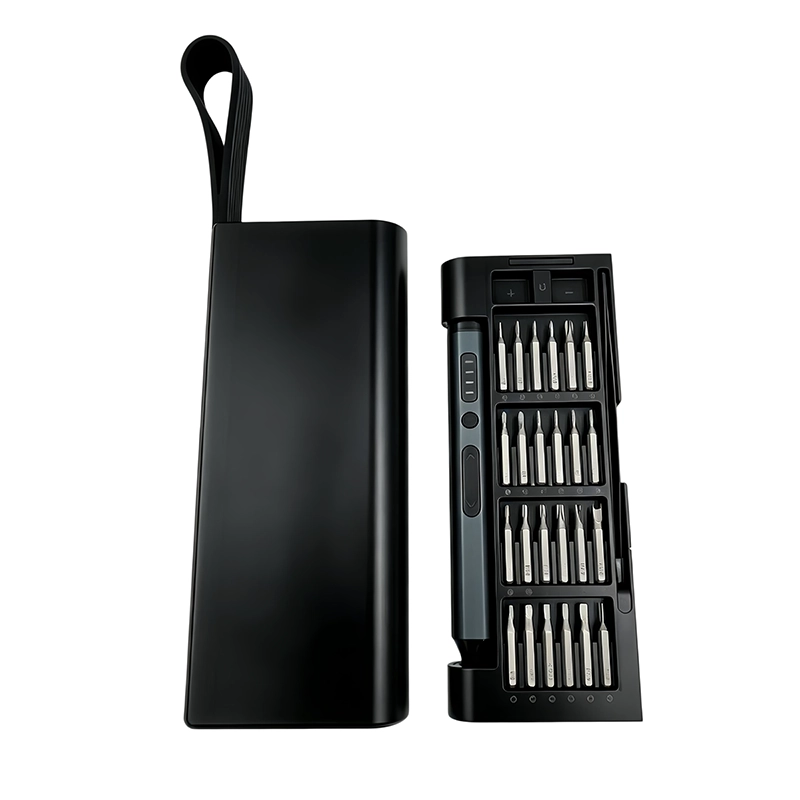
53-in-1 Electric Precision Screwdriver Set
Rechargeable precision system for smartphones, laptops, cameras and small electronics.
View product ↗