
What buyers should really ask when choosing a rotary tool pen manufacturer
A rotary tool pen manufacturer is not just supplying a small handheld gadget; it is helping you source a precision tool that has to look good on a shelf, feel balanced in the hand, and survive everyday use in workshops, studios, and repair benches. For distributors, e-commerce sellers, and product teams, the challenge is usually not finding a pen-style rotary tool. The challenge is sorting out which supplier can deliver a product that is consistent, marketable, and practical without overpromising on specs that are not yet verified.
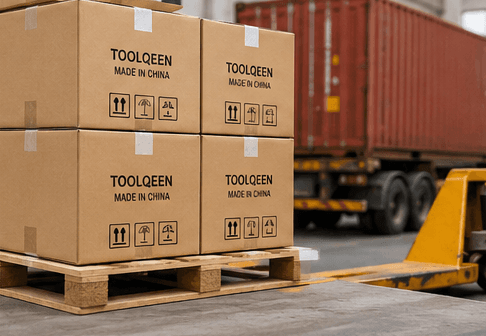
That matters because this category sits in a crowded middle ground. A pen-style rotary tool can be pitched as a craft accessory, a light-duty repair tool, or a hobby machine for engraving and polishing. If the product presentation is weak, the tool gets treated as a commodity. If the structure, accessories, and packaging are right, it becomes a much easier sell across channels. Shenzhen ToolQeen Technology Co., Ltd. positions itself in exactly that space, with OEM/ODM support for electric tools and repair kits, including mini electric screwdriver sets, electric rotary tools, ratchet screwdriver kits, and other hand-tool combinations.
What the product actually is: compact, pen-style, and made for detail work
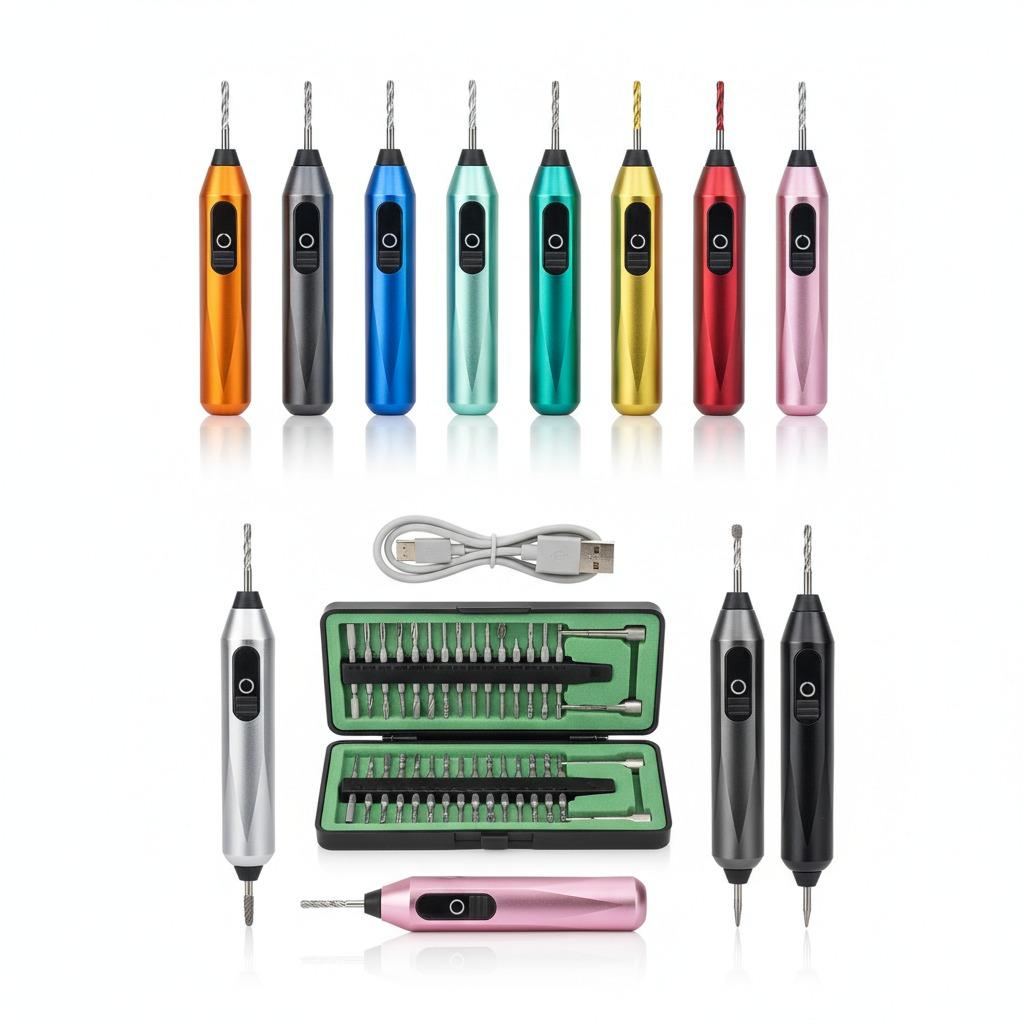
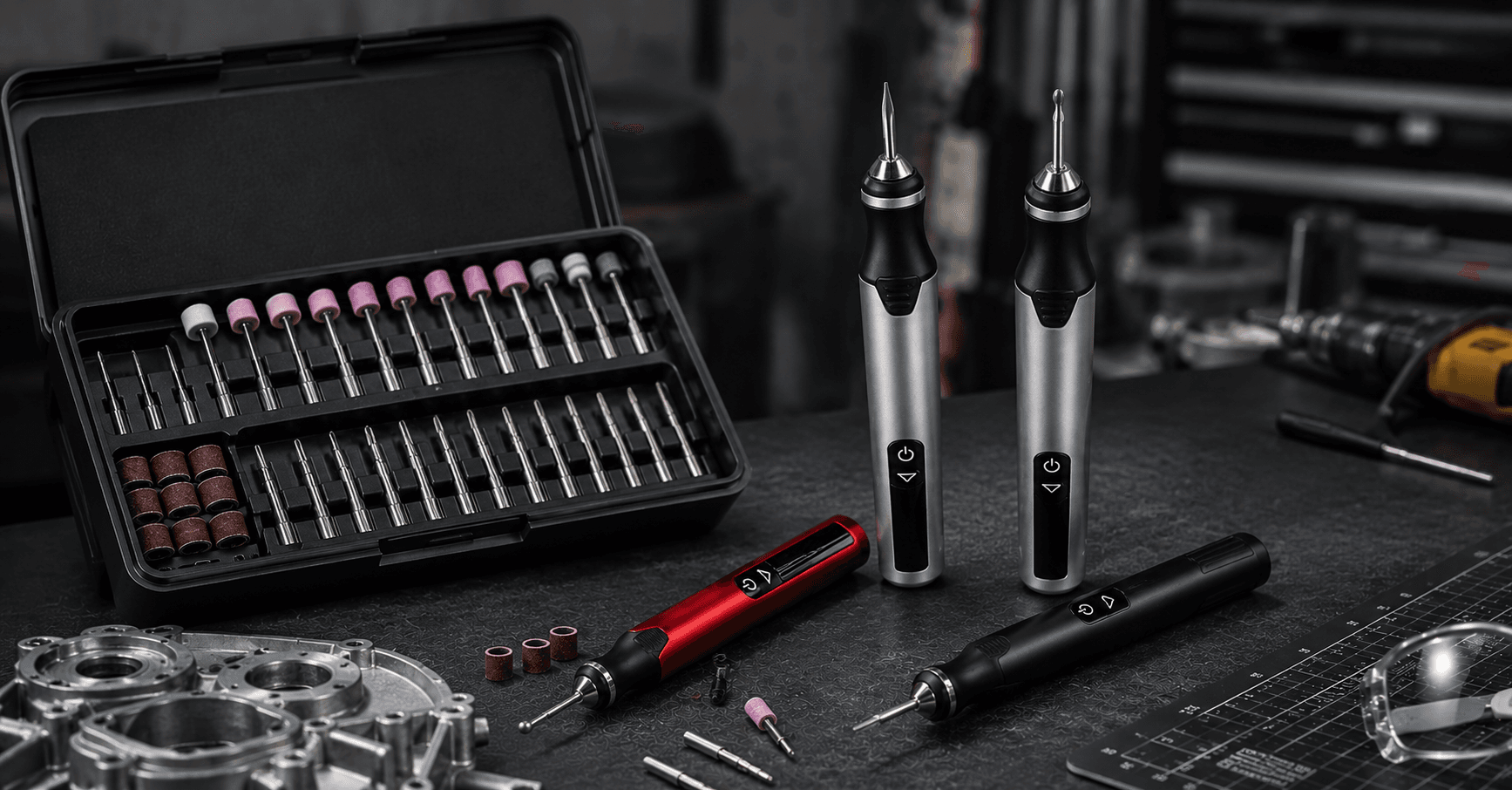
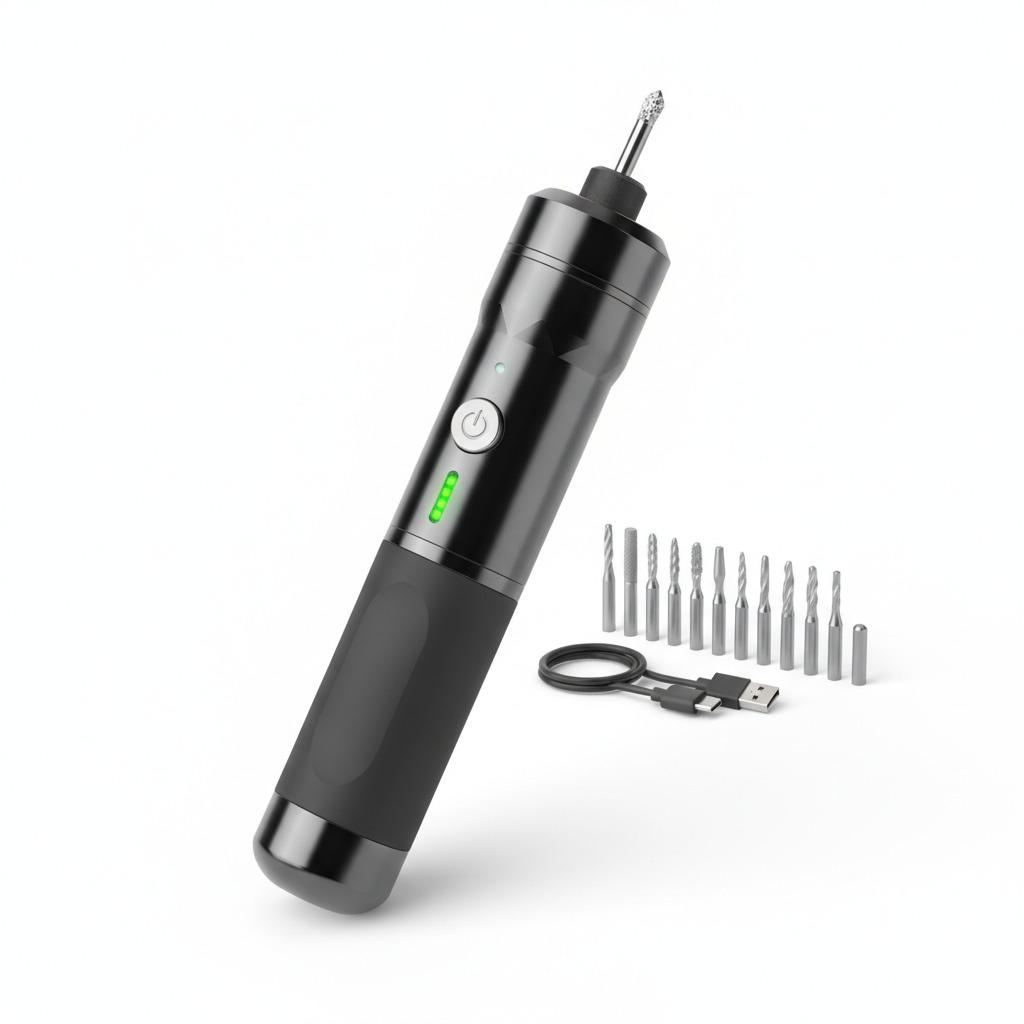
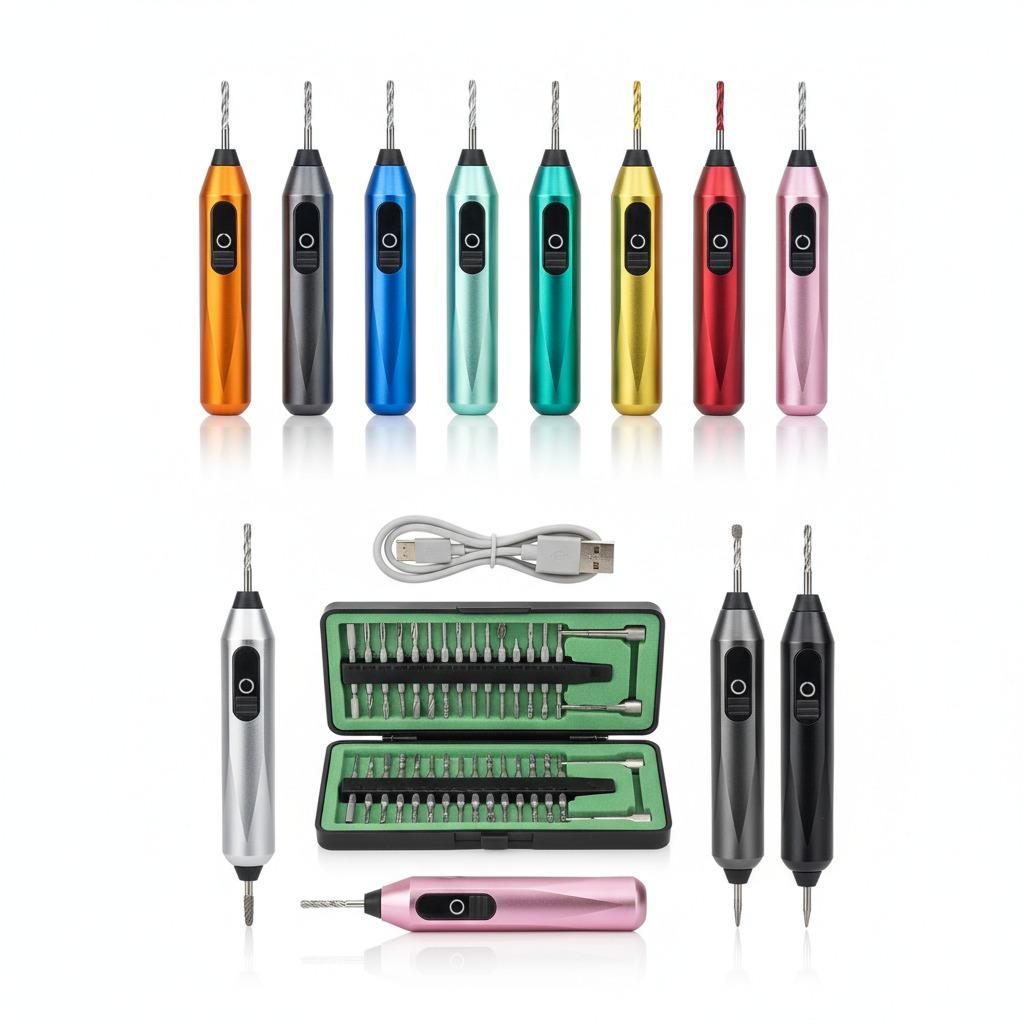
The rotary tool shown in the supplied product information is a slim handheld pen format rather than a larger benchtop or full-size rotary grinder. That distinction matters. Buyers looking for jewelry finishing, model making, or light engraving usually want control first, power second. The visible design cues support that use case: a cylindrical body, a tapered front section, a metal shaft or bit at the tip, a black grip/control area, and a status display or indicator area on the body.
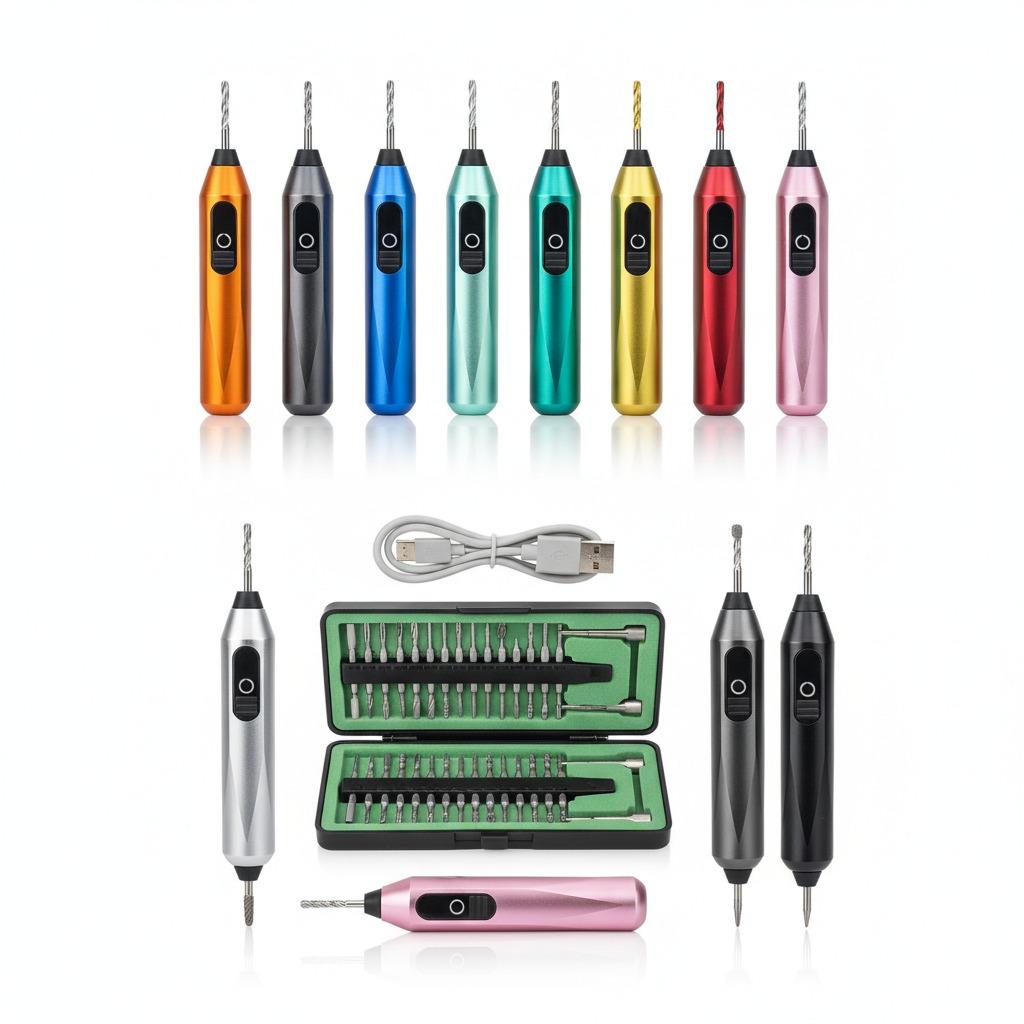
The image set also suggests a product line with multiple color options, including metallic-looking orange, blue, silver, green, cyan, gold, gray, red, dark gray, and pink variants. In retail, that sort of color range can help separate listings, build bundles, or create a more giftable appearance. It is a small detail, but buyers in this category often underestimate how much the look of the tool affects conversion.
Visible features that matter to buyers
There are a few selling points here that are practical rather than decorative:
- Compact pen form factor for fine control
- Interchangeable-looking working bits
- Integrated button or control area
- LED-style battery or status display on some versions
- Textured or matte black grip section for handling
- Storage case and USB cable shown in the kit version
Notably absent are the performance numbers. Speed, torque, battery capacity, runtime, and charging method are not confirmed in the supplied material, and that is a good reminder for sourcing teams: do not let marketing language outrun the engineering sheet.
Where this type of tool fits in the market
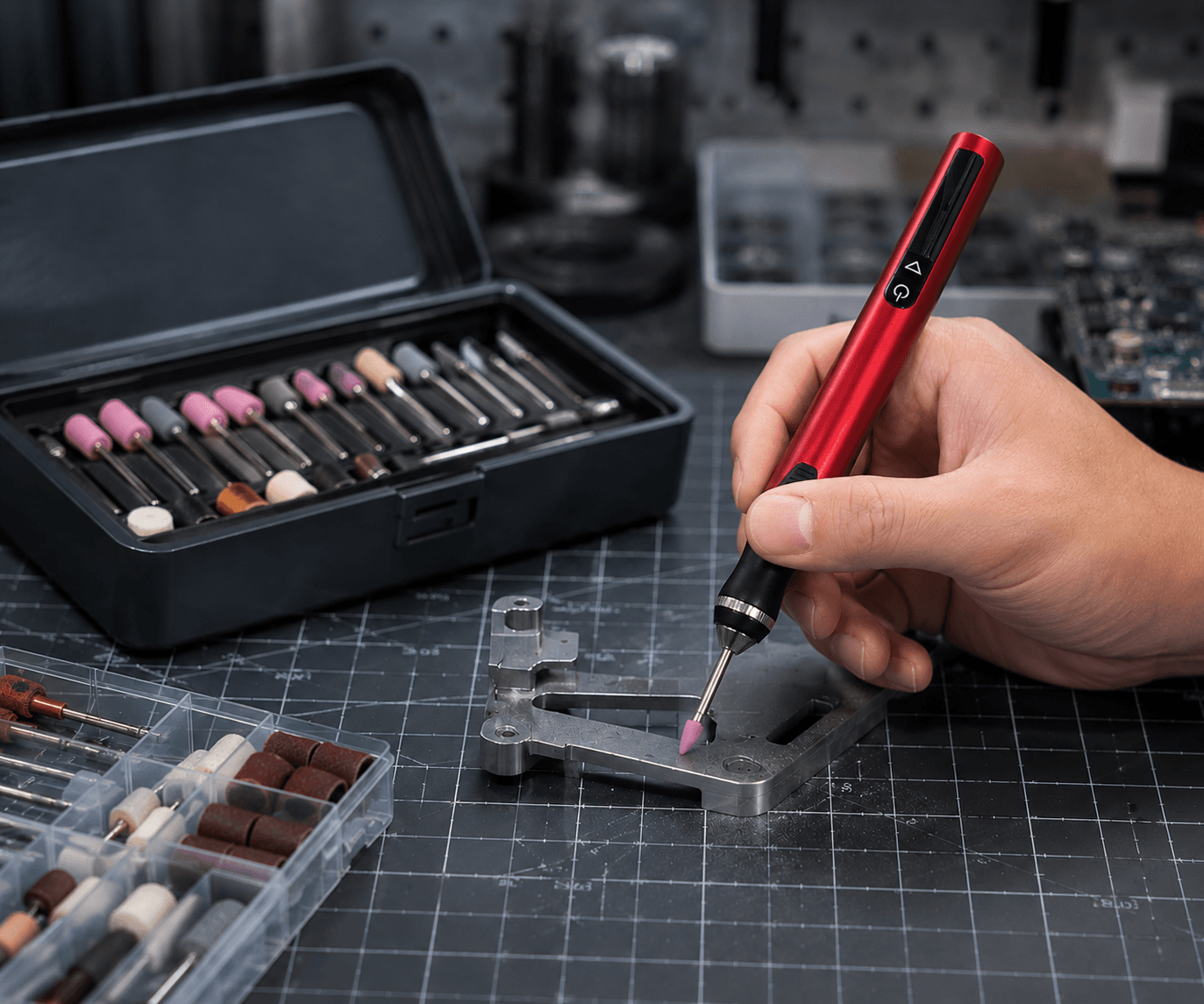
A pen-style rotary tool has a narrower job than a full rotary tool, but in many product lines that is an advantage. It is easier to position for light-duty precision tasks, which include engraving, sanding, polishing, deburring, carving, and small-part finishing. In some markets, the same format is also sold into nail art, resin cleanup, and craft detailing, though that depends on accessory choice and compliance claims that are not provided here.
For wholesalers, the appeal is obvious: the tool can be sold as a standalone unit, a starter kit with interchangeable bits, or part of a broader repair or hobby set. For Amazon-style e-commerce, the product has enough visual variety to create a differentiated listing without needing a huge amount of SKU complexity. For brand owners, the pen-style shape gives room for logo placement, color customization, and packaging design.
Shenzhen ToolQeen highlights OEM & ODM customization, including logo printing, color options, and packaging design. That is the right language for this category. In a market where many products look similar at first glance, packaging and presentation often decide whether a listing gets attention or is ignored.
How to evaluate a rotary tool pen factory before you place an order
Not every rotary tool pen factory is equally useful to a commercial buyer. Some can assemble a product. Fewer can support market-ready product development. When the item is small and visually simple, it is easy to assume sourcing will be straightforward. In practice, the details are where projects stall.
Start with the basics: does the supplier understand the difference between a display piece, a consumer retail product, and a tool intended for repeat use? A factory that works well in this segment should be able to discuss housing finish, grip texture, accessory packaging, and the visual balance between the tool body and the bit set. The product information supplied here suggests a mass-produced electromechanical hand tool with a metal-look housing and plastic or polymer grip areas, which is a common and workable construction approach. Exact materials are not confirmed, so buyers should ask for samples before assuming the finish will hold up to retail handling.
Next, check whether the supplier can keep the kit consistent across batches. Interchangeable bits, tray layouts, USB cable placement, and blister or case packaging all need alignment. A rotary tool kit can look premium in a sample and then lose its edge if the tray is loose, the bit arrangement shifts, or the outer box is not robust enough for shipping.
What to ask about OEM and ODM options
A good rotary tool pen OEM relationship should make the buyer’s job easier, not harder. The supplier should be able to handle product appearance, basic configuration, and packaging adjustments without turning every revision into a long development cycle.
Useful questions include:
- Can the housing color be customized to match a brand line?
- Can the logo be printed or applied cleanly on the body or packaging?
- Is the bit set configurable for different retail tiers?
- Can the storage case or insert tray be redesigned?
- Is the product sold as a kit, a standalone tool, or both?
Shenzhen ToolQeen states that it supports fast sampling, with samples in 3–5 days and scalable production for bulk orders. That kind of flexibility matters most for buyers testing a new listing or entering a new channel. Still, buyers should treat any sample as a starting point. A sample shows direction; it does not prove production consistency.
Wholesale buyers should look past the headline product and inspect the kit logic
Rotary tool pen wholesale purchases are often won or lost on the accessories. The tool itself may be small, but the perceived value of the set can change dramatically depending on bit count, case quality, and presentation. The supplied images show interchangeable bits arranged in a fitted storage case, which is a strong retail signal. It tells the buyer that the product is meant to be displayed, not just used.
A practical buyer-facing caution: if the set is being sold into craft or hobby markets, the accessories need to look intentional. Random bit assortments can make a product seem cheap, even if the tool body is decent. A well-organized case, by contrast, makes the product easier to gift, easier to ship, and easier to explain on a product page.
Common mistakes in this category
The most common mistake is overclaiming performance. Buyers sometimes want a mini rotary tool to behave like a larger workshop machine. That is usually a bad fit. Another mistake is ignoring grip and control. A small tool with a slippery finish or awkward button placement will generate returns, even if the motor is acceptable. A third issue is packaging underinvestment. This kind of product is visual. If the box does not carry the value, price pressure will follow.
Why Shenzhen ToolQeen’s manufacturing position is relevant
ToolQeen describes itself as a one-stop OEM/ODM tool kit manufacturer with a focus on electric tools and repair kits. That is relevant because this kind of supplier is usually better suited to commercial buyers than a narrow single-product factory. The company says it began with screwdriver bits, then expanded into mini electric screwdriver sets, rotary tools, ratchet screwdriver kits, and multi-functional repair kits. In practical terms, that suggests familiarity with component sourcing, kit assembly, and packaging coordination.
The company also notes export experience in Europe, North America, South America, and Australia. For buyers, that does not replace due diligence, but it does indicate the supplier is used to serving distributors, wholesalers, Amazon sellers, brand owners, and retailers across different market expectations.
Practical selection criteria for engineers and sourcing managers
When comparing suppliers, focus on the few issues that affect launch risk most:
- Visual consistency across colors and batches
- Bit quality and presentation
- Grip comfort and control placement
- Kit packaging and shipping protection
- OEM/ODM flexibility for branding and case design
- Sample responsiveness and communication speed
If the supplier cannot answer these cleanly, the order may still be possible, but the product line will be harder to scale. For a small hand tool, that matters more than it first appears. The real cost is not only unit price; it is the time spent fixing packaging errors, replacing awkward accessories, or reworking a listing after the first customer feedback cycle.
FAQ for buyers sourcing a pen-style rotary tool
Is this tool suitable for heavy workshop work?
Probably not based on the available information. The product appears designed for light-duty precision work, not heavy stock removal or demanding industrial grinding.
Can the tool be customized for private label sales?
Yes, the company information indicates OEM and ODM customization, including logos, colors, and packaging design.
Does the kit include a charging cable and bits?
The supplied product images show a USB cable and a tray of interchangeable bits in at least one version, but exact kit contents should still be confirmed before ordering.
What should I confirm before placing a wholesale order?
Ask for confirmed specifications, accessory lists, packaging details, sample approval, and production consistency checks. Do not rely on the visual appearance alone.
Next step for buyers
If you are sourcing a rotary tool pen manufacturer for private label, retail, or wholesale distribution, the best next move is to request a sample package and a clear configuration sheet. Compare the look of the body, the quality of the bits, the storage layout, and the packaging finish. Then decide whether the product belongs in a hobby line, a repair kit line, or a broader tool assortment.
For buyers who want a supplier that can support OEM/ODM customization, stable production, and market-oriented product development, Shenzhen ToolQeen Technology Co., Ltd. is positioned as a relevant starting point. The conversation should begin with the product you want to sell, not just the tool you see in the photo.