

OEM Electric Screwdriver Supplier: 7 Checks Before Bulk Orders
Quick Answer: The safest OEM electric screwdriver supplier for B2B buyers is one that can prove torque stability, bit material consistency, battery and charging reliability, sample control, packaging accuracy, and final inspection before bulk shipment. Buyers who verify these seven checks reduce return risk, protect private-label reviews, and make repeat orders easier to scale.
An OEM electric screwdriver supplier should be evaluated as a long-term manufacturing partner, not only as a low-price exporter. For importers, distributors, Amazon sellers, and private-label tool brands, the real cost of a weak supplier appears after launch: unstable torque, stripped screws, poor accessory fit, confusing charging behavior, damaged packaging, and slow reorders.
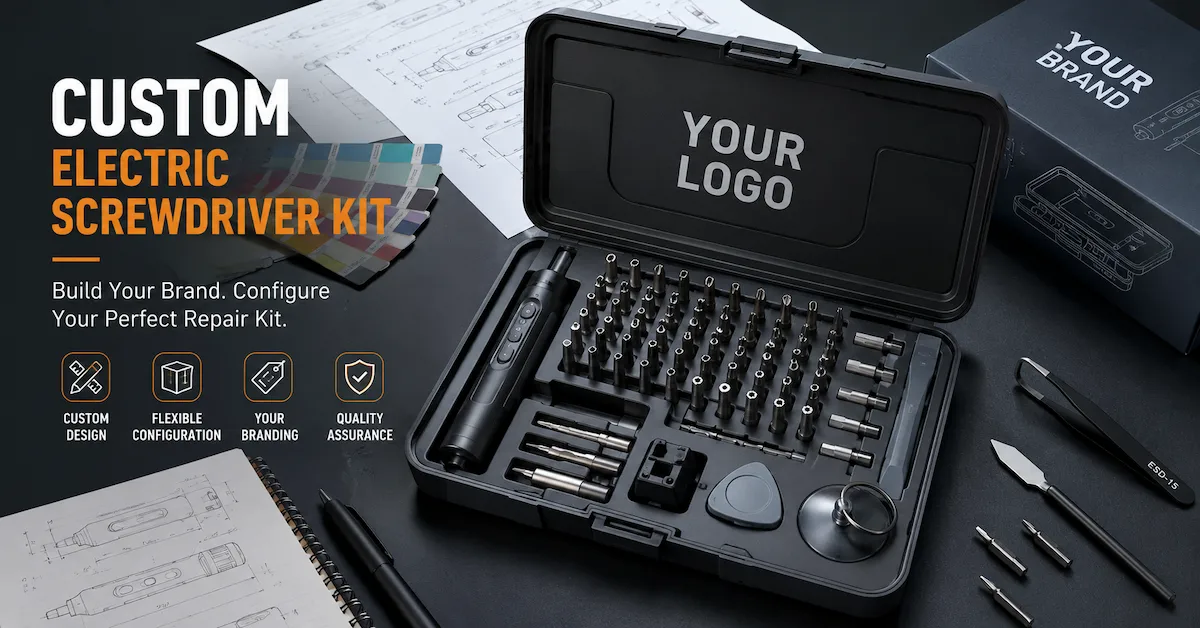
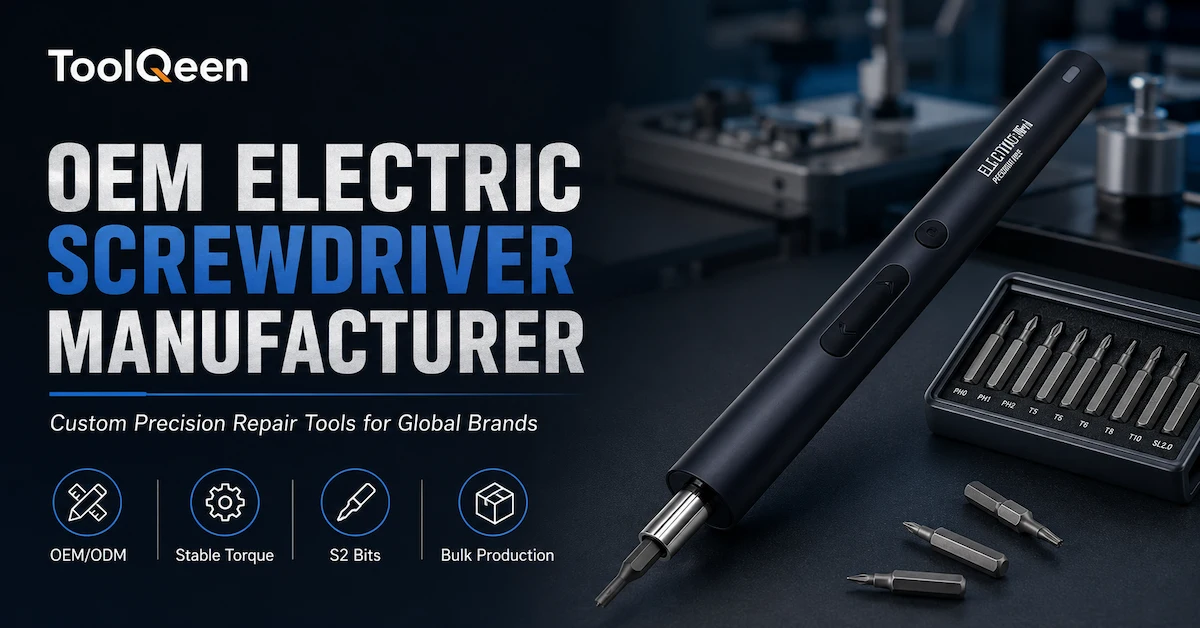
ToolQeen supports OEM, ODM, private label, wholesale, and factory-direct supply for precision electric screwdrivers and repair tool kits. Buyers comparing suppliers can review ToolQeen products, check factory background, or send an OEM inquiry with target quantity and packaging requirements.
1. Confirm Torque Stability Instead of Marketing Claims
Torque numbers on a quotation sheet do not prove real production consistency. Buyers should ask how torque is tested across repeated fastening cycles and whether output remains stable as battery level changes. A serious OEM electric screwdriver supplier should explain the method, tolerance range, and pass criteria instead of replying with a generic "good quality" promise.
2. Check Bit Material and Accessory Fit
S2 steel bits are usually preferred for higher-wear repair use because they support better durability and stronger product positioning. CR-V can still be acceptable for broader bundles, but buyers should understand where it fits. More important than the material name alone is whether the bit fit, magnetic hold, tray layout, and accessory count stay consistent from sample to mass production.
3. Review Battery, Charging, and Daily-Use Reliability
Many return requests come from poor charging behavior rather than obvious motor failure. Buyers should check whether the screwdriver charges reliably, whether the battery feels stable during repeated use, and whether USB-C or other charging choices fit the target market. This matters even more for e-commerce sellers, because one charging issue can trigger a review trend that is expensive to reverse.
4. Lock the Sample Before Approving Bulk Production
The approved sample should define motor feel, torque direction, bit list, logo position, charging cable, instruction sheet, carton mark, and gift box structure. When the sample is vague, the production result becomes negotiable later. That is where B2B buyers lose time and margin.
5. Treat OEM Packaging as Part of Product Quality
Private-label success depends on more than the screwdriver itself. Buyers should confirm how the supplier checks color boxes, EVA trays, blister placement, barcode labels, carton marks, and accessory arrangement. Packaging mistakes create the same commercial damage as tool defects because the product reaches the customer as one complete retail experience.
6. Ask for a Clear MOQ and Lead-Time Plan
A trustworthy supplier should explain MOQ, sampling timeline, packaging approval sequence, and mass-production lead time in practical terms. The best answer connects quantity, packaging complexity, logo method, and inspection steps. Buyers should be cautious when lead time is promised without asking about artwork, accessory configuration, or final QC.
7. Review QC Records and Repeat-Order Communication
The strongest OEM electric screwdriver supplier can describe how incoming materials, assembly checks, torque tests, packaging review, and shipment approval are documented. Process discipline is why standards such as ISO 9001 quality management matter for export manufacturing. Buyers should also test how quickly the supplier answers practical questions about configuration changes, samples, and reorder planning.
Why This Matters for B2B Buyers
Distributors, repair tool importers, and private-label sellers do not win by buying the cheapest screwdriver that looks acceptable in a catalog. They win by selecting a supplier that can keep the product experience stable across launch, reviews, reorders, and packaging revisions. That is the difference between one container sale and a repeatable product program.
Buyer FAQ
What should buyers ask an OEM electric screwdriver supplier first? Start with torque stability, bit material, battery behavior, sample process, OEM packaging control, MOQ, lead time, and final inspection method.
Why is sample approval so important? Because the approved sample locks the product feel, accessory mix, packaging structure, and brand presentation before bulk production begins.
Are low MOQ offers always better? No. A low MOQ can still be expensive if the product creates returns, weak reviews, or inconsistent reorders.
What internal pages should buyers review next? Compare the ToolQeen product range, then review ToolQeen company information before sending an OEM brief.
Next Step for Buyers
The safest sourcing move is to send the supplier your target market, order quantity, packaging concept, and expected sales channel before approving a bulk order. ToolQeen can help buyers compare standard models, OEM packaging options, and private-label routes based on that brief.
CTA: Visit ToolQeen Products to compare available models, then use the contact page to request pricing, MOQ, lead time, and OEM packaging support.