

Electric Screwdriver for Laptop Repair: Lower Return Risk for EU Distributors
European distributors do not lose margin only because a laptop repair tool is priced too high. They lose margin when a kit looks professional in the catalog but creates stripped screws, weak bit engagement, inconsistent charging feedback, damaged packaging, or unclear CE/RoHS documentation after the first shipment. For an electric screwdriver for laptop repair, the safer buying decision is to verify the product, the factory process, and the repeat-order controls before approving bulk production.

Quick Answer
An electric screwdriver for laptop repair should be sourced by checking torque stability, S2 bit fit, battery and charging consistency, OEM packaging, CE/RoHS document readiness, MOQ, lead time, and batch QC. EU distributors should avoid choosing only by kit quantity or low price because after-sales risk usually comes from unstable production details, unclear inspection standards, and packaging changes between sample and repeat orders.
A practical ToolQeen sourcing process starts with the target market, repair scenario, required bit layout, packaging format, and expected quantity. From there, buyers can compare samples, confirm the QC checklist, and lock production details before bulk orders.
Definition: What Is an Electric Screwdriver for Laptop Repair?
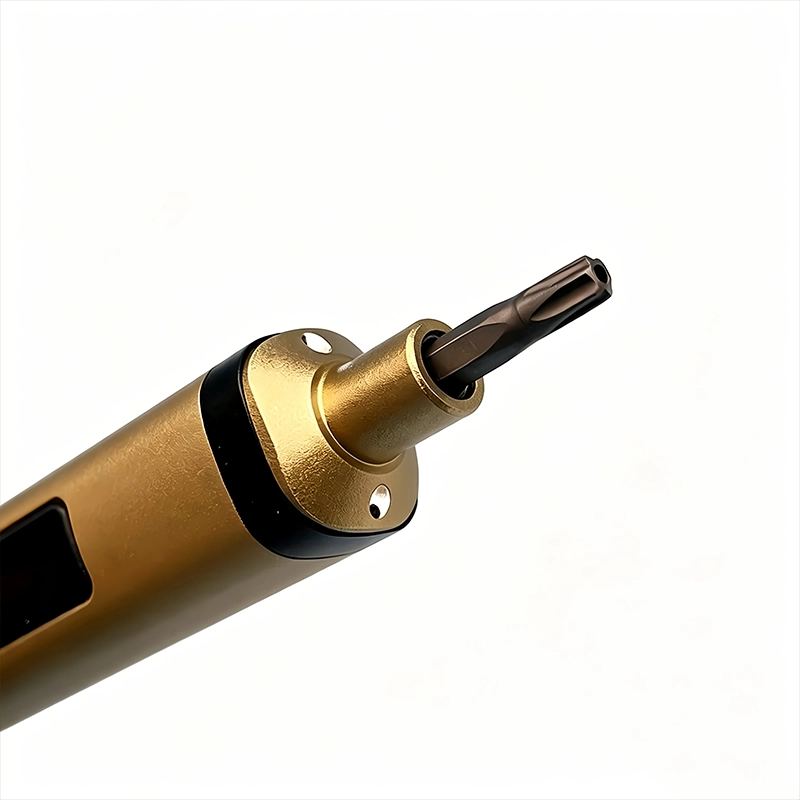
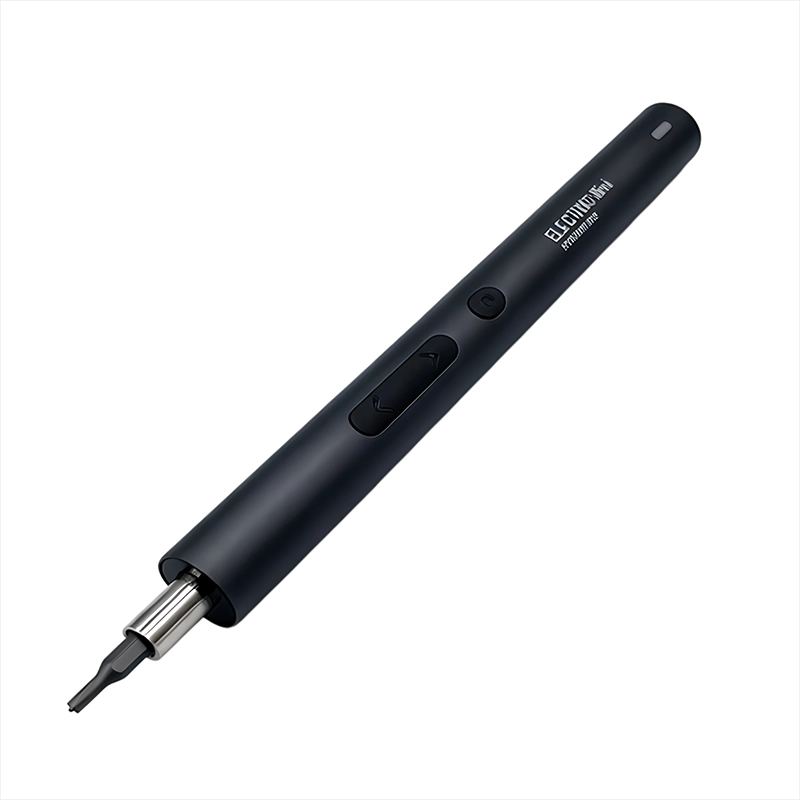
An electric screwdriver for laptop repair is a compact powered fastening tool designed for small screws, plastic housings, internal brackets, hinges, keyboards, cooling modules, and electronic assemblies. It should help technicians work faster while reducing hand fatigue, but it must still control torque carefully enough to avoid damaging small screws or thin laptop parts.
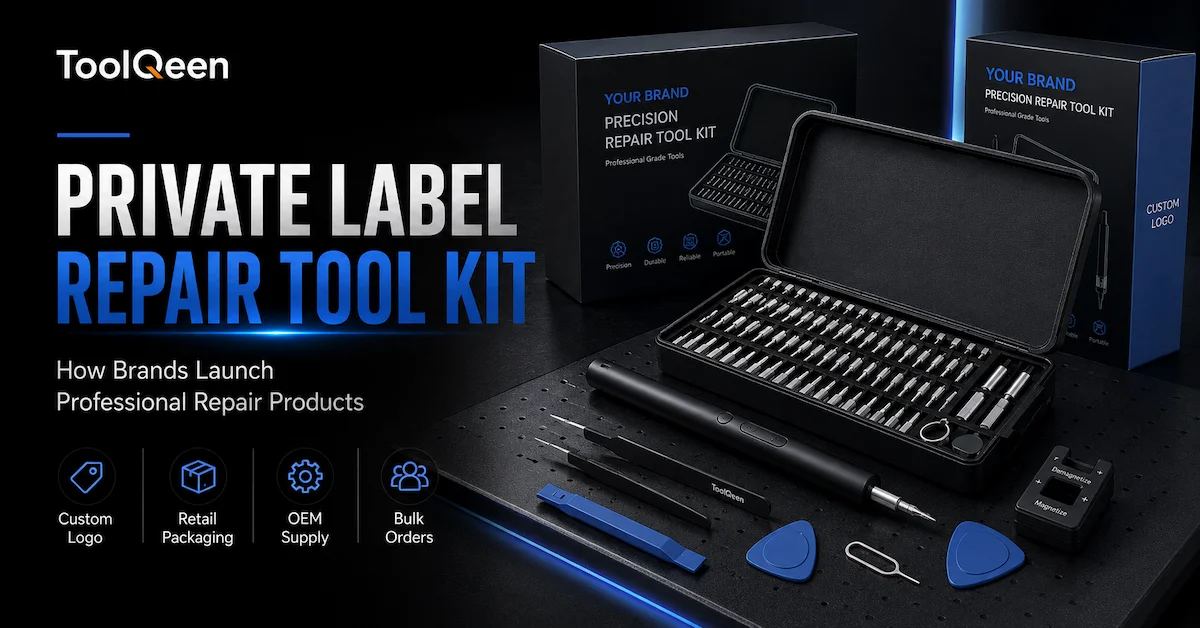
For B2B buyers, the product is not just the handle. The full SKU includes the screwdriver body, motor and gearbox behavior, bit material, bit tray, charging cable, storage case, manual, barcode label, gift box, carton mark, certification documents, spare parts plan, and after-sales communication. This is why distributors should evaluate the supplier as a repeatable manufacturing partner, not only as a product seller.
Technical Explanation: Why Laptop Repair Tools Fail in Bulk Orders
Torque stability is more important than peak power
Laptop screws are small, and many housings use plastic posts or delicate internal threads. A tool that feels powerful during a short demo may still create repair complaints if the output changes as the battery level drops or if the clutch behavior varies across units. Buyers should ask how the factory checks torque consistency during sample approval and final inspection.
S2 bit fit affects both repair speed and return risk
S2 bits are often preferred for precision repair positioning because they support stronger wear resistance and a professional feel. However, material alone is not enough. Tip shape, hardness direction, magnetic strength, bit seating, and tray accuracy also matter. A repair shop will notice quickly if the bit slips, rounds early, or does not fit common laptop screw types.
Battery, USB-C charging, and LED behavior must match user expectations
For European repair channels, charging reliability is part of product trust. Buyers should confirm charging port fit, indicator behavior, battery endurance, low-power feel, and instruction wording. If a user cannot understand charging status or if performance drops too early, the product may generate support tickets even when the mechanical parts are acceptable.
For compliance context, the European Commission explains that importers and distributors have responsibilities when placing products on the EEA market, including checking that products meet applicable rules and are accompanied by required documentation. Buyers can review the official EU product compliance guidance from the European Commission when preparing importer-side risk checks.
Factory Insight: What EU Buyers Should Confirm Before Samples
ToolQeen is Shenzhen ToolQeen Technology Co., Ltd., a Shenzhen-based precision tool manufacturer founded in 2016. The company supports electric screwdrivers, precision assembly tools, mini rotary tools, manual repair tools, ratchet screwdriver sets, and OEM/ODM tool kits for global B2B buyers. Buyers can review available categories on the ToolQeen products page and check factory background on About ToolQeen.
For an electric screwdriver program, the factory conversation should start before artwork or pricing. EU importers should share the target country, repair user type, preferred kit size, quantity plan, packaging level, certificate needs, and launch schedule. ToolQeen can then help compare standard and customized options instead of forcing buyers to choose from a fixed catalog photo.
Importer risk control starts with locked samples
Once a sample is approved, the buyer and factory should lock the important details: motor feel, torque direction, bit list, magnetic strength, case layout, logo position, packaging artwork, manual language, barcode label, carton mark, and QC checklist. This reduces the common dispute where the sample looks good but the mass-production shipment changes small details that customers notice immediately.
Real Manufacturing Data for ToolQeen Buyers
ToolQeen supports OEM electric screwdriver projects from 500 pieces and ODM projects from 1,000 pieces. Standard samples can usually be prepared in 3-5 days. Standard production commonly takes 10-15 days, while customized orders often require 15-25 days depending on color, logo, packaging, component changes, and material availability.
For electric screwdriver products, ToolQeen's daily output can reach about 3,000-5,000 units, with monthly capacity around 80,000-120,000 units depending on SKU mix and production schedule. Shipping terms can include FOB, EXW, CIF, and DDP. These numbers matter for distributors because stable replenishment is often more valuable than a one-time low price.
| Buyer Decision Point | ToolQeen Reference | Why EU Buyers Should Care |
|---|---|---|
| OEM MOQ | 500 pcs | Supports lower-risk first private-label orders. |
| ODM MOQ | 1,000 pcs | Useful when changing structure, color, or kit design. |
| Sample lead time | 3-5 days | Helps buyers compare configurations before bulk approval. |
| Standard lead time | 10-15 days | Supports distributor replenishment planning. |
| Custom lead time | 15-25 days | Allows time for packaging, logo, and component confirmation. |
| Monthly capacity | 80,000-120,000 units | Reduces long-term supply uncertainty for repeat orders. |
Quality Control Process for Laptop Repair Screwdriver Kits
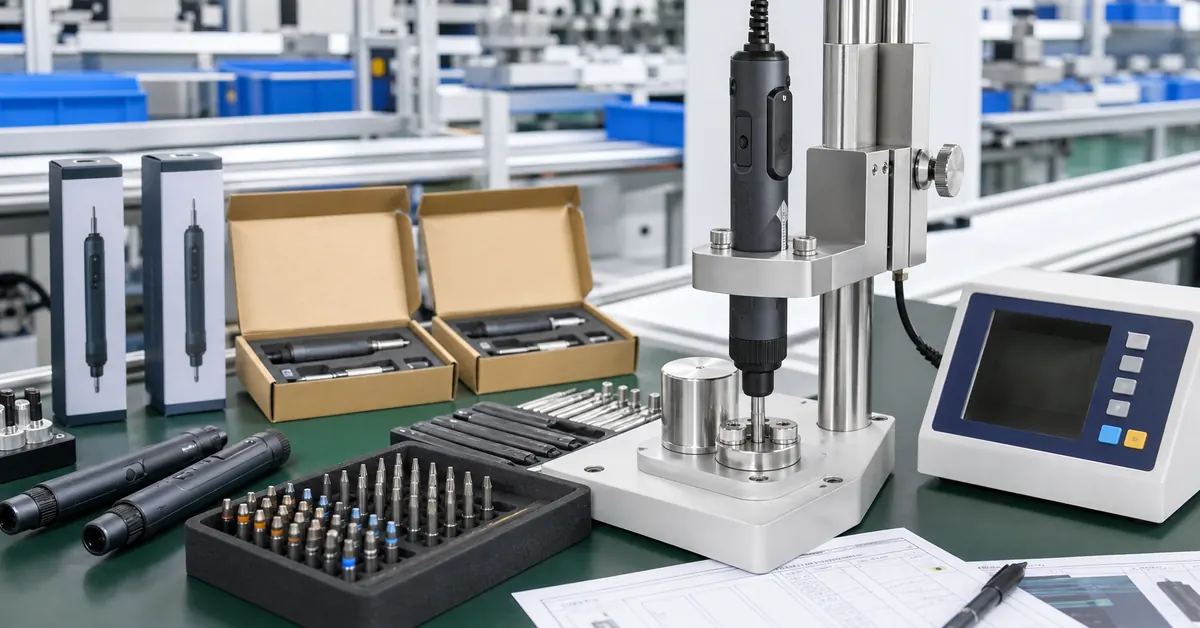
A reliable electric screwdriver for laptop repair needs a QC process that connects the approved sample to the actual shipment. ToolQeen's inspection workflow can include incoming material checks, in-process monitoring, final function testing, reliability checks, and pre-shipment packaging review.

IQC: incoming material inspection
Incoming inspection should cover motors, batteries, PCBs, S2 bits, plastic housings, charging parts, trays, metal parts, and packaging materials. This stage helps catch visible defects or wrong components before assembly begins.
IPQC: in-process assembly monitoring
During production, inspectors should monitor assembly fit, torque calibration, button feel, charging function, LED alignment, tray placement, and process parameters. This is where many repeat-order problems can be stopped before they become finished goods.
FQC, aging, and pre-shipment inspection
Final inspection should check function, torque output, appearance, noise, bit fit, accessory count, logo position, packaging print, manual, barcode label, and carton mark. Reliability checks can include continuous run, drop, temperature, and life-cycle testing where relevant. Pre-shipment inspection should confirm that the packed goods match the approved sample and buyer requirements.
How EU Distributors Should Compare Suppliers
For Europe, compliance and after-sales risk should be part of supplier comparison from the first quotation. CE/RoHS document readiness, importer communication, stable lead time, packaging clarity, and batch consistency are not optional details. They affect customs preparation, customer trust, distributor reputation, and the cost of repeat orders.
Documentation should also match the commercial channel. A distributor selling to repair shops may need clear product identification, instruction wording, carton labels, and replacement communication. A private-label brand may need logo files, manual language, retail packaging artwork, barcode placement, and traceable batch references. An importer preparing a first order should ask the supplier which documents can be prepared before shipment and which packaging details need buyer approval before production starts. This practical conversation reduces the chance that goods are finished while the buyer is still waiting for compliance files, translated instructions, or carton information.
After-sales risk is usually created by small gaps rather than one dramatic defect. A missing bit, a changed tray, a weak manual, a different charging cable, or a packaging color shift can create customer questions and slow reorders. For that reason, serious buyers should request sample photos, packaging confirmations, and final inspection records that can be compared against the shipment. The goal is not paperwork for its own sake. The goal is to make the first order repeatable.
| Supplier Check | Weak Sourcing Approach | Lower-Risk ToolQeen Approach |
|---|---|---|
| Product selection | Choose by photo and bit count. | Match torque, bit layout, and case design to laptop repair use. |
| Compliance | Ask for documents after production. | Discuss CE/RoHS needs before sample confirmation. |
| Packaging | Approve artwork without carton checks. | Lock box, manual, barcode, insert, and carton mark. |
| MOQ and lead time | Accept vague promises. | Confirm MOQ, sample timing, production lead time, and shipping terms. |
| QC | Check only appearance photos. | Use function, torque, bit fit, charging, and pre-shipment checks. |
Buyer Scenario: Reducing After-Sales Risk for Repair Channels
A European repair tool distributor may want a compact screwdriver kit for laptop service counters, phone repair shops, e-commerce bundles, and local wholesale customers. The first request often focuses on kit size and price, but the real business risk is different: technicians complain about bit slip, the product page shows one package while the shipment arrives in another package, or repeat orders feel different from the approved sample.
The better process is to approve a focused SKU, test it on real laptop screws, confirm S2 bit coverage, review the case layout, lock the retail packaging, and define the final QC checklist before bulk production. This creates a product that is easier to explain to dealers, easier to reorder, and easier to support if customers ask for replacement parts or documentation.
Inquiry CTA for EU Buyers
If you are sourcing an electric screwdriver for laptop repair for European distribution, repair tool wholesale, e-commerce resale, or private-label launch, send ToolQeen your target country, preferred kit configuration, quantity range, packaging idea, CE/RoHS document needs, and launch schedule. ToolQeen can help compare standard and OEM options, prepare samples, confirm MOQ and lead time, review packaging, and set QC checkpoints before bulk orders.
Start with ToolQeen precision tool products, then review ToolQeen manufacturing background before sending your specifications.
FAQ
What should EU buyers check before ordering an electric screwdriver for laptop repair?
Check torque stability, S2 bit fit, charging consistency, accessory count, packaging accuracy, CE/RoHS document readiness, MOQ, lead time, and pre-shipment QC records. These checks reduce after-sales risk and make repeat orders easier to control.
What is the MOQ for ToolQeen OEM electric screwdriver projects?
ToolQeen's reference MOQ is 500 pieces for OEM projects and 1,000 pieces for ODM projects. The final MOQ depends on model, logo method, packaging, color, accessory mix, and customization depth.
How long do samples and production usually take?
Standard samples usually take 3-5 days. Standard production commonly takes 10-15 days, while customized projects often require 15-25 days after sample and packaging confirmation.
Can packaging be customized for European distributors?
Yes. ToolQeen can support logo placement, color direction, retail box, instruction insert, barcode label, carton mark, and gift-ready packaging. Buyers should confirm packaging files before mass production to avoid shipment differences.
Why are CE/RoHS documents important for EU repair tool buyers?
CE/RoHS document readiness helps importers and distributors prepare compliance checks before placing products on the European market. Buyers should discuss document expectations early rather than waiting until goods are finished.
How can buyers reduce return risk in bulk orders?
Use a locked sample, clear specifications, defined bit list, packaging approval, torque and function testing, accessory count checks, and pre-shipment inspection. The supplier should connect every shipment back to the approved sample.
Which customers are the best fit for ToolQeen electric screwdriver supply?
ToolQeen is suitable for European importers, tool distributors, electronics repair suppliers, e-commerce sellers, private-label tool brands, wholesalers, and repair shop supply chains that need stable quality and repeatable B2B supply.
Final Buying Recommendation
The right electric screwdriver for laptop repair should protect distributor margin, reduce after-sales disputes, and support long-term supply instead of only winning the first quotation. EU buyers should compare suppliers through torque behavior, S2 bit fit, packaging consistency, CE/RoHS readiness, MOQ, lead time, and batch QC. ToolQeen can support this process with practical OEM/ODM communication, factory-side inspection, and precision tool manufacturing experience for repeat B2B orders.