
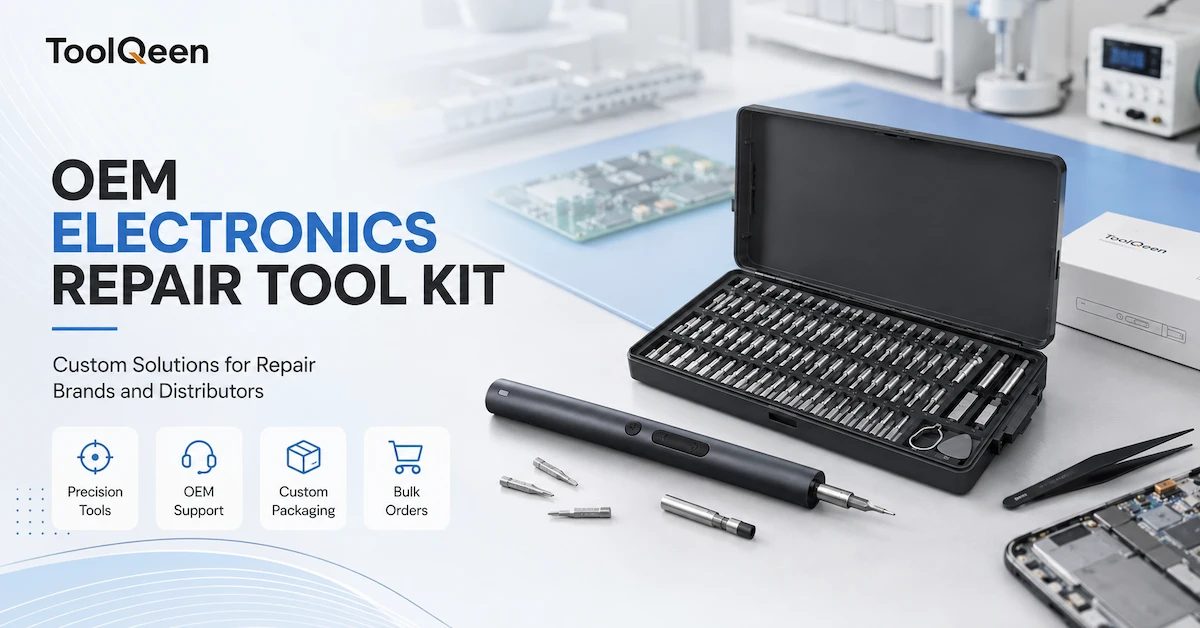
An OEM electronics repair tool kit provides brands, distributors, repair service providers, and technical companies with a reliable way to develop professional repair solutions for modern electronic devices.
With the rapid growth of smartphones, laptops, tablets, cameras, drones, and smart devices, repair businesses require tools that offer accuracy, durability, and consistent performance.
However, selecting the right OEM repair kit is not only about purchasing more tools. A professional solution requires careful planning of:
- Screwdriver configuration
- Precision bit selection
- Repair accessories
- Storage design
- Packaging
- Branding
- Quality standards
- Production consistency
An experienced OEM manufacturer can help buyers transform a basic tool concept into a market-ready repair solution.
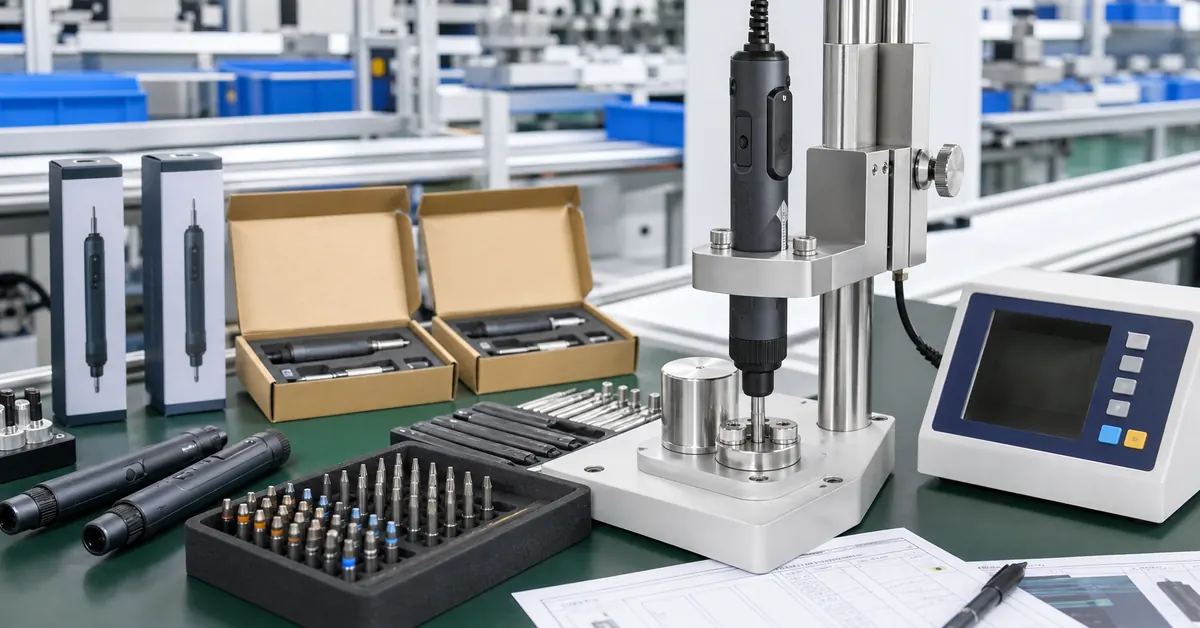
ToolQeen supports OEM electronics repair tool kit projects through precision screwdriver production, accessory configuration, packaging customization, sample approval, quality inspection, and bulk manufacturing.
Buyers can learn more about ToolQeen’s manufacturing capability through the About Us page.
Quick Answer
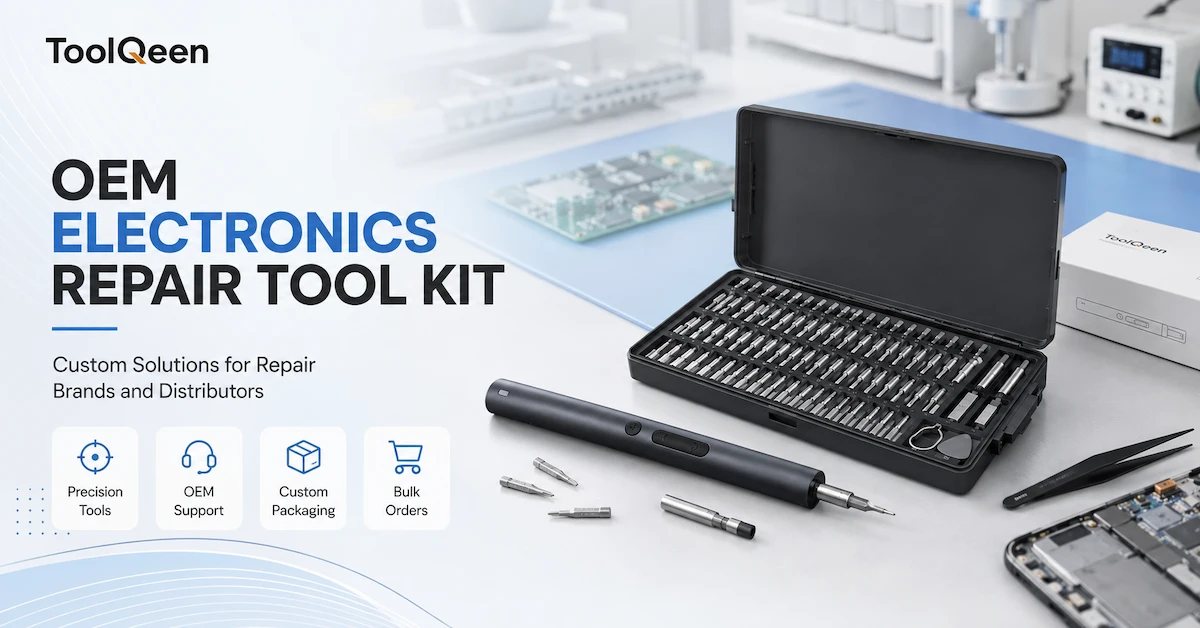
A reliable OEM electronics repair tool kit manufacturer should provide stable production, professional tool configuration, customization options, quality testing, and long-term supply support.
Before placing an OEM order, buyers should confirm:
- Target repair applications
- Tool configuration
- Bit types
- Accessories
- Product materials
- Packaging
- Branding requirements
- Sample approval process
- Quality inspection
- MOQ
- Delivery schedule
Why Choose OEM Electronics Repair Tool Kits?
OEM manufacturing allows companies to create branded repair solutions without building their own production system.
Stable Product Supply
For distributors and repair brands, consistent supply is critical.
OEM cooperation helps maintain:
- Same specifications
- Same accessories
- Same packaging
- Same quality standards
- Stable reorder capability
Professional Product Positioning
OEM repair kits allow companies to create products designed for:
- Repair technicians
- Service centers
- Electronics distributors
- Online repair tool brands
Flexible Configuration
OEM buyers can define:
- Screwdriver type
- Bit selection
- Accessory combination
- Storage case
- Packaging style
Better Market Differentiation
Compared with generic repair kits, OEM products can include:
- Brand logo
- Custom packaging
- Special configurations
- Market-specific accessories
Who Needs OEM Electronics Repair Tool Kits?
Electronics Repair Brands
Suitable for companies selling:
- Phone repair tools
- Computer maintenance products
- Professional repair solutions
Repair Service Networks
Useful for:
- Multiple repair locations
- Technician teams
- Standardized repair operations
Electronics Distributors
Suitable for:
- Wholesale channels
- Regional suppliers
- Dealer networks
E-Commerce Sellers
Useful for:
- Amazon sellers
- Shopify brands
- Online repair stores
Corporate Technical Teams
Suitable for:
- Equipment maintenance
- Engineering departments
- Internal repair operations
Common Applications
An OEM electronics repair tool kit can be designed for:
Smartphone Repair
Common requirements:
- Pentalobe bits
- Phillips bits
- Tri-point bits
- Tweezers
- Pry tools
- Magnetic storage
Laptop Repair
Common requirements:
- Phillips bits
- Torx bits
- Security Torx
- Extended shafts
- Magnetic holders
Camera Repair
Common requirements:
- Micro precision bits
- Stable rotation
- Fine tweezers
- Organized storage
Drone Repair
Common requirements:
- Hex bits
- Torx bits
- Portable case
- Lightweight tools
PCB Maintenance
Common requirements:
- Precision control
- ESD-safe accessories
- Accurate screw fit
How to Design an OEM Electronics Repair Tool Kit
Step 1: Define the Target User
Before production, buyers should identify:
- Who will use the kit?
- What devices are repaired?
- What screw types are common?
- What price range is expected?
- What sales channel will be used?
A professional technician kit and a consumer repair kit require completely different configurations.
Step 2: Select the Core Repair Tools
A typical OEM electronics repair kit may include:
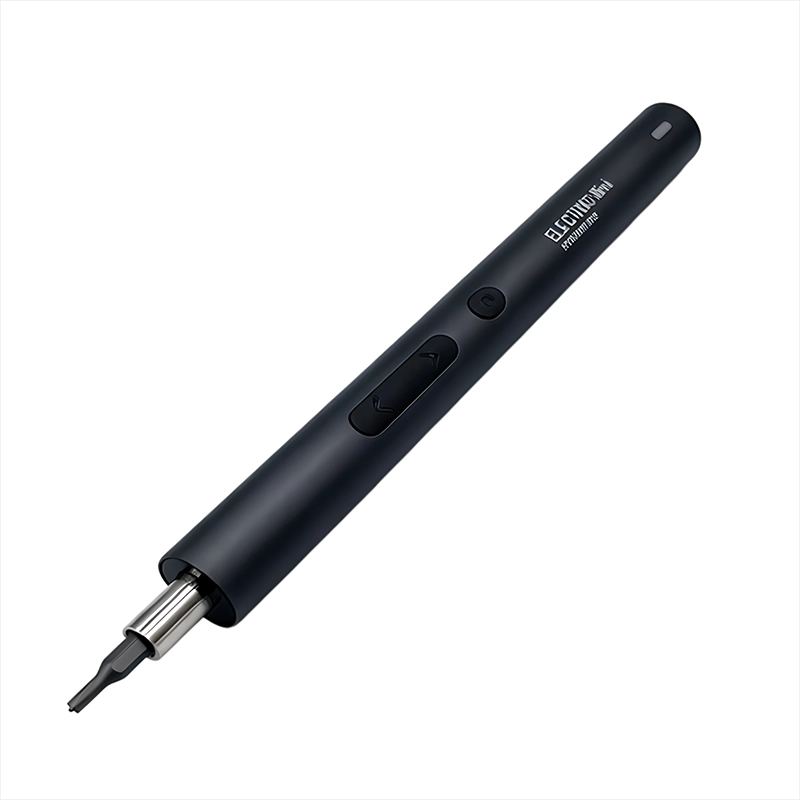
Electric Precision Screwdriver
Benefits:
- Faster operation
- Stable torque
- Reduced fatigue
Manual Precision Screwdriver
Benefits:
- Simple operation
- Backup tightening
- Low maintenance
Precision Bits
Common options:
- Phillips
- Torx
- Security Torx
- Pentalobe
- Tri-point
- Hex
- Slotted
Step 3: Select Accessories
Possible accessories:
- Tweezers
- Pry tools
- Opening picks
- Magnetizer
- Suction cup
- Screw storage tray
- Cleaning tools
- ESD accessories
Accessories should support actual repair tasks instead of increasing piece count.
Recommended Product Platform: 67-in-1 Electric Precision Screwdriver Set
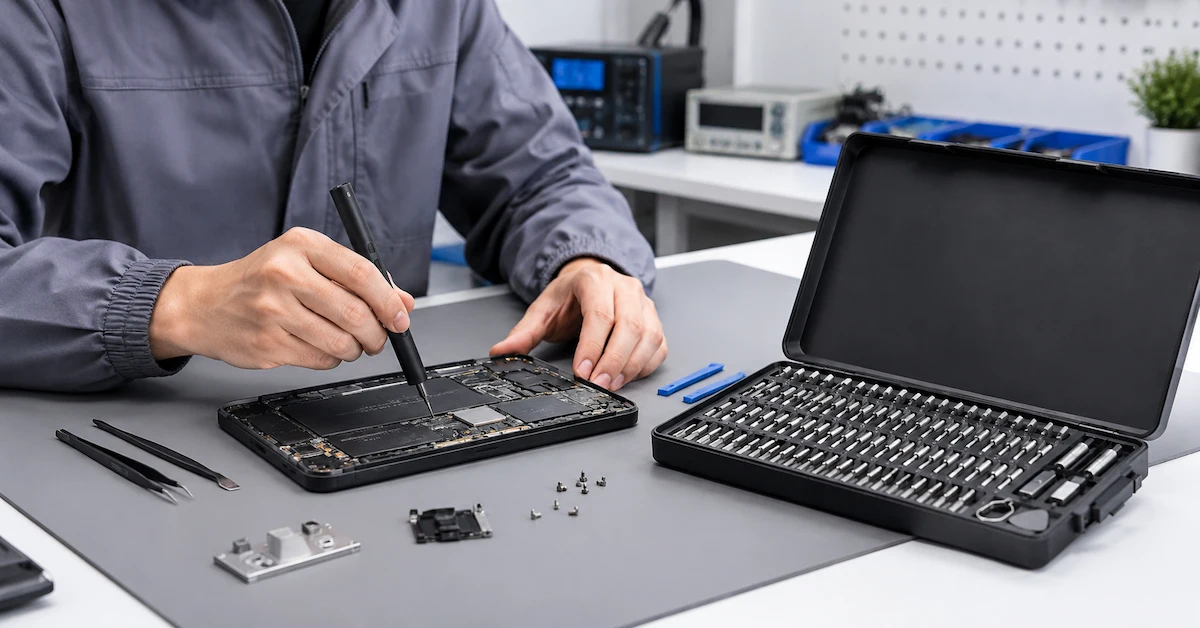
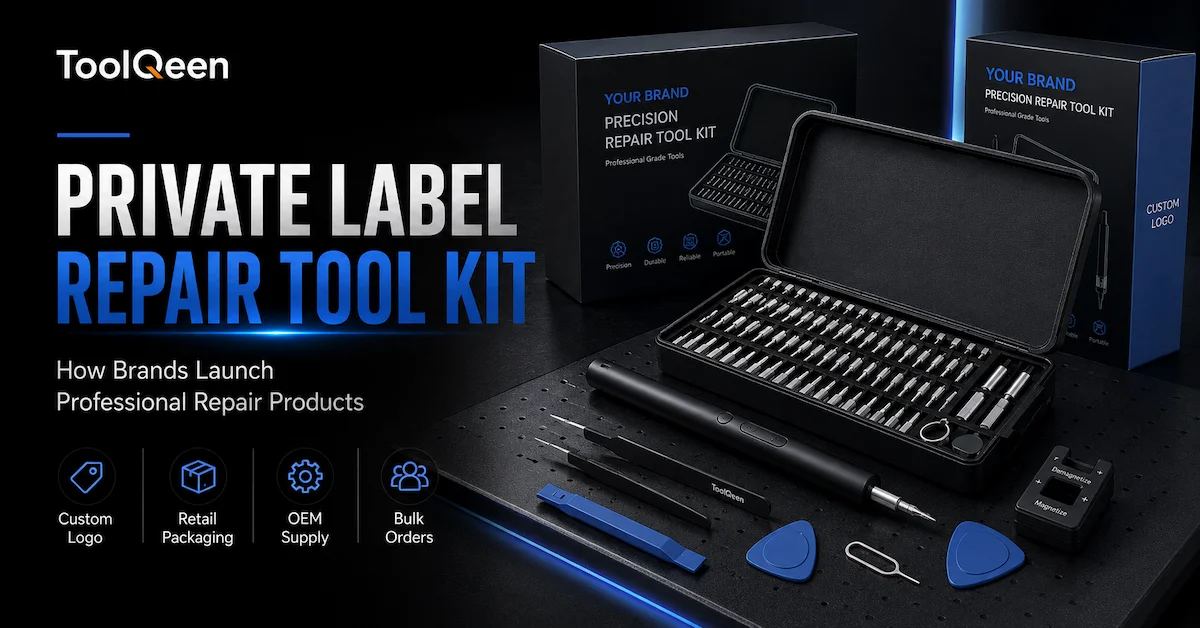
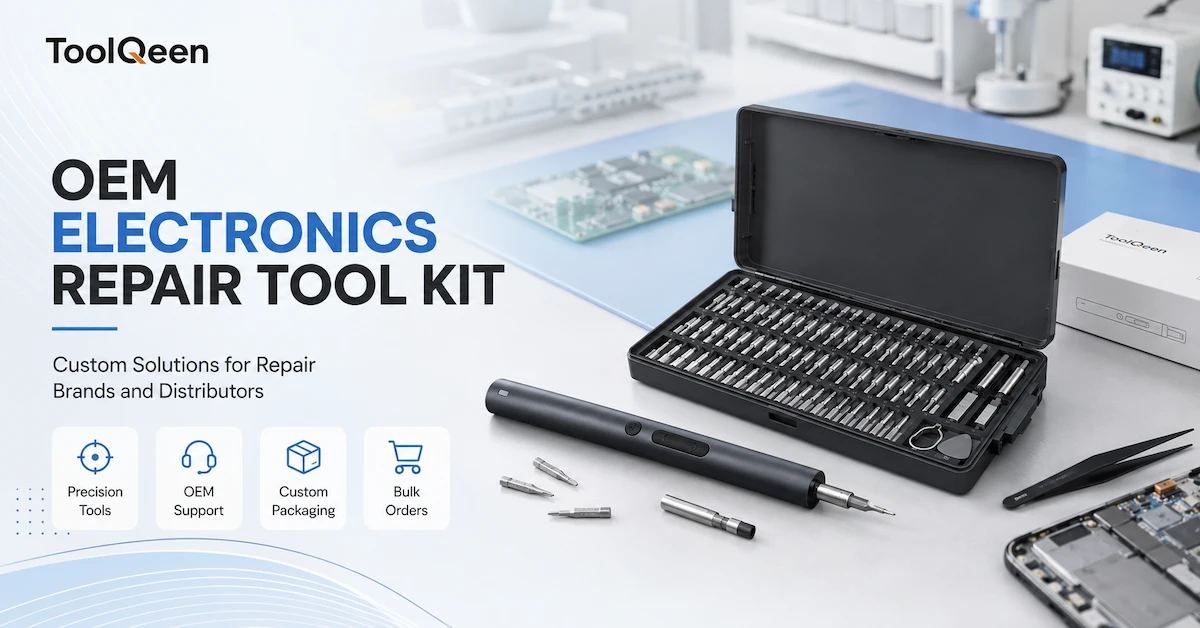
ToolQeen’s 67-in-1 Electric Precision Screwdriver Set provides a suitable foundation for OEM electronics repair tool kit projects.
The kit includes:
- Electric screwdriver
- Manual operation support
- S2 steel precision bits
- Magnetic organization
- LED lighting
- Type-C charging
- Repair accessories
- Compact storage
OEM buyers can customize:
- Logo
- Product color
- Bit configuration
- Accessories
- Packaging
- Manual
- Labels
- Storage design
OEM Customization Options
Tool Configuration
Buyers can customize:
- Screwdriver type
- Torque requirements
- Battery specification
- Bit selection
- Accessory combination
Branding
Options include:
- Laser logo
- Printed logo
- Product labels
- Storage case branding
Packaging
Customization includes:
- Retail box
- User manual
- Warranty card
- Barcode
- Shipping carton
Storage Solution
Options include:
- Case design
- Inner tray
- Bit arrangement
- Accessory placement
How to Evaluate an OEM Repair Tool Supplier
Manufacturing Capability
Check:
- Production experience
- Assembly process
- Material control
- Production capacity
Tool Quality
Check:
- Bit hardness
- Screw fit
- Torque accuracy
- Battery performance
- Charging stability
Customization Ability
Check:
- Logo methods
- Packaging support
- Accessory customization
- Sample development
Quality Management
Check:
- Incoming inspection
- Assembly QC
- Finished product testing
- Packaging inspection
OEM Sample Approval Process
Before mass production, buyers should evaluate:
Product Sample
Check:
- Tool appearance
- Bit configuration
- Accessories
- Performance
Functional Testing
Test:
- Torque
- RPM
- Charging
- Battery runtime
- Bit compatibility
Packaging Review
Check:
- Logo
- Labels
- Manual
- Carton information
OEM Production Process
Requirement Confirmation
Define:
- Product specifications
- Quantity
- Packaging
- Quality standards
Sample Development
Complete:
- Prototype
- Testing
- Improvement
Production Preparation
Prepare:
- Materials
- Components
- Packaging
Mass Production
Complete:
- Assembly
- Inspection
- Packing
- Shipment
Quality Control Checklist
Incoming Materials
Inspect:
- Motors
- Batteries
- Bits
- Plastic parts
- Packaging materials
Assembly Quality
Check:
- Component installation
- Electrical connections
- Screwdriver operation
Final Inspection
Verify:
- Performance
- Appearance
- Accessories
- Packaging
OEM Electronics Repair Kit vs Standard Kit
| Item | Standard Repair Kit | OEM Electronics Repair Kit |
|---|---|---|
| Branding | Supplier brand | Buyer brand |
| Configuration | Fixed | Customized |
| Packaging | Standard | Custom |
| Accessories | Fixed | Adjustable |
| Quality Standard | General | Buyer-defined |
| Supply | One-time purchase | Long-term cooperation |
Common Buying Mistakes
Mistake 1: Choosing Only by Price
Low-cost tools may create problems with:
- Bit wear
- Poor screw fit
- Weak accessories
- Customer complaints
Mistake 2: Ignoring End Users
The best kit depends on actual repair applications.
Mistake 3: Skipping Samples
Sample testing prevents problems during mass production.
Mistake 4: Not Defining Specifications
A clear BOM and specification sheet protects future orders.
Mistake 5: Ignoring Packaging
Professional products require professional presentation.
Pros and Cons
Pros
- Stable supply
- Brand control
- Custom configurations
- Professional positioning
- Long-term cooperation
Cons
- Higher MOQ
- Requires planning
- Sample approval needed
- More communication required
ToolQeen OEM Electronics Repair Tool Kit Support
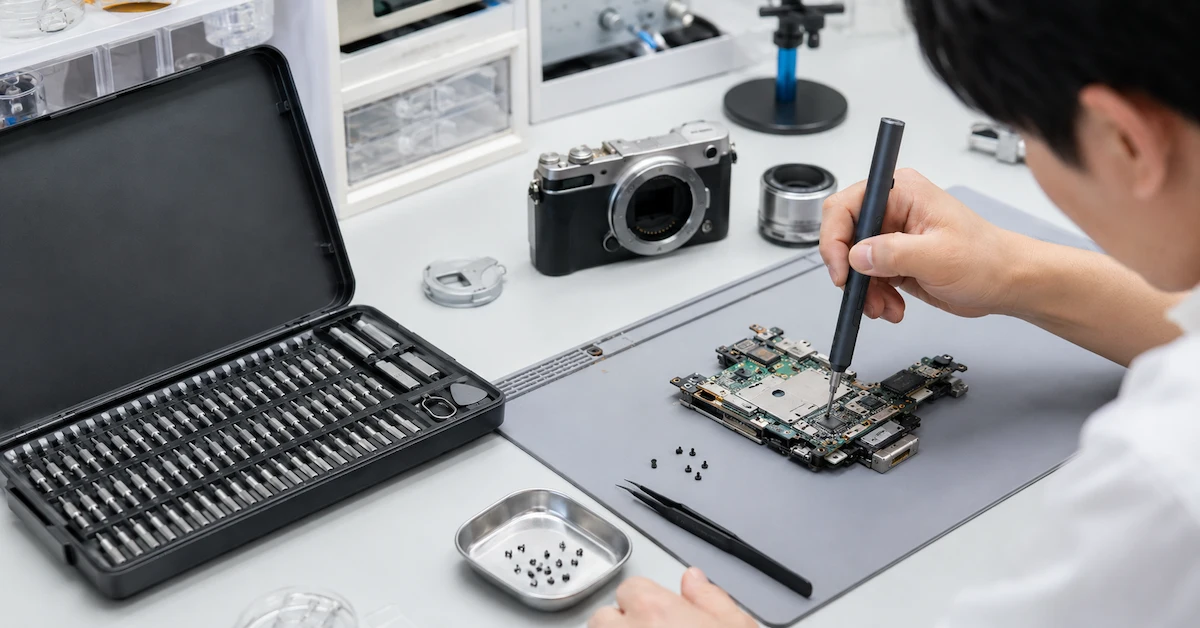
ToolQeen provides:
- Product configuration
- Precision screwdriver solutions
- Accessory selection
- Logo customization
- Packaging development
- Sample testing
- QC inspection
- Bulk production
Buyers can submit project requirements through the Contact Us page.
Recommended Applications
OEM electronics repair tool kits are suitable for:
- Smartphone repair brands
- Laptop service companies
- Electronics distributors
- Camera repair businesses
- Drone maintenance companies
- PCB service providers
- Professional technicians
- E-commerce repair tool sellers
Key Takeaways
- OEM electronics repair tool kits provide reliable branded repair solutions.
- Configuration should match real repair applications.
- Quality depends on tools, accessories, packaging, and production control.
- Sample approval is essential before bulk manufacturing.
- ToolQeen supports OEM repair tool projects from configuration to delivery.
FAQ
1. What is an OEM electronics repair tool kit?
An OEM electronics repair tool kit is manufactured according to buyer requirements, including tools, accessories, branding, packaging, and quality standards. It allows companies to sell professional repair solutions under their own brand.
2. What can be customized in an OEM repair kit?
Buyers can customize screwdriver type, bits, accessories, storage case, logo, packaging, manuals, labels, and product configuration.
3. Which devices can OEM repair kits support?
OEM kits can be designed for smartphones, laptops, tablets, cameras, drones, PCB assemblies, watches, and other electronic devices.
4. Can ToolQeen produce branded OEM repair kits?
Yes. ToolQeen supports OEM customization, precision screwdriver production, accessory configuration, packaging, sample approval, QC, and bulk manufacturing.
5. What should buyers test before bulk production?
Buyers should test tool performance, bit accuracy, accessories, packaging, charging, battery operation, and overall user experience.
6. How long does OEM production take?
Production time depends on product configuration, customization level, packaging requirements, sample approval, and order quantity.
7. What is the difference between OEM and standard repair kits?
OEM kits are produced according to buyer specifications with branding and customization, while standard kits usually use fixed supplier designs.
8. Are OEM repair kits suitable for distributors?
Yes. OEM repair kits are widely used by distributors because they provide branded products, stable supply, and long-term product consistency.
For more sourcing information, visit ToolQeen’s FAQ page.
Conclusion
An OEM electronics repair tool kit helps brands and service companies create reliable repair solutions with professional manufacturing support.
The strongest OEM projects combine suitable tools, accurate accessories, customized branding, strong quality control, and stable production.
ToolQeen supports OEM electronics repair tool kit projects through product selection, customization, testing, and bulk manufacturing.
Contact ToolQeen to discuss your repair tool requirements and OEM solution.