
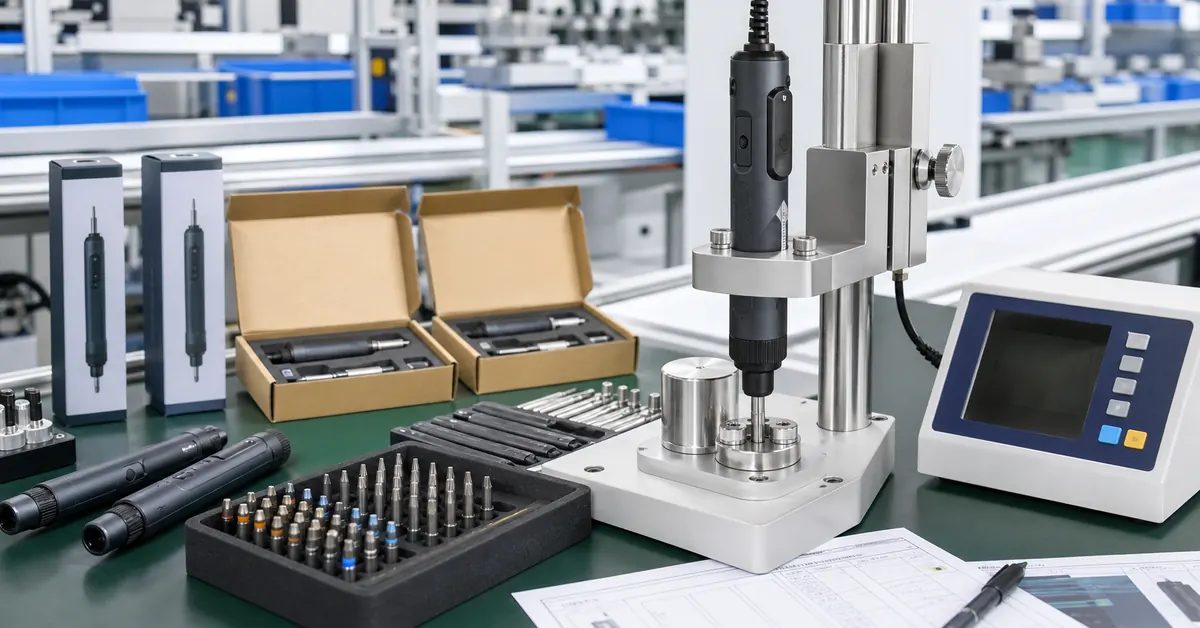
Electric Screwdriver Torque Testing: Fewer Returns for US Private-Label Sellers
US Amazon sellers, independent-store brands, and repair shop distributors can lose margin quickly when an electric screwdriver feels weak in one batch and too aggressive in the next. Customers rarely describe the problem as torque variation. They write that the tool stripped screws, stalled, felt cheap, damaged small parts, or was not worth the price. That is why electric screwdriver torque testing is a factory-strength topic, not a back-room inspection detail.
ToolQeen treats torque control as part of the full B2B product system: motor choice, PCB control, battery output, bit fit, housing assembly, sample approval, OEM packaging, aging checks, and final inspection. For US private-label sellers, this matters because a stable electric screwdriver is easier to list, easier to reorder, and easier to defend when customers compare similar repair tool kits online.
Quick Answer
Electric screwdriver torque testing checks whether finished tools deliver repeatable fastening force for their intended use, such as phone repair, laptop repair, smart device assembly, or household maintenance. For US sellers, it helps reduce stripped screws, negative reviews, return requests, and repeat-order surprises by connecting the approved sample to controlled mass production.
Definition: What Electric Screwdriver Torque Testing Means
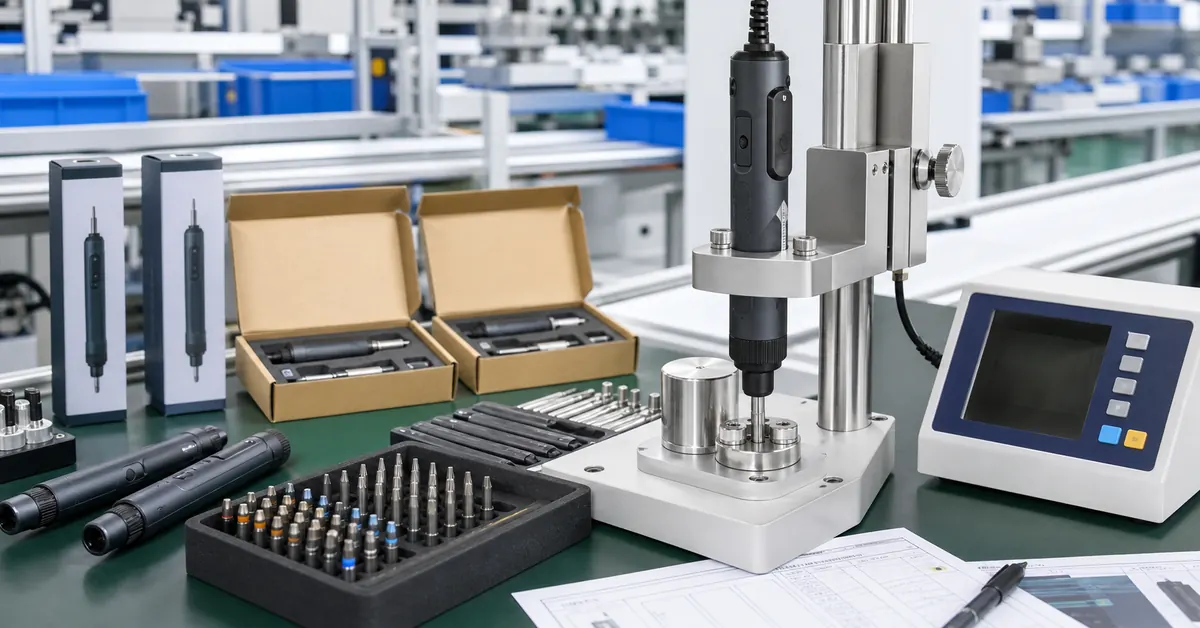
Electric screwdriver torque testing is the controlled process of checking whether an electric screwdriver produces the expected fastening force under a defined test method. In precision repair tools, the goal is not maximum force. The goal is stable, suitable force that supports small screws, delicate housings, and repeated repair work without damaging the user's device.
A useful torque test should be tied to the target market. A phone repair kit, laptop repair kit, smart lock assembly tool, and household maintenance screwdriver do not need the same output behavior. The test should confirm the product promise that appears on the listing, packaging, manual, and private-label sales page.
Technical Explanation: Why Torque Stability Changes User Reviews
Torque stability depends on several parts working together. Motor quality affects power delivery. Gear or transmission structure affects smoothness. PCB control affects how power is managed. Battery output affects consistency across charge levels. Bit fit affects whether the force reaches the screw cleanly. Housing assembly affects how the tool feels during use.
If one element drifts, the user experience changes. A screwdriver with unstable torque may slip out of tiny screws, stall during common repair jobs, or apply too much force on delicate fasteners. For repair shops, this slows technicians down. For Amazon sellers, it creates refund requests and review language that damages conversion. For distributors, it reduces confidence in repeat replenishment.
This is why buyers should ask suppliers how torque is tested, how samples are approved, how production batches are monitored, and how final units are checked before shipment. A factory that can explain the process is usually safer than a supplier that only says "quality is good."
Factory Insight: Torque Testing Starts Before the Test Bench
ToolQeen does not wait until final inspection to think about torque. The process starts with requirement communication: target market, repair scenario, quantity, packaging, bit configuration, and private-label plan. From there, the team can recommend whether the buyer needs a compact precision electric screwdriver, a larger repair kit, a specific bit layout, or a more cost-controlled configuration.
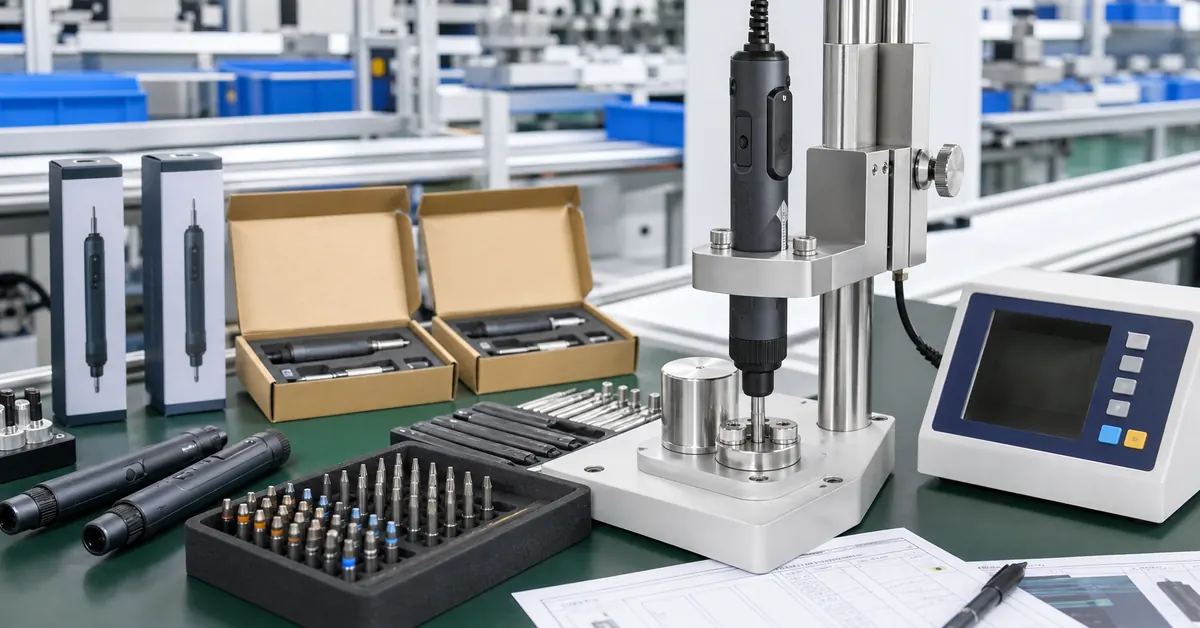
Before assembly, incoming inspection checks motors, batteries, PCBs, S2 bits, plastic parts, metal parts, packaging materials, and charging accessories. During assembly, in-process checks watch fit, button feel, charging port alignment, motor response, bit holder stability, and accessory completeness. The torque test then confirms the finished tool against the approved sample and target application.
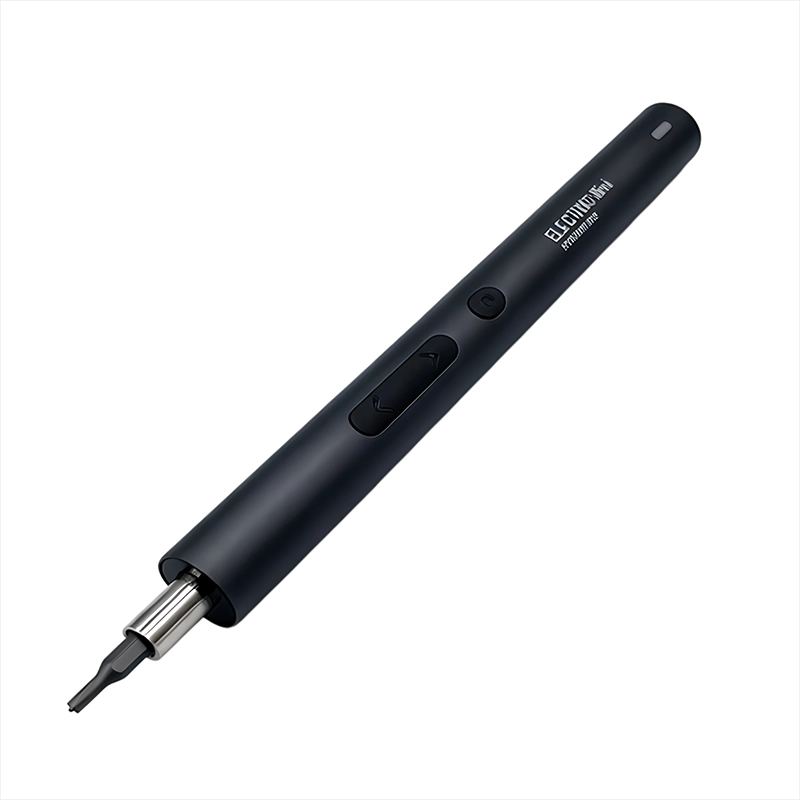
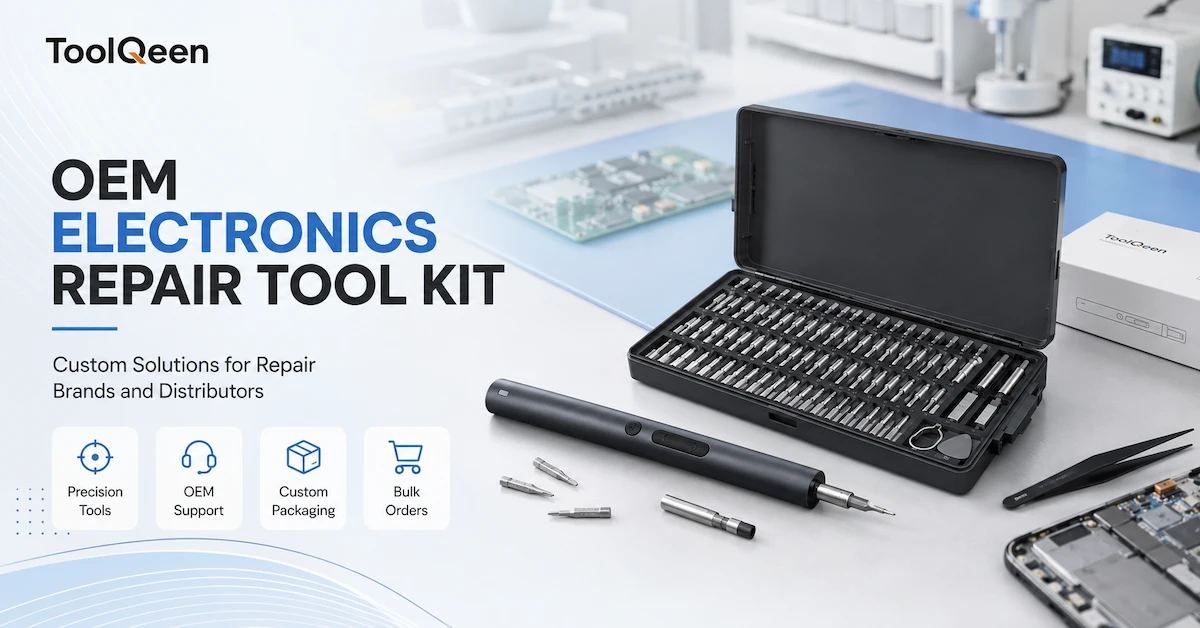
ToolQeen's public product line includes electric screwdriver sets such as 67-in-1 and 62-in-1 repair kits, plus related precision tools. Buyers can review the broader product range at ToolQeen Products before deciding which electric screwdriver configuration fits a US Amazon, independent-store, repair shop, or wholesale channel.
Real Manufacturing Data for B2B Buyers
ToolQeen is Shenzhen ToolQeen Technology Co., Ltd., a Shenzhen precision tool manufacturer founded in 2016. The company supports global B2B buyers with electric screwdrivers, precision repair tools, mini rotary tools, manual screwdriver sets, ratchet screwdriver sets, OEM projects, ODM projects, and private-label tool kits.
Relevant sourcing data includes OEM MOQ from 500 pcs, ODM MOQ from 1,000 pcs, sample lead time around 3-5 days for standard projects, standard production lead time around 10-15 days, and custom order lead time around 15-25 days depending on configuration. Electric screwdriver daily output is typically around 3,000-5,000 units, with monthly capacity around 80,000-120,000 units depending on order mix.
These numbers are useful only when backed by process control. A fast lead time does not help if torque output, packaging, accessory count, or bit fit changes between batches. US sellers should evaluate capacity together with QC records, sample locking, packaging approval, and pre-shipment inspection.
Quality Control Process for Electric Screwdriver Torque Testing
A practical QC process connects component inspection, assembly monitoring, final function checks, reliability testing, and packaging verification. For buyers, the value is simple: fewer avoidable defects reach customers, and repeat orders are easier to compare against the approved sample.
1. IQC: Incoming Component Control
Incoming inspection checks motors, batteries, PCBs, bits, plastic housings, metal parts, cables, trays, boxes, and labels before production starts. This stage reduces the risk of unstable torque caused by weak components or mismatched accessories.
2. IPQC: In-Process Assembly Monitoring
In-process control watches assembly accuracy, contact stability, motor response, button feel, bit holder fit, charging port alignment, and process parameters. If a batch begins to drift, the factory can correct it before too many units move forward.
3. FQC: Final Function and Torque Test
Final QC verifies forward and reverse operation, speed response, torque behavior, charging function, noise, appearance, accessory completeness, and packaging. The test should reflect the real application, not a random maximum-power claim.
4. Aging and Reliability Checks
Aging checks help expose weak batteries, unstable electronics, loose connections, and inconsistent motor behavior. Buyers should ask whether aging or continuous-run checks are part of the factory process for the chosen model.
5. Pre-Shipment Inspection
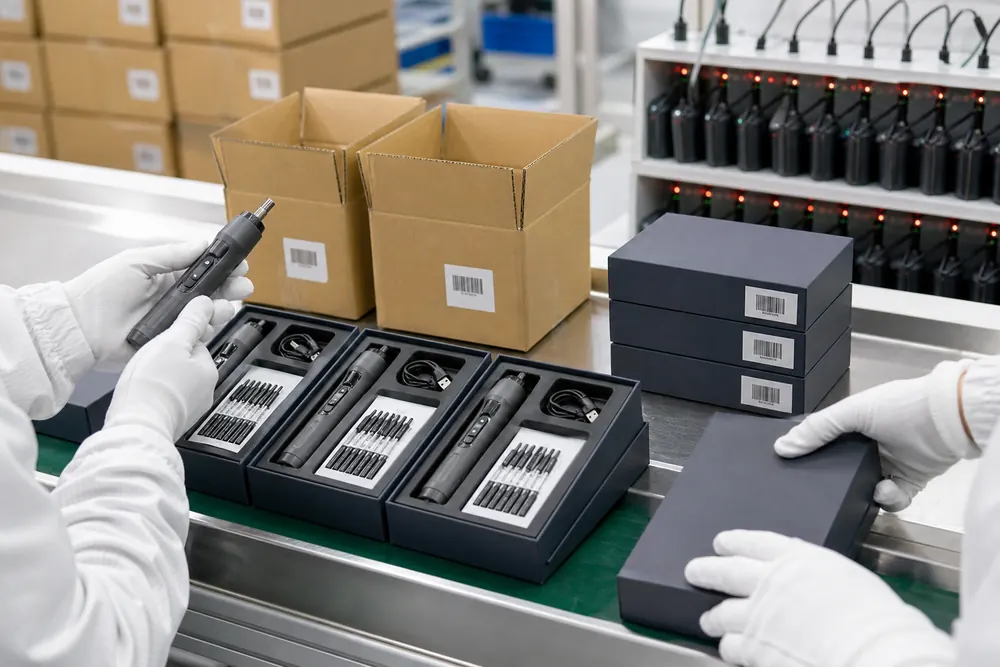
Before shipment, ToolQeen checks packaging integrity, labels, barcodes, manuals, accessory count, carton condition, and final random samples. For private-label sellers, packaging accuracy is part of the product. Wrong labels or missing accessories can create returns even when the tool itself works.
Measurement Discipline and Authority Reference
Torque testing is only useful when the measurement process is repeatable. Buyers do not need to become lab engineers, but they should ask how the factory checks its equipment, records results, and compares production units with the approved sample. Measurement traceability matters because a test result is only helpful when it can be trusted across time, operators, and batches.
The US National Institute of Standards and Technology explains measurement traceability through its official NIST traceability resources. For sourcing teams, the takeaway is practical: a factory should be able to explain how it keeps inspection tools, test methods, and records consistent enough to support repeat orders.
What US Amazon Sellers Should Ask Before Bulk Orders
A seller preparing a private-label electric screwdriver kit should ask more than the unit price. Ask what torque range fits the intended repair scenario. Ask whether the approved sample will be locked. Ask how many units are checked during production and final inspection. Ask whether the packaging, barcode, manual, bit layout, and accessory count will match the approved version.
Also ask about MOQ, lead time, sample timing, color customization, logo method, box artwork, carton labels, shipping terms, and after-sales response. These details shape the true landed cost. A cheaper product can become expensive when weak torque, missing accessories, or poor packaging creates returns and bad reviews.
How Torque Testing Supports E-Commerce Conversion
US e-commerce buyers compare listings quickly. If two electric screwdriver kits look similar, the stronger product page is the one that explains why the tool is reliable for real repair work. Torque testing gives the seller a credible story: controlled output, sample-confirmed performance, stable bit fit, QC before shipment, and packaging prepared for private-label sales.
This does not mean the product page should overclaim. It should use specific, defensible language. Instead of "professional quality," a stronger listing can explain stable torque control, S2 bit options, accessory inspection, charging checks, organized storage, and retail packaging. That language helps buyers understand the value before they click away to a cheaper listing.
Repair Shop Efficiency and Bulk Replenishment
Repair shops do not buy electric screwdrivers for decoration. They buy them to make repeated tasks faster and more predictable. A tool that slips, stalls, or feels inconsistent slows the bench down. A kit with missing bits or confusing layout wastes technician time.
For repair shop suppliers, torque stability should be paired with the right bit list, clean storage, durable packaging, and repeatable bulk supply. A successful first order should lead to replenishment, not a search for another supplier. That is why factory-strength QC is directly connected to sales growth.
Private Label Packaging: Where QC Meets Reviews
Packaging can protect or damage the brand promise. A premium electric screwdriver kit should arrive with a clean tray, complete accessories, clear manual, stable box, correct barcode, and consistent outer carton. If the box looks weak or the tray does not hold accessories well, customers may assume the tool is lower value before using it.
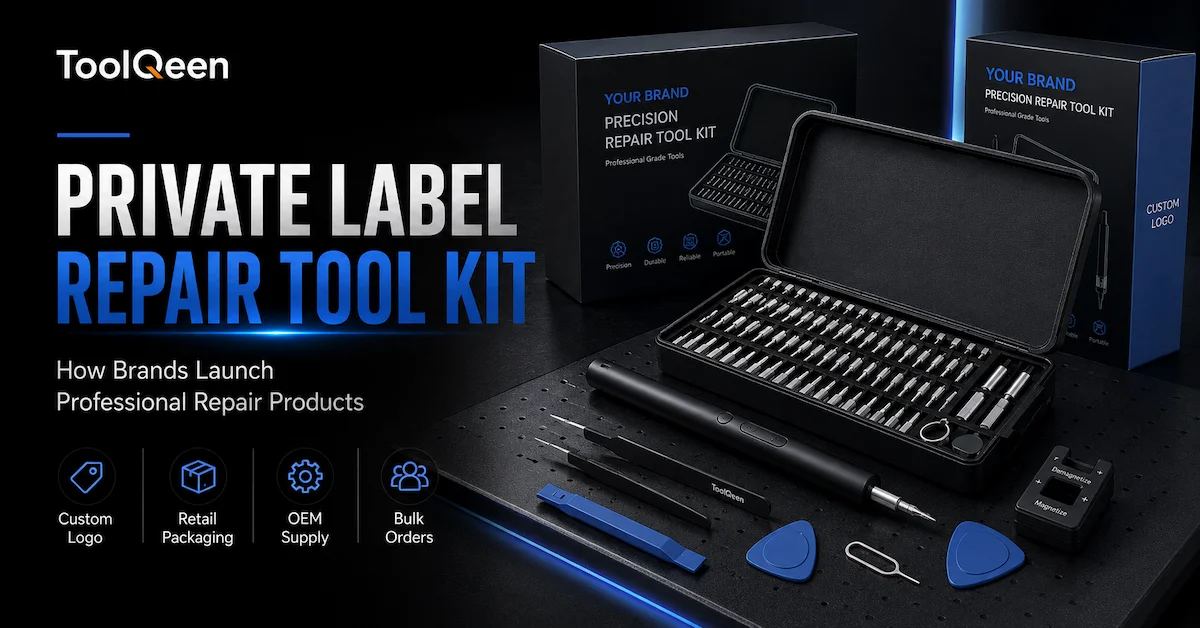
ToolQeen supports OEM logo, color direction, packaging artwork, manuals, labels, and kit configuration for qualified B2B projects. Buyers can review company background at About ToolQeen and then send target market, quantity, packaging idea, and launch channel for a practical sample plan.
Sample Approval Checklist
Test Real Screws
Use the screws your customers actually meet: phone screws, laptop screws, game console screws, glasses screws, smart lock screws, and small appliance screws. Do not approve a sample only by appearance.
Check Battery and Charging Behavior
Review charging response, runtime expectation, port fit, indicator behavior, and whether the tool feels consistent across normal battery levels.
Confirm Bit Fit and Accessory Count
Check whether bits seat cleanly, stay organized in the tray, and match the repair scenarios promised on the listing. Missing or loose accessories create customer service problems.
Approve Packaging Before Mass Production
Confirm box structure, insert tray, manual, logo, barcode, carton label, color, and accessory layout before production. Packaging changes after mass production are expensive.
Ask How Repeat Orders Are Controlled
One strong sample is not enough. Ask how ToolQeen will keep torque feel, bit layout, box quality, labels, and inspection process consistent across replenishment orders.
Inquiry CTA for US Private-Label Buyers
If you are planning an electric screwdriver kit for Amazon, an independent store, repair shop resale, wholesale replenishment, or OEM/private-label launch, send ToolQeen your target market, preferred kit configuration, torque expectation, packaging requirements, expected quantity, and launch schedule. ToolQeen can help compare standard and customized options, prepare samples, confirm MOQ and lead time, review packaging, and define QC checkpoints before bulk orders.
Start by browsing ToolQeen electric screwdriver and precision tool products, then review ToolQeen manufacturing background before sending your sourcing notes.
FAQ
Why does electric screwdriver torque testing matter for US sellers?
It helps confirm that tools perform consistently before customers use them. Stable torque can reduce stripped screws, weak-performance complaints, bad reviews, and avoidable returns.
What should buyers check in a torque test?
Buyers should check whether the torque behavior matches the target repair scenario, whether the sample is repeatable, whether bits fit cleanly, and whether the supplier records final inspection results.
Can ToolQeen customize electric screwdriver kits for private label?
Yes. ToolQeen supports OEM and ODM projects, including logo, color direction, bit configuration, packaging artwork, manuals, labels, retail boxes, and bulk-order planning.
What is the MOQ for OEM electric screwdriver projects?
ToolQeen's typical OEM MOQ starts from 500 pcs, while ODM projects usually start from 1,000 pcs. Final MOQ depends on model, customization, packaging, and accessory configuration.
How long do samples and production take?
Standard samples usually take 3-5 days. Standard production is often around 10-15 days after confirmation, while custom projects may take 15-25 days depending on complexity.
Does packaging affect return rates?
Yes. Poor packaging, missing accessories, unclear manuals, weak trays, or wrong labels can create returns even when the electric screwdriver works. Packaging QC is essential for e-commerce conversion.
Should repair shop suppliers ask for different checks than Amazon sellers?
Repair shop suppliers should focus heavily on repeated use, bit fit, torque consistency, and accessory organization. Amazon sellers should also check packaging, listing claims, barcode needs, and review risk.
What documents or records should buyers request?
Buyers can request sample confirmation details, QC checklist, packaging approval, product specification, inspection photos where available, and shipment packing information before bulk orders.
Summary: Factory Testing Protects the Product Promise
Electric screwdriver torque testing protects the product promise that US sellers make to online shoppers, repair shops, and distributors. It connects the approved sample with mass production, checks performance before shipment, and gives private-label sellers a clearer way to reduce reviews and return risk.
ToolQeen helps buyers combine torque control, electric screwdriver configuration, bit selection, packaging, MOQ, lead time, OEM branding, and QC into a repeatable supply plan. For sellers who need stable bulk replenishment, that factory process is often more valuable than a small unit-price difference.