
An electronics repair tool supplier should provide more than a mixed list of tools. For distributors, phone repair chains, laptop repair shops, Amazon sellers, and private-label brands, the real value comes from stable product quality, complete repair tool solutions, clear specifications, reliable packaging, and repeatable bulk supply.
Electronics repair tools are used for phone repair, laptop repair, PCB repair, camera maintenance, drone repair, game console repair, smartwatch repair, and small device refurbishment. If the supplier uses low-grade screwdriver bits, unstable electric tools, weak storage cases, poor packaging, or unclear QC, buyers may face returns, complaints, and delayed repeat orders.
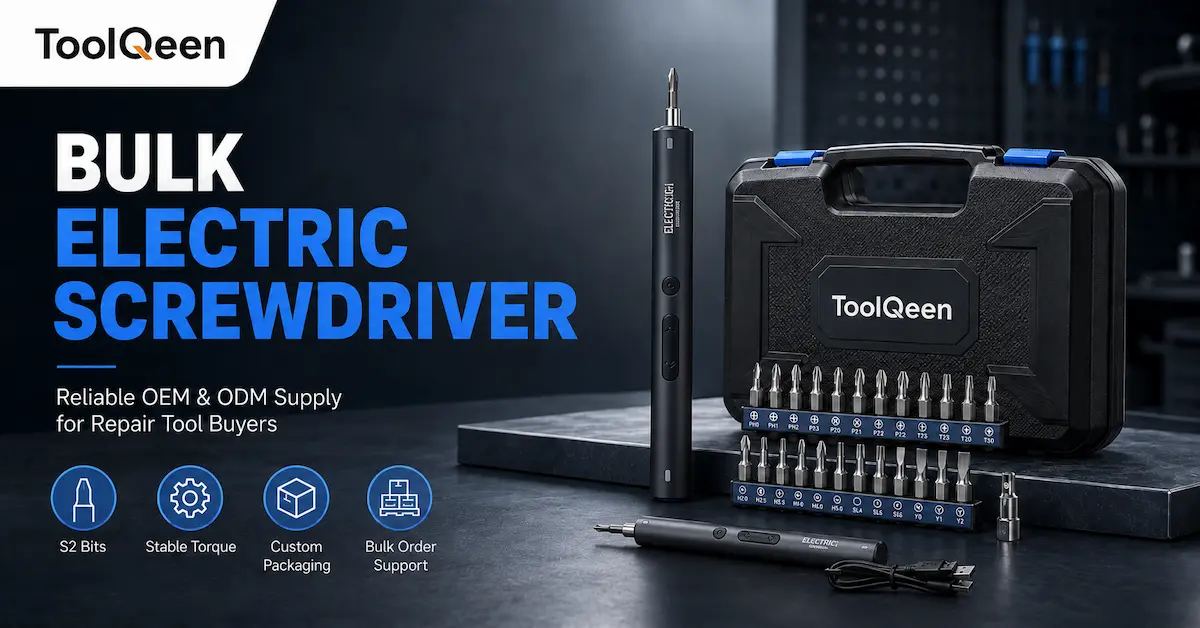
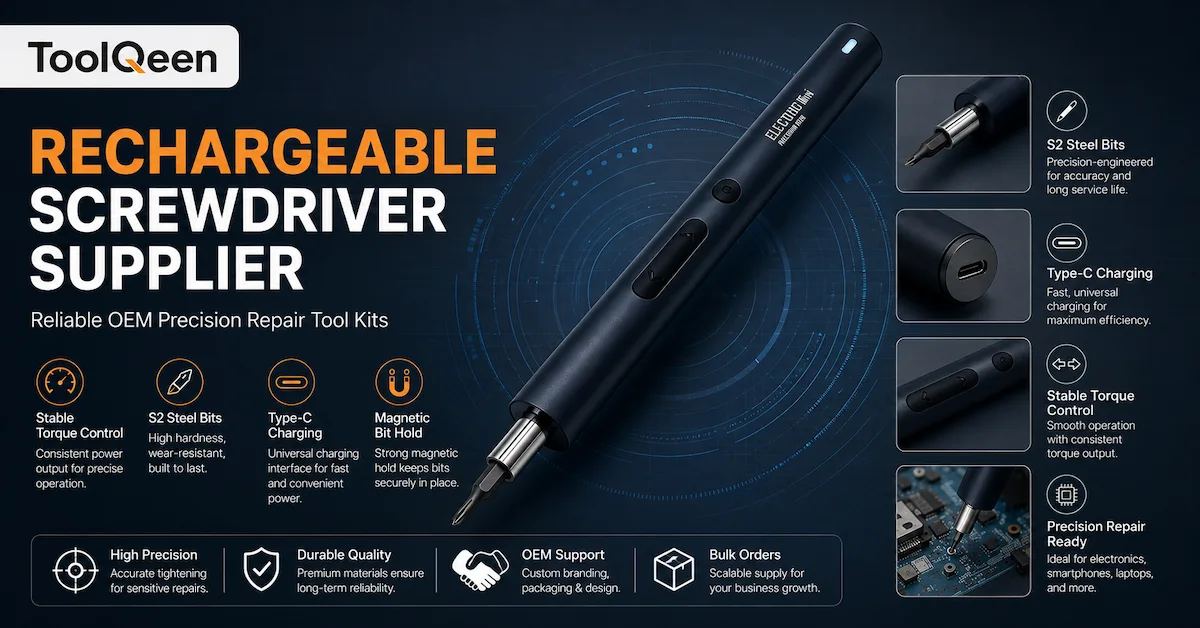
ToolQeen supports OEM/ODM repair tool manufacturing, precision repair tool kits, electric screwdriver production, electric rotary tools, custom logo service, packaging customization, sample requests, and bulk order support. To learn more about ToolQeen’s factory background and production capability, visit the About Us page.
Quick Answer
A reliable electronics repair tool supplier should offer complete repair tool categories, stable bit quality, precision electric screwdrivers, polishing or grinding tools, organized storage cases, OEM packaging, sample support, clear MOQ, production lead time, and a structured QC workflow. Buyers should test samples and confirm packaging before placing bulk orders.
Why B2B Buyers Need a Specialized Repair Tool Supplier
Electronics repair is different from general hardware repair. Tools must be small, precise, comfortable, and suitable for delicate components. A standard household screwdriver kit may not work well for phone screws, laptop screws, PCB components, or compact device housings.
A professional electronics repair tool supplier helps buyers control:
- Screwdriver bit material and hardness
- Bit fit for small electronics screws
- Magnetic hold for tiny screws
- Electric screwdriver torque stability
- Mini rotary tool RPM control
- Polishing accessory quality
- Storage case layout
- Retail packaging and export cartons
- OEM branding, labels, and manuals
- Repeat order consistency
Buyers who want to compare available repair tool models can browse ToolQeen’s Products page for electric screwdrivers, precision repair kits, electric rotary tools, manual tools, and ratchet tools.
Recommended For
- Electronics repair tool distributors
- Phone and laptop repair suppliers
- PCB repair tool buyers
- Amazon and Shopify sellers
- Private-label tool brands
- Industrial maintenance suppliers
- Regional wholesalers
- Repair shop chains
Not Recommended For
- Heavy construction fastening
- Automotive impact applications
- Large woodworking tools
- Buyers who only compare price
- Orders without sample testing or packaging checks
Common Problems When Choosing the Wrong Supplier
1. Incomplete Product Range
Some suppliers only offer one screwdriver set or one electric tool. For distributors, this limits product line development. A stronger supplier should support multiple repair tool categories, including screwdriver kits, electric screwdrivers, polishing tools, accessories, and packaging solutions.
2. Low-Grade Screwdriver Bits
Bits are small but critical. Poor bit material may lead to slipping, stripped screws, loose fit, and fast wear. For professional repair kits, S2 steel bits or similar high-grade materials are often preferred.
3. Unstable Electric Screwdriver Torque
Electric screwdrivers for electronics repair need controlled torque. If torque is unstable, users may over-tighten small screws or fail to fasten them properly.
4. Poor Accessory Organization
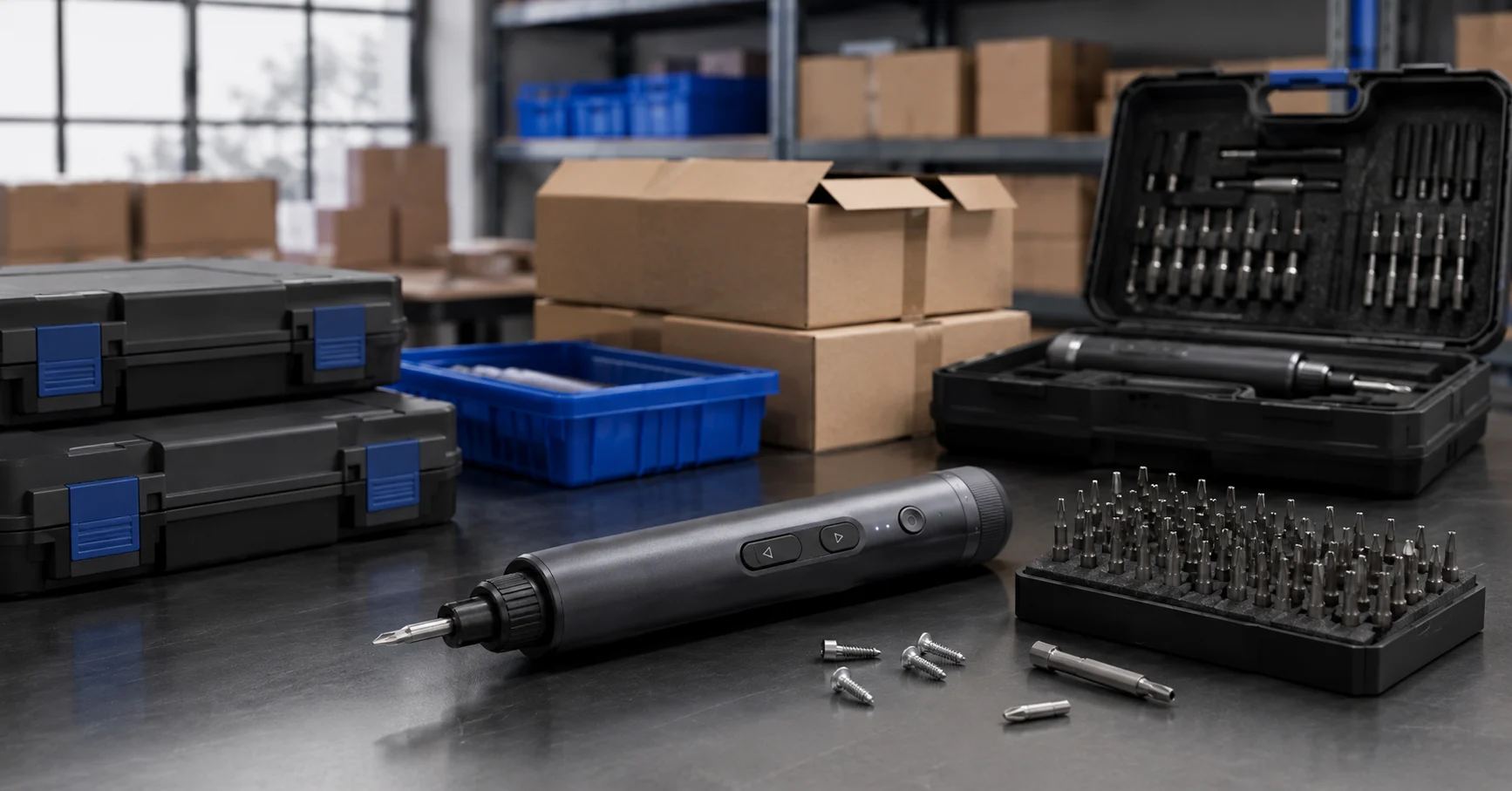
Repair tool kits often contain many small bits, tweezers, pry tools, polishing heads, and adapters. If the storage case is messy or loose, accessories may move during shipping or become hard to use.
5. Packaging Damage During Shipping
For e-commerce and wholesale buyers, packaging is part of the product value. Weak retail boxes, loose trays, damaged cases, and poor export cartons can cause returns even if the tools still work.
6. Delayed Shipments
Delayed shipments can affect store launches, distributor delivery plans, seasonal sales, and platform inventory. Buyers should confirm production lead time before placing bulk orders.
How to Choose an Electronics Repair Tool Supplier
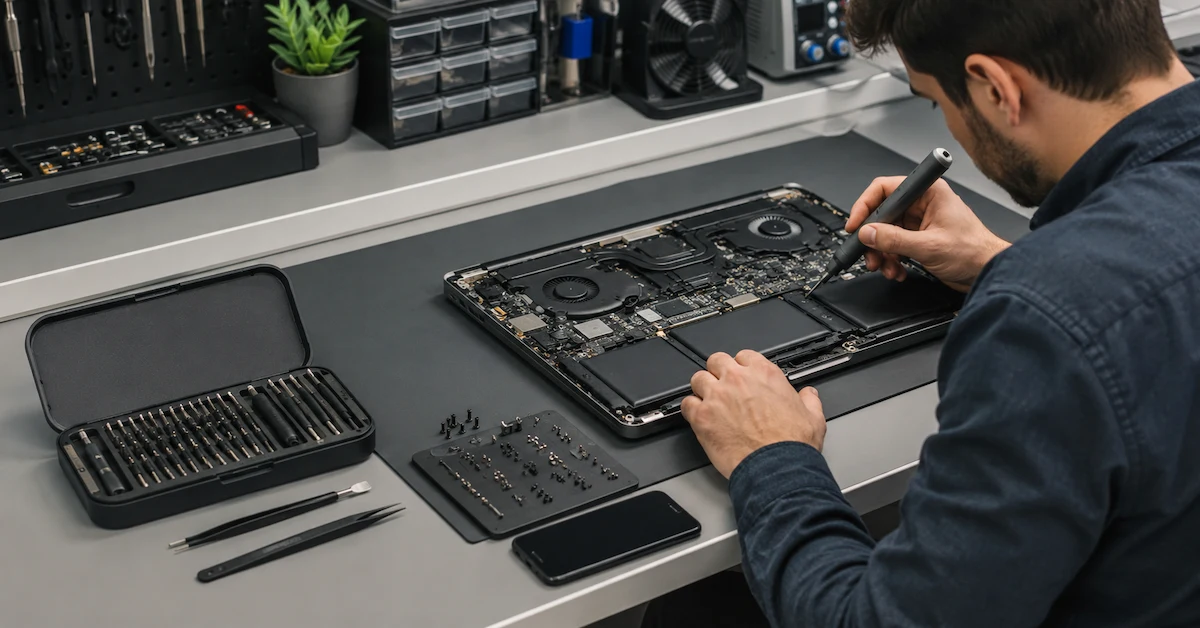
When choosing an electronics repair tool supplier, buyers should evaluate product range, factory capability, QC workflow, and customization support.
Product Checklist
- Does the supplier offer precision screwdriver kits?
- Are electric screwdrivers available for phone and PCB repair?
- Does the supplier offer mini rotary or polishing tools?
- Are bits made from S2 steel or equivalent material?
- Is the bit fit tested on real screws?
- Is magnetic hold strong enough for tiny screws?
- Are storage cases organized and secure?
- Are repair accessories suitable for target users?
- Is retail packaging available?
- Can samples be tested before bulk orders?
Supplier Audit Checklist
- What is the MOQ for standard and OEM repair tool kits?
- Can the supplier customize logo, color, packaging, manual, and labels?
- Does the supplier provide sample confirmation?
- Is incoming material inspection part of the QC workflow?
- Are bit fit, torque, RPM, battery, and packaging checked?
- Are export cartons suitable for long-distance shipping?
- What is the standard production lead time?
- Can the supplier support repeat orders with stable quality?
Best Product Categories to Source
Precision Screwdriver Kits
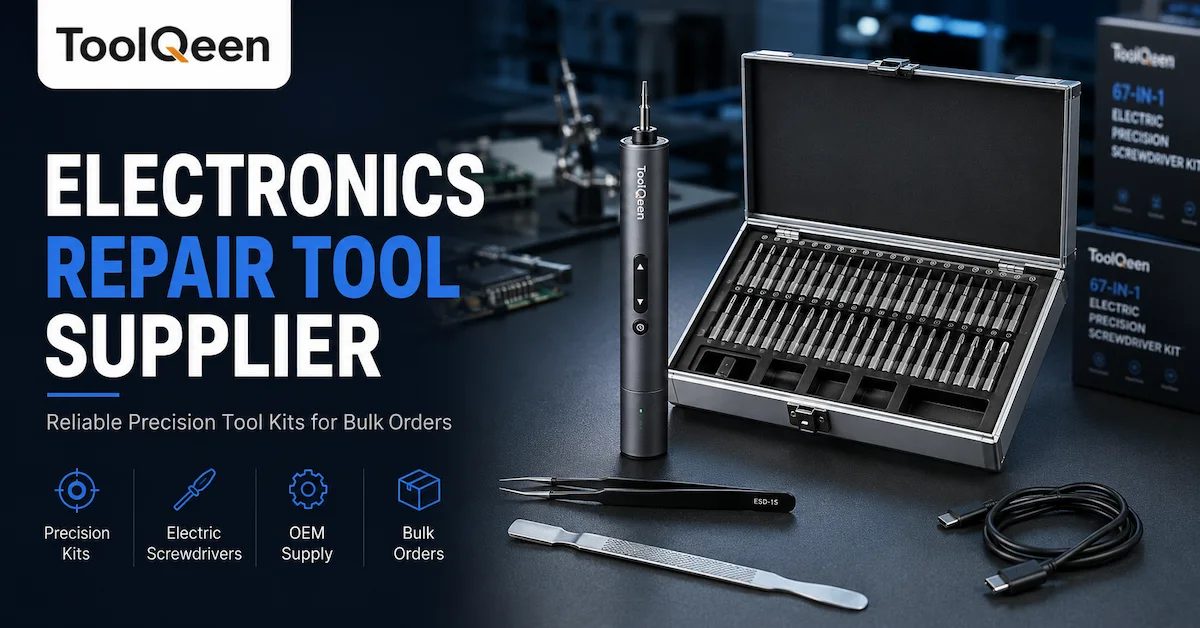
Precision screwdriver kits are core products for electronics repair. They are commonly used for phones, laptops, tablets, cameras, drones, and game consoles.
Buyers should check bit material, handle comfort, magnetic hold, storage layout, and packaging durability.
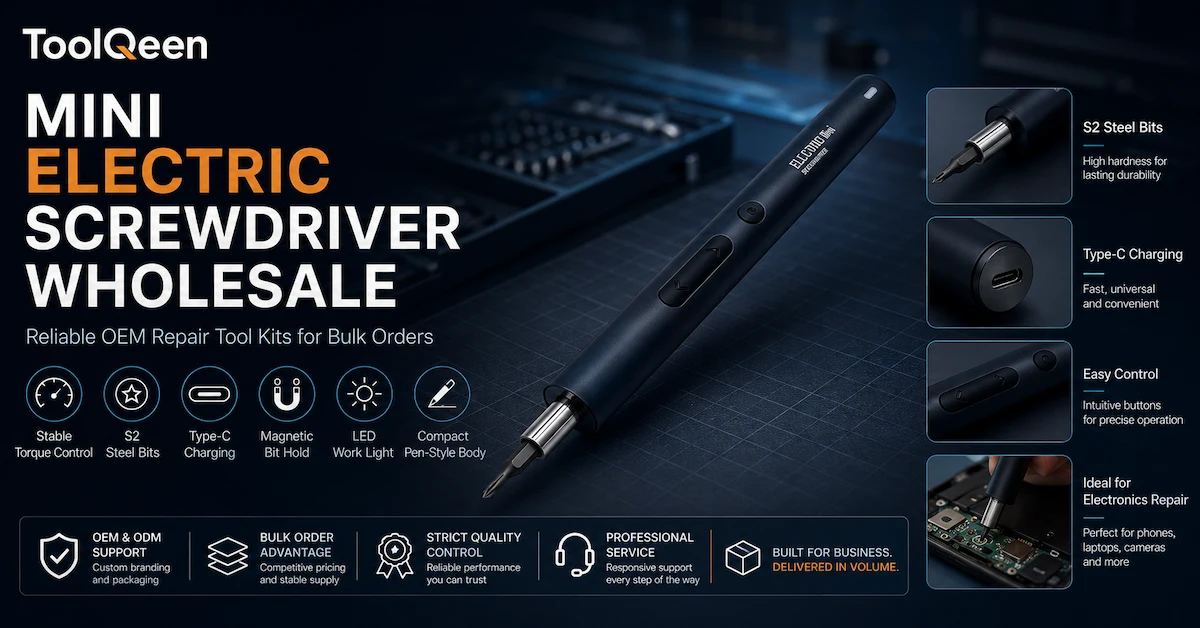
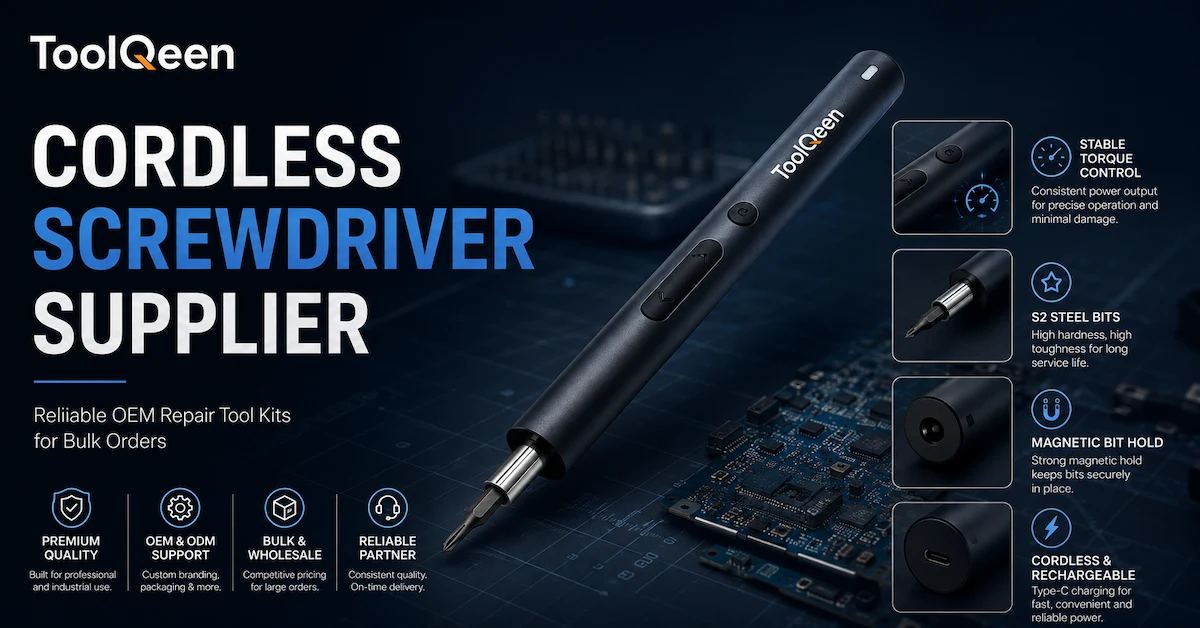
Electric Screwdrivers
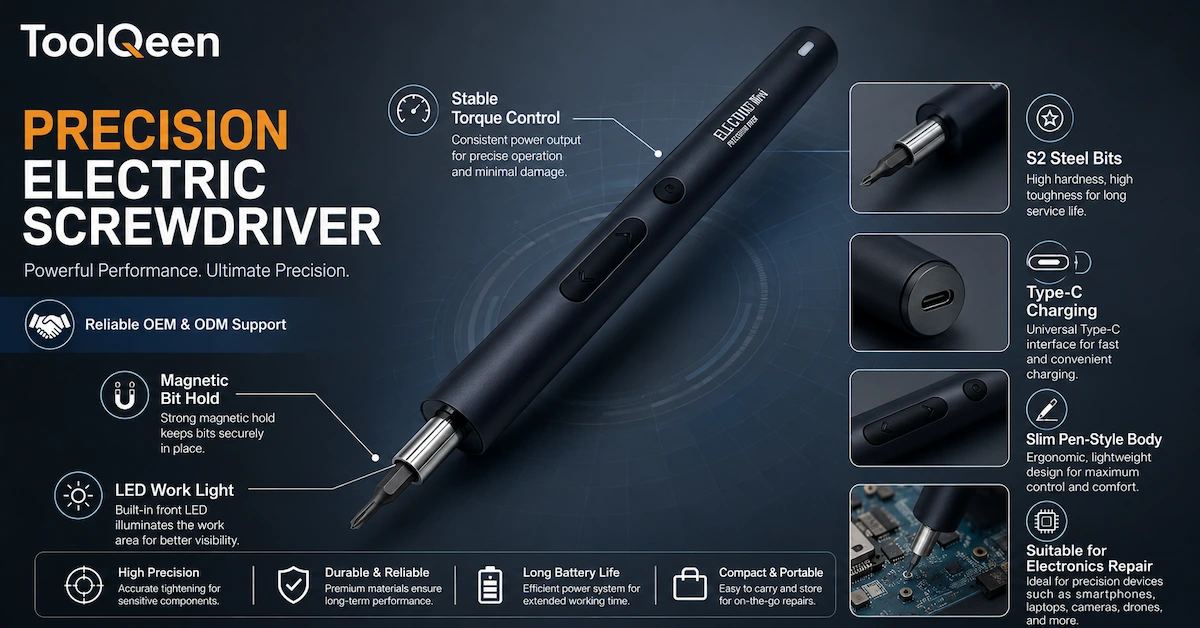
Electric screwdrivers improve repair efficiency for repeated screw removal and installation. Buyers should check torque range, RPM, battery capacity, Type-C charging, bit compatibility, and torque calibration.
Electric Rotary and Polishing Tools
Mini rotary tools and polishing tools are useful for connector cleaning, oxidation removal, plastic edge smoothing, small part finishing, and refurbishment work. Buyers should check RPM control, accessory fit, vibration, and battery performance.
Manual Tools and Accessories
Tweezers, pry bars, magnetizers, cleaning tools, opening picks, and small adapters can help build a more complete electronics repair tool kit.
Comparison Table: Basic Supplier vs Professional Repair Tool Supplier
| Audit Item | Basic Tool Supplier | Professional Electronics Repair Tool Supplier |
|---|---|---|
| Product Range | Limited products | Screwdriver kits, electric tools, accessories |
| Bit Quality | Often unclear | S2 steel or specified materials |
| Electric Tool QC | Limited testing | Torque, RPM, battery, and function checks |
| Packaging | Basic box | Retail and export packaging support |
| OEM Support | Simple logo service | Logo, manual, label, box, kit layout |
| Sample Support | May be limited | Provides samples before bulk order |
| Repeat Orders | Quality may change | More stable specifications |
| Best For | Small trial orders | B2B repair tool and private-label projects |
Pros and Cons of Buying from a Specialized Supplier
Pros
- Wider repair tool product range
- Better support for tool kit development
- Easier private-label customization
- More stable product quality
- Better packaging and export support
- Stronger repeat order planning
- More suitable for distributors and repair tool brands
Cons
- MOQ may be higher than retail purchasing
- Custom packaging needs confirmation time
- Buyers should test samples before bulk orders
- OEM projects may require more communication
- Product selection must match the target market
Buying Mistakes to Avoid
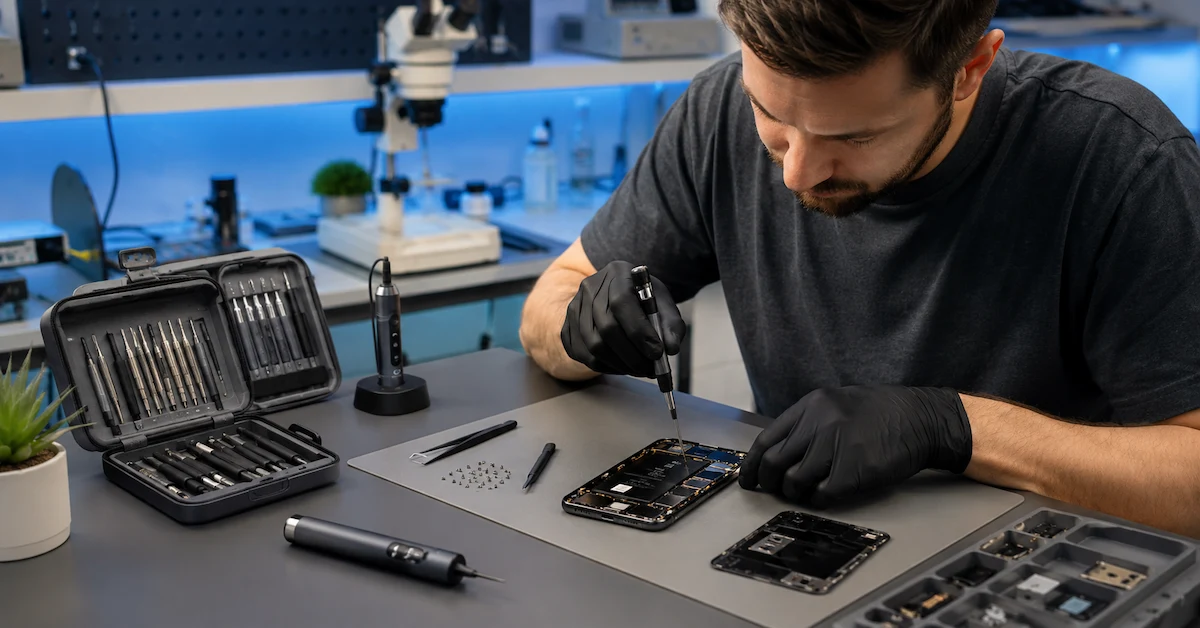
Mistake 1: Choosing Only by Price
A cheaper supplier may use low-grade bits, weak cases, poor motors, unstable batteries, or thin packaging. Buyers should compare total business risk, not only unit cost.
Mistake 2: Not Testing Samples
Samples help buyers test bit fit, magnetic hold, torque, RPM, battery life, accessory layout, and packaging. Photos alone cannot prove real repair performance.
Mistake 3: Ignoring the Product Line
For distributors, one product is not enough. A stronger supplier should help build a repair tool product line, not only sell one screwdriver kit.
Mistake 4: Confirming OEM Details Too Late
Logo method, manual language, barcode, SKU label, box artwork, kit layout, and carton marks should be confirmed before production starts.
Mistake 5: Ignoring Packaging Inspection
Repair tools often include many small parts. Without packaging inspection, accessories may move, boxes may break, or kits may arrive with missing items.
OEM/ODM Buying Tips
ToolQeen supports OEM/ODM repair tool manufacturing for electronics repair tool supplier projects, including sample requests, custom logo service, packaging customization, accessory configuration, and bulk order support.
OEM Options Buyers Can Request
- Logo printing or laser engraving
- Custom tool color
- Retail box design
- User manual customization
- Bit quantity adjustment
- Repair tool bundle configuration
- Storage case design
- Barcode and SKU label support
- Export carton customization
ODM Options Buyers Can Discuss
- New repair tool kit structure
- Market-specific tool combinations
- Electric screwdriver specification adjustment
- Mini rotary tool accessory layout
- Packaging structure design
- E-commerce-ready product configuration
- Private-label repair tool series development
If you need sample confirmation, packaging customization, custom logo service, or bulk order support, send your requirements through the Contact Us page.
Recommended Applications
Electronics repair tools are commonly used for:
- Phone repair
- Laptop repair
- PCB repair
- Tablet and smartwatch repair
- Camera and drone repair
- Game console repair
- Electronics refurbishment
- Connector cleaning
- Small appliance repair
- Precision assembly
- Industrial maintenance
- Private-label repair tool kits
For B2B buyers, these tools can be sold as individual products, complete repair kits, retail tool sets, e-commerce bundles, or OEM private-label product lines.
Key Takeaways
- Electronics repair tool sourcing should focus on precision, consistency, and packaging quality.
- A reliable electronics repair tool supplier should offer multiple product categories.
- Buyers should check bit quality, torque stability, accessory layout, and QC workflow.
- Samples should be tested before bulk orders.
- OEM details should be confirmed before production starts.
- ToolQeen can support electronics repair tool projects with sample requests, custom logo service, packaging customization, and bulk order production.
FAQ
1. How do I choose an electronics repair tool supplier?
Choose a supplier that offers complete repair tool categories, sample support, clear MOQ, stable bit quality, packaging inspection, and OEM customization. Buyers should also check whether the supplier can support repeat orders and explain its QC workflow before mass production.
2. What tools should be included in an electronics repair kit?
A useful kit may include precision screwdriver bits, electric screwdrivers, tweezers, pry tools, magnetizers, opening picks, polishing tools, and organized storage cases. The exact tool mix should match the target users, such as phone repair shops, laptop technicians, or PCB repair teams.
3. Why is bit quality important for electronics repair?
Bit quality affects screw fit, slipping, wear resistance, and screw head protection. Poor bits can cause stripped screws and customer complaints. For professional repair tool kits, S2 steel bits or similar high-grade materials are often preferred by distributors and technicians.
4. Can ToolQeen support OEM repair tool kits?
Yes. ToolQeen supports custom logo service, packaging customization, bit configuration, manual design, barcode labels, SKU labels, and export carton support. Buyers can request samples before bulk production to confirm product quality, packaging layout, and market-ready presentation.
5. What should Amazon sellers check before ordering?
Amazon sellers should check product consistency, packaging strength, barcode labels, user manual clarity, accessory layout, and return risk. Common complaints include missing bits, weak magnets, damaged boxes, poor fit, and unclear product presentation, so sample testing is important.
6. How can buyers reduce shipping damage?
Buyers should request secure storage cases, strong inner trays, retail box inspection, export cartons, and packaging checks before shipment. Electronics repair kits often contain many small accessories, so organized packaging helps reduce missing parts and damaged retail presentation.
For more sourcing, customization, and order-related questions, visit ToolQeen’s FAQ page.
Conclusion
Choosing the right electronics repair tool supplier is not only about price. For B2B buyers, the real value comes from stable bit quality, complete repair tool solutions, reliable packaging, OEM/ODM support, MOQ planning, and repeat-order consistency.
If you are sourcing repair tools for distributors, e-commerce stores, repair shops, or your own tool brand, ToolQeen can support sample requests, custom logo service, packaging customization, precision repair tool kits, electric screwdrivers, rotary tools, and bulk order delivery.
Contact ToolQeen to discuss your electronics repair tool project, target market, MOQ, packaging design, and sample testing plan. You can submit your requirements through our Contact Us page.