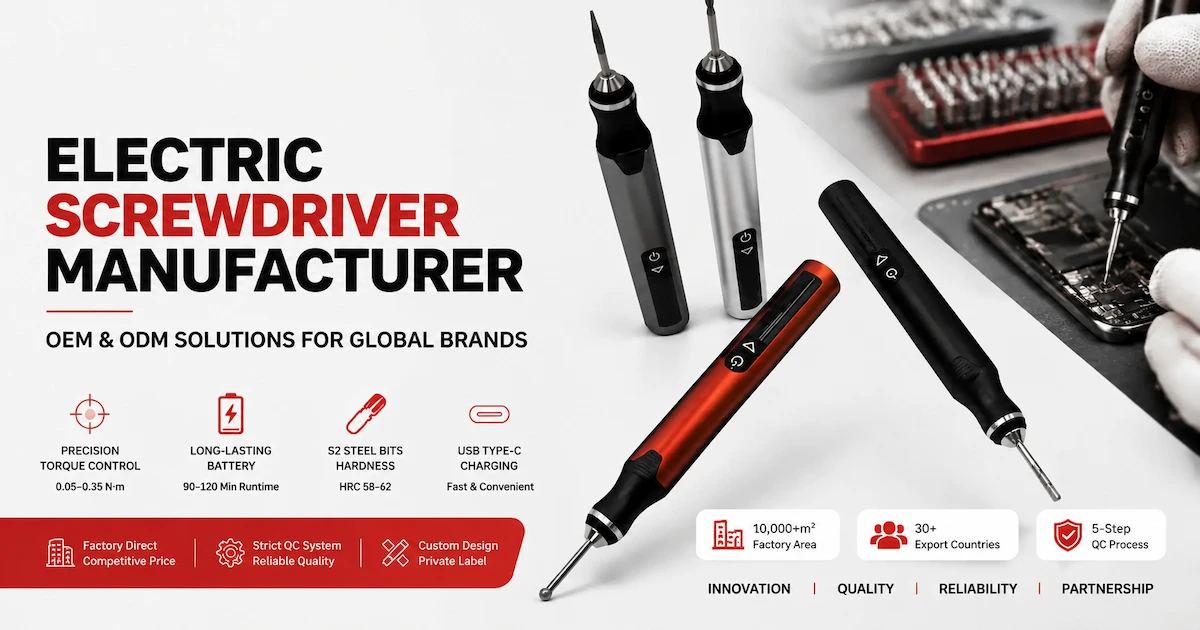

Electric Screwdriver Quality Control: How Professional Factories Ensure Consistent Product Performance
Quick Answer
Electric screwdriver quality control involves material inspection, torque testing, hardness verification, battery aging tests, and final product inspection. These procedures help manufacturers maintain product consistency, reduce warranty claims, and ensure reliable performance across OEM and wholesale projects.
Why Quality Control Matters In Electric Screwdriver Manufacturing
Many buyers compare suppliers based on pricing.
However, experienced distributors and procurement managers understand that quality control often determines long-term profitability.
Poor quality control can result in:
- Product failures
- High return rates
- Customer complaints
- Increased warranty costs
- Brand reputation damage
For OEM projects, quality consistency is often more important than achieving the lowest purchase price.
What Causes Quality Problems In Electric Screwdrivers?
Even products that look identical externally may perform differently due to manufacturing variations.
Common causes include:
Material Inconsistency
Low-quality steel and batteries reduce durability.
Poor Torque Calibration
Incorrect torque can damage screws and electronic devices.
Weak Process Control
Unstable production procedures create batch-to-batch variations.
Inadequate Testing
Products may reach customers without proper performance verification.
Factory Insight
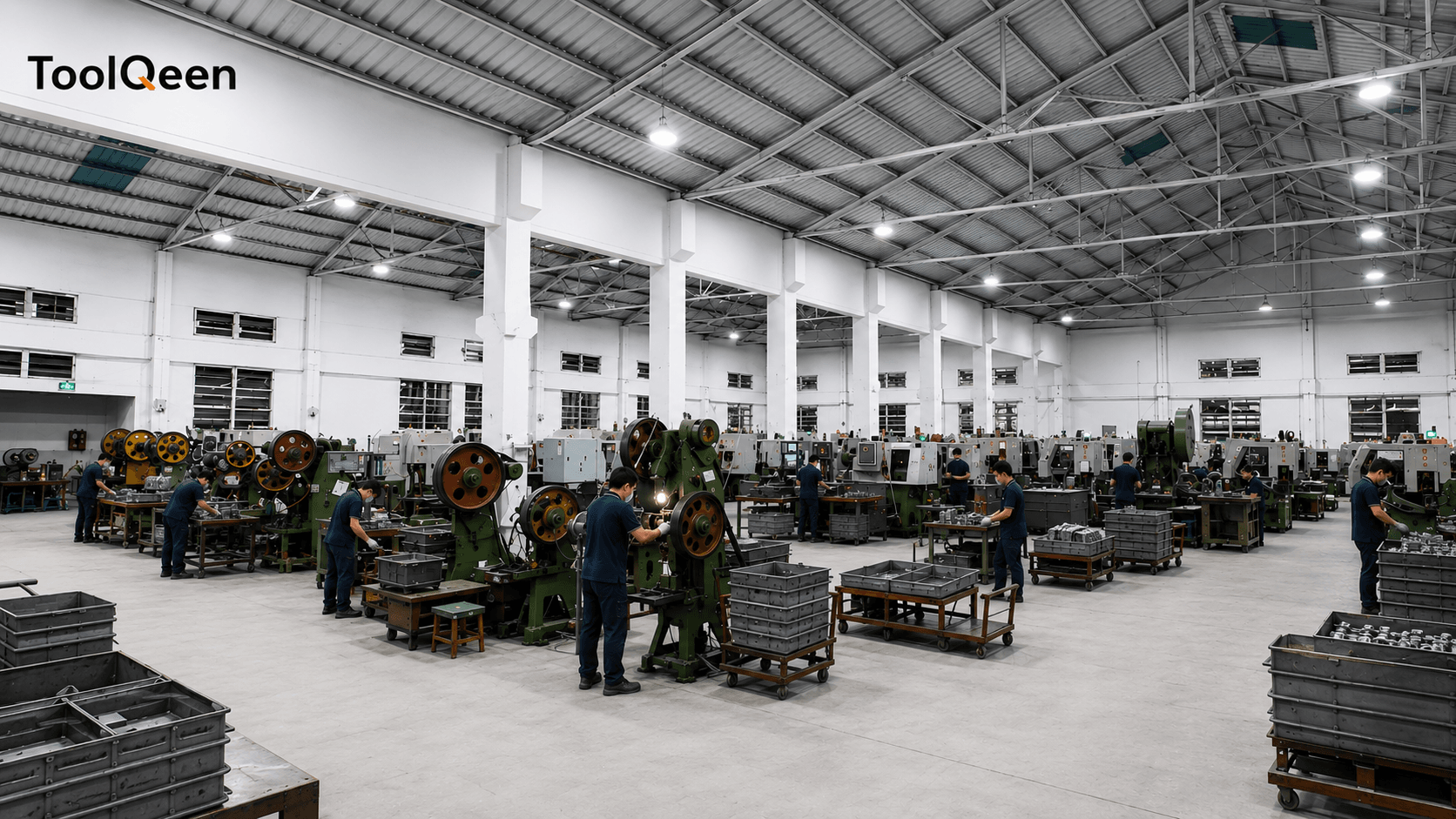
At ToolQeen, quality control begins before production starts.
Every OEM project follows documented procedures covering:
- Incoming material inspection
- Production process monitoring
- Functional verification
- Final shipment approval
The goal is to identify problems before products reach customers.
Stage 1: Incoming Material Inspection
The first step is verifying all incoming materials.
Critical inspections include:
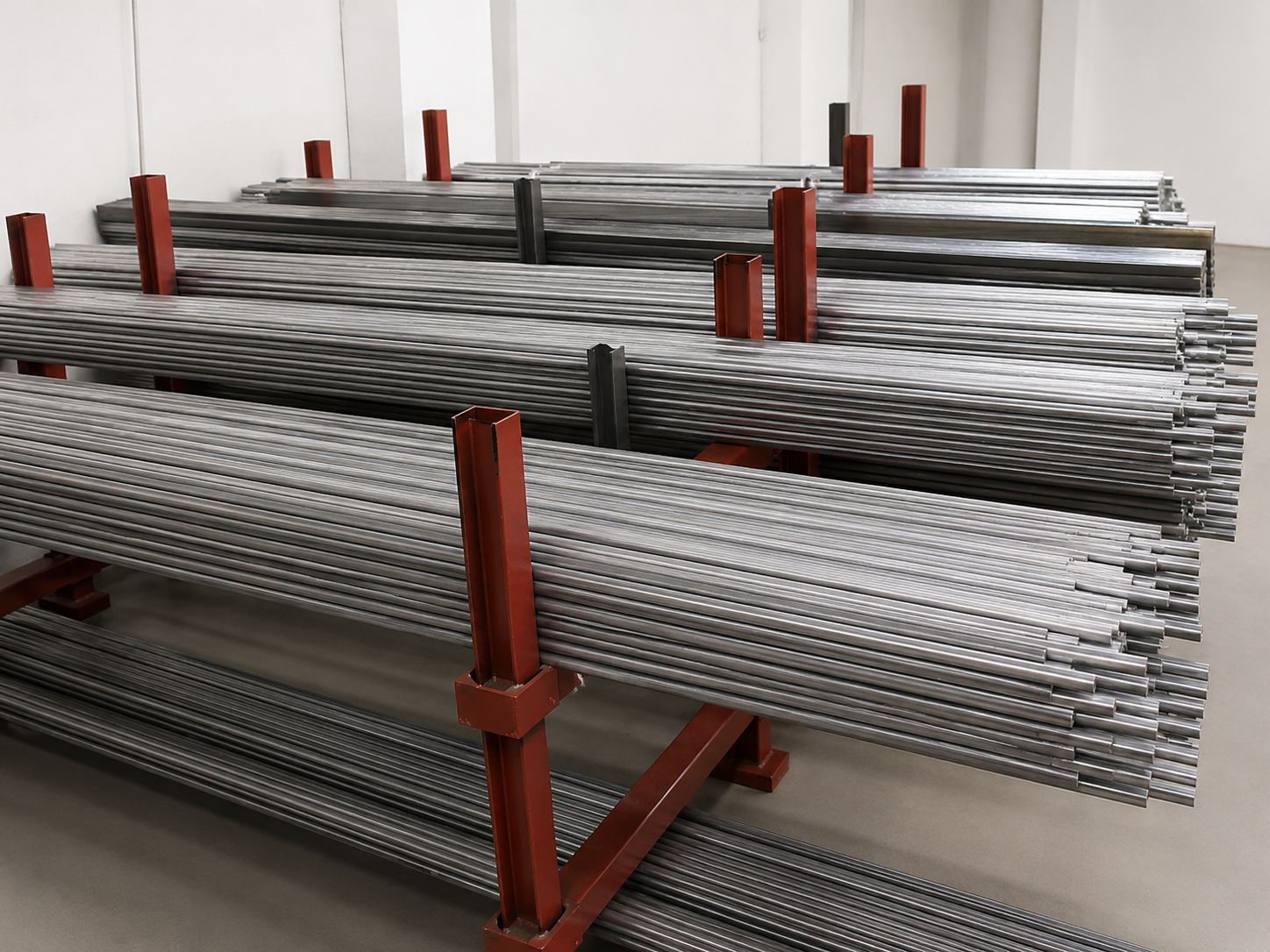
S2 Steel Bits
Verification of:
- Material composition
- Surface quality
- Hardness consistency
Lithium Batteries
Verification of:
- Capacity
- Voltage stability
- Charging performance
Electronic Components
Inspection of:
- PCB quality
- Connectors
- Switch assemblies
This stage helps prevent defective materials from entering production.
Stage 2: Bit Hardness Testing
Bit durability is one of the most important quality factors.
Professional S2 bits typically require:
58–62 HRC hardness.
Benefits include:
- Better wear resistance
- Longer service life
- Improved torque transfer
Hardness testing helps maintain consistent performance across production batches.
Stage 3: Torque Testing Process
Torque accuracy directly affects product performance.
Testing verifies:
- Forward torque
- Reverse torque
- Stability under load
Typical electric screwdriver torque:
0.2–0.5 N·m
Accurate torque helps reduce stripped screws and customer complaints.
Stage 4: Battery Aging Test
Battery reliability is critical for cordless tools.
Aging tests evaluate:
- Charging performance
- Discharge stability
- Runtime consistency
This process helps identify battery defects before shipment.
Stage 5: Functional Testing
Every electric screwdriver should undergo:
- Rotation testing
- Forward/reverse testing
- Charging verification
- Speed verification
Products failing any test are removed from production.
Stage 6: Final Quality Inspection
Before packaging, inspectors verify:
- Product appearance
- Logo quality
- Packaging accuracy
- Accessory completeness
- Product functionality
This final checkpoint ensures products meet customer requirements.
Quality Control VS No Quality Control
| Item | Basic Inspection | Professional Quality Control |
|---|---|---|
| Material Verification | Limited | Complete |
| Torque Testing | Limited | Full Testing |
| Hardness Testing | Rare | Standard |
| Battery Aging Test | Rare | Standard |
| Product Consistency | Medium | High |
| Warranty Risk | Higher | Lower |
Solution: Reducing Product Failures
Problem
Customer complaints about bit wear.
Method
Implement S2 bit hardness testing.
Result
Improved durability.
Problem
Battery performance inconsistency.
Method
Introduce battery aging tests.
Result
More stable runtime.
Problem
Product performance variations.
Method
Standardize torque testing procedures.
Result
Better consistency across production batches.
Technical Parameter Table
| Parameter | Specification |
| Electric Torque | 0.2–0.5 N·m |
| Bit Material | S2 Steel |
| Hardness | 58–62 HRC |
| Battery Capacity | 350 mAh |
| Voltage | 3.7V |
| Runtime | 90 Minutes |
| Speed | 170 RPM |
Real Manufacturing Data
| Metric | Industry Average | ToolQeen Standard |
| Yield Rate | 95% | 98.5% |
| Rework Rate | 4.5% | 1.2% |
| Lead Time | 15–20 Days | 10–15 Days |
| Complaint Rate | Higher | Lower |
| Production Consistency | Medium | High |
Real Customer Case
A European electronics tool distributor experienced frequent warranty claims due to inconsistent product quality from multiple suppliers.
After switching to a factory that implemented structured quality control procedures, the distributor achieved:
- Lower return rates
- Better customer reviews
- Improved product consistency
- Reduced warranty costs
The largest improvement came from process control rather than product redesign.
Application Scenarios
Quality control is especially important for:
- OEM projects
- Private label brands
- Tool distributors
- Electronics repair suppliers
- Hardware wholesalers
- Amazon sellers
Industry Standards And References
Professional electric screwdriver quality control systems often align with:
- ISO 9001 Quality Management Systems
- RoHS Compliance Standards
- CE Certification Requirements
- FCC Compliance Requirements
- IPC Assembly Guidelines
These standards help ensure product consistency and global market acceptance.
FAQ
Why is torque testing important?
Torque testing ensures stable fastening performance and reduces screw damage.
What hardness should professional S2 bits achieve?
Most professional S2 bits range from 58–62 HRC.
Why perform battery aging tests?
Battery aging tests help identify defects before products reach customers.
How does quality control reduce warranty claims?
Structured inspections identify issues before shipment.
Do OEM buyers require quality reports?
Many professional buyers request inspection records and testing documentation.
What is the most important QC stage?
Material inspection is critical because defects introduced early can affect the entire production process.
Does ToolQeen perform final inspections?
Yes. Every production batch undergoes final quality verification before shipment.
Can quality control improve brand reputation?
Yes. Consistent quality helps reduce complaints and increase customer trust.
Request A Quote
Looking for an electric screwdriver factory with professional quality control systems?
Contact ToolQeen to discuss OEM projects, inspection requirements, and factory-direct manufacturing solutions.
About ToolQeen
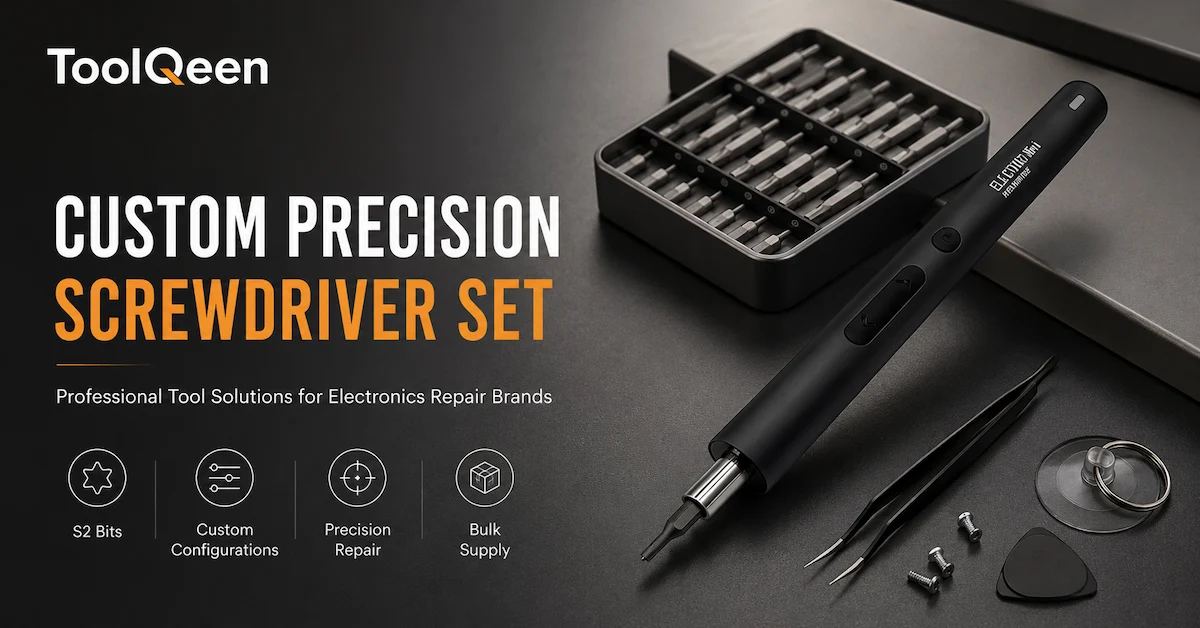
ToolQeen specializes in electric screwdrivers, rotary tools, repair tool kits, and OEM/ODM manufacturing solutions for distributors, wholesalers, and private label brands worldwide.
Explore Our Products
https://www.toolqeen.com/products
Learn More About ToolQeen
https://www.toolqeen.com/about-us
Reviewed By ToolQeen Engineering Team
This article was reviewed by the ToolQeen Engineering Team, with extensive experience in quality control, OEM manufacturing, torque testing, and electric screwdriver production.