
Electric Rotary Tool for Small Parts Polishing: What EU Distributors Should Check Before Bulk Orders
When a compact rotary tool feels rough, vibrates too much, or ships with weak accessories, the problem does not stay in the workshop. For European distributors, it becomes slow-moving inventory, extra support tickets, weak repeat orders, and uncomfortable conversations with repair tool customers. An electric rotary tool for small parts polishing should feel controlled in the hand, run smoothly at practical speeds, and arrive with accessory quality that matches the market promise.
ToolQeen builds compact electric rotary tools and precision repair tool kits for B2B buyers who need stable product quality, export-ready packaging, and repeatable supply. Our work starts with product application, not only a catalog photo: electronics repair, model finishing, jewelry touch-up, plastic trimming, craft polishing, and small-component cleaning all require different accessory and speed choices.
Quick Answer
An electric rotary tool for small parts polishing should be evaluated by grip control, rotation stability, accessory durability, speed range, packaging reliability, compliance documents, and repeat-batch consistency. EU distributors should avoid choosing only by price because weak accessories and unstable rotation can quickly reduce customer trust.
Why Small Polishing Jobs Expose Weak Rotary Tools
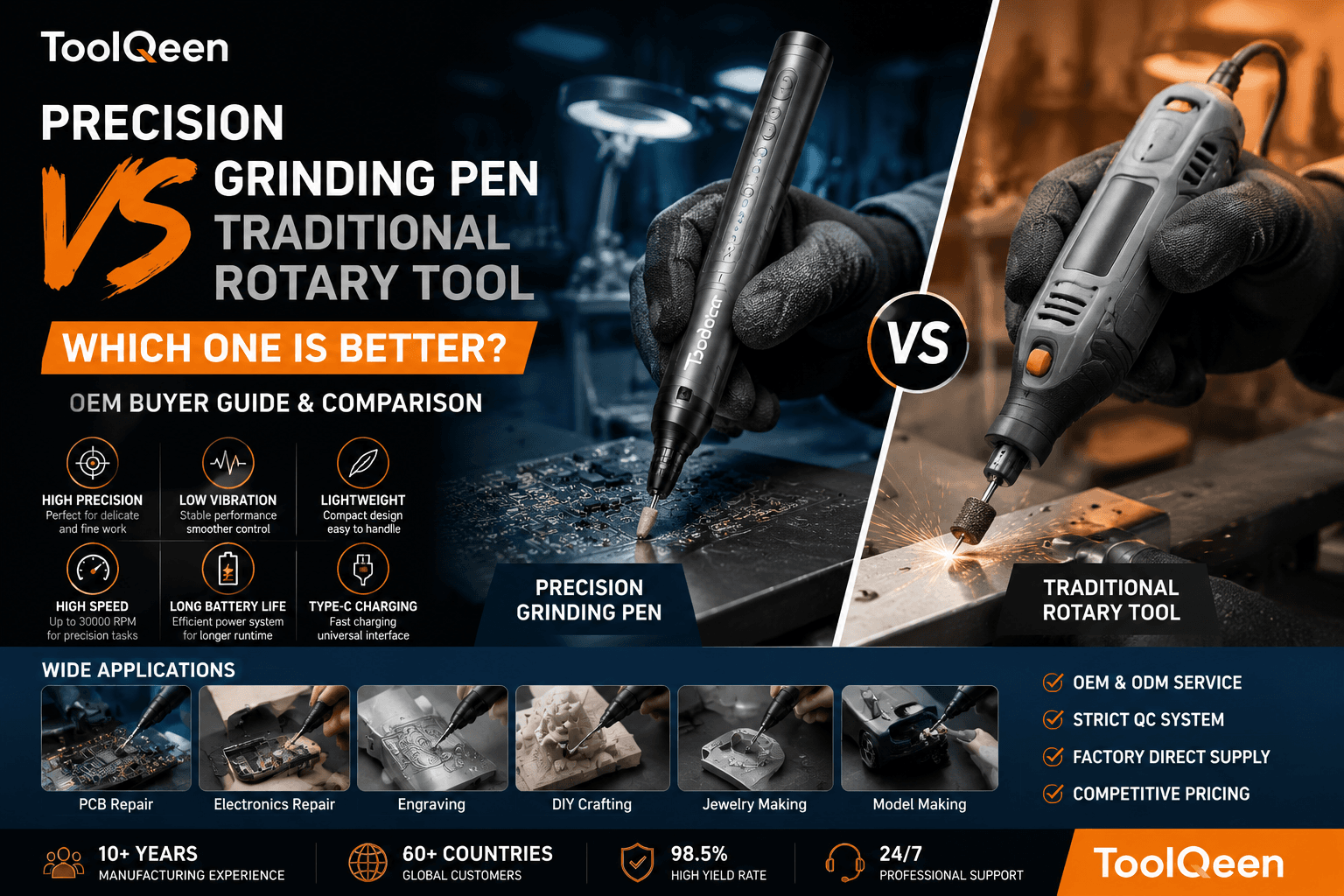
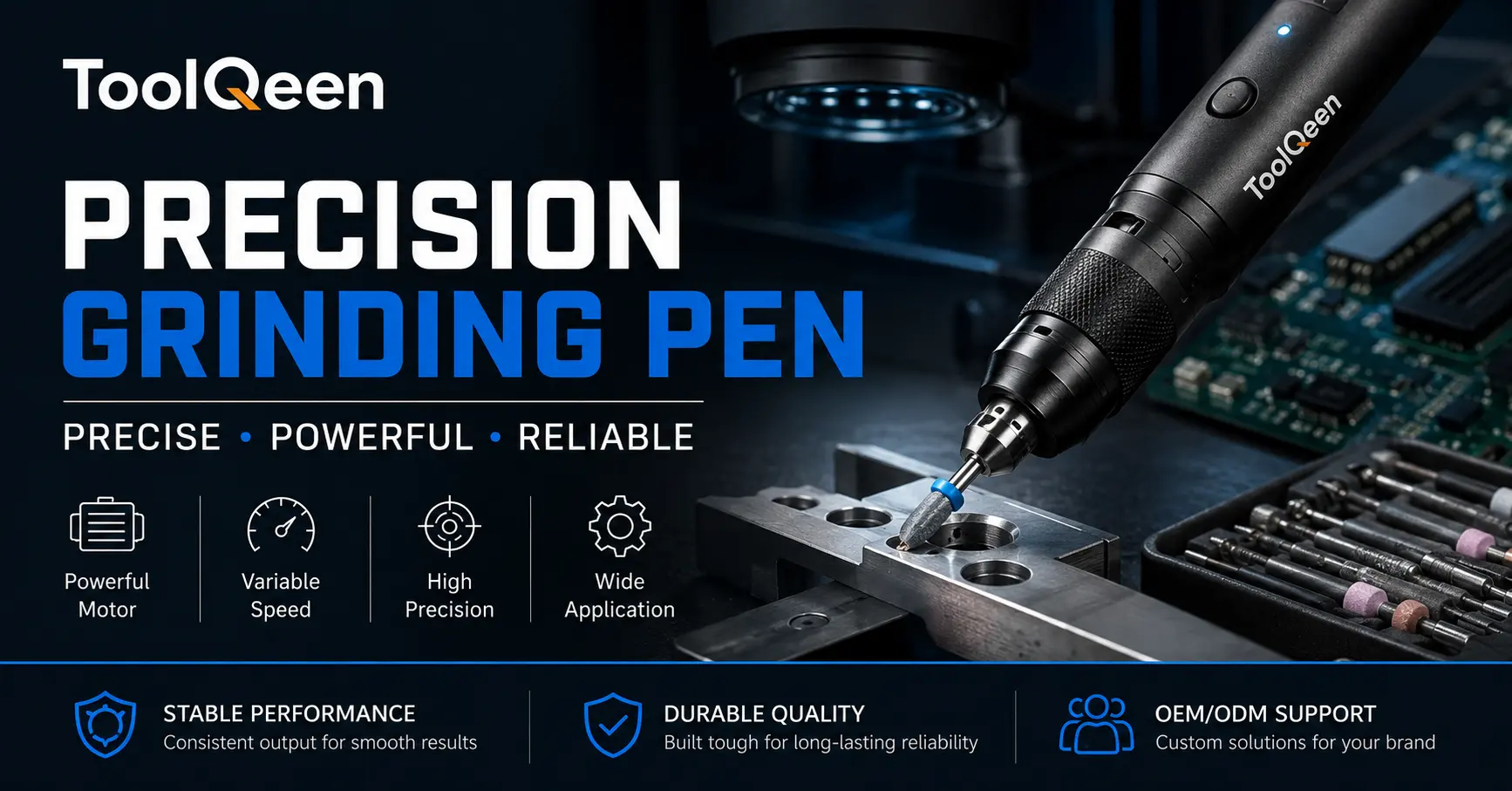
Large tools can hide small flaws. A pen-style rotary tool cannot. When users polish a phone frame, clean a small metal edge, trim plastic flash, or touch up a model part, every vibration is felt through the fingertips. If the tool is too bulky, the user loses control. If rotation is unstable, the finish becomes uneven. If the accessory wears fast, the buyer questions the whole kit.
This is why distributors should treat compact rotary tools as precision products, not simple DIY gadgets. The right product should help users work slowly and carefully when needed, then switch to faster finishing when the material allows it.
Material, Motor, and Accessory Details That Matter
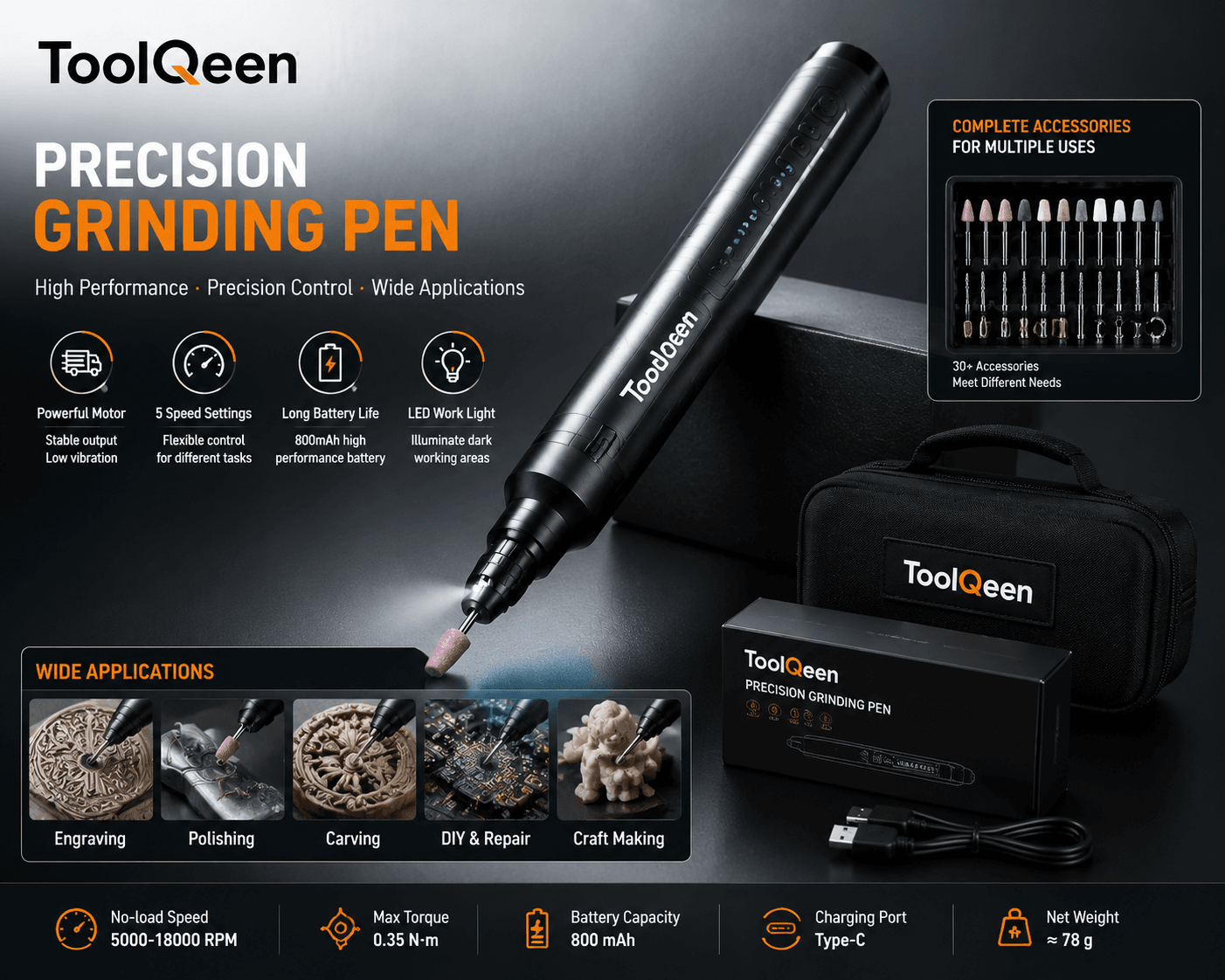
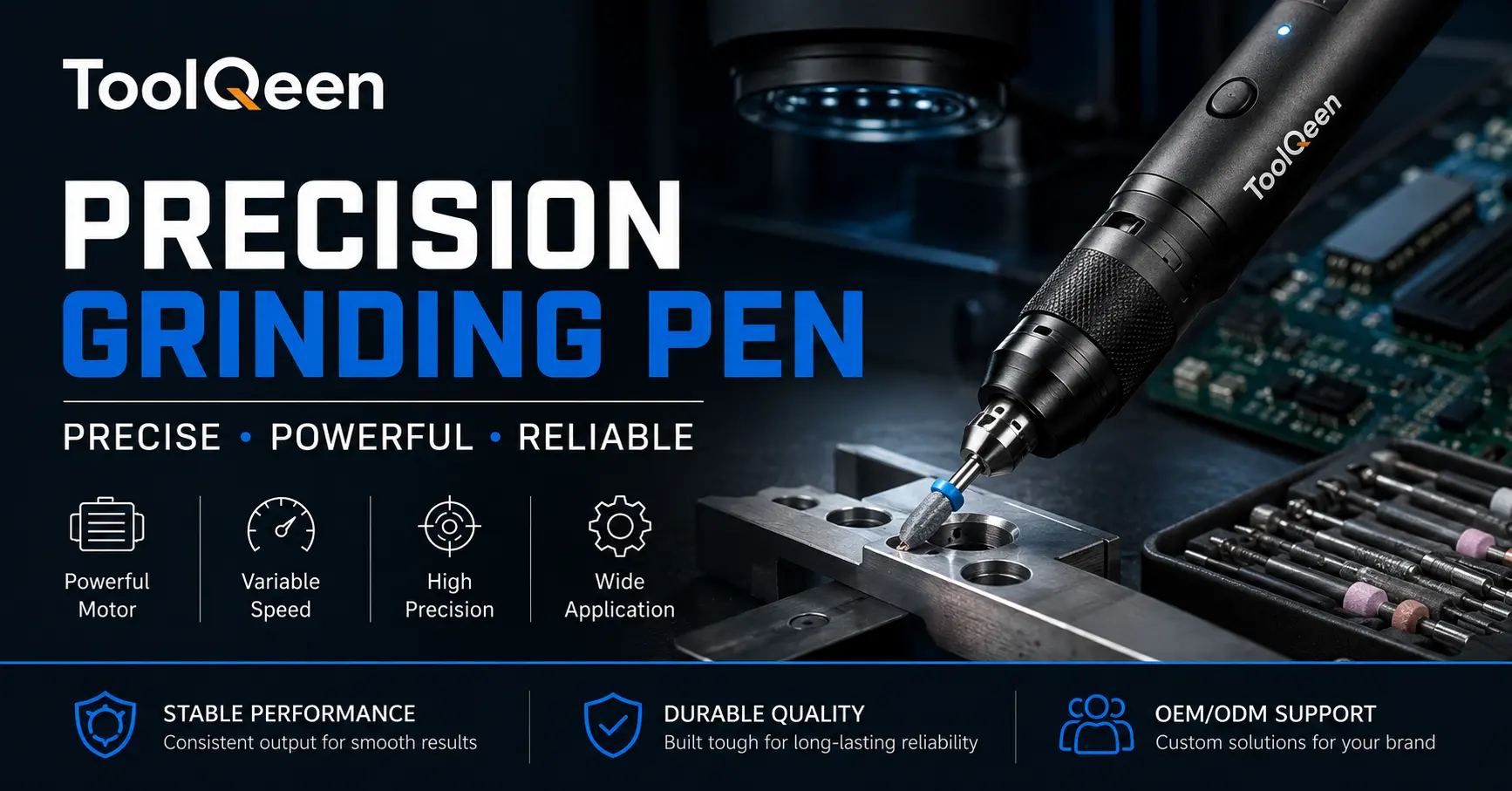
A reliable electric grinder pen depends on the balance between motor output, shaft alignment, housing fit, accessory quality, and power stability. ToolQeen checks incoming motors, PCBs, plastic parts, metal parts, charging components, and accessory heads before assembly. These details affect noise, heat, vibration, and the user's sense of control.
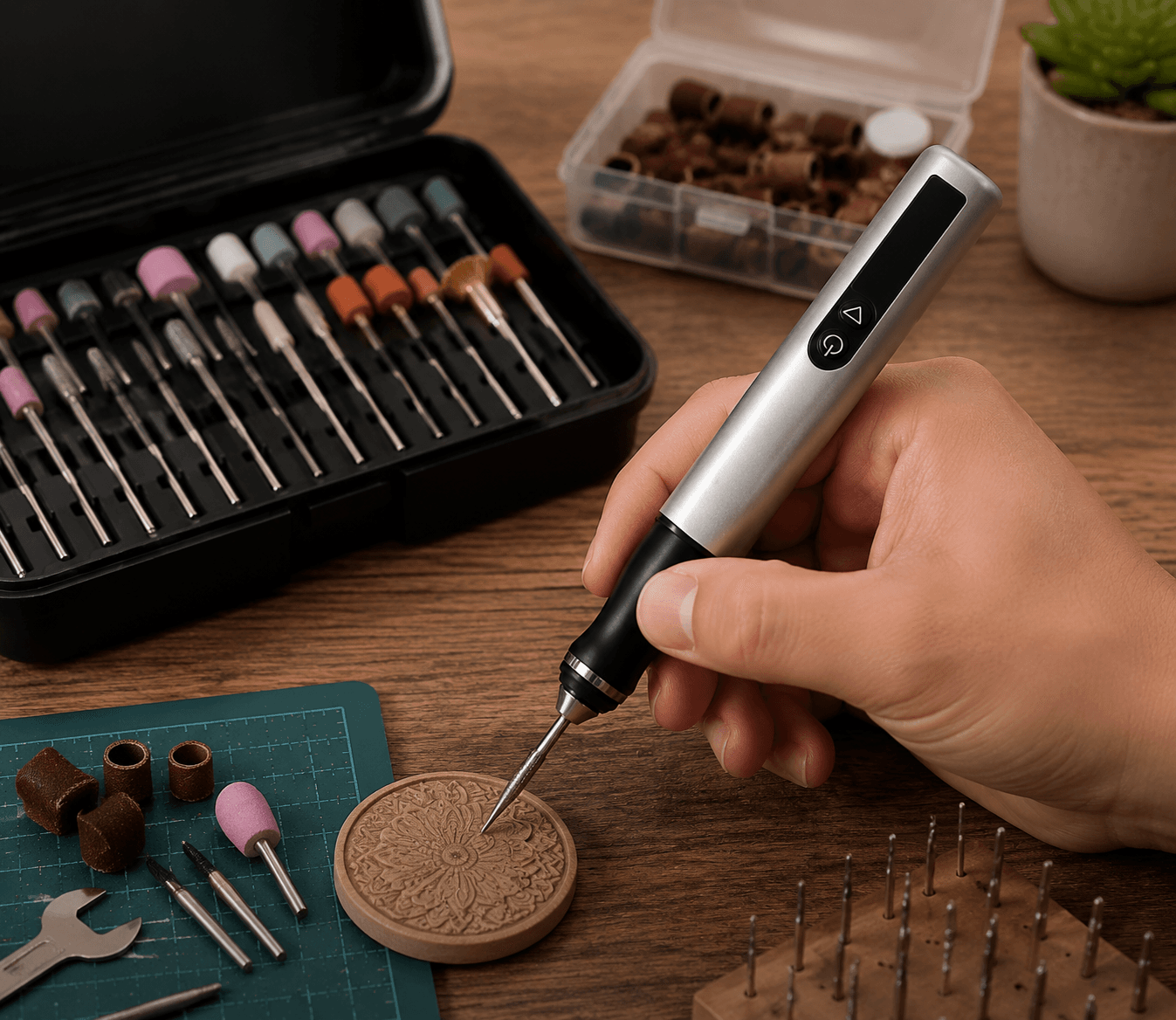
Accessory selection is just as important as the main unit. Grinding stones, polishing heads, sanding pieces, drill heads, and engraving tips must match the target application. A distributor selling to electronics repair shops may need a different accessory mix than a distributor selling to craft and model-making channels.
Why Choose ToolQeen for Rotary Tool Supply
ToolQeen is a Shenzhen precision tool manufacturer founded in 2016. Our team supports electric rotary tools, electric screwdrivers, ratchet screwdriver sets, manual repair tools, and OEM/ODM tool kits for importers, distributors, private-label sellers, and repair tool brands.
Because ToolQeen controls design, mold work, injection molding, CNC machining, metal stamping, assembly, testing, packaging, and shipment, buyers can discuss product configuration and packaging in one workflow. That makes it easier to keep repeat orders consistent and reduce supplier communication gaps.
Compliance and Documentation for EU Buyers
For European sourcing, buyers should check more than the sample. Depending on product configuration, electric rotary tools may require CE, RoHS, battery-related information, labeling, packaging details, and material documentation. The European Commission provides useful background on the RoHS Directive, which is relevant to electrical and electronic equipment supply chains.
Distributors should ask whether documentation can support repeat shipments, not only the first order. A supplier that understands documentation usually manages export risk, packaging labels, and batch consistency with more discipline.
Comparing Low-Cost Kits and Distributor-Ready Kits
A low-cost rotary kit may look attractive in a quote sheet. The risk appears later: weak accessory heads, unclear packaging, inconsistent charging response, and higher customer complaints. A distributor-ready kit should balance price with usability, product presentation, and after-sales stability.
The strongest choice is not always the most expensive product. It is the configuration that fits the buyer's channel. Repair tool distributors usually need practical accessories and stable grip. Craft channels may need more polishing and engraving heads. E-commerce sellers may need retail packaging that explains the use case clearly.
Selection Checklist Before Bulk Orders
Check the Real Application
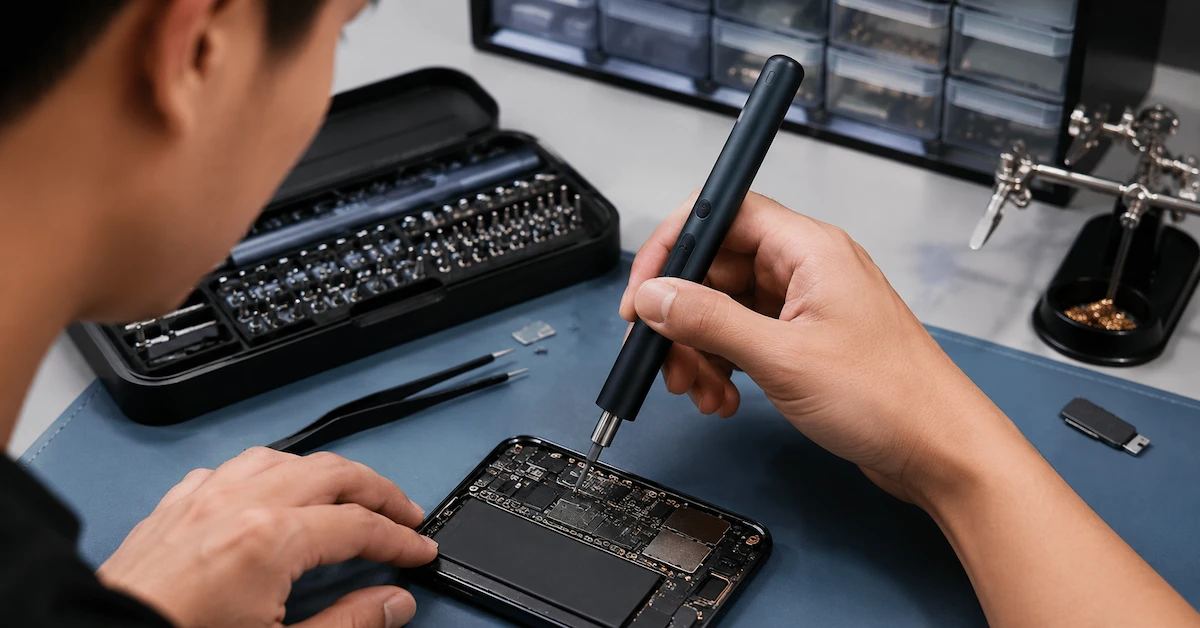
Confirm whether the tool is mainly for electronics repair, model making, jewelry touch-up, plastic trimming, engraving, or general DIY maintenance. The application should drive the accessory set and product positioning.
Review Rotation Feel and Vibration
Ask for samples and test them on real materials. A smooth tool helps users feel professional, while unstable rotation makes even simple polishing work feel risky.
Inspect Accessories and Packaging
Accessories should not feel like an afterthought. Packaging should protect the kit during shipping and make the product easy to understand for distributors, retailers, and online buyers.
Confirm Lead Time and Repeat Orders
ToolQeen can discuss standard samples, OEM/ODM requirements, packaging, MOQ, and delivery terms before mass production. Stable repeat supply is especially important for distributors who sell to multiple repair channels.
Reference Case: Distributor Expanding From Screwdriver Kits
A European repair tool distributor may already sell precision screwdriver sets but want a complementary product for polishing, trimming, and finishing work. The wrong rotary tool would feel like a random add-on. The right tool extends the distributor's repair solution and increases average order value.
In this case, ToolQeen would first review target customers, accessory needs, packaging style, language requirements, compliance expectations, and sample feedback. After sample approval, production can follow the same inspection checkpoints so the bulk shipment matches the approved kit.
FAQ
What is the best use case for a compact electric rotary tool?
Compact electric rotary tools work best for small parts polishing, light engraving, plastic trimming, model finishing, jewelry touch-up, and electronics repair support tasks where control matters more than heavy power.
What should EU distributors check before ordering?
Distributors should check sample performance, accessory quality, packaging, labeling, CE/RoHS-related documentation, MOQ, lead time, and whether the supplier can keep repeat batches consistent.
Can ToolQeen support private-label packaging?
Yes. ToolQeen supports OEM/ODM projects, including logo, color, packaging, manuals, accessory configuration, and export-focused B2B supply.
How many keywords should buyers use for product positioning?
For a product page or blog campaign, focus on one main keyword and several related long-tail terms. This keeps the content clear and avoids unnatural keyword stuffing.
Summary: A Better Rotary Tool Protects Distributor Trust
An electric rotary tool for small parts polishing should help users feel precise, not cautious. EU distributors should review rotation stability, accessories, compliance documents, packaging, and supplier repeatability before bulk orders.
ToolQeen helps importers, distributors, and tool brands build compact rotary tool kits with practical configuration, OEM/ODM support, and export-ready production. Learn more about our manufacturing background on About ToolQeen, or review our repair tool categories at ToolQeen Products.