
Electric Rotary Tool for Electronics Repair Shops: How US Buyers Reduce Returns and Bad Reviews
A repair shop tool can look impressive in a product photo and still fail the moment a technician uses it on a delicate housing, cable slot, or worn plastic edge. If rotation feels unstable, accessories wear too fast, or packaging oversells the product, US buyers face the same result: returns, weak reviews, and lower confidence in repeat orders. An electric rotary tool for electronics repair shops needs controlled handling, useful accessories, and supplier consistency behind it.
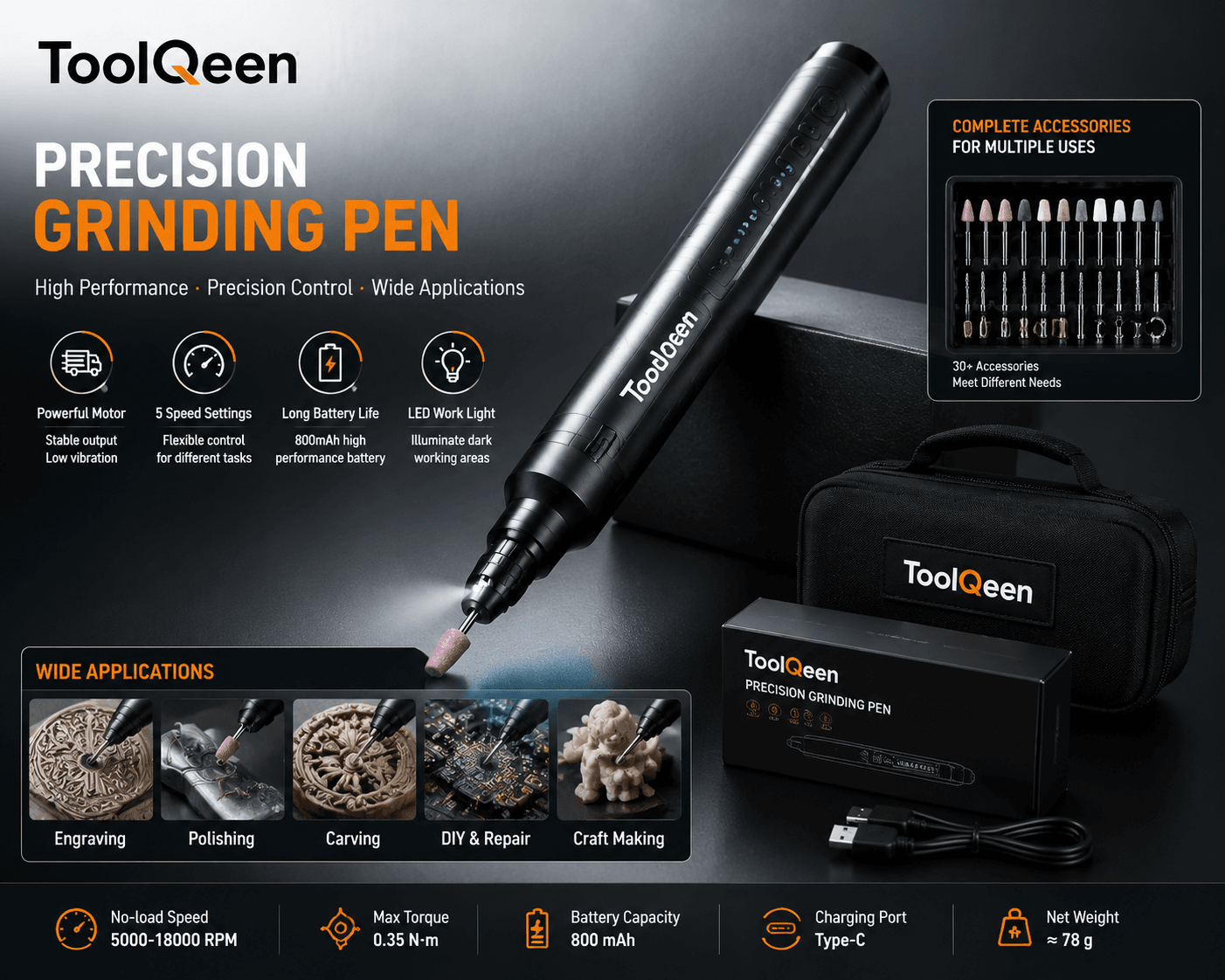
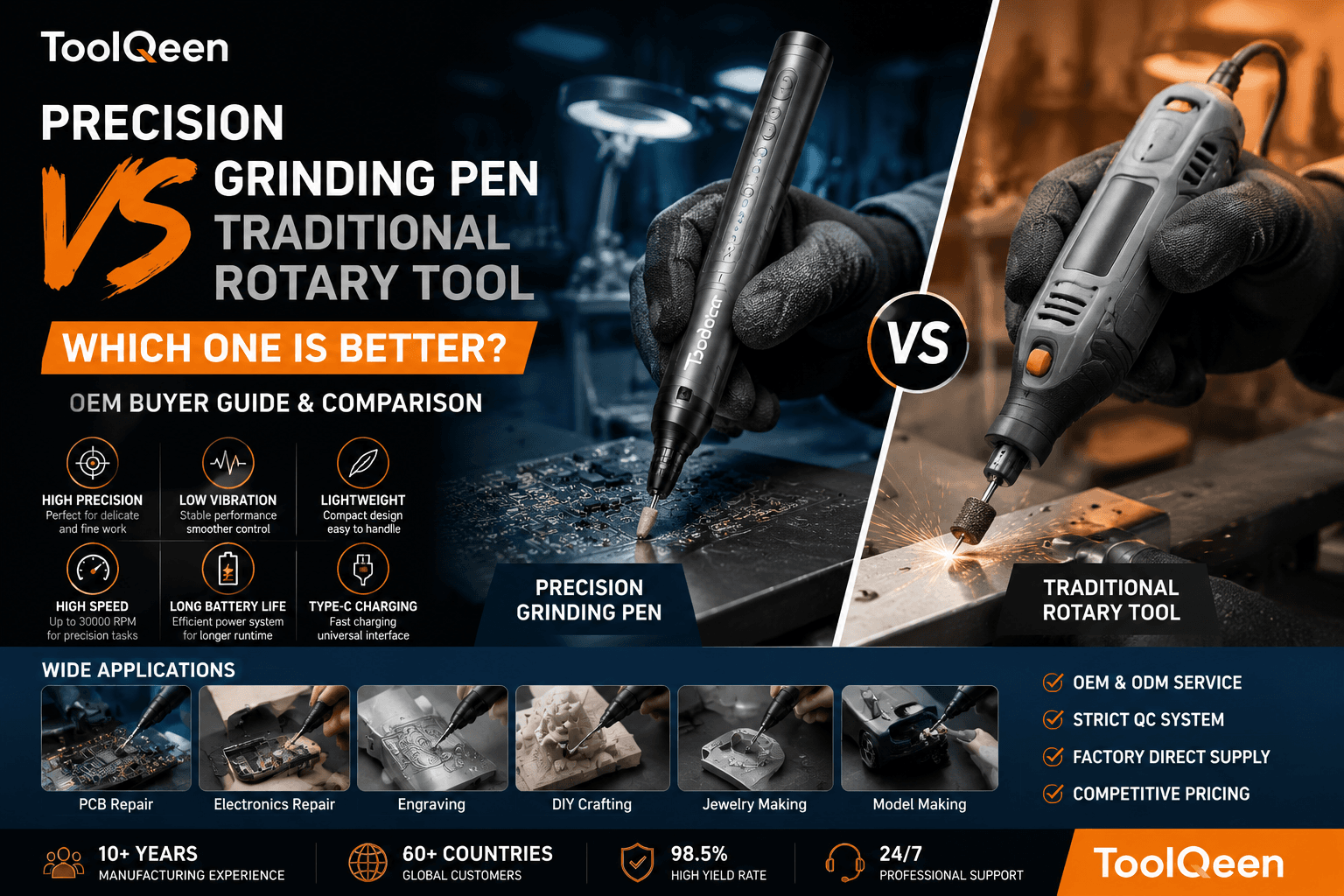
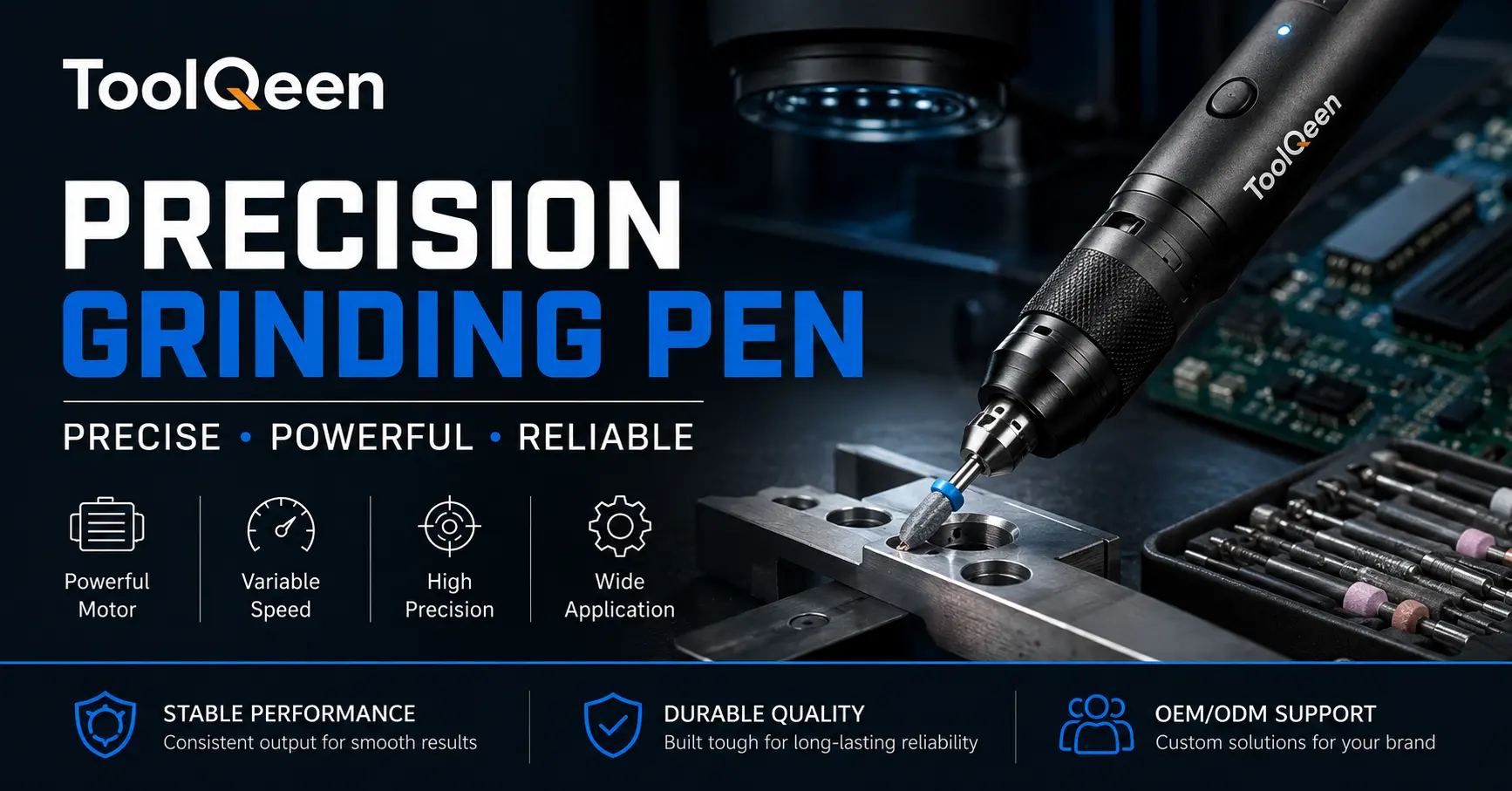
ToolQeen supports B2B buyers who need compact rotary tools, precision repair kits, and OEM/ODM packaging for e-commerce sellers, repair tool distributors, and private-label brands. Our focus is not only making the tool look good. It must make sense for real repair work and for the commercial pressure behind online sales.
Quick Answer
An electric rotary tool for electronics repair shops should be lightweight, stable at practical speeds, easy to control on small parts, and supplied with accessories that match electronics repair tasks. US buyers should check sample performance, accessory quality, packaging clarity, QC process, and private-label readiness before placing bulk orders.
Why Repair Shops Need Control More Than Raw Power
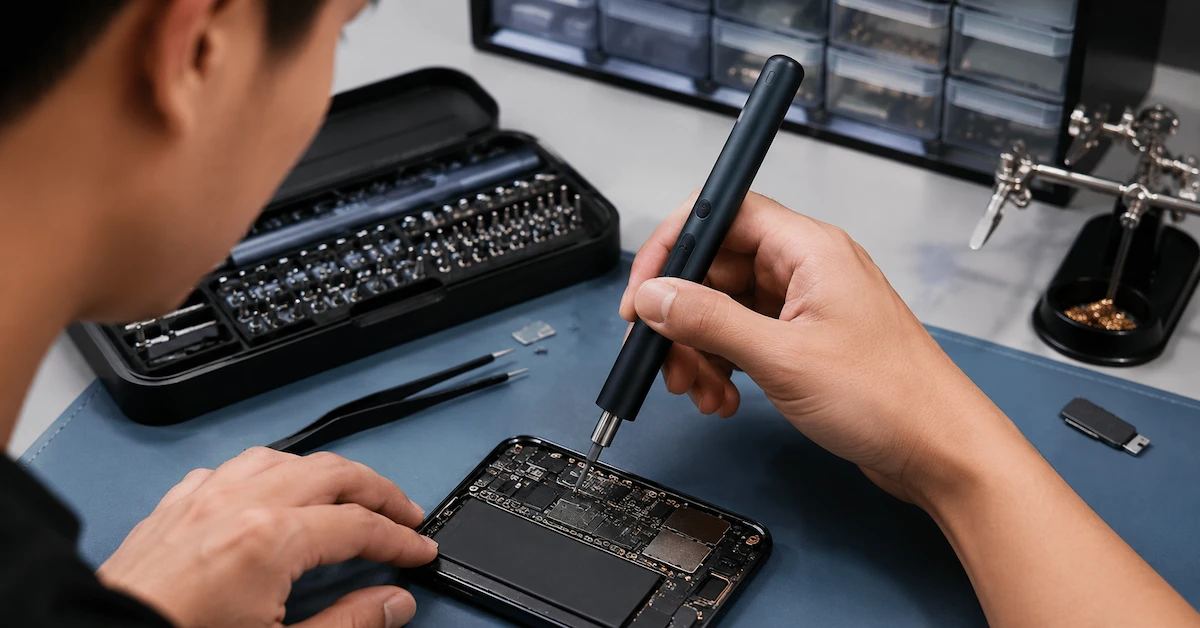
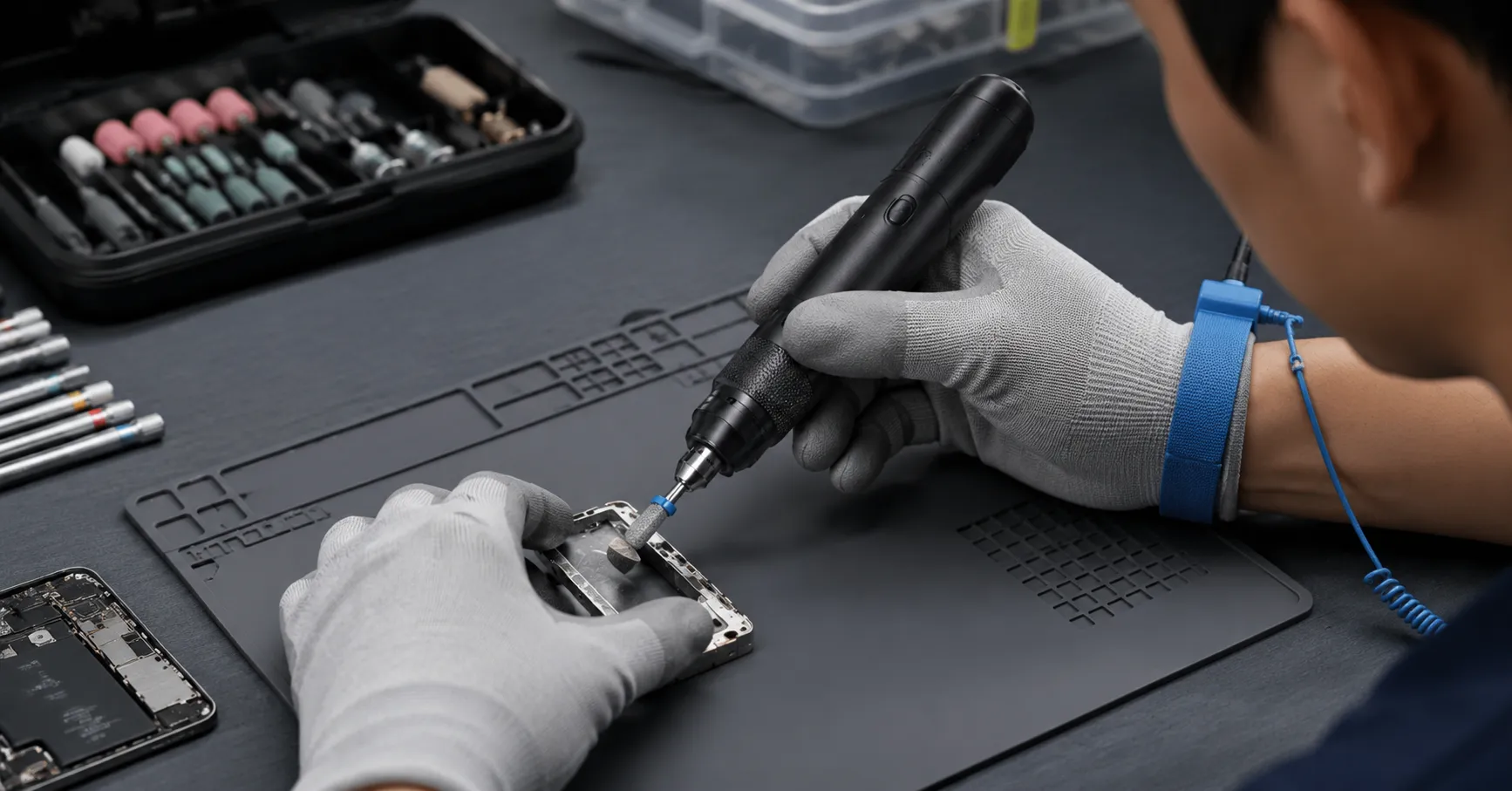
Electronics repair is not heavy grinding. It is careful trimming, light polishing, small-area cleaning, and detailed finishing. A tool that feels powerful but hard to control can damage a housing, scratch a visible surface, or make the technician slow down. For repair shops, that is not a small inconvenience. It affects service time and customer trust.
For e-commerce sellers, the same problem appears as reviews. Customers may not describe vibration or accessory mismatch in technical words. They simply say the tool feels cheap, hard to control, or not suitable for repair work. Those phrases hurt conversion quickly.
What Makes a Rotary Tool Repair-Shop Ready
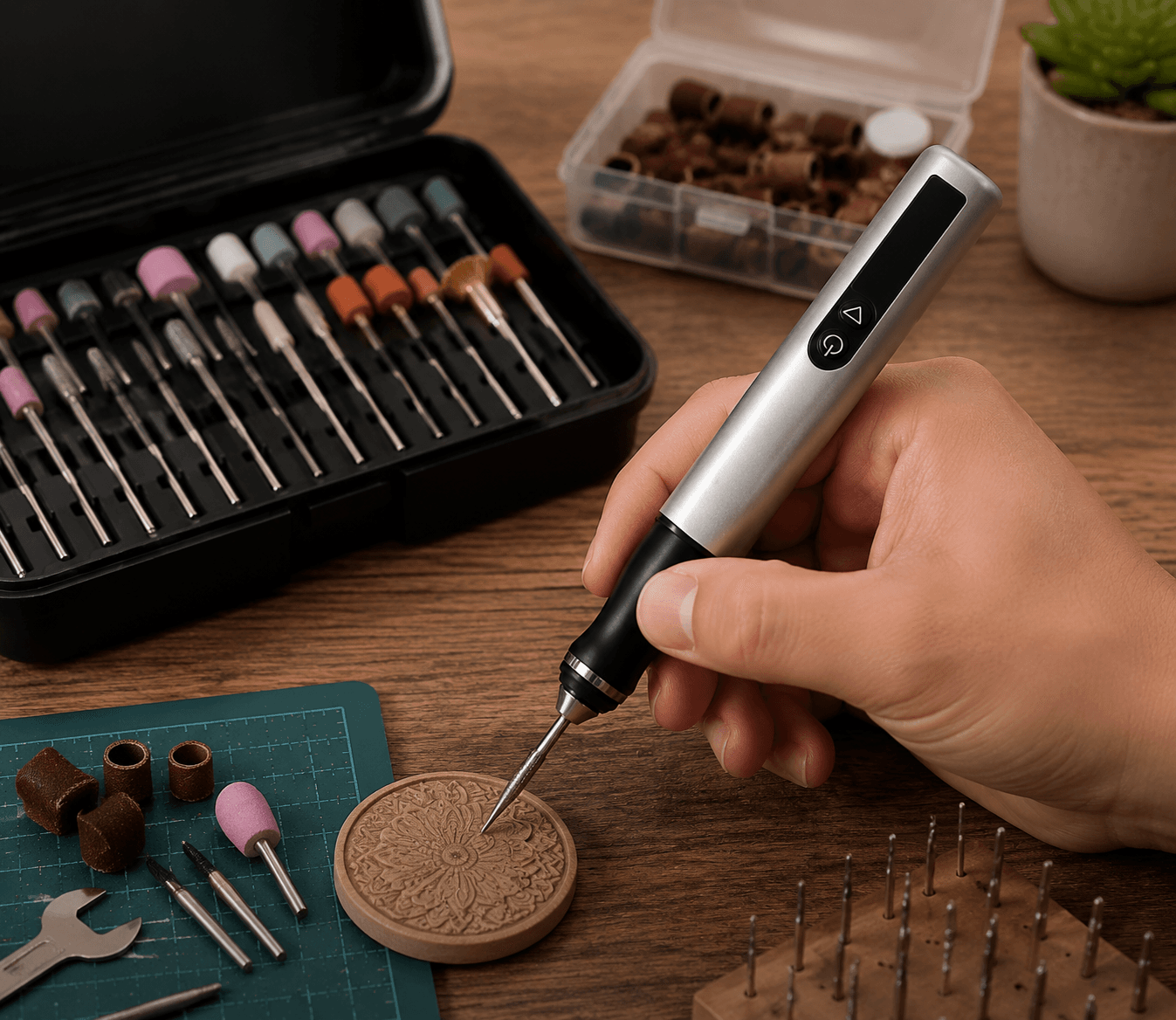
A repair-shop-ready electric grinder pen should combine pen-style handling, stable rotation, practical accessory heads, low perceived vibration, and clear packaging. The tool should feel intuitive enough for small repairs but reliable enough for repeated daily use.
ToolQeen reviews product configuration from the target user's point of view. Phone repair, laptop repair, game console repair, smart lock repair, and small appliance maintenance do not all need the same accessory mix. A supplier should help buyers match the kit to the market, not simply add more parts to make the listing look bigger.
Motor, Shaft, Housing, and Accessory Checks
Small rotary tools depend on small tolerances. Motor output, shaft alignment, housing assembly, charging stability, and accessory fit all influence the final user experience. If the shaft is not stable, the finishing result becomes rough. If the housing feels loose, the product feels lower value. If accessories wear quickly, the whole kit is blamed.
ToolQeen's quality workflow includes incoming component inspection, in-process assembly monitoring, final function checks, reliability observation, and pre-shipment packaging review. This helps private-label brands and repair tool sellers reduce variation between the approved sample and the bulk shipment.
Packaging Can Decide Whether a Tool Feels Professional
US buyers often sell through Amazon, independent stores, wholesale channels, and repair shop supply networks. Packaging is not decoration in these channels. It shapes the customer's first impression, reduces confusion, and affects whether the product feels worth the price.
A good electric rotary tool kit should show the use case clearly, organize accessories logically, protect the product during shipping, and support private-label branding. ToolQeen can discuss logo, color, accessory layout, manual style, barcode needs, and retail-ready presentation for OEM buyers.
Comparing Hobby Kits and Repair-Focused Kits
A hobby kit may include many accessories but still miss the needs of repair shops. A repair-focused kit should prioritize control, useful heads, stable operation, and clear instructions. Buyers should not assume that a larger accessory count automatically creates a better product.
For a US seller, the better question is: will customers understand what this tool does, use it successfully, and leave a confident review? If the answer is unclear, the configuration needs work before bulk production.
What Buyers Should Test Before Bulk Orders
Test Real Repair Materials
Use sample tools on plastic housing edges, small metal parts, old adhesive residue, model parts, or other realistic materials. A desk test without real materials can miss the problems that customers will later complain about.
Check Accessory Wear
Accessories should match the product promise. If a polishing head, grinding stone, or sanding accessory wears too quickly, it may create the impression that the entire tool kit is low quality.
Review Charging and Noise
For compact repair tools, charging response, runtime expectation, noise, and hand feel all shape review quality. These details matter more than many sellers expect.
Confirm OEM Details Early
Private-label buyers should confirm logo, color, packaging, manual, accessory layout, MOQ, sample time, and lead time before production. ToolQeen supports OEM projects from 500 pieces and ODM projects from 1,000 pieces depending on the project.
Reference Case: A Private-Label Seller Preparing a Repair Kit Bundle
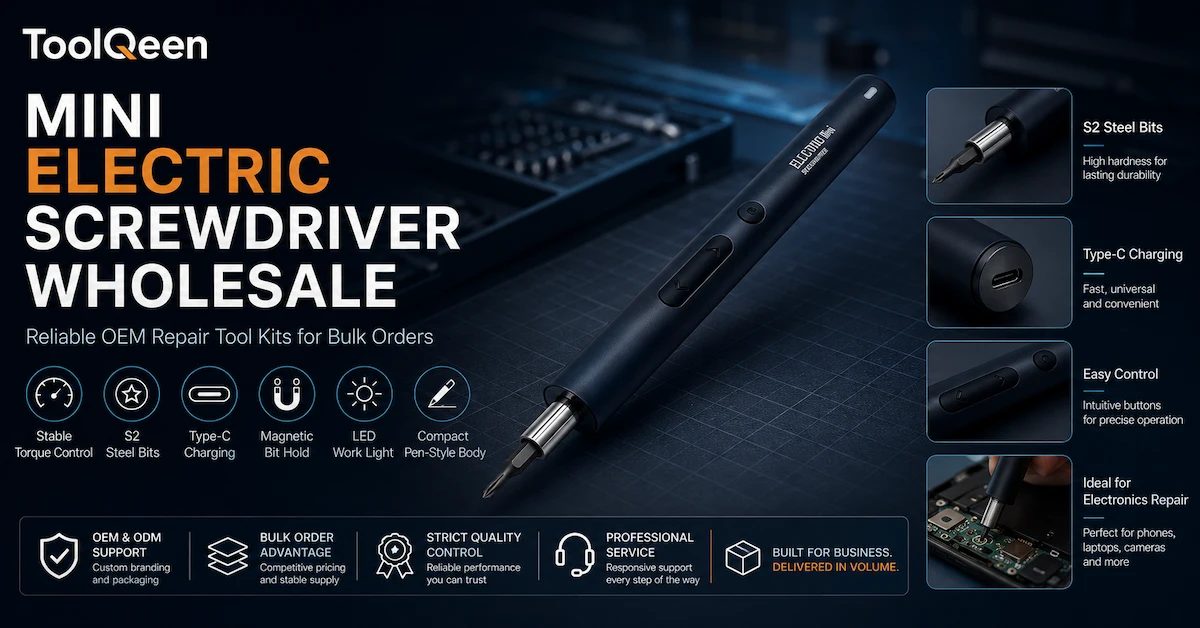
A US seller may want to bundle an electric rotary tool with screwdriver bits, opening tools, and small cleaning accessories for electronics repair customers. The bundle can increase perceived value, but only if each tool feels connected to the use case.
In this type of project, ToolQeen would review target platform, expected price range, accessory set, packaging dimensions, product photography needs, and sample feedback. After approval, the production process focuses on keeping the bulk order close to the tested sample so the listing promise matches the customer experience.
Useful Quality Reference for Measurement Mindset
Buyers do not need to become engineers, but they should care about repeatable checks. The US National Institute of Standards and Technology explains measurement traceability through its official NIST traceability resources. For tool buyers, the practical lesson is simple: a supplier should know how it checks product consistency, not only how it describes it.
FAQ
Is an electric rotary tool useful for phone repair shops?
Yes, when the tool is compact and controlled. It can support light polishing, plastic trimming, cleaning, finishing, and small repair preparation tasks, but it should not be positioned as a heavy grinding tool.
What causes bad reviews for compact rotary tool kits?
Common causes include unstable rotation, weak accessories, unclear instructions, poor packaging, noisy operation, and a mismatch between product claims and real use.
Can ToolQeen make private-label rotary tool kits?
Yes. ToolQeen supports logo, color, packaging, manual, accessory configuration, and retail-ready kit development for importers, e-commerce sellers, repair tool distributors, and tool brands.
Should buyers choose the kit with the most accessories?
Not always. A smaller but better-matched accessory set can convert better and reduce complaints if it fits the target repair scenario clearly.
Summary: Better Control Creates Better Reviews
An electric rotary tool for electronics repair shops should help customers feel precise, not uncertain. US buyers should test real materials, review accessories, check packaging, and confirm supplier QC before bulk orders.
ToolQeen helps private-label sellers, repair tool distributors, and e-commerce brands build compact rotary tool kits with OEM/ODM support, practical quality checks, and export-ready packaging. Learn more about our factory at About ToolQeen, or browse related products at ToolQeen Products.