
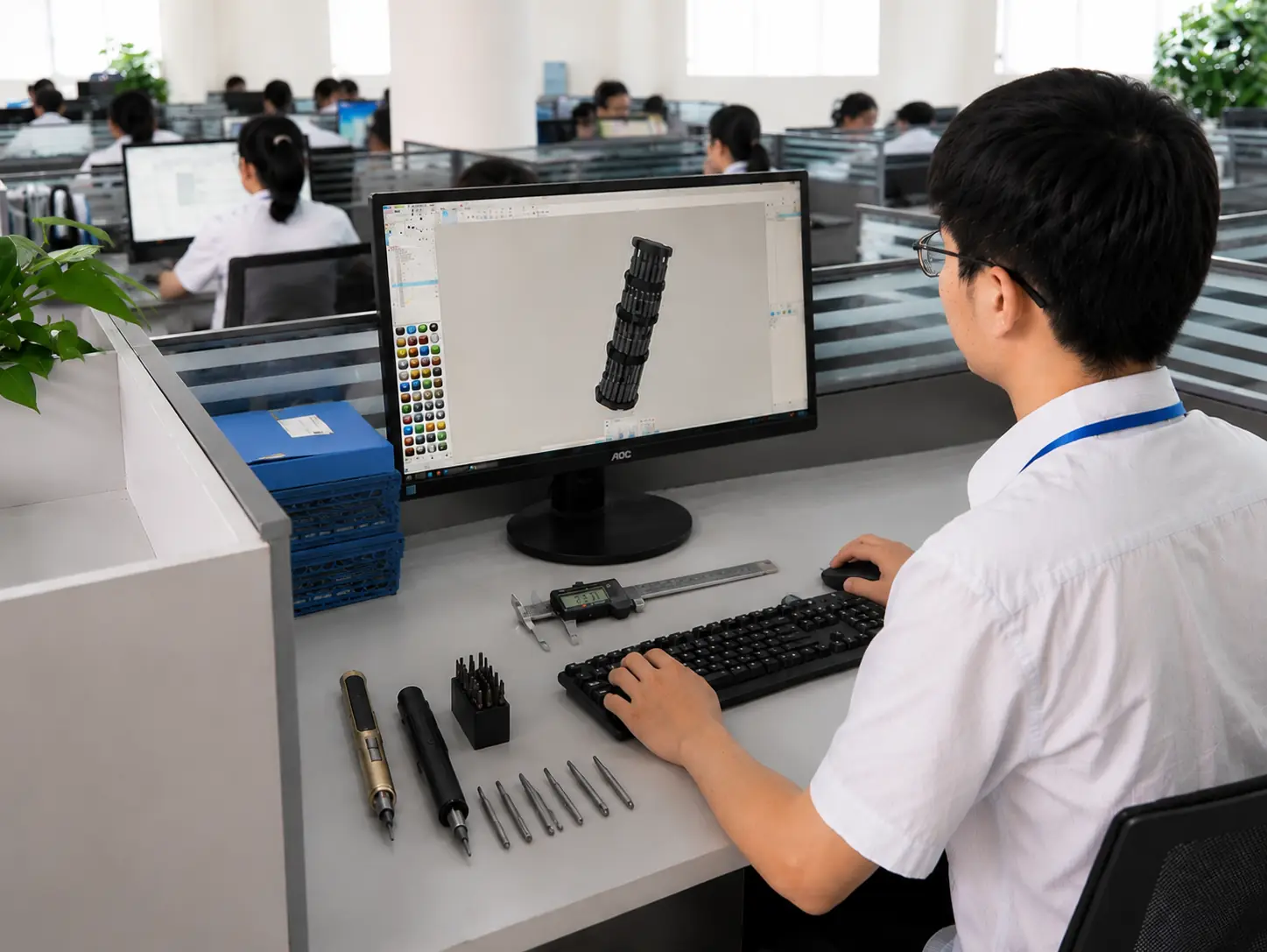
What is the typical ODM development process for a screwdriver product?
A typical ODM screwdriver development process starts with defining the application and technical requirements, then moves through design, engineering validation, prototyping, tooling, testing, and mass production.
A practical process is:
Requirement confirmation: target application, torque, RPM, bit system, battery, product size, functions, target price, and order quantity
Concept design: define the product structure, appearance, handle, case, and user experience
Engineering review: evaluate motor, gearbox, PCB, battery, materials, tolerances, and manufacturability
3D design and drawings: create the final mechanical and structural design
Prototype development: use CNC, 3D printing, existing components, or prototype tooling
Functional testing: verify torque, speed, runout, battery, charging, noise, vibration, and bit fit
Design correction: improve structure, performance, assembly, or ergonomics based on test results
Tooling: manufacture injection molds, fixtures, or custom parts when required
T0 / first-tooling sample: check dimensions, appearance, assembly, and function
Pre-production sample: build the final version using production materials and components
Golden sample approval: approve the final physical sample
BOM and specification freeze: lock the motor, gearbox, battery, PCB, bits, materials, color, packaging, and QC requirements
Compliance testing: complete CE, RoHS, FCC, UN38.3, or other required testing according to the destination market
Pilot production: confirm assembly stability and production consistency
Mass production: begin full production after the pilot batch passes inspection
Final QC and shipment: complete torque, runout, aging, battery, appearance, packaging, and pre-shipment inspection
For ToolQeen ODM projects, we recommend confirming the target function, torque, RPM, battery, bit configuration, appearance, target market, quantity, and target price at the beginning, because these requirements determine the motor, gearbox, PCB, tooling, and development route.