
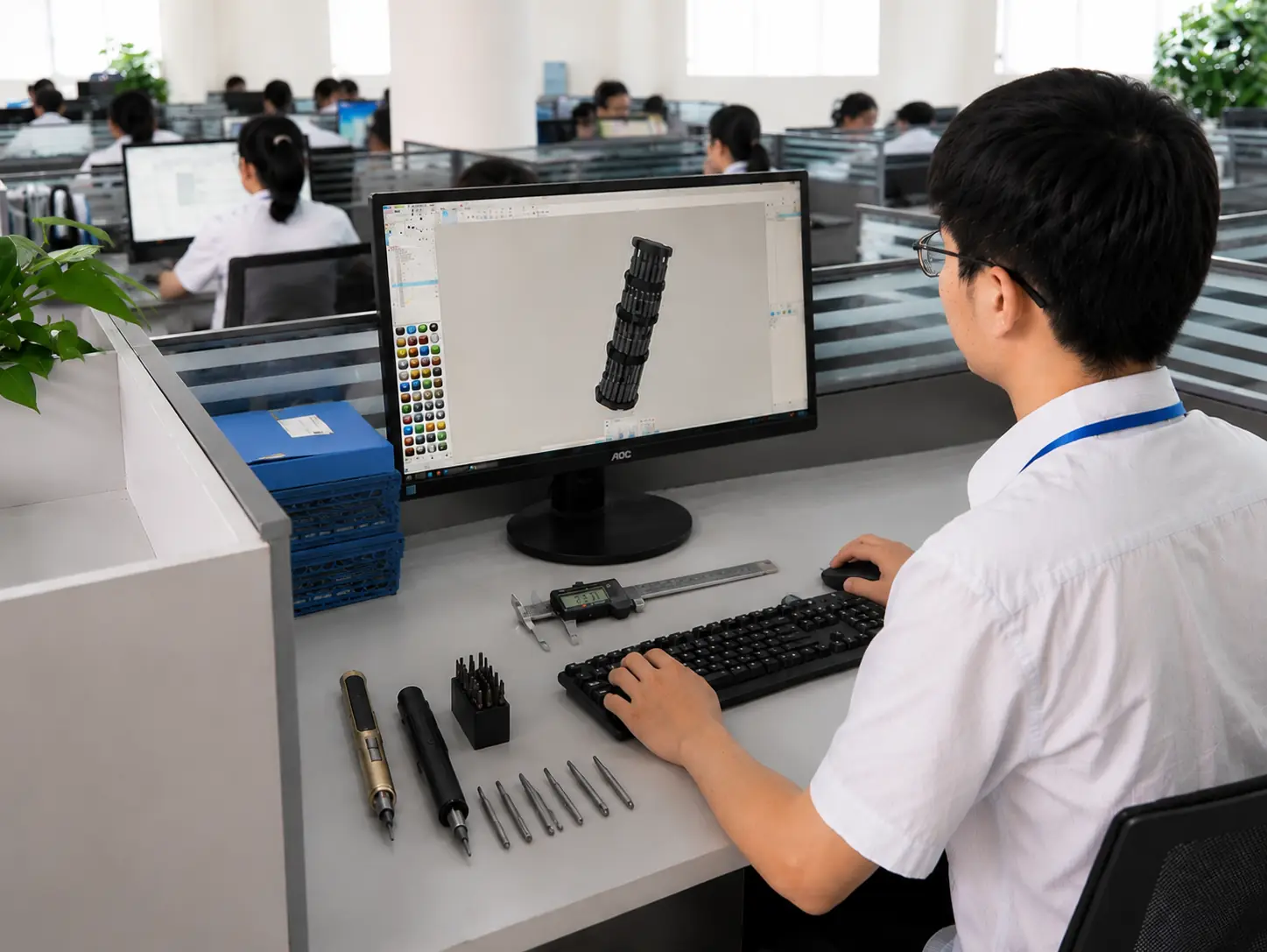
How does a screwdriver factory develop a custom product from a drawing?
A screwdriver factory develops a custom product from a drawing by reviewing the design, confirming manufacturability, selecting materials and components, building a prototype, testing it, and then preparing the product for mass production.
A typical process includes:
Drawing review: check dimensions, tolerances, materials, structure, and functional requirements
DFM analysis: confirm whether the design can be manufactured efficiently and identify areas that may need adjustment
Material selection: choose the bit steel, shaft material, handle material, plastics, aluminum, and other components
Component selection: for electric models, confirm the motor, gearbox, battery, PCB, bearings, and charging system
Tooling evaluation: determine whether existing molds can be used or new molds, CNC parts, or fixtures are required
Prototype production: make the first sample using CNC machining, 3D printing, existing tooling, or prototype molds
Functional testing: check torque, RPM, runout, bit fit, strength, battery, noise, and other required performance
Design correction: adjust dimensions, structure, tolerances, or components based on the test results
Pre-production sample: produce the final version using production materials and processes
Golden sample approval: lock the approved physical sample as the mass-production reference
BOM and specification freeze: finalize materials, components, drawings, performance parameters, and QC requirements
Tooling and mass production: complete any required production molds, fixtures, assembly, and final testing
For electric screwdriver projects, the drawing alone is normally not enough. Buyers should also provide the target torque, RPM, battery requirements, application, bit configuration, expected quantity, and target price.
For ToolQeen OEM and ODM projects, we can develop custom screwdriver products from 2D drawings, 3D CAD files, physical samples, or detailed dimensions, then evaluate the structure, tooling, materials, electronics, prototype cost, and mass-production feasibility before development starts.