
Manual Tool Buyer Guide
Manual Screwdriver Kit for Heat Pump Controller Service
Manual screwdriver kit for heat pump controller service selection covers authorized work zones, bit fit, access, fastener handling and sample approval.
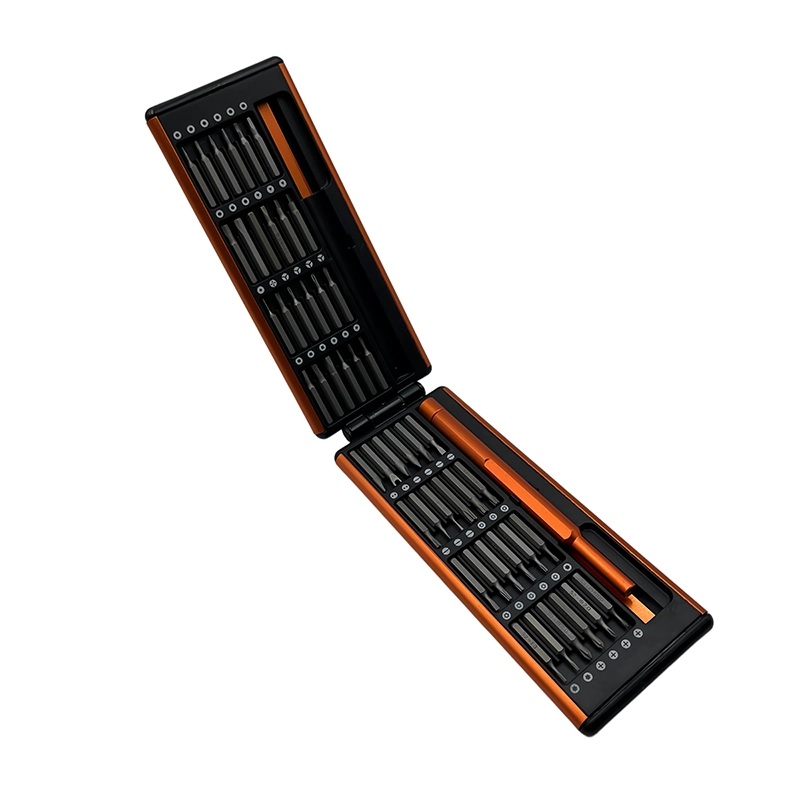
Quick Answer
A manual screwdriver kit for heat pump controller service should be selected from the authorized controller tasks, actual fastener profiles and available access around the housing. Compare bit seating, handle reach, manual control, case retention and receiving checks on representative service units. Keep electrical isolation, refrigerant-system work and final fastening requirements within the equipment maker's procedures and qualified service scope.
Buyer Takeaways
- Map only the controller tasks the service team is authorized to perform.
- Choose working bits from representative fasteners, not the advertised piece count.
- Check handle reach and straight alignment before approving the case.
- Freeze the accepted bit list, case layout and service exclusions.
Buy a controlled service set, not a catalogue piece count
A distributor can buy a comprehensive-looking case and still leave a technician without the one bit that reaches a recessed controller-cover screw. Conversely, a smaller set can cover the approved work if its profiles, usable length and handle clearance have been checked. The purchasing question is therefore specific: which configuration supports the service network’s named controller families, and how will that configuration stay consistent on the next order?
This guide concerns tool selection for authorised controller-housing work. It is not an electrical-service procedure. ToolQeen catalogue models are candidates for sample comparison, not heat-pump-approved equipment. Do not describe a conventional precision screwdriver as insulated or suitable for live work without the applicable evidence.
Define the heat pump controller service boundary
Begin with the heat pump families, controller locations and housing tasks that the equipment maker permits the service team to perform. Record whether the work concerns an external cover, mounting bracket, terminal guard or another named service-access part. The manual screwdriver kit for heat pump controller service should support that documented scope, not imply permission for every task inside the unit.
Follow the maker's isolation, verification and service instructions before opening any controller area. Refrigerant work, live electrical work, safety-device adjustment and final fastening requirements remain subject to the relevant qualified process. Put those exclusions in the sample record so a convenient tool does not broaden the technician's authority.
Technical Explanation
Why access geometry matters as much as bit profile
A correctly labeled bit can still be unsuitable when the handle or extension cannot remain straight in the controller service zone. The fastener, approach and nearby parts must be evaluated together.
- Name the service zone before choosing the bit.
- Check full seating and straight access on a representative assembly.
- Record nearby cables, connectors, seals and finished surfaces.
Buyer Comparison
Three kit configurations to compare on the same service map
| Configuration | Where it can help | Approval question | Commercial trade-off |
|---|---|---|---|
| Compact manual precision set | Named small housing fasteners with open access | Does every essential bit seat fully and reach squarely? | Fewer redundant items; check spare availability |
| Manual set with extension options | Recessed access where the approved extension stays aligned | Was the exact handle–extension–bit combination tested? | More configuration items to track |
| Ratchet or mixed service set | Tasks with sufficient handle and swing clearance | Does the ratchet geometry fit without loading adjacent parts? | Useful only if the extra functions serve named tasks |
Map fasteners, bits and access before comparing kits
Create one row for each authorized service zone: equipment family, panel or bracket, fastener profile, visible condition, access direction and nearby parts. Use representative service units or approved training assemblies to confirm that a proposed bit seats fully and that the handle can remain aligned without loading a cable, connector, seal or finished surface.
A larger case can still omit the profiles that matter or include long bits that cannot approach a recessed fastener squarely. Separate essential working bits from optional spares and unrelated accessories. The useful configuration is the smallest controlled set that covers the documented tasks and can be restored to its case after use.
Run a repeatable manual tool sample check
Use the service network's approved method to compare samples on the same fastener stages. Record bit engagement, access, grip, manual control, removal behavior and visible condition after the task. Stop when a bit rocks, cams out, marks the recess, cannot stay aligned or conflicts with the equipment instruction. Do not invent a universal tightening value from the tool catalogue.
Inspect the case as part of the trial. Confirm that working bits can be identified, retained and returned to consistent positions, and that the selected handle and extensions match the tested configuration. A bench result is incomplete when the packed sample differs from the tools used during evaluation.
Write the sample approval and repeat-order controls
The approval record should name the equipment families, authorized zones, accepted handle, working bit list, extensions, case arrangement, exclusions and inspection method. Link that record to the quotation and receiving check so substitutions are reviewed instead of accepted by appearance.
Repeat affected checks after a change to the controller fastener, housing access, bit source, handle, extension, case insert, label or service instruction. This change-control step is more useful than assuming that every kit with the same piece count will behave like the approved sample.
Use a pass-or-hold decision before discussing price
Treat essential coverage as an approval gate. A candidate that misses a required fastener, cannot reach it squarely or changes the packed configuration without explanation should remain on hold. A lower quote does not compensate for a failed gate. After candidates meet the same scope, compare set price, spare-bit availability, replenishment quantities, packaging and the cost of keeping technicians’ cases complete.
Illustrative example, not a ToolQeen test result: a network has two approved controller families. Sample A reaches both cover locations; Sample B seats correctly on the bench but its handle fouls the housing at one recessed location. B has more accessories, yet it does not cover the specified task. Ask for a revised access configuration and retest that location rather than scoring the kit higher for piece count.
For a European distribution programme, agree the instruction languages and field identification labels before artwork approval. Keep the technical sample record separate from any market-documentation review: neither a successful bit-fit test nor this buyer guide establishes regulatory conformity.
Sources and scope
Daikin installation manual: equipment-specific safety instructions https://www.daikin.eu/content/dam/document-library/installation-manuals/heat/air-to-water-heat-pump-mid-temperature/ekhws/EKHWS-D3V3.EKHWSP-D3V3_Installation%20manual_4PEN510672-1D_English.pdf An example of equipment-specific electrical safety requirements. Use the manual for the actual serviced model; this reference does not establish ToolQeen compatibility.
Things Buyers Should Check
Things Buyers Should Check
- ✓List controller family, revision, authorised zone and service-document revision.
- ✓Separate required bit profiles from optional accessories.
- ✓Test the exact handle, extension and bit together at the actual access point.
- ✓Record pass, hold or exclusion for each service-map row.
- ✓Match case labels, insert positions and replacement references to the accepted sample.
- ✓Compare price only after essential coverage passes.
Frequently Asked Questions
Frequently Asked Questions
Can one manual screwdriver kit cover every heat pump controller?
No. Controller layouts, fasteners, access and maker instructions vary, so approve the kit against named equipment families and authorized service zones.
Should the highest piece count decide the service kit?
No. Prioritize the working bit profiles, access tools, case retention and documented service scope that the network actually needs.
What should stop a controller tool trial?
Stop for uncertain isolation, poor bit seating, cam-out, damaged recesses, misalignment, contact with nearby parts or conflict with the equipment procedure.
Can the tool sample define final tightening requirements?
No. Use the equipment maker's service specification and qualified process; the sample trial only evaluates the proposed tool configuration for the named task.
What belongs in the approved case record?
Record the handle, working bits, extensions, case positions, equipment scope, exclusions, document revision and receiving checks.
When should the service kit be reapproved?
Repeat affected checks after changes to equipment, fasteners, access, bits, handles, extensions, case inserts, labels or service instructions.
Final Buyer Recommendation
Choose the service kit only after its working bits, access and packed configuration pass the same bounded controller-task review.
Related Products
Related Products
49-in-1 Manual Precision Screwdriver Set
Manual precision repair kit for electronics maintenance, workshops and retail ranges.
View product ↗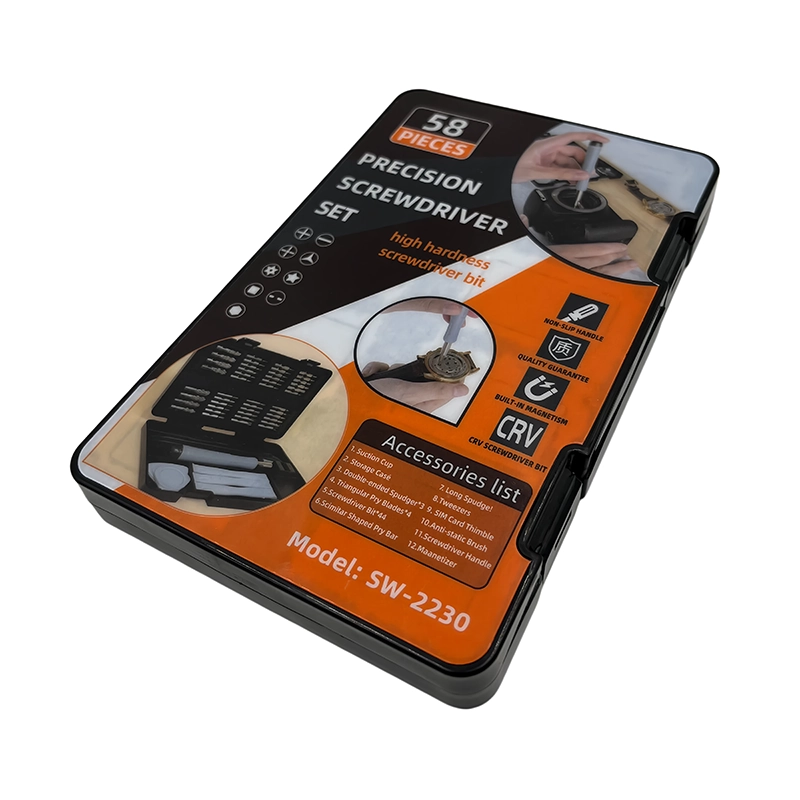
58-in-1 Manual Precision Screwdriver Set
Manual precision repair kit for electronics maintenance, workshops and retail ranges.
View product ↗