
Torque Testing Process for Precision Electric Screwdrivers
Precision electric screwdrivers are widely used in electronics repair, smartphone maintenance, laptop assembly, smart device installation, DIY projects, and industrial production lines. In these applications, torque accuracy directly affects assembly quality, screw stability, product safety, and user experience.
For professional OEM & ODM manufacturers, a strict torque testing process is one of the most important quality control procedures before shipment.
Why Torque Testing Is Important
Torque refers to the rotational force generated by an electric screwdriver when tightening or loosening screws.
If the torque is too low:
- Screws may become loose
- Assembly quality decreases
- Products may fail during use
If the torque is too high:
- Screw heads may strip
- PCB boards can be damaged
- Sensitive electronic components may crack
Professional torque testing ensures:
- Stable fastening performance
- Consistent product quality
- Better durability
- Reduced after-sales problems
- Improved customer satisfaction
- Reliable OEM production standards
For electronics repair tools, torque consistency is especially important because modern electronic devices use extremely small and delicate screws.
What Is Torque Testing?
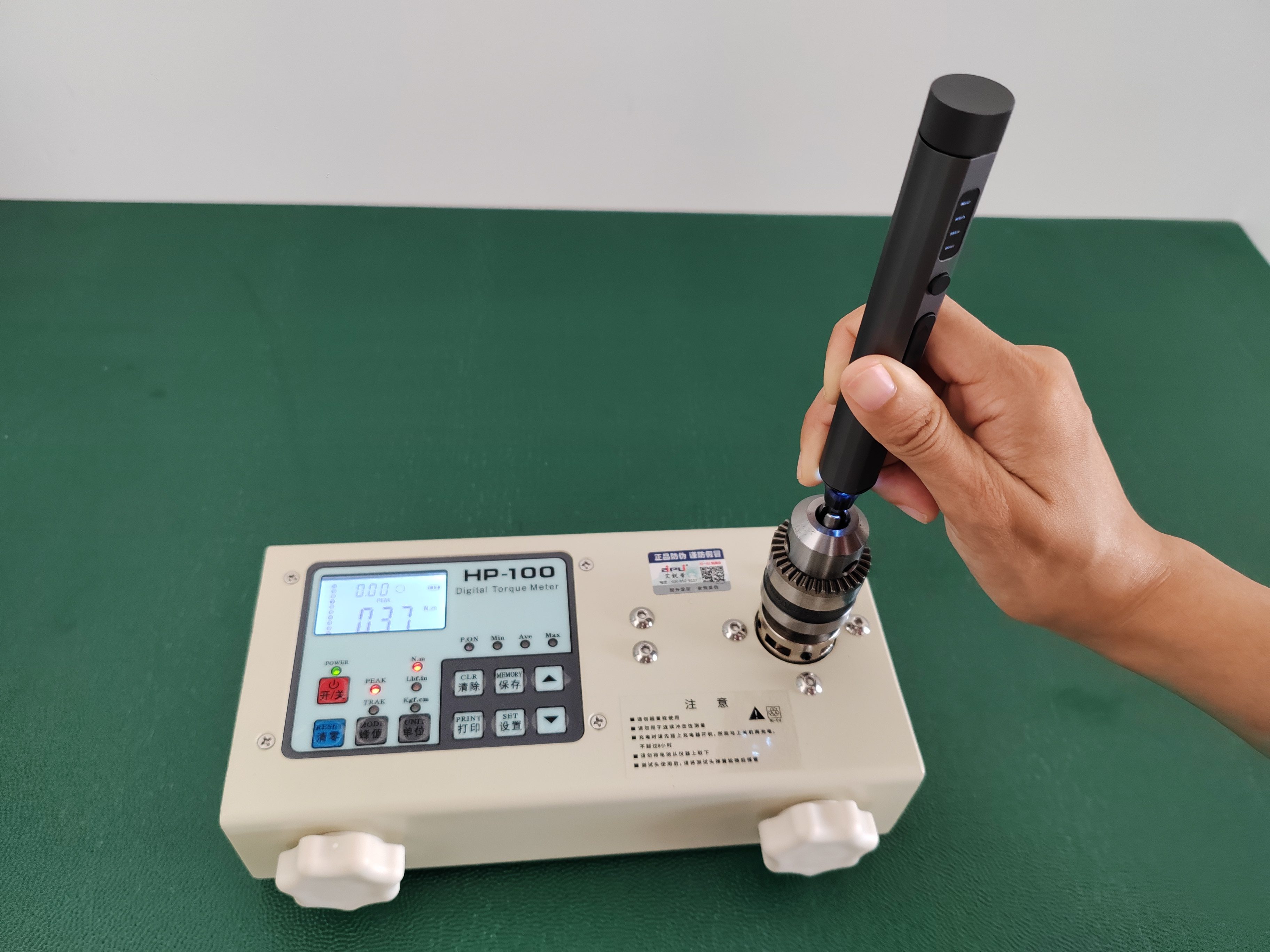
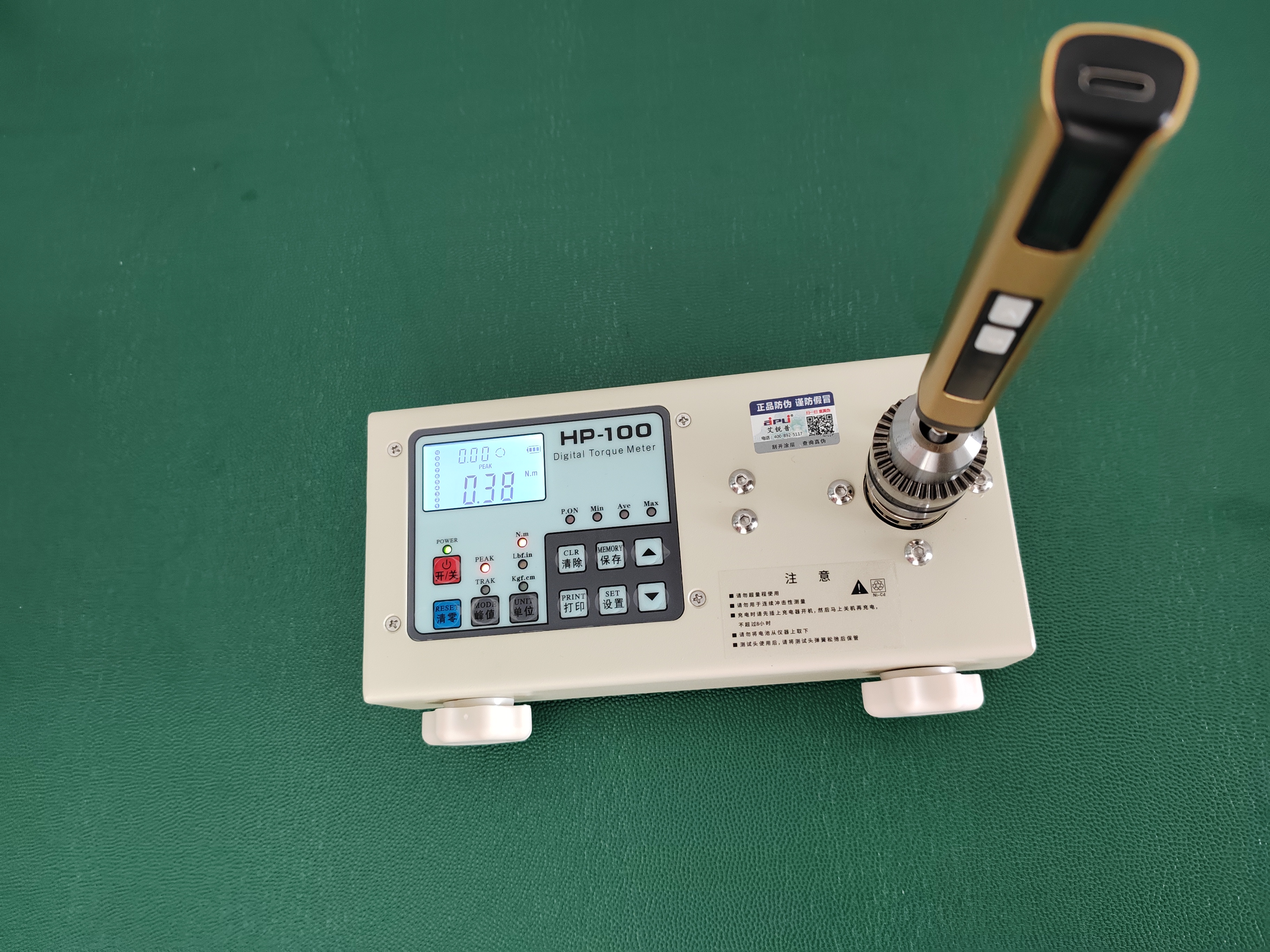
Torque testing is the process of measuring the actual output force of an electric screwdriver using professional digital testing equipment.
Most precision electric screwdrivers operate within a controlled torque range such as:
0.35 N⋅m0.35\ \mathrm{N\cdot m}
Different screwdriver models may have different torque settings depending on:
- Screw size
- Material hardness
- Application environment
- Assembly requirements
The goal of torque testing is to verify:
- Torque accuracy
- Output consistency
- Stability during operation
- Batch reliability
- Compliance with product specifications
Professional Torque Testing Equipment
Digital Torque Meter
A digital torque meter is the core device used during testing.
Main functions include:
- Real-time torque monitoring
- Peak torque recording
- Accuracy analysis
- Data storage
- Multi-unit conversion
- Quality tracking
Professional factories use high-precision torque meters to ensure every screwdriver meets strict QC standards.


Standard Torque Testing Process
Step 1 — Product Inspection Before Testing
Before torque testing begins, the screwdriver undergoes a preliminary inspection.
The QC team checks:
- Battery condition
- Charging function
- Bit installation
- Rotation direction
- Button operation
- LED display performance
This ensures the screwdriver is operating normally before testing.
Step 2 — Fixing the Tool on the Torque Meter
The screwdriver bit is connected to the testing fixture of the digital torque meter.
Correct alignment is extremely important because improper positioning can affect measurement accuracy.
Professional manufacturers usually use customized fixtures for:
- Better stability
- Higher testing consistency
- Improved mass production efficiency
Step 3 — Torque Output Measurement
The operator activates the electric screwdriver and allows the torque meter to record the output force.
The testing system measures:
- Peak torque
- Average torque
- Maximum value
- Minimum value
- Stability performance
Multiple tests are repeated to verify consistency.
Step 4 — Data Comparison & Analysis
The measured data is compared with the factory quality standards.
Example specification:
| Test Item | Standard |
|---|---|
| Electric Torque | 0.35 N·m |
| No-load Speed | 170 RPM |
| Noise Level | ≤58 dB |
| Battery Voltage | 3.7V |
| Stability Tolerance | QC Standard |
If any value exceeds the acceptable range, the product will be:
- Recalibrated
- Repaired
- Re-tested
- Rejected if necessary
Step 5 — Final Quality Inspection
After torque testing passes, the screwdriver enters the next QC stage:
- Aging test
- Charging test
- Appearance inspection
- Packaging inspection
- Random sampling inspection
Only qualified products proceed to shipment.
Common Torque Problems Found During Testing
Unstable Torque Output
Possible causes:
- Poor motor quality
- Gear wear
- Internal structural problems
- Battery instability
Excessive Torque
Possible risks:
- Damaged screws
- Cracked plastic housing
- PCB damage
Common causes:
- Incorrect motor calibration
- Faulty control board
- Improper torque settings
Insufficient Torque
Possible problems:
- Loose fastening
- Weak assembly strength
- Reduced repair efficiency
Potential causes:
- Low motor power
- Weak battery
- Gear transmission issues
Why Strict Torque Testing Improves Product Quality
Better Product Reliability
Stable torque ensures long-term performance consistency.
Reduced Customer Complaints
Strict QC minimizes:
- Screw slipping
- Weak tightening
- Product returns
- Warranty claims
Improved OEM & ODM Manufacturing Standards
Professional testing helps factories maintain:
- Stable batch quality
- Consistent production
- Better customization support
Stronger Market Competitiveness
High-quality products help brands gain:
- Better customer trust
- More repeat orders
- Stronger distributor relationships
Applications of Precision Electric Screwdrivers
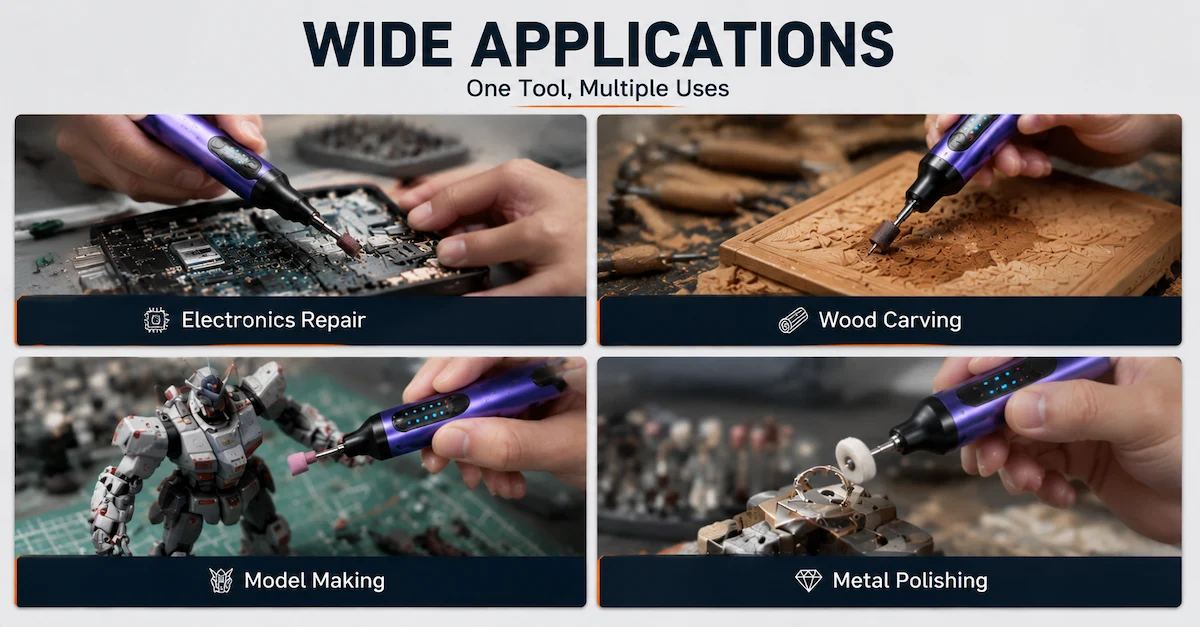
Precision electric screwdrivers are widely used in:
- Smartphone repair
- Laptop maintenance
- Drone repair
- Smartwatch assembly
- Camera repair
- Gaming console repair
- DIY electronics
- Industrial assembly lines
Different applications require different torque settings and screwdriver bit combinations.
How to Choose a Reliable Electric Screwdriver Manufacturer
When choosing an OEM/ODM supplier, buyers should evaluate:
Factory Testing Capability
A professional manufacturer should have:
- Digital torque testing equipment
- Aging test systems
- Battery testing equipment
- Professional QC teams
Production Experience
Experienced manufacturers usually provide:
- More stable quality
- Faster delivery
- Better customization
- Stronger technical support
OEM & ODM Support
Reliable factories should support:
- Custom logo
- Custom color
- Packaging design
- Tool kit customization
- User manual customization
FAQ — Torque Testing Process
What is the ideal torque for a precision electric screwdriver?
The ideal torque depends on the application. Precision electronics repair screwdrivers commonly use torque ranges around 0.2–0.35 N·m for delicate electronic components.
Why is torque accuracy important?
Accurate torque prevents:
- Screw damage
- PCB cracking
- Loose fastening
- Product assembly defects
It also improves repair efficiency and product safety.
How often should torque testing be performed?
Professional manufacturers usually perform:
- Incoming material inspection
- Production line testing
- Random batch inspection
- Final pre-shipment testing
What equipment is used for torque testing?
Factories commonly use:
- Digital torque meters
- Torque calibration systems
- Stability testing fixtures
- Data analysis systems
Can torque settings be customized?
Yes. Professional OEM & ODM manufacturers can customize:
- Torque output
- Rotation speed
- Button functions
- Product appearance
- Packaging solutions
What industries require precision torque testing?
Industries include:
- Consumer electronics
- Smartphone repair
- Computer assembly
- Smart home devices
- Industrial manufacturing
- Precision assembly production
Conclusion
Torque testing is one of the most important quality control procedures for precision electric screwdrivers. Accurate torque output ensures stable fastening performance, protects sensitive electronic components, and improves overall product reliability.
For global distributors, wholesalers, repair brands, and Amazon sellers, choosing a manufacturer with strict torque testing standards can significantly reduce product defects and improve customer satisfaction.
As the global demand for precision repair tools continues to grow, professional torque testing processes are becoming increasingly important for maintaining stable quality and long-term market competitiveness.