
S2 vs CRV screwdriver bits: what buyers actually need to know
When people compare S2 vs CRV screwdriver bits, they are usually not looking for metallurgy trivia. They are trying to avoid stripped fasteners, premature bit wear, and a return pile that starts with one bad tool choice. That matters even more in a compact electric precision screwdriver set, where torque is delivered faster than a human hand would normally manage, and a weak bit can fail before the tool itself shows any problem.
For OEM buyers, sourcing managers, and repair-focused product teams, the question is simple enough: which material gives the better balance of durability, cost, and day-to-day usability in a screwdriver kit aimed at electronics, small appliances, and precision assembly? The answer is not always the same for every market, which is why a side-by-side look is more useful than a blanket “best screwdriver bits S2 vs CRV” verdict.
Quick comparison: the practical difference
S2 steel bits vs CRV is a comparison buyers run into because both are common in hand tools, yet they behave differently in service. S2 is generally chosen when the bit needs higher toughness and better resistance to twist under load. CRV, short for chrome vanadium, is widely used in general-purpose tools and can be a sensible option when the kit has to stay cost-efficient and cover normal repair work.
In a torque screwdriver bits comparison, S2 usually earns attention for its stronger performance in repetitive fastening, especially where the user may be driving small screws into electronics housings, device frames, or fine mechanical assemblies. CRV can still be perfectly acceptable for lighter-duty work, but buyers should be cautious about assuming “metal bit” means “equal bit.” In precision tools, the difference shows up in wear, tip integrity, and how long the bit stays useful before rounding begins.
Why the screwdriver set design changes the material choice
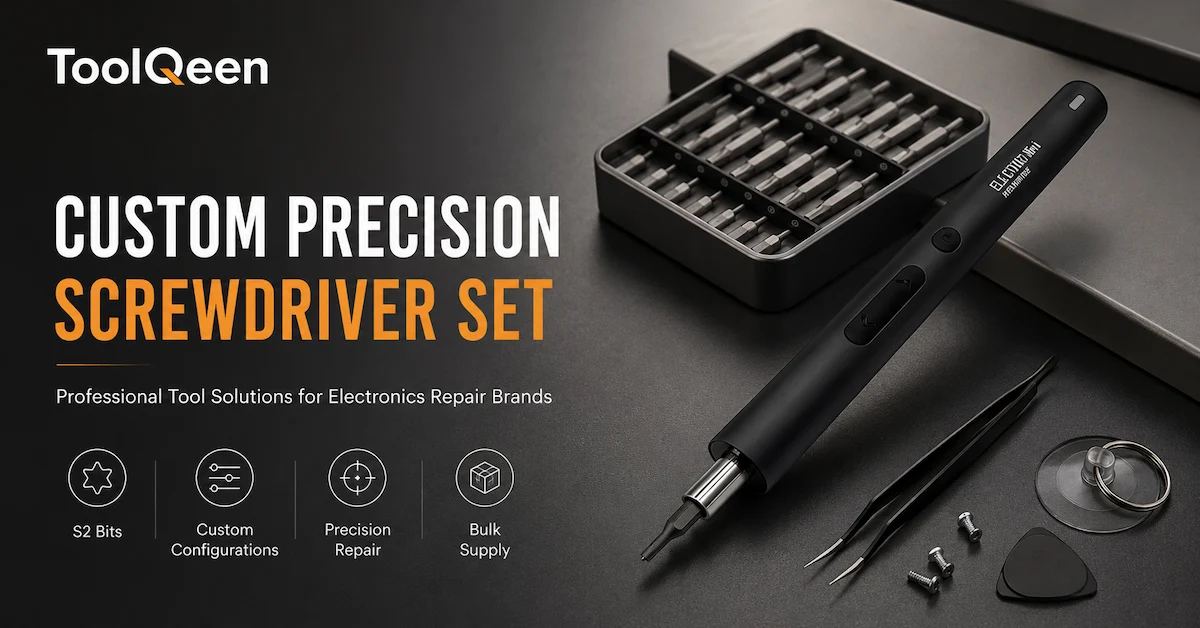
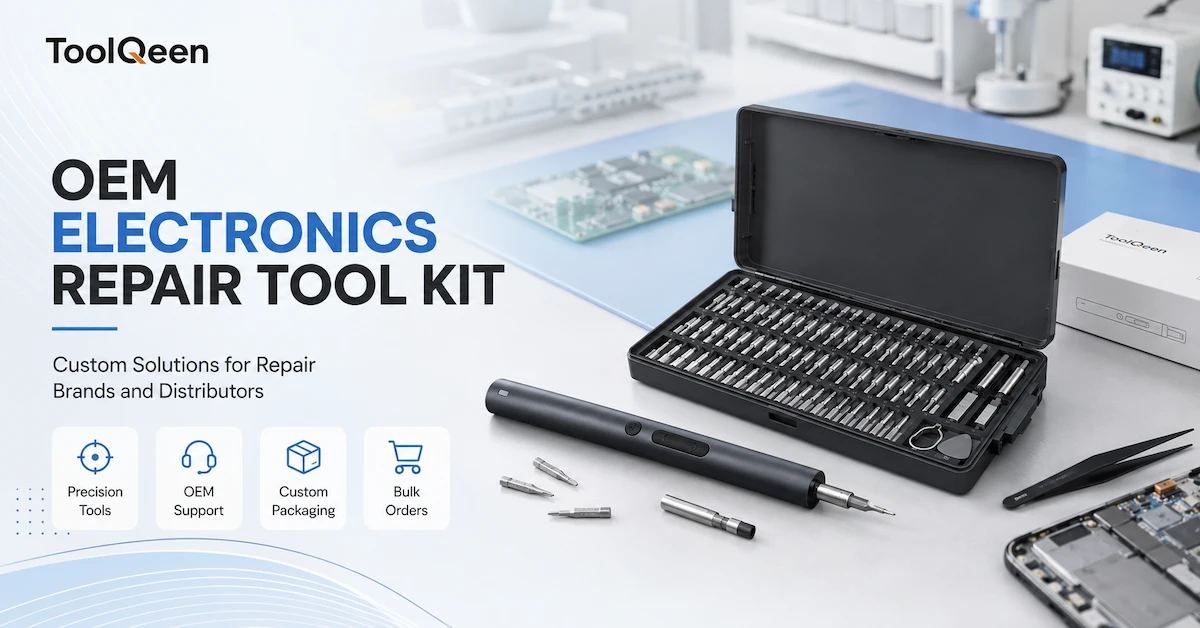
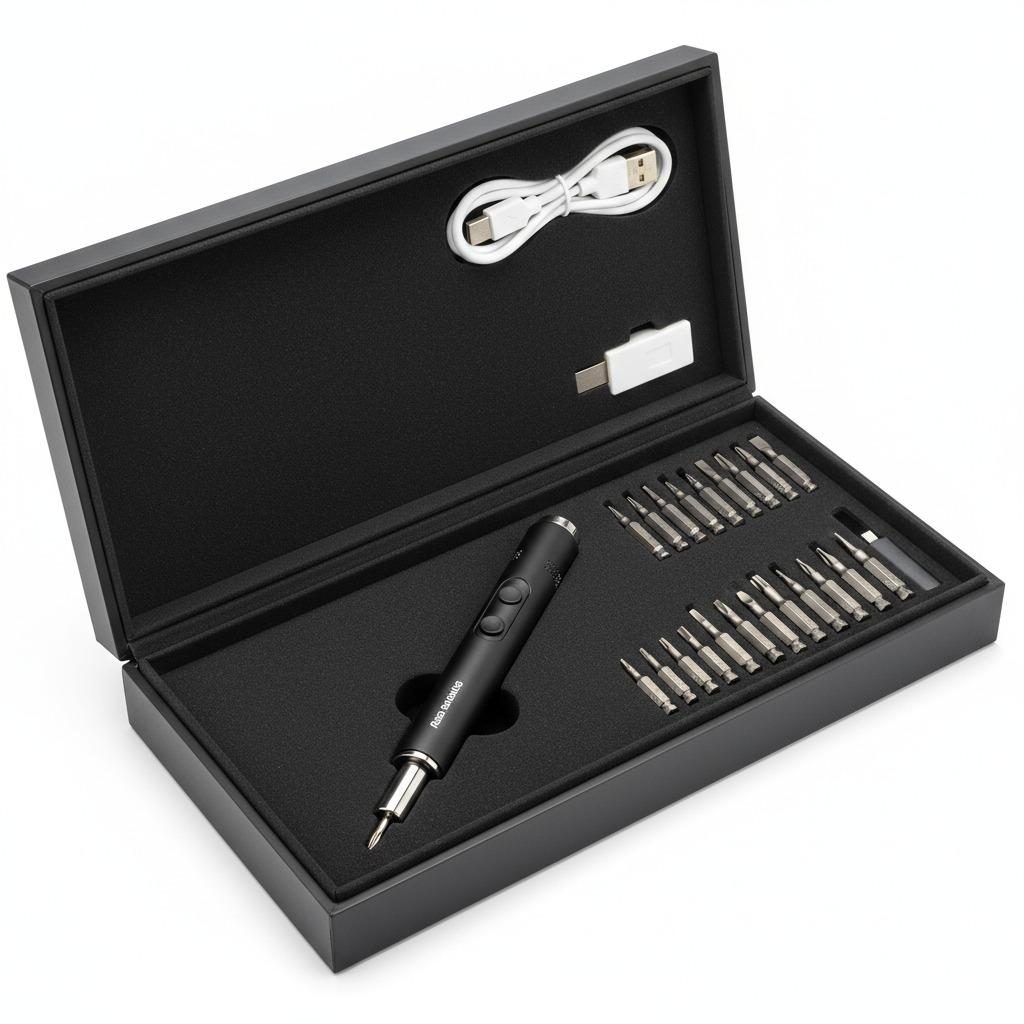
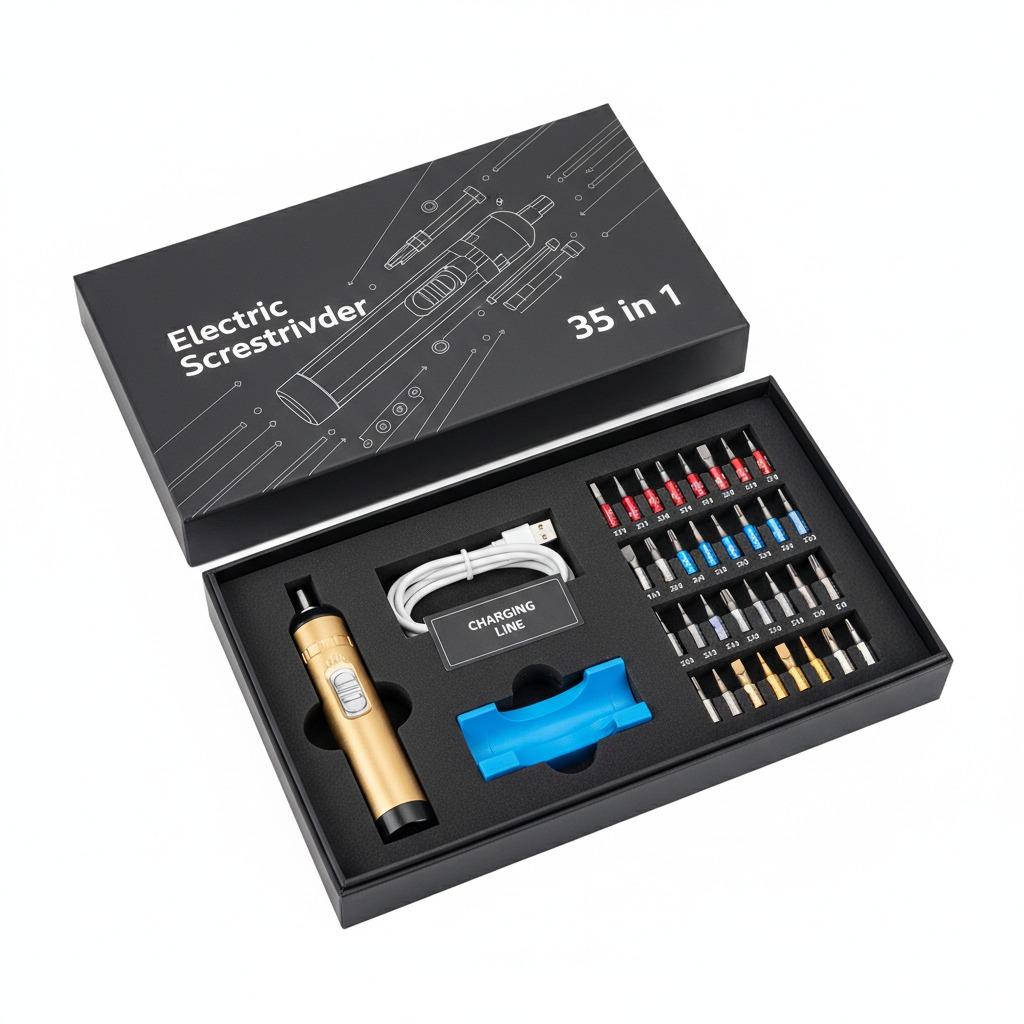
An electric precision screwdriver kit is not the same environment as a basic manual screwdriver set. The product described here is a slim pen-style electric screwdriver packaged with multiple interchangeable bits, a charging cable, and an organized storage case. That layout suggests a tool intended for small fasteners, portable repair work, and fast bit changes rather than heavy industrial fastening.
That matters because the tool itself can encourage users to apply more cycles, not necessarily more force, but enough repeated loading to expose weak bits. In a service bench or repair-shop setting, a bit may be used dozens of times in one shift. In a consumer setting, the tool may sit in a drawer until a phone, laptop, or camera repair comes along. The material choice has to hold up across both patterns of use.
S2 steel: where it tends to make sense
S2 steel is commonly associated with higher toughness and better performance under impact or torsional stress. In plain language, it tends to resist snapping and twisting better than many general-purpose bit steels. That is one reason it is often favored for precision driver kits, especially those marketed to technicians who work on electronics and small hardware.
For an OEM electric screwdriver set, S2 can support a more premium positioning. It aligns well with buyers who want a compact kit that feels professional, not flimsy. It is often a better fit when the set includes a rigid presentation box, foam insert, and an organized bit tray, because the whole package is aimed at repeat use and brand perception as much as raw functionality.
There is a caveat, though. S2 is not automatically “better” if the rest of the product is built for entry-level retail. If the screwdriver body, bit retention, or packaging is designed for casual use, the premium bit material may be overkill. In other words, a high-end bit in a weak system still leaves you with a mediocre screwdriver kit.
CRV bits: the sensible baseline for many kits
CRV bits are common for good reasons. They are familiar to buyers, easy to source, and often sufficient for general repair tasks. In markets where price sensitivity is high, CRV can help keep the kit commercially viable without pushing the bill of materials into a premium bracket.
For some buyers, that is exactly the right choice. If the target user is doing occasional maintenance on small appliances, toys, or light household electronics, CRV can do the job. It also works well when the business model depends on attractive retail packaging, broad accessory counts, and competitive shelf pricing rather than industrial-grade endurance.
Still, CRV can be the first material to show wear if users routinely over-torque fasteners or hit stubborn screws with a powered driver. That is where complaints begin: the bit looks fine at first, then the tip deforms, and the next screw starts slipping. Once that happens, the tool feels cheap even if the rest of the kit was thoughtfully assembled.
What the buyer should weigh beyond the alloy name
The materials debate is useful, but it should not crowd out the other factors that determine whether a precision screwdriver set performs well in the field. The pen-style electric driver in this kind of kit needs balanced weight, secure bit storage, and enough control for small fasteners. If the bit tray is disorganized, the user wastes time. If the case is flimsy, the set looks like a commodity. If the bits fit loosely, the material choice becomes secondary.
For buyers comparing screwdriver kits, these are the practical questions that matter:
Does the kit need premium positioning, or just functional utility?
Will it be used in repair shops, by distributors, or by casual consumers?
Is the product expected to face repeated daily use, or intermittent home repairs?
Does the packaging support retail presentation and safe transport?
Those questions matter as much as the bit alloy. A well-organized 35-piece style set with a charging cable and fitted storage box can sell on convenience, but the bit material decides whether that convenience still feels reliable after a few months.
Common mistakes when sourcing bits for electric screwdriver sets
One recurring mistake is assuming that all precision bits are interchangeable across materials because they “look the same.” They do not. Two kits can have identical tray layouts and very different service lives depending on the steel used and the quality of machining. Another mistake is chasing the cheapest specification sheet and then trying to rescue the product with packaging. That rarely works for technical buyers.
Another issue is over-specifying where it does not help. If a simple consumer repair kit is built like a lab instrument, the cost can rise faster than the market will accept. On the other hand, if the kit is supposed to serve repair technicians, cutting corners on bit quality can create more warranty noise than the savings are worth. The right answer depends on the channel.
How this connects to OEM and ODM kit development
Shenzhen ToolQeen Technology Co., Ltd. focuses on OEM and ODM tool kits, including mini electric screwdriver sets and related repair tools. That kind of manufacturing background matters because bit material selection is not a standalone decision; it sits inside a product strategy. ToolQeen’s market-driven approach, customization support, and emphasis on stable production are relevant for buyers who need a kit that can move from concept to retail shelf without endless rework.
For brand owners and Amazon sellers, the decision may come down to whether the product is being positioned as a value kit or a step-up repair solution. For distributors and wholesalers, consistency is often the bigger concern. In either case, the bit alloy should match the story the rest of the product tells. A premium-looking electric screwdriver with a foam insert and organized storage tray usually deserves a bit set that can stand up to the promise it is making.
Selection advice for different buyers
If you sell to repair professionals
Lean toward S2 steel bits when the product is expected to see regular bench use. Professional users notice tip wear quickly, and they remember which kits hold up.
If you sell entry-level retail kits
CRV may be the more practical choice if the goal is to stay competitive on price while still offering a credible electric precision screwdriver package. Just avoid overselling it as heavy-duty.
If your product is a bundled premium set
Consider S2, especially if the set includes a rechargeable electric screwdriver, organized storage, and clean presentation packaging. The bit material should support the whole impression.
A short buyer-facing warning
Do not judge a precision screwdriver kit by the handle alone. A sleek pen-style body, a charging cable, and a tidy box can hide mediocre bit performance. Conversely, a modest-looking kit with well-made bits may outlast a prettier competitor. In this category, users remember the first stripped screw, not the finish on the housing.
FAQ for sourcing teams
Are S2 bits always better than CRV bits?
Not always. S2 is often the stronger choice for torque resistance and repeated use, but CRV can be a reasonable fit for lighter-duty, price-sensitive kits.
Which is better for electric precision screwdrivers?
For many electric precision screwdriver kits, S2 is the safer premium option because powered driving exposes bit weaknesses faster. CRV can still work when the application is mild.
What should I verify before ordering?
Confirm the actual bit material, bit count, fit with the driver, packaging format, and the intended user segment. Do not assume the visible tray layout tells you everything.
What to do next
If you are building or sourcing a screwdriver kit, decide first whether the product should compete on value or on durability. That single choice usually points you toward CRV or S2 more reliably than any generic spec sheet. For OEM and ODM projects, align the bit material, the electric driver body, and the packaging into one consistent market message. If you need a customized precision tool set with brand-ready presentation, a supplier such as Shenzhen ToolQeen Technology Co., Ltd. can help shape the configuration around the channel you are targeting, rather than forcing a one-size-fits-all answer.