
Why a ratchet screwdriver factory matters to buyers who sell, spec, or source tools
A ratchet screwdriver factory is not just a place that assembles handles and bits. For buyers, it is where the small decisions that affect shelf appeal, user comfort, and margin all get locked in: the feel of the ratchet, the way the bits are organized in the case, the durability of the molded storage box, and whether the kit looks like a serious professional ratchet screwdriver set or a throwaway impulse item. Those details matter because this category lives or dies on convenience. If a user can find the right bit quickly, keep fasteners under control, and store the kit without losing parts, the product earns repeat use. If not, it becomes another drawer-cluttered purchase.
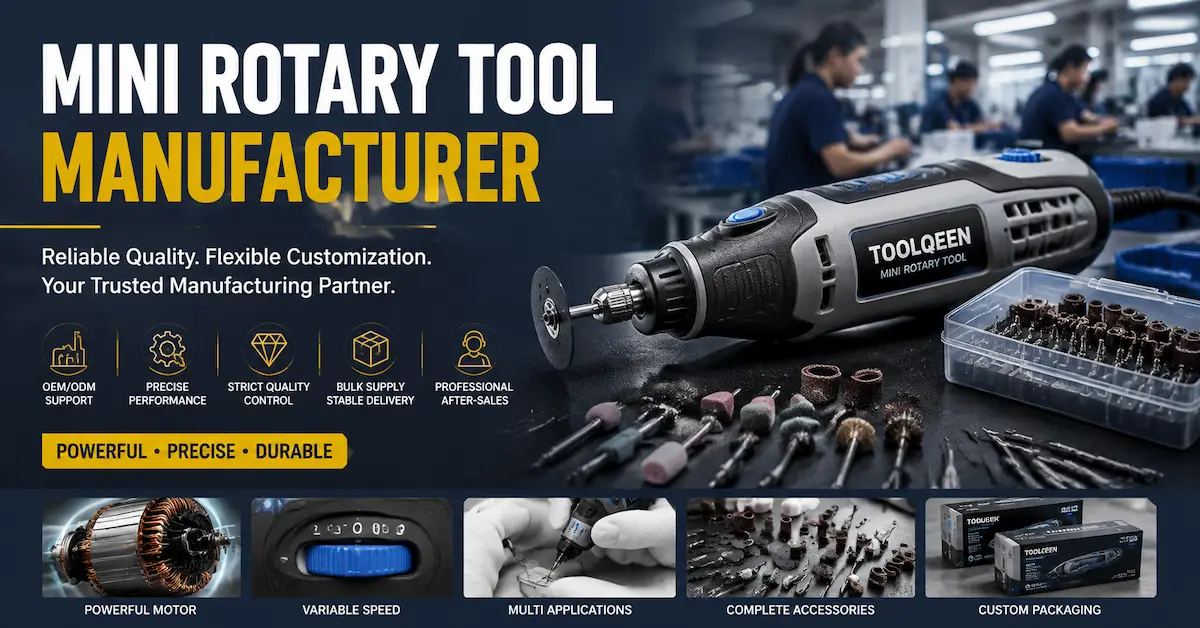
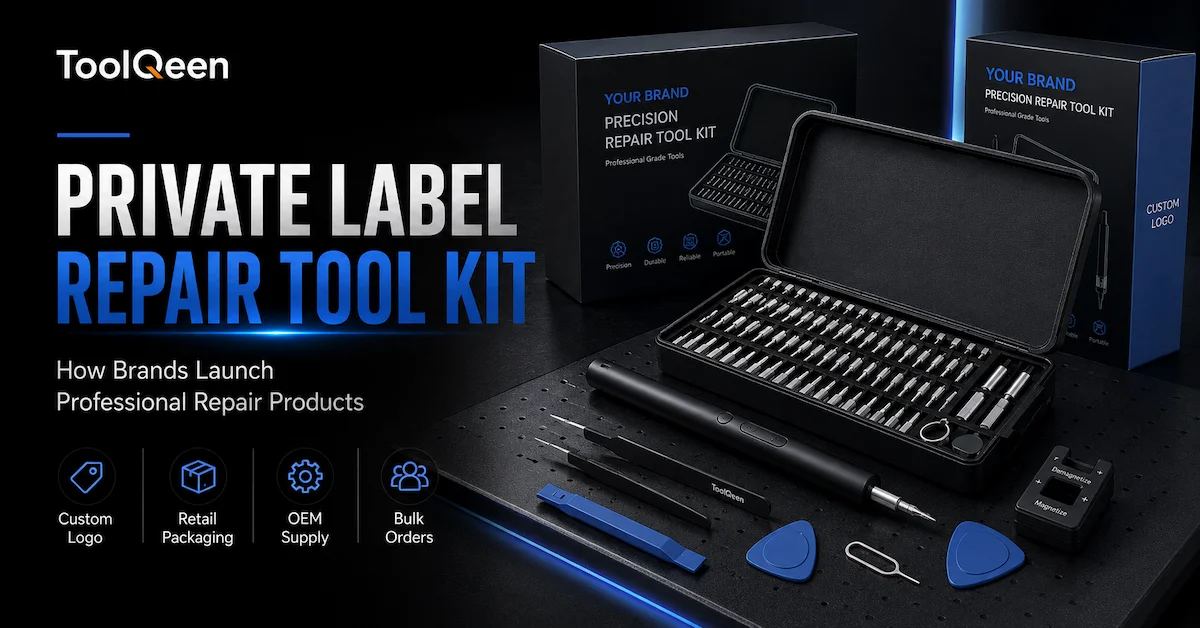
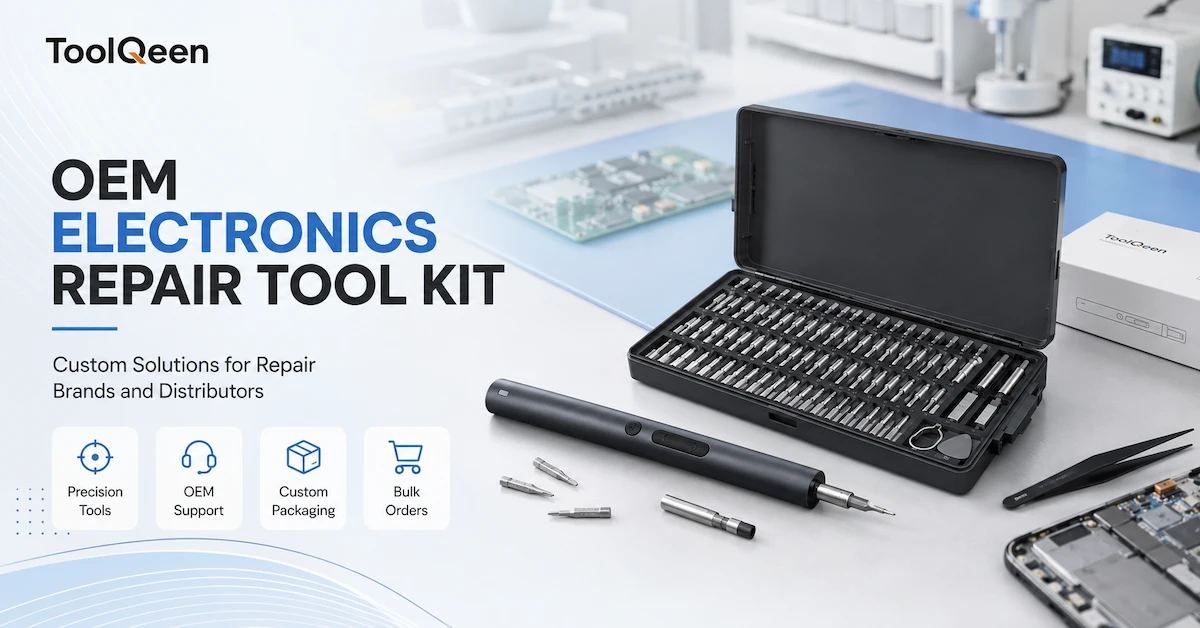
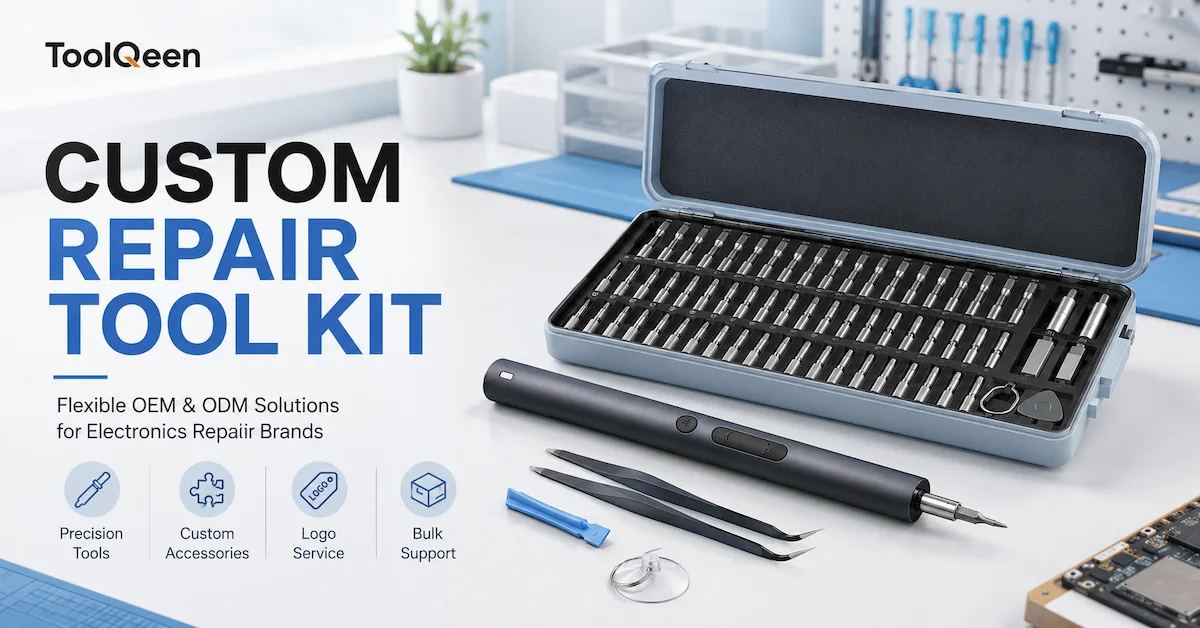
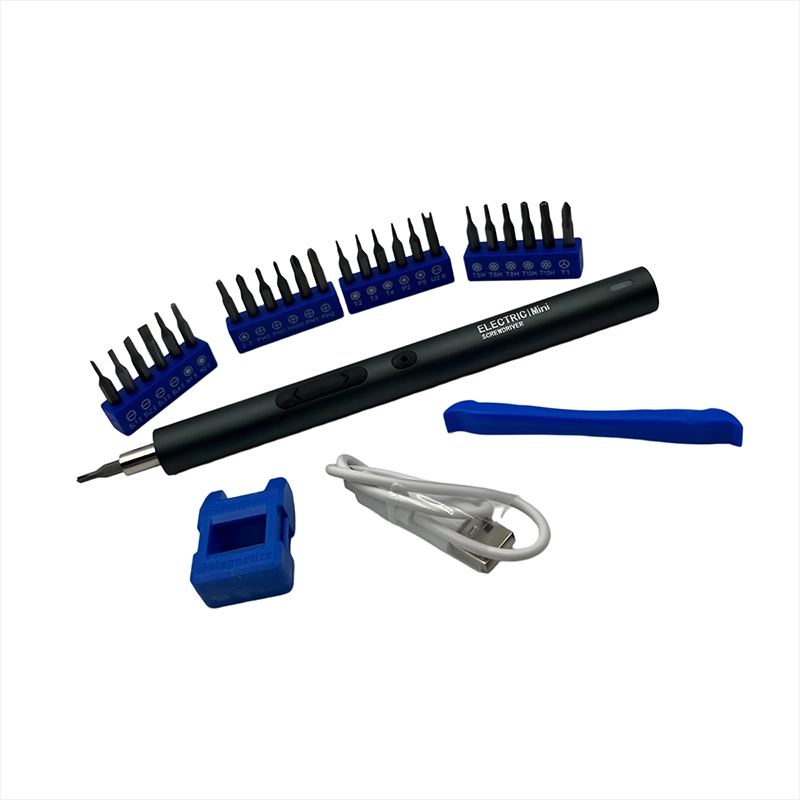
That is why sourcing managers and product teams often evaluate the factory as carefully as the screwdriver itself. In a category like the ratchet screwdriver production line, the manufacturing setup affects everything from consistency to customization. Shenzhen ToolQeen Technology Co., Ltd. positions itself as an OEM/ODM tool kit manufacturer, with experience across screwdriver bits, mini electric screwdrivers, rotary tools, and repair kits. For buyers looking at ratchet screwdrivers wholesale or planning a custom ratchet screwdriver line, that kind of range can be useful because the kit is usually sold as part of a broader accessory story, not as a single tool.
What the product is really for
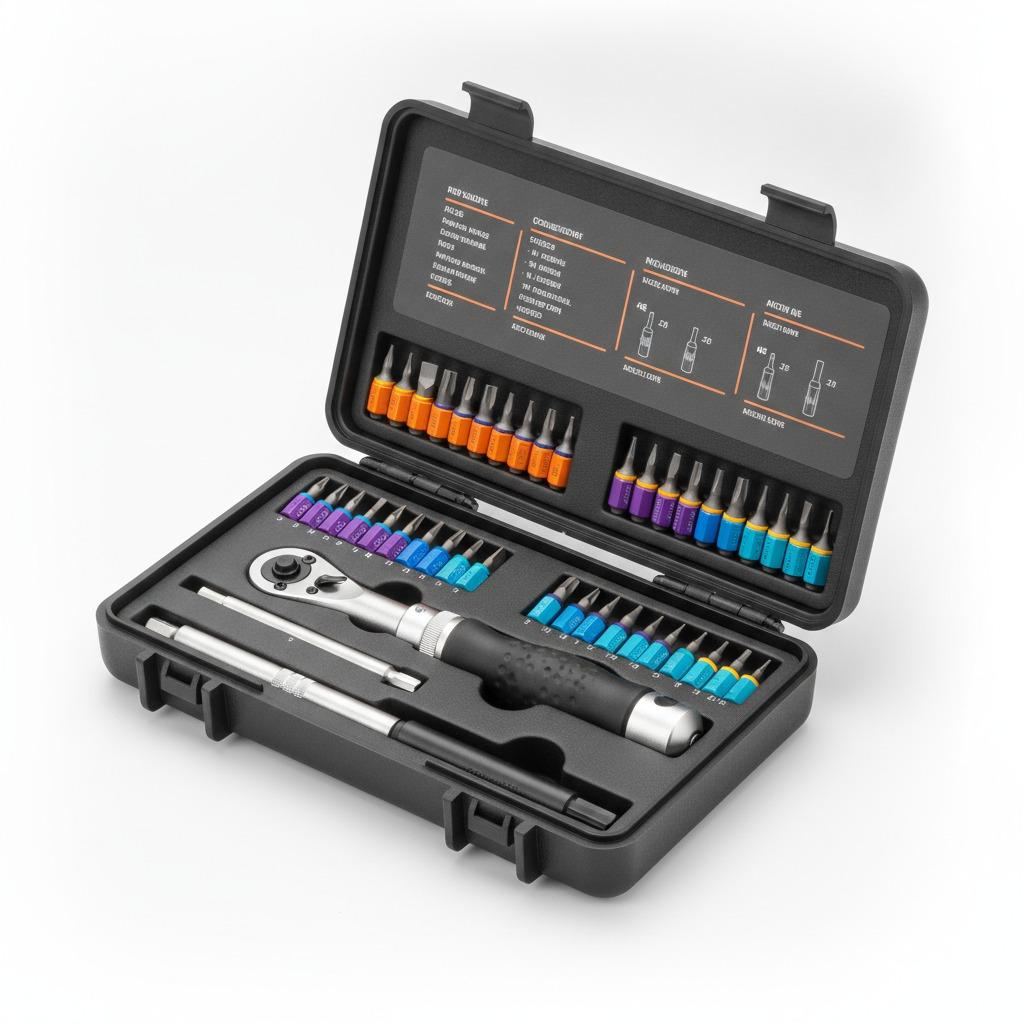
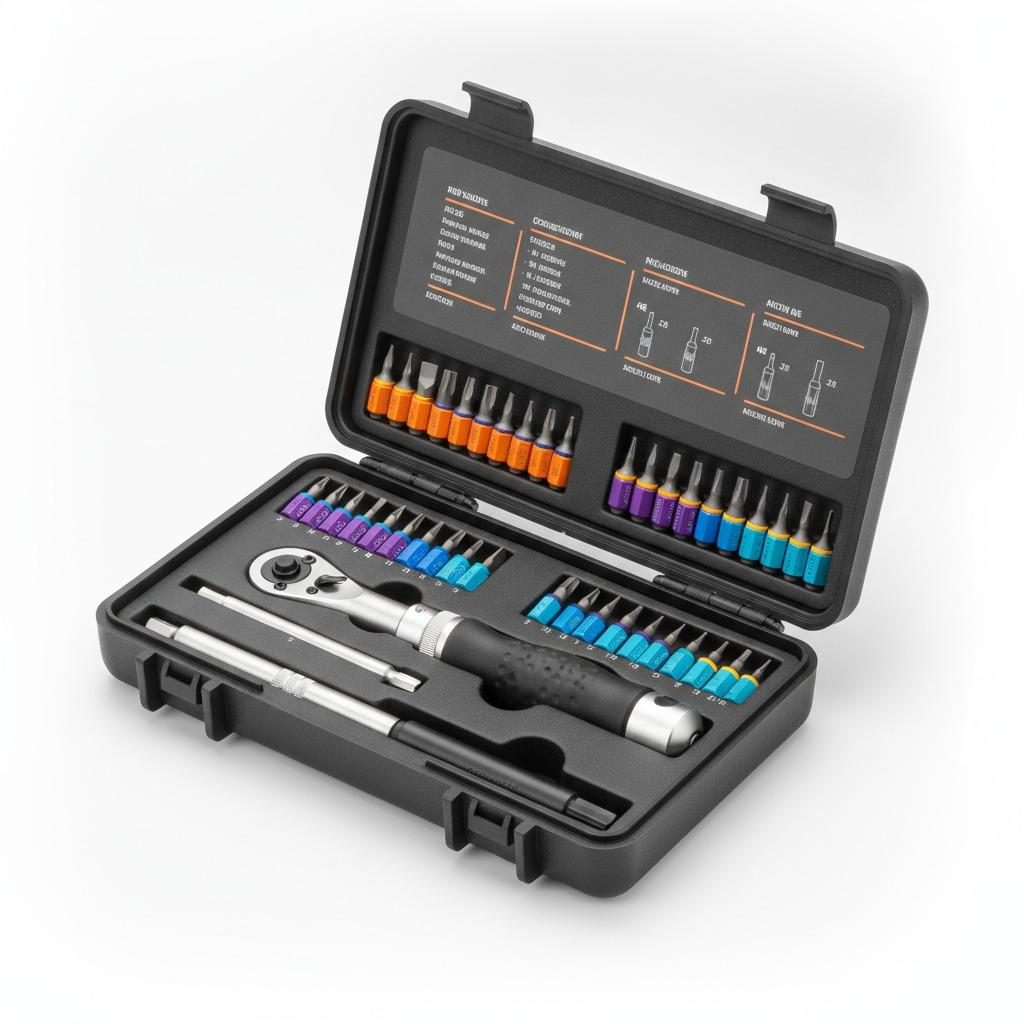
The sets shown here are compact multi-piece hand tool kits built around a ratcheting driver and interchangeable bits. One version uses a magnetic ratchet screwdriver-style handle in a hard storage case; another uses a T-handle ratchet format with a central vertical grip and horizontal crossbar for added torque. In both cases, the product is aimed at general fastening and unfastening tasks where speed and organization matter more than brute force.
Typical use cases include appliance repair, electronics, furniture assembly, household maintenance, light mechanical work, and field service. That last point is worth emphasizing. A portable case with molded compartments is not a cosmetic feature. For technicians and repair teams, it means fewer missing bits, faster identification, and less time spent rummaging in a toolbox. The color-coded rings or collars on some bits help with that too, especially when several profiles and sizes are mixed into one kit.
Key features buyers can verify from the product layout
The visible features are straightforward, and that is usually a good sign in this category.
The first is the ratcheting handle. A ratchet screwdriver supplier will often stress this because the mechanism reduces repetitive wrist motion and can speed up assembly work. Buyers should still be cautious here: ratcheting feel can vary widely from one tool to another, and the mechanism’s smoothness often says more about manufacturing control than about marketing copy.
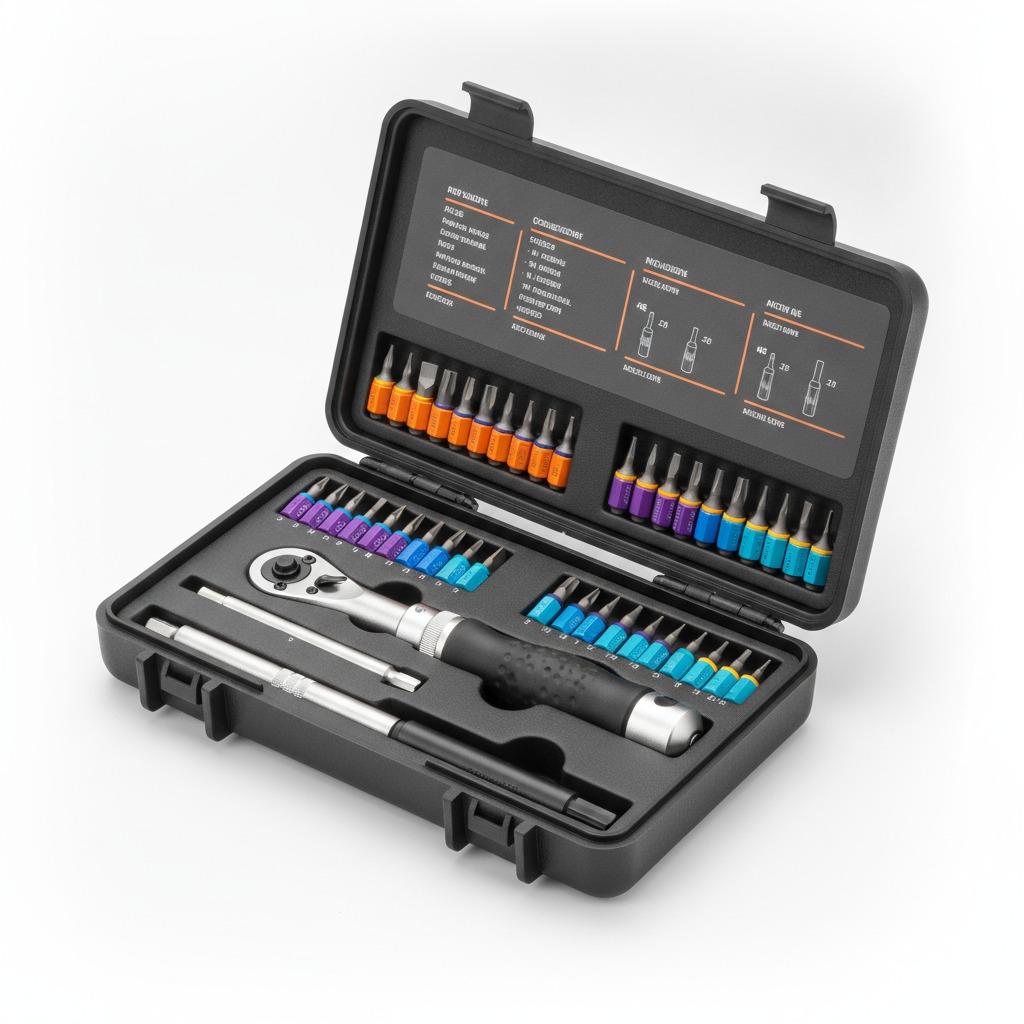
The second is bit organization. These kits include multiple interchangeable bits, plus extension or adapter-style components. The bits appear to be metal, likely hardened steel, though the exact grade is not visible. The case interior is molded to hold each piece in a dedicated slot, which is exactly what buyers want in a product intended for retail, e-commerce, or field use.
The third is portability. A hard case gives the set a more finished, retail-ready feel and offers real practical value when the tool is moved between job sites, benches, or storage drawers. For an industrial ratchet screwdriver buyer, this can be the difference between a kit that stays complete and one that slowly disappears into the shop.
How a ratchet screwdriver factory typically builds the kit
Exact process details depend on the supplier, but the manufacturing logic is familiar.
The storage case is usually injection molded, which allows the manufacturer to create a hinged lid, latch, and shaped tray insert in one consistent format. That matters because case fit is one of the first things customers notice. If the bits rattle around or the latch feels flimsy, the set immediately looks cheaper than it should.
The driver parts and bits are generally produced through a mix of metal forming, machining, heat treatment, and finishing. In simple terms, the factory needs bits that hold shape, resist wear, and fit the drive interface accurately enough for repeated use. Some visible components have dark or satin coatings, but it would be a mistake to claim a specific alloy or coating system without confirmation. Buyers should ask directly about material specification if the product will be used in demanding environments.
For a ratchet screwdriver manufacturer, the assembly stage is where product differentiation happens. This is where the factory decides which bit assortment goes into the kit, how the trays are arranged, whether the handle is a standard driver or T-handle style, and what the packaging says on the shelf. That last part is not minor. In retail and marketplace channels, a well-composed kit can outsell a technically similar one simply because it looks easier to understand.
Choosing between a standard driver kit and a T-handle set
Not every buyer needs the same format.
A standard ratcheting screwdriver is usually better when the user wants a familiar grip and quick access to screws in tighter spaces. It is the format many consumers expect when they hear “ratchet screwdriver.” The magnetic bit retention noted in one of the product descriptions is useful here because it helps hold the bit and, in some cases, the fastener during positioning.
A T-handle ratchet screwdriver, by contrast, is more about torque and control. The crossbar shape gives the user leverage, which can be handy for stubborn screws, repetitive assembly, or situations where the tool needs a more stable pushing motion. It is not automatically better; it is simply different. Buyers who source for workshop, appliance, or maintenance channels may prefer the T-handle version, while general consumer programs often sell better with the more familiar handheld style.
What makes these kits attractive for OEM and retail programs
ToolQeen’s business model is built around OEM & ODM customization, and that fits this category well. Ratchet screwdriver production is not only about making the tool; it is about building a product line that can be sold to distributors, wholesalers, Amazon sellers, brand owners, and retailers.
Practical customization options often include logo printing, color choices, packaging design, and assortment tuning. For example, a buyer targeting electronics repair may want more precision bits and a slimmer presentation. A home-improvement channel may prioritize a broader assortment and a stronger-looking hard case. A brand owner trying to stand out on a crowded marketplace may want a distinct color scheme or tray layout.
The company also notes fast sampling and scalable production, which is the sort of operational detail buyers tend to care about early. If a sourcing team is evaluating a ratchet screwdriver factory for a launch window, sample speed and stable production matter as much as the product itself. Still, it is wise to confirm the exact order quantities, shipment terms, and quality checkpoints before assuming the line can move as fast as the brochure suggests.
Common mistakes when buying ratchet screwdrivers wholesale
The biggest mistake is treating the set as a commodity and skipping the inspection of the mechanism and case fit. Two kits may look similar in photos, but one may have a loose latch, weak bit retention, or a poorly balanced handle. Those problems turn into returns.
Another mistake is over-specifying the bit assortment without checking actual demand. More pieces are not always better. In some channels, buyers prefer a tighter, more understandable configuration over a crowded tray with obscure bits no one uses. This is especially true in e-commerce, where clarity sells.
A third mistake is ignoring packaging. A custom ratchet screwdriver can be merchandised well or badly depending on case color, labeling, and how the layout reads to the shopper. A neat molded case signals order; a cluttered one can make even a decent tool look cheap.
Questions worth asking the supplier before you place an order
If you are comparing a ratchet screwdriver supplier list, ask these questions early:
What bit types are included, and can the assortment be adjusted?
Is the handle magnetic, and if so, how is that feature implemented?
What is the case material and closure style?
Can the factory support logo printing and packaging changes?
What is the inspection process for bit fit, ratchet action, and case assembly?
Are sample sets available for channel testing before bulk purchase?
Those questions help separate a real manufacturing partner from a trader with generic stock photos. For tool buyers, that distinction affects both quality and accountability.
A practical buyer’s view of the category
The best ratchet screwdriver sets are not the ones with the most features on paper. They are the ones that solve a small, repeated problem cleanly. A good kit lets the user pick the right bit fast, apply reasonable torque, and keep the whole set intact after months of use. That is why the case, tray design, and bit organization deserve as much attention as the ratchet itself.
For sourcing teams, the decision is usually less about whether the product works and more about which version fits the target channel. A professional ratchet screwdriver for field service may need a tougher feel and a more controlled assortment. A retail-ready consumer kit may benefit from bright case color, simple labeling, and a compact footprint. The factory should be able to support both, or at least explain where its production strengths sit.
FAQ for sourcing teams and product managers
Is this more of a consumer tool or an industrial one?
Based on the available product information, it sits in the consumer to light industrial range. It is suitable for general maintenance and repair work, but exact industrial suitability would depend on the unconfirmed material and mechanism specifications.
Can the kit be customized?
Yes, according to the company information, OEM and ODM customization is available, including logo printing, color options, and packaging design.
What should I review first when sampling?
Check bit fit, ratchet feel, case closure, tray retention, and the clarity of the assortment. Those are the details most likely to affect buyer satisfaction.
Why choose a factory that also makes other repair tools?
Because a supplier with a broader tool program may better understand kit composition, retail positioning, and accessory bundling. That can be useful when building a product line rather than a single item.
Next step for buyers
If you are evaluating a ratchet screwdriver factory for a private label launch, wholesale program, or channel-specific repair kit, start with a sample review and a clear discussion of customization. Ask for the exact bit assortment, confirm packaging options, and compare the tool feel against your target user group. The right partner should be able to help you shape a kit that is easy to sell and practical to use, not just one that looks full in a photo.
For OEM/ODM tool kit development, Shenzhen ToolQeen Technology Co., Ltd. is positioned as a supplier worth a closer look, especially if your roadmap includes screwdriver bits, repair kits, and compact hand tools built for retail or distribution.