

Precision Electric Screwdriver Manufacturer: 7 Checks EU Importers Should Make Before OEM Orders
EU buyers comparing a precision electric screwdriver manufacturer are usually not choosing between two identical tools. They are choosing between two supply systems: one that can repeat torque feel, accessory fit, packaging accuracy, and compliance paperwork after the approved sample, and one that cannot. For importers, that difference shows up later as returns, relabel costs, delayed launches, and distributor hesitation.
Quick Answer
A reliable precision electric screwdriver manufacturer for EU OEM orders should prove CE and RoHS document readiness, torque repeatability, bit material control, 500 pcs OEM MOQ fit, sample confirmation discipline, packaging accuracy, and repeat-batch QC before mass production starts. Buyers should treat the approved sample, compliance file set, and written inspection checklist as one package.
Buyer Pain: Why Similar-Looking Samples Still Create Risk
Many screwdriver kits look acceptable in catalog photos. That does not confirm whether torque stays stable across battery levels, whether S2 bits match the intended repair use, or whether carton marks and inserts will match the approved retail plan. EU importers need consistency more than a one-time demo result because channel trust is expensive to rebuild after a bad first batch.
What a Precision Electric Screwdriver Manufacturer Should Actually Provide
The manufacturer should provide a repeatable OEM process covering product configuration, accessory layout, logo treatment, manual language planning, packaging, inspection, and shipment coordination. ToolQeen's broader product range and factory background show the context buyers should review before approving a new private-label configuration.
Technical Explanation: Torque, Bits, Charging, and Control
Precision electric screwdrivers are judged by the total user experience, not by one spec line. Buyers should confirm torque output on real fasteners, bit hardness and fit, charging behavior, switch feel, magnetic retention, and whether the selected accessory mix matches laptop repair, mobile repair, smart-device assembly, or general electronics maintenance. ToolQeen positions precision programs around in-house production and repeatable output rather than catalog-only quoting.
Material and Industrial Design Checks
S2 bits, stable motor output, battery consistency, tray fit, and gift-box protection all affect warranty risk. A stronger supplier explains why the selected housing, accessory tray, and bit selection match the buyer's channel. For European compliance context, buyers should review the European Commission CE marking guidance and the EU RoHS directive page before assuming one document pack covers every variation.
Why Choose ToolQeen
ToolQeen supports OEM, ODM, wholesale, and private-label precision tool programs from Shenzhen with in-house design, mold development, injection molding, machining, assembly, QC, packaging, and export coordination. That matters for EU importers because the same team can align the approved sample, packaging checklist, and final inspection points instead of leaving those steps spread across separate vendors.
Factory Insight: How Approval Should Work Before OEM Orders
The sample stage should freeze the working configuration, accessory count, packaging direction, logo treatment, and multilingual inserts before mass production begins. Buyers can also compare adjacent sourcing guidance in ToolQeen's electric screwdriver manufacturer guide and the OEM electric screwdriver manufacturer guide.
Real Manufacturing Data Buyers Should Ask For
- OEM MOQ starting from 500 pcs for standard private-label programs.
- Typical sample timing around 3 to 5 days for standard configurations.
- Production timing around 10 to 15 days once configuration and packaging are locked.
- Torque accuracy target around +/-3% with documented test points for buyer confirmation.
QC Process Buyers Should Request
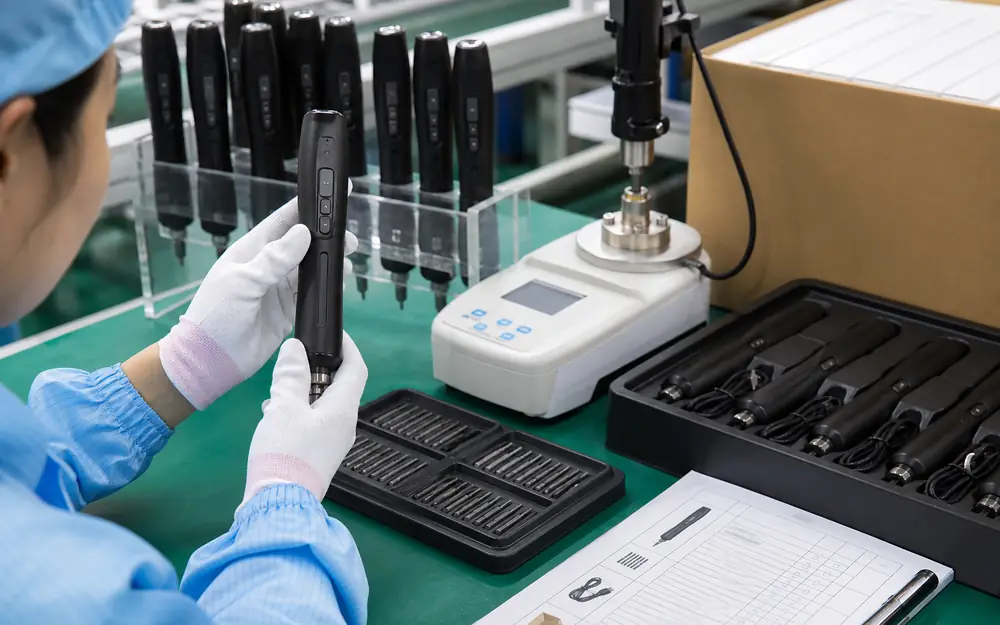
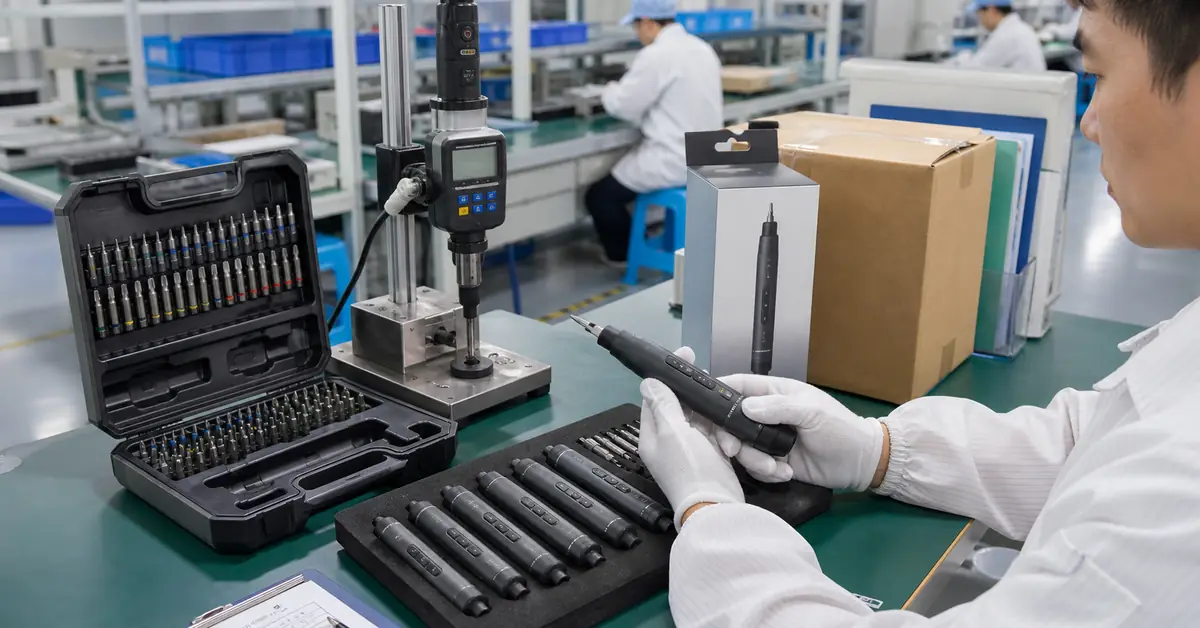
EU buyers should request a written QC flow that covers incoming parts, assembly checks, torque verification, charging confirmation, bit-fit checks, accessory count, logo placement, package print accuracy, and final carton review. That checklist is what turns an approved sample into a repeatable product instead of a one-off success.
7 Checks EU Importers Should Make Before OEM Orders
- Match the screwdriver to the real repair or assembly use case.
- Test torque feel and stability on the actual screw types.
- Confirm S2 bit material, hardness direction, and fit.
- Lock CE and RoHS files against the exact approved SKU.
- Align MOQ and lead time with launch and reorder risk.
- Freeze box artwork, barcode, inserts, and carton marks at sample stage.
- Require a repeatable written QC checklist before bulk payment.
EU Importer Checklist Table
| Buyer Check | Why It Matters | What To Confirm |
|---|---|---|
| Compliance pack | Avoids customs and channel delays. | CE/RoHS files tied to the exact approved model and charger. |
| Torque repeatability | Reduces returns and damaged fasteners. | Real test method, acceptable tolerance, and battery-state checks. |
| Packaging approval | Protects launch timing and retail trust. | Artwork, barcode, inserts, labels, and carton marks. |
| Sample lock | Prevents sample-to-bulk drift. | Approved accessory mix, photos, and final BOM direction. |
FAQ
What MOQ should EU buyers expect for OEM precision screwdriver projects?
Standard OEM programs typically start around 500 pcs, but the practical MOQ depends on packaging complexity, accessory count, and logo treatment.
When should CE and RoHS documents be checked?
Before mass production and against the exact approved SKU, charger, and packaging version. Buyers should not assume one file set automatically covers every variant.
What is the main QC risk for first-time private-label orders?
The main risk is sample-to-bulk drift: the approved sample feels right, but the final batch changes torque feel, accessory count, packaging, or labels because those points were not frozen in writing.
Can ToolQeen support private-label and OEM programs for EU buyers?
Yes. ToolQeen supports OEM, ODM, wholesale, and private-label precision tool programs for importers, distributors, and repair-tool brands.
Summary CTA
The right precision electric screwdriver manufacturer is the one that can repeat the approved sample with the same mechanical feel, packaging accuracy, and compliance readiness after the first order. If you are comparing EU OEM options, send ToolQeen your target application, quantity, packaging direction, and compliance concerns through the contact page so the sample, MOQ, and QC plan can be aligned before bulk production.