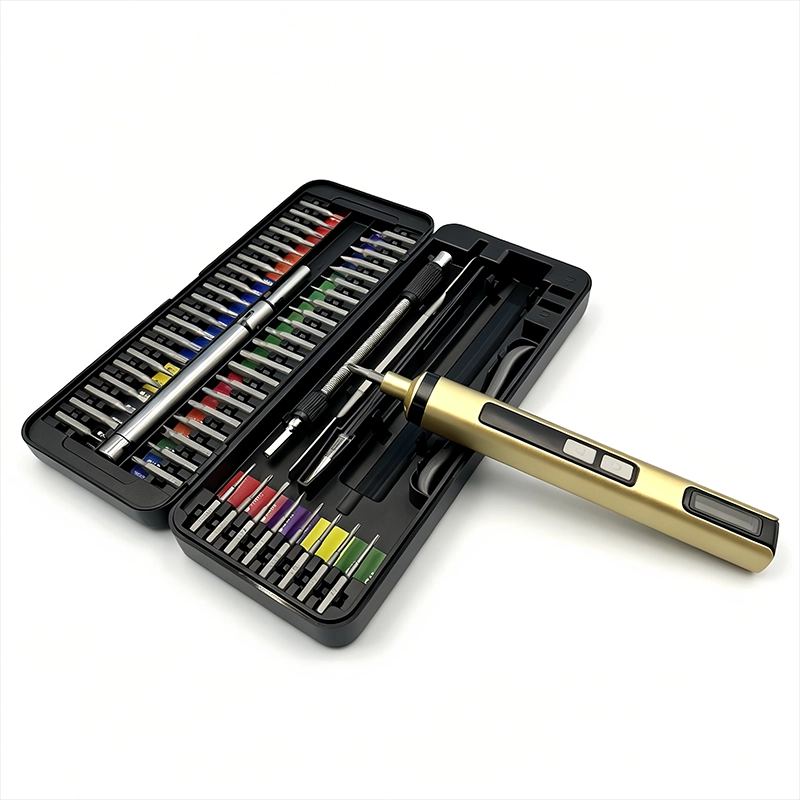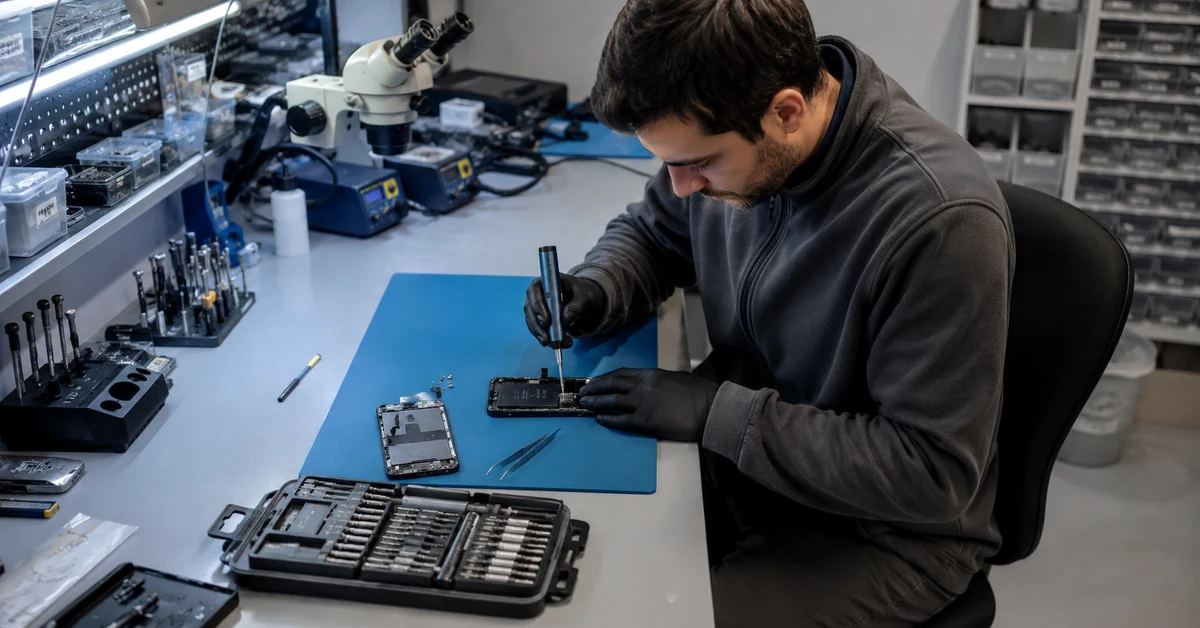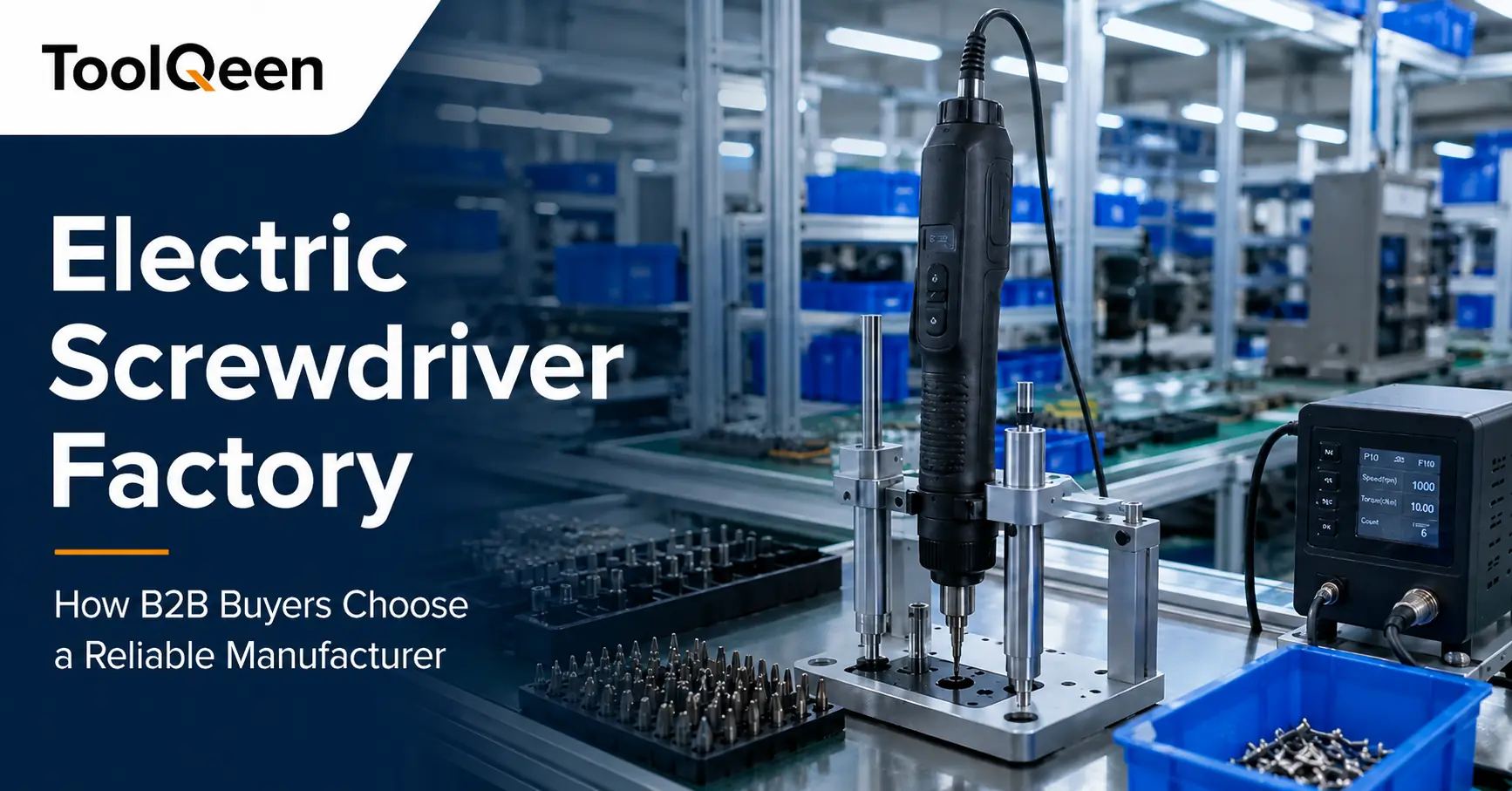

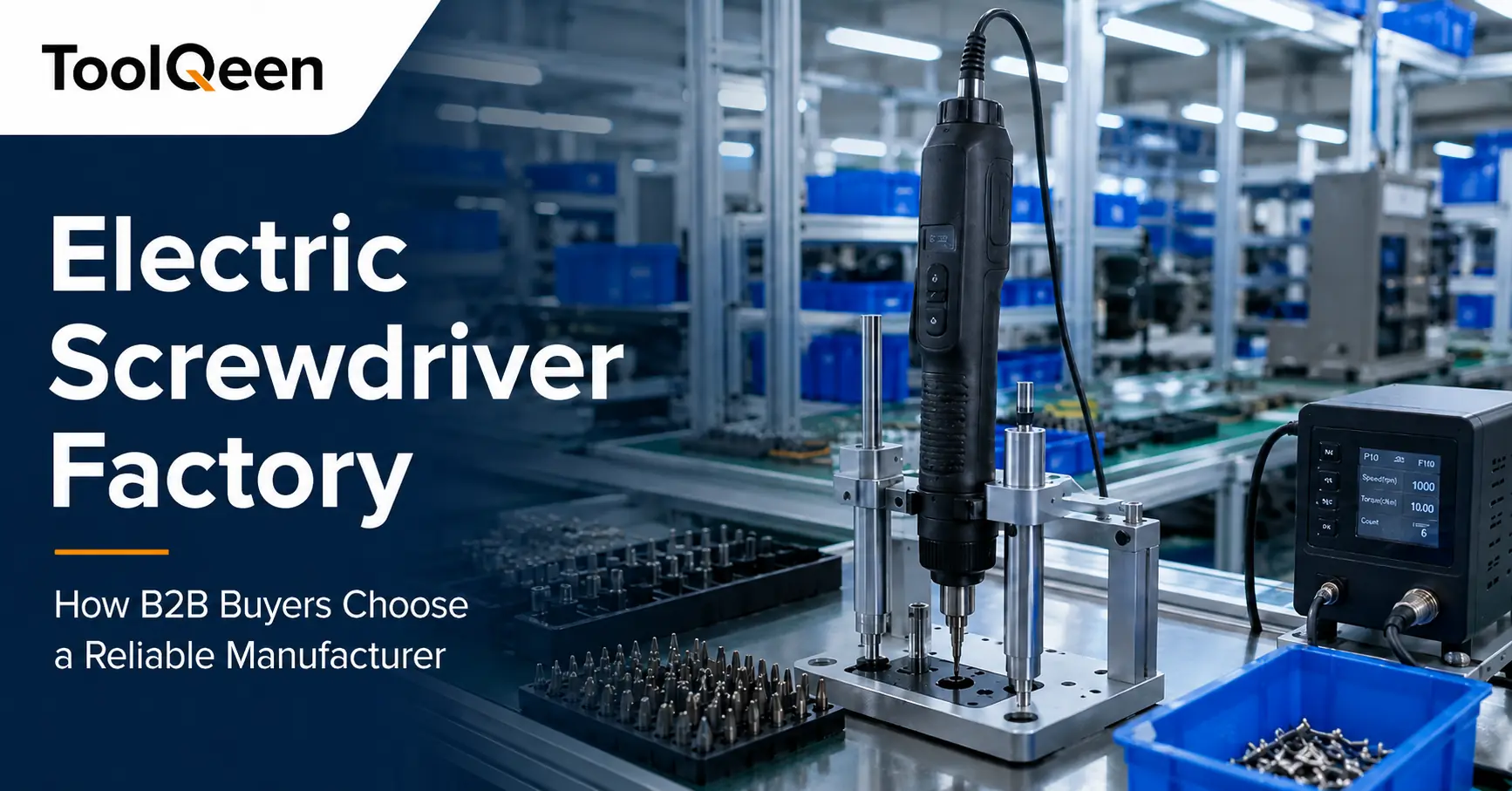
An electric screwdriver factory should provide more than a low unit price. For tool brands, repair tool distributors, Amazon sellers, electronics repair chains, and industrial buyers, the real value is stable torque, reliable bits, consistent battery performance, professional packaging, and repeatable quality across bulk orders.
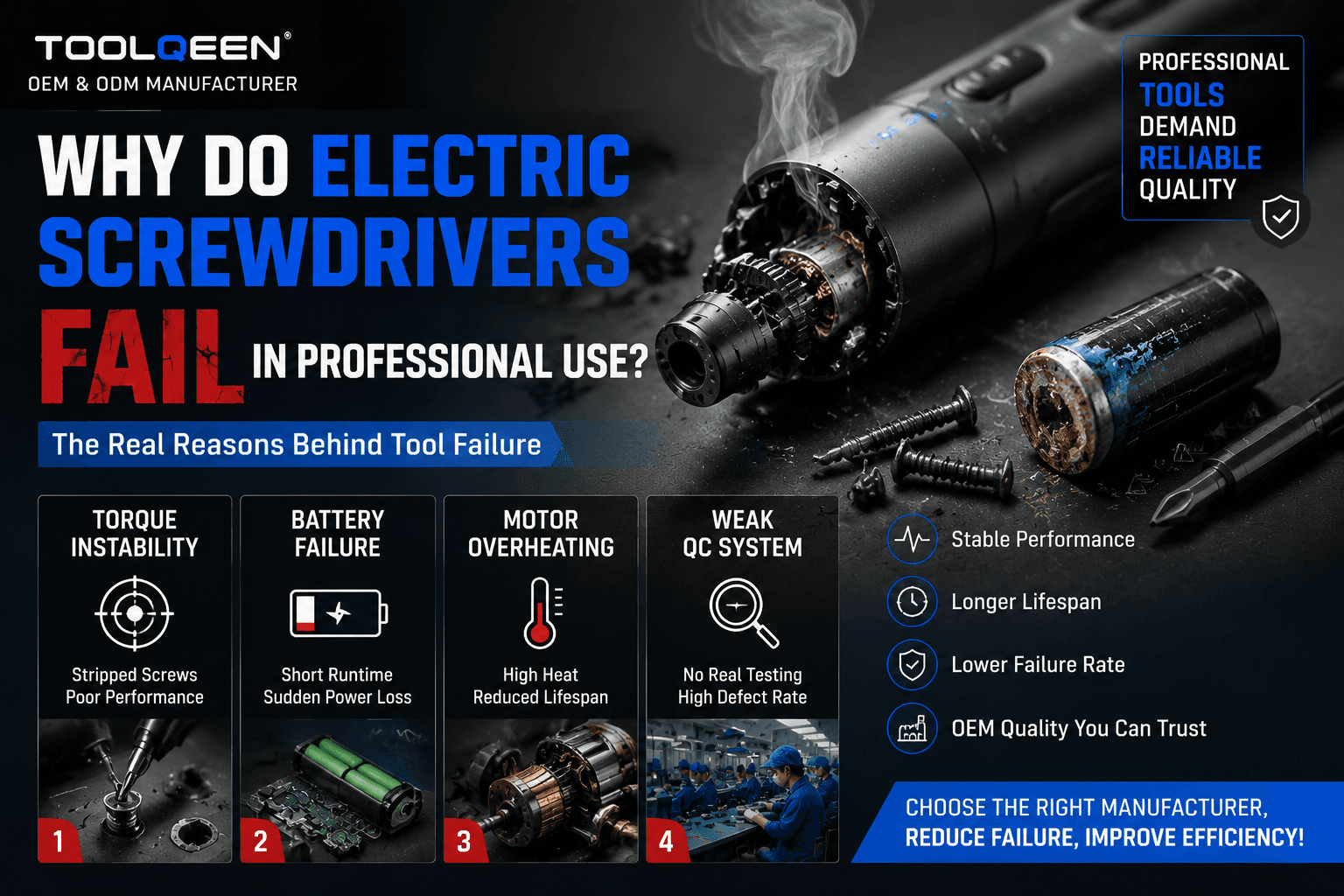
Many buyers find that a sample looks good, but the mass production batch has unstable torque, low-grade screwdriver bits, weak magnetic hold, loose fit, packaging damage, or delayed shipments. These problems directly affect customer reviews, repair efficiency, and repeat sales.
ToolQeen supports OEM/ODM repair tool manufacturing, electric screwdriver production, precision repair tool kits, custom logo service, packaging customization, sample requests, and bulk order support for global buyers. To learn more about ToolQeen’s factory background and production capability, visit our About Us page.
Quick Answer
A reliable electric screwdriver factory should have stable production capacity, torque calibration, assembly line QC, battery and motor testing, bit inspection, packaging inspection, clear MOQ, reasonable lead time, and OEM/ODM customization support. Buyers should request samples, confirm product specifications, review packaging, and check the factory QC workflow before approving mass production.
Why B2B Buyers Need a Real Factory Partner
For small trial orders, some trading suppliers may be enough. But when buyers need stable quality, private-label packaging, repeat orders, or market-specific product development, working with a real factory becomes more important.
A factory partner can help buyers control:
- Product structure and appearance
- Torque range and RPM performance
- Screwdriver bit material and hardness
- Battery capacity and charging performance
- Packaging design and shipping protection
- Logo, color, manual, barcode, and label details
- QC workflow before shipment
- Production lead time and repeat order consistency
For repair tool brands and electronics repair distributors, the product must perform consistently in real use. Buyers who want to compare ToolQeen’s available models can browse the Products page.
Recommended For
- Repair tool distributors
- Electronics repair tool brands
- Amazon and Shopify sellers
- Phone repair chain stores
- Laptop and PCB repair suppliers
- Industrial maintenance tool buyers
- OEM/ODM private-label brands
- Global importers and wholesalers
Not Recommended For
- Buyers who only need one or two retail tools
- Heavy construction tool sourcing
- Automotive impact driver applications
- High-torque drilling projects
- Low-price-only purchasing without QC requirements
Common Problems When Choosing the Wrong Supplier
Selecting the wrong electric screwdriver factory can create hidden costs after shipment.
1. Inconsistent Quality Between Sample and Bulk Order
Some suppliers send a good sample but fail to match the same quality during mass production. Buyers may receive tools with different torque levels, weak buttons, loose cases, or poor accessories.
2. Unstable Torque
Torque stability is important for electronics repair and precision assembly. If torque is not calibrated, users may experience over-tightening, stripped screws, or incomplete fastening.
3. Low-Grade Screwdriver Bits
Low-grade bits wear quickly and may cause bit slipping, loose fit, or damaged screw heads. For precision repair tools, S2 steel bits or similar high-grade material are preferred.
4. Weak Magnetic Hold
Small screws are easy to lose during phone, laptop, PCB, camera, or drone repair. Weak magnetic hold reduces repair efficiency and creates user complaints.
5. Poor Battery Performance
A low-quality battery can cause short runtime, slow charging, unstable power output, or early product failure. Battery inspection should be part of the production QC workflow.
6. Packaging Damage During Shipping
For e-commerce sellers and distributors, damaged packaging can cause returns even if the tool still works. Export packaging standards, drop testing, and carton checks should not be ignored.
7. Delayed Shipments
Unclear production planning can delay product launches, seasonal sales, or platform inventory restocking. Buyers should confirm production lead time before placing an order.
How to Choose an Electric Screwdriver Factory

When evaluating an electric screwdriver factory, buyers should check both product capability and production management.
Product Capability Checklist
- Does the factory offer multiple electric screwdriver models?
- Can it support precision repair tool kits?
- Does it provide suitable torque range options?
- Are RPM, battery capacity, and charging method clearly specified?
- Are the bits made from S2 steel or equivalent material?
- Is magnetic hold tested before shipment?
- Can the factory customize bit quantity and accessory layout?
- Does the tool have a slim and ergonomic body?
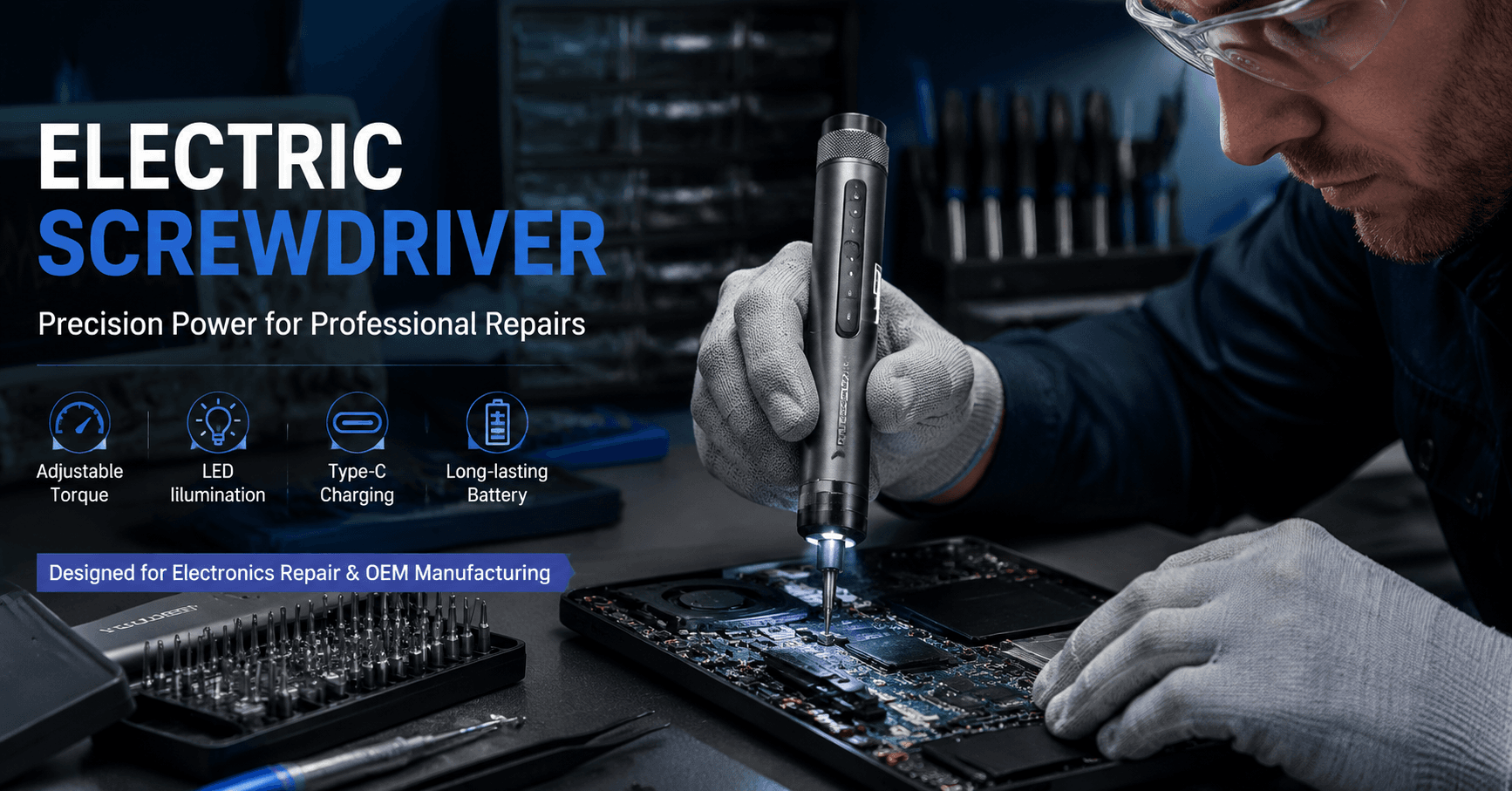
- Are Type-C charging and LED lighting available?
- Can the product meet the target market’s usage needs?
Factory Audit Checklist
- Does the supplier have sample support before bulk order?
- What is the MOQ for standard and OEM products?
- Can the factory customize logo, color, packaging, manual, and labels?
- Is torque calibration included in assembly line QC?
- Are motor, battery, PCB, buttons, and charging functions tested?
- Does the factory perform screwdriver lifespan testing?
- Is drop testing used for retail packaging?
- Are export cartons inspected before shipment?
- What is the normal production lead time?
- Can the factory support repeat orders with stable quality?
Best Factory Capabilities to Look For
Torque Calibration Process
A strong electric screwdriver factory should test torque during production. This helps reduce unstable torque, over-tightening, stripped screws, and inconsistent user experience.
For electronics repair tools, low and stable torque is often more important than high power.
Screwdriver Bit Quality Control
Bits are small but critical. A good factory should inspect bit fit, hardness rating, surface finishing, and magnetic performance. Poor bits can damage customer trust faster than many buyers expect.
Battery and Charging Testing
Battery capacity, charging cycles, charging protection, and runtime should be checked before packing. For repair shops, stable battery performance affects daily work efficiency.
Assembly Line QC
A structured production QC workflow should include incoming material inspection, in-process inspection, function testing, torque checking, appearance inspection, packaging inspection, and final shipment review.
Packaging Customization
For private-label buyers, packaging is not only protection. It also affects retail value. Buyers should confirm box structure, inner tray, instruction manual, barcode label, SKU label, and export carton design.
OEM/ODM Development Support
A reliable factory should support more than logo printing. For serious tool brands, OEM/ODM support may include housing color, torque settings, bit configuration, accessory layout, manual language, packaging structure, and new product development.
Comparison Table: Trading Supplier vs Electric Screwdriver Factory
| Item | Trading Supplier | Electric Screwdriver Factory |
|---|---|---|
| Product Control | Limited control over production | Direct control of production workflow |
| OEM Support | Often basic logo support | Logo, color, packaging, accessories, specs |
| QC Process | Depends on third-party factory | Can manage assembly line QC directly |
| Torque Testing | May be unclear | Can include torque calibration process |
| Lead Time Control | Less predictable | More direct production planning |
| Repeat Order Stability | May vary by source | More consistent if workflow is controlled |
| Technical Support | Limited | Better for custom product development |
| Best For | Small trial sourcing | Bulk orders and private-label projects |
Pros and Cons of Working Directly with a Factory
Pros
- Better control over product quality
- More flexible OEM/ODM customization
- Stronger packaging and label support
- Clearer production lead time
- Better support for repeat orders
- More direct communication on technical details
- Easier sample confirmation before bulk production
Cons
- MOQ may be higher than small retail orders
- Custom projects need more confirmation time
- Packaging artwork must be prepared carefully
- Buyers need to test samples before mass production
- Lead time depends on order quantity and customization level
Buying Mistakes to Avoid
Mistake 1: Choosing Only by the Lowest Price
A very low price may hide poor motors, weak batteries, low-grade bits, unstable torque, or thin packaging. For B2B buyers, returns and negative reviews can cost more than the initial savings.
Mistake 2: Not Requesting Samples
Samples help buyers test real torque, RPM, bit fit, magnetic hold, battery life, packaging, and user experience. Bulk orders should not be approved based only on product photos.
Mistake 3: Ignoring QC Workflow
A supplier should explain how products are tested before shipment. If there is no clear production QC workflow, mass production risk is higher.
Mistake 4: Confirming Packaging Too Late
Retail box design, inner tray, manual, barcode, SKU label, and export carton marks should be confirmed before production starts.
Mistake 5: Not Checking Lead Time
Buyers should confirm sample time, mass production time, packaging confirmation time, and shipping schedule. This helps avoid delayed shipments during sales seasons.
OEM/ODM Buying Tips for Tool Brands
For tool brands and distributors, OEM/ODM customization can make an electric screwdriver product line more competitive.
ToolQeen supports OEM/ODM repair tool manufacturing, electric screwdriver production, sample requests, custom logo service, packaging customization, accessory configuration, and bulk order support.
OEM Options Buyers Can Request
- Logo printing or laser engraving
- Custom housing color
- Retail box design
- Instruction manual customization
- Bit quantity adjustment
- Magnetic storage case layout
- Barcode and SKU label support
- Export carton customization
- Accessory combination adjustment
ODM Options Buyers Can Discuss
- New product appearance
- Different torque settings
- Battery capacity adjustment
- RPM setting changes
- LED lighting design
- Charging interface design
- Storage case structure
- Market-specific repair tool kit configuration
If you need sample confirmation, packaging customization, custom logo service, or bulk order support, you can send your project details through the Contact Us page.
Factory Qualification Comparison
| Audit Item | Reliable Factory | High-Risk Supplier |
| Sample Support | Provides samples before bulk order | Pushes bulk order without testing |
| Torque QC | Has torque calibration process | No clear torque inspection |
| Bit Quality | Tests bit hardness and fit | Uses low-grade bits without specs |
| Battery Testing | Checks charging and runtime | Only checks appearance |
| Assembly QC | Has in-process inspection | Relies on final random checks |
| Packaging | Offers packaging inspection and export cartons | Uses weak boxes or loose trays |
| Lead Time | Gives clear schedule | Gives vague delivery promises |
| OEM Support | Confirms logo, color, manual, packaging | Handles details late |
| Repeat Orders | Can keep product consistency | Product source may change |
Recommended Applications
An electric screwdriver factory can supply products for many repair and assembly markets:
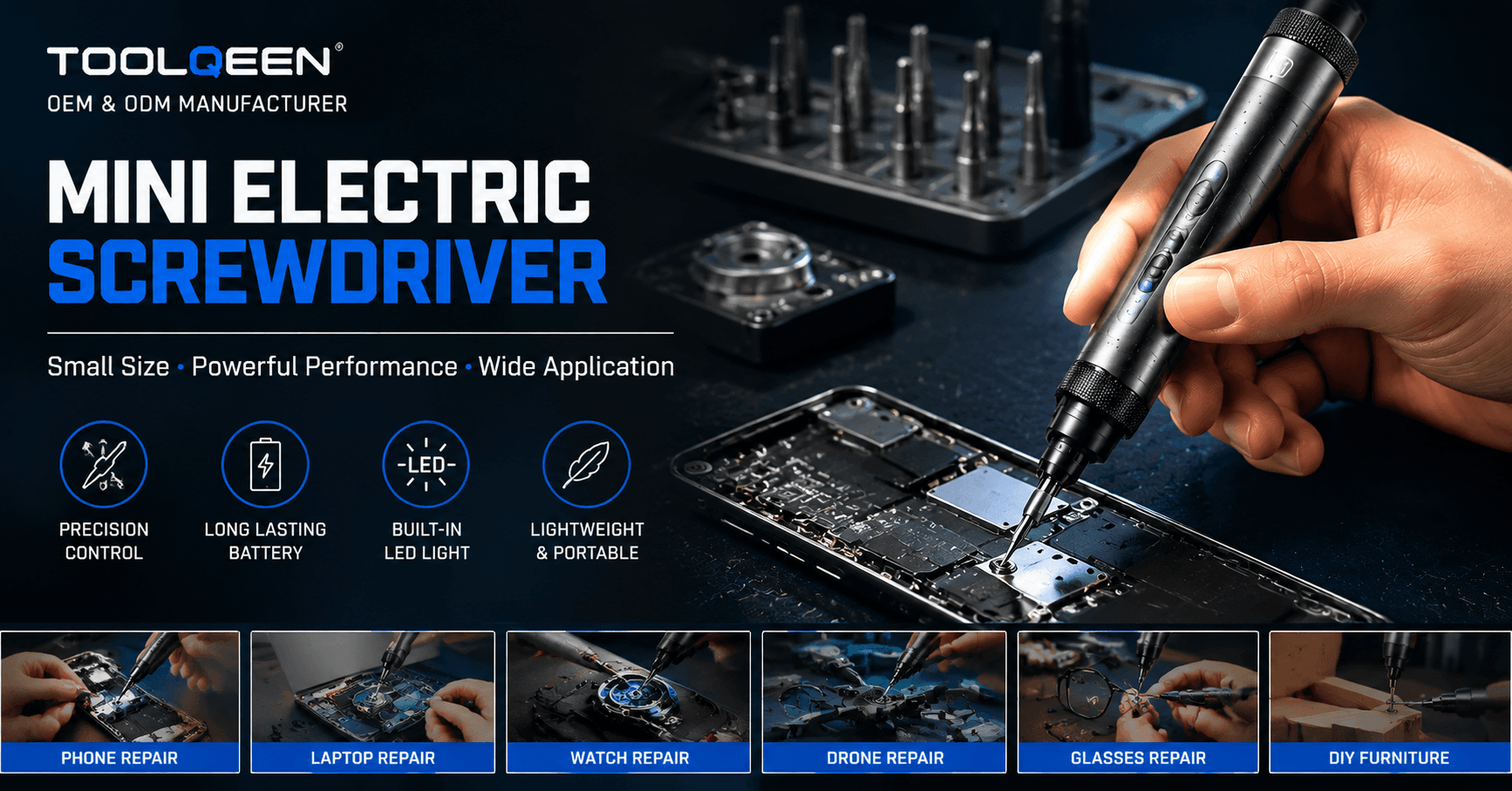
- Phone repair screwdriver kits
- PCB repair tools
- Laptop repair tool kits
- Tablet and smartwatch repair tools
- Camera and drone repair kits
- Game console repair tools
- Electronics refurbishment tools
- Precision assembly tools
- Small appliance repair kits
- Industrial maintenance tool sets
For B2B buyers, electric screwdrivers can be sold as individual tools, repair tool kits, private-label retail products, or part of a larger electronics repair solution.
Key Takeaways
- A reliable electric screwdriver factory should provide both product quality and production control.
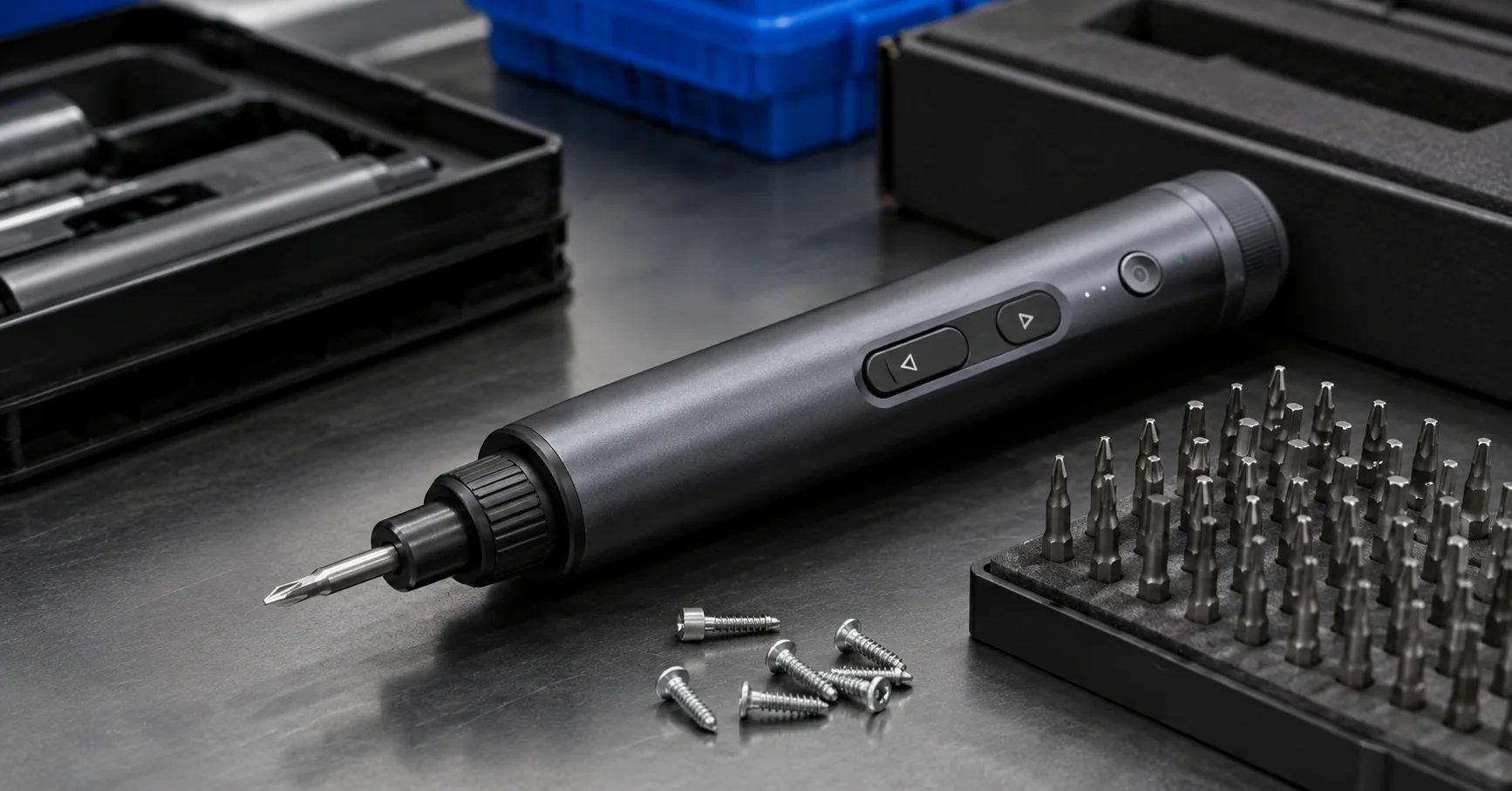
- Torque calibration, bit inspection, battery testing, and packaging inspection are key audit points.
- Buyers should request samples before bulk orders.
- OEM/ODM details should be confirmed before production starts.
- Packaging quality matters for distributors and e-commerce sellers.
- ToolQeen can support custom electric screwdriver projects through sample requests, packaging customization, custom logo service, and bulk order production.
FAQ
1. How do I choose a reliable electric screwdriver factory?
Choose a factory that provides samples, clear MOQ, torque calibration, battery testing, bit inspection, packaging inspection, and OEM customization. Buyers should also check production lead time, repeat order support, and whether the supplier can explain its QC workflow before mass production.
2. What MOQ is common for OEM electric screwdrivers?
MOQ depends on model, customization level, packaging design, and accessory configuration. Standard models usually have lower MOQ than fully customized ODM projects. Buyers should confirm logo method, color, packaging, manual, and bit layout before requesting the final MOQ.
3. Why is torque testing important for electric screwdrivers?
Torque testing helps ensure each screwdriver provides stable tightening force. Without torque calibration, tools may over-tighten small screws, strip screw heads, or fail to fasten properly. This is especially important for phone repair, PCB repair, and precision electronics assembly.
4. What should buyers check in screwdriver bits?
Buyers should check bit material, hardness rating, machining accuracy, magnetic hold, surface finish, and real screw fit. Low-grade bits can slip, wear quickly, or damage screw heads, leading to customer complaints and higher return rates for distributors and online sellers.
5. Can ToolQeen provide OEM electric screwdriver packaging?
Yes. ToolQeen supports packaging customization, custom logo service, manual design, accessory layout, barcode labels, SKU labels, and export carton support. Buyers can request sample confirmation before bulk production to check both product performance and retail presentation.
6. How long does electric screwdriver production take?
Production lead time depends on order quantity, customization level, material availability, and packaging confirmation. Standard models are usually faster than ODM projects. Buyers should confirm sample time, artwork approval time, mass production schedule, and shipping plan before ordering.
7. Should Amazon sellers work directly with a factory?
Amazon sellers can benefit from factory support when they need consistent quality, strong packaging, barcode labels, custom branding, and repeat order stability. Sample testing is important because issues such as weak bits, damaged boxes, and unstable torque can affect reviews.
8. What QC steps should an electric screwdriver factory have?
A factory should inspect incoming materials, motor performance, battery function, PCB operation, torque stability, bit fit, charging function, appearance, packaging, and final cartons. A clear QC workflow helps reduce shipment risk and improves product consistency across bulk orders.
For more sourcing, customization, and order-related questions, visit ToolQeen’s FAQ page.
Conclusion
Choosing the right electric screwdriver factory is not only about comparing prices. For B2B buyers, the real decision depends on torque stability, screwdriver bit quality, battery performance, QC workflow, packaging strength, OEM/ODM support, MOQ, and production lead time.
If you are sourcing electric screwdrivers for repair shops, distributors, e-commerce stores, or your own tool brand, ToolQeen can support sample requests, custom logo service, packaging customization, precision repair tool kits, and bulk order production.
Contact ToolQeen to discuss your electric screwdriver project, target market, MOQ, packaging design, and sample testing plan. You can submit your requirements through our Contact Us page.