
Electric screwdriver S2 vs CRV bits: what buyers actually need to decide
When buyers compare electric screwdriver S2 vs CRV bits, the question is rarely academic. It usually comes up when a sourcing manager is trying to balance tool life, cost, and user complaints, or when a repair team wants a kit that survives daily opening and reassembly work without turning every service call into a stripped-screw problem. The material choice behind the bit set matters because the driver body can be excellent and still disappoint if the bits wear too fast, chip at the tip, or feel inconsistent from one batch to the next.
That is especially true in precision repair kits for phones, laptops, watches, cameras, toys, and small appliances. In this category, the screwdriver is only part of the system. The bit geometry, the storage layout, the extension pieces, and even the way the kit is packaged all affect actual field use. Shenzhen ToolQeen Technology Co., Ltd. works in this part of the market with mini electric screwdriver sets and repair kits, which makes the comparison useful from a buyer’s standpoint: if you are selecting a kit for resale, OEM branding, or internal maintenance, you need to know where S2 and CRV fit and where they do not.
Quick comparison: S2 and CRV are not competing on the same terms
In simple terms, S2 is usually chosen for higher wear resistance and better performance in precision bits, while CRV is valued for broad practicality, easier supply, and generally solid everyday use. That sounds neat on paper, but real purchasing decisions are messier.
S2 electric screwdriver bits are often associated with better edge retention on small fasteners, particularly when the user is working with tight tolerances and repetitive assembly or disassembly. They tend to be the more premium option in electric screwdriver kits designed for higher-duty repair work.
CRV bits comparison usually leads to a different conclusion: chrome vanadium is widely used, cost-effective, and dependable for general-purpose repair tool kits. For many consumer and light commercial applications, CRV is enough. The catch is that “enough” depends on usage intensity, screw type, and whether the driver is being used carefully or hammered through a production queue.
Why bit material matters more in an electric screwdriver
Manual screwdrivers give the operator more feel. Electric screwdrivers, even compact pen-style models, increase speed and consistency but can also expose weaknesses in the bit faster. A bit that is only marginally adequate in a hand tool may show wear much sooner when paired with a powered driver, especially if the screw head is shallow, the bit fit is loose, or the operator keeps the tool engaged too long.
That is why the choice between S2 vs CRV screwdriver bits is not just about metallurgy. It is also about the real use pattern. In an electronics repair shop, technicians often remove dozens of tiny fasteners per shift. In an eCommerce return center, the tool may be used intermittently but by different operators. In a retail kit, the buyer may use it occasionally and judge the product harshly if the first stripped screw ruins the experience. Material choice affects all of those scenarios differently.
S2 electric screwdriver bits: where they make sense
S2 is typically the better fit when the buyer wants a more durable precision bit for frequent use. In a powered precision screwdriver kit, that can matter a great deal. If the bit profile stays crisp longer, the user gets better engagement with small fasteners and less slippage at the head. That can reduce damage to delicate electronics housings and avoid one of the most annoying service problems: a perfectly functional tool that no longer grips properly.
For OEM and ODM buyers, S2 can also support a stronger product story. A mini electric screwdriver kit with S2 bits is easier to position as a higher-spec repair set, especially for technicians or brand owners targeting phone repair, laptop maintenance, or camera service. ToolQeen’s product scope includes mini electric screwdriver sets and multi-functional repair tool kits, so this is the sort of configuration that fits a market-oriented line aimed at higher conversion and stronger repeat perception.
There is a practical caution, though: not every S2-marketed bit set is automatically superior in the hands of the end user. Heat treatment, machining quality, coating, and tip accuracy still matter. If the manufacturing process is sloppy, a good material can still produce an average bit. Buyers should avoid assuming that a premium steel label guarantees performance on its own.
CRV bits comparison: the value case is real
CRV bits remain common for a reason. They are workable, familiar, and usually easier to place into cost-sensitive kits. For a distributor building a broad catalog, or for a retailer needing a price-competitive precision screwdriver kit, CRV often hits the right balance. It may not be the most aggressive performer in long service life, but it can still deliver dependable results in moderate-use scenarios.
In general-purpose repair kits, CRV also pairs well with mixed accessory bundles. The current market often expects more than just a screwdriver handle and a row of bits. Buyers look for a hard case, extension shaft, pry picks, suction tools, tweezers, USB charging cable if the screwdriver is electric, and organized storage that makes the kit feel complete. A CRV-based set can still look and function like a strong retail product if the overall configuration is useful and well presented.
For lower-frequency users, the practical question is often not “Is CRV the best?” but “Will this outlast how I actually use it?” For many small-device repair tasks, the answer is yes.
How the rest of the kit changes the buying decision
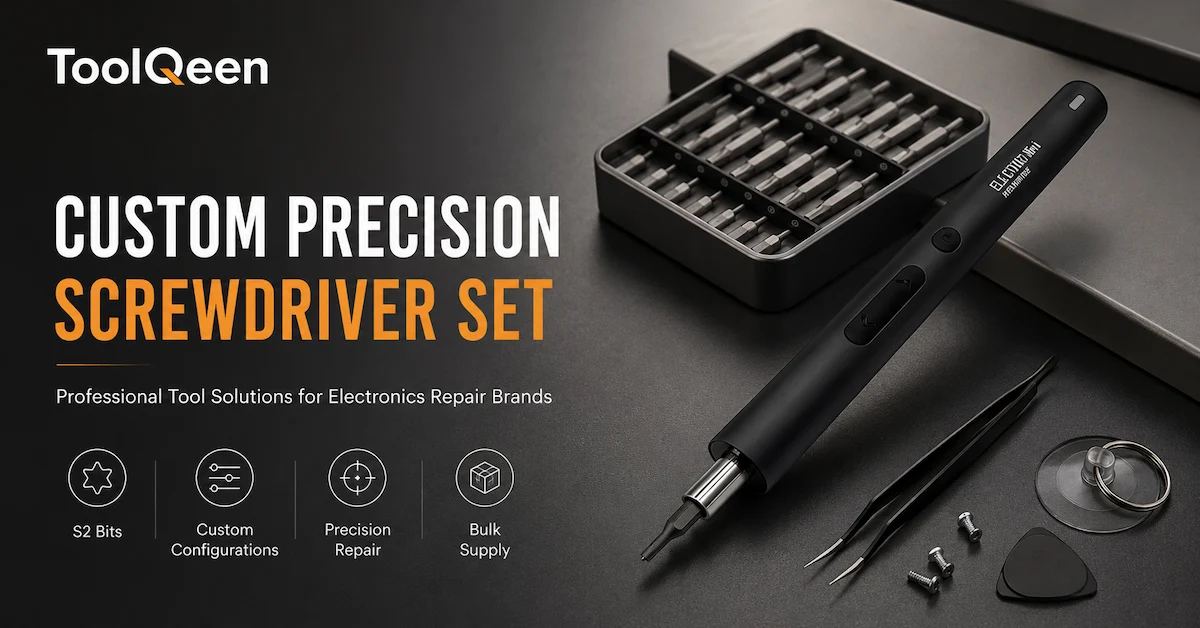
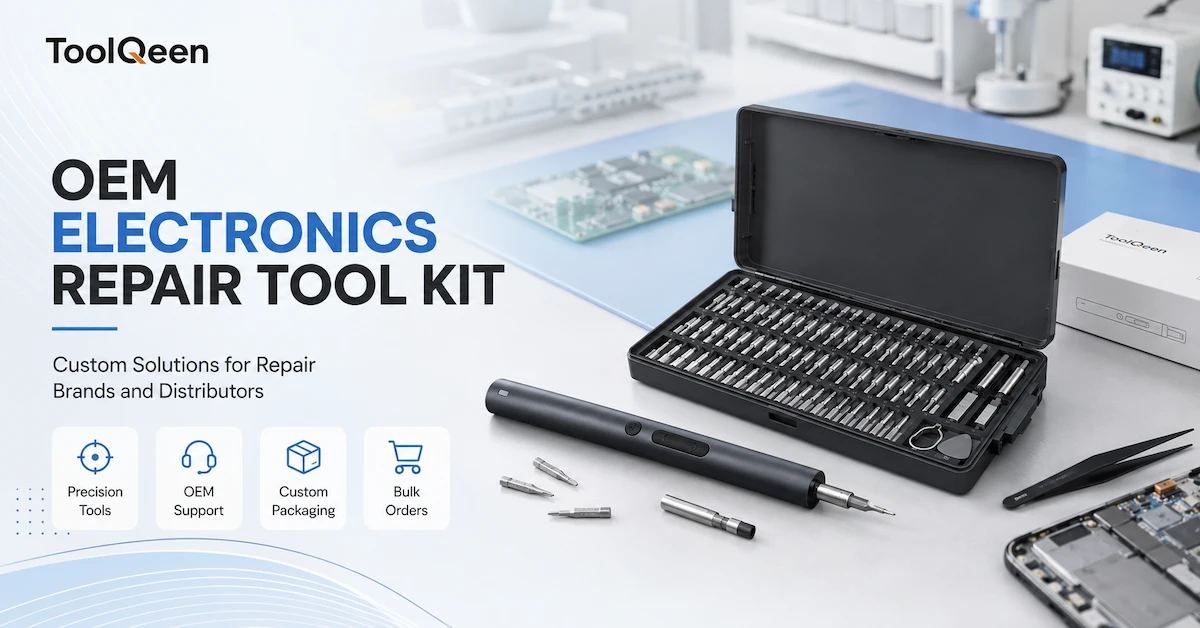
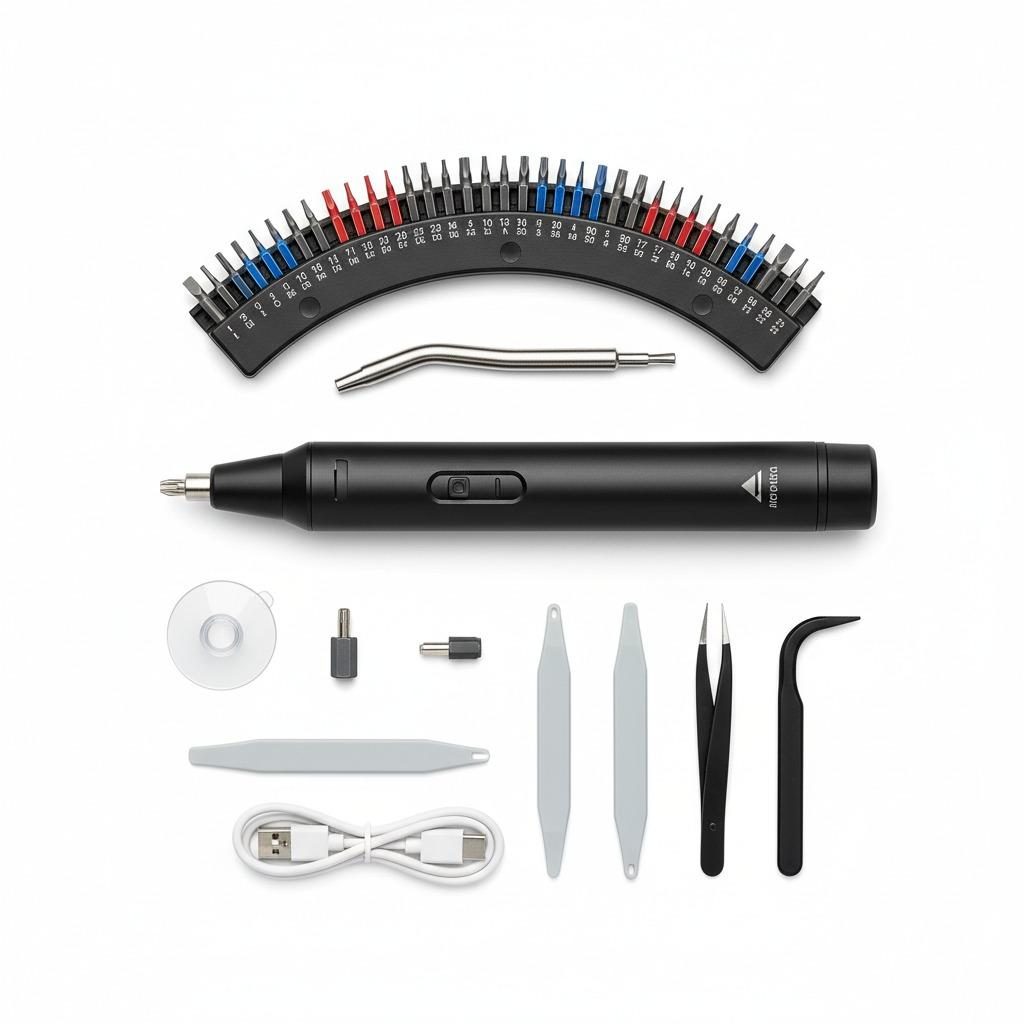
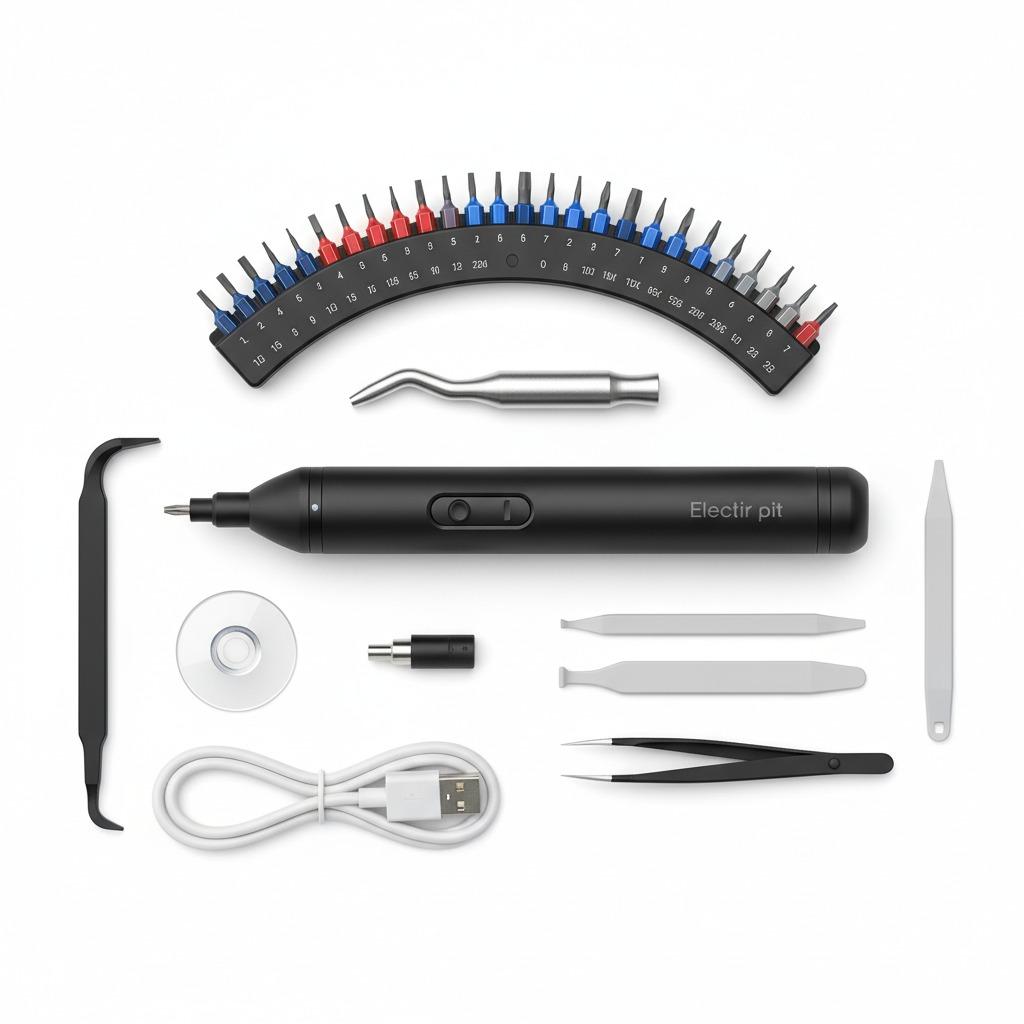
Bit material gets the headlines, but the rest of the electric screwdriver kit can decide whether the product sells or sits in a warehouse. The product information provided here points to several common features: a slim pen-style electric screwdriver body, interchangeable precision bits, a clear or hard storage case, extension pieces, pry tools, a suction cup, a USB charging cable, and organized accessory compartments. Those details matter because they affect speed, portability, and daily usability.
A well-arranged case lets technicians identify the right bit quickly. A compact driver body helps when working inside crowded device housings. Pry picks and suction tools are useful for opening smartphones and tablets without improvising with the wrong tool. These are not glamorous features, but they are often the reason a kit gets picked up again after the first job.
For a sourcing team, the lesson is straightforward: do not judge the set by bit steel alone. A modest CRV bit set with a smart layout can outperform a supposedly premium bit set that is awkward to use, poorly labeled, or missing the accessories that actual repair work requires.
Selection criteria for sourcing managers and product teams
1. Match the material to the usage level
If the kit is intended for frequent professional repair, S2 electric screwdriver bits are usually worth considering. If the kit is aimed at consumers, occasional DIY work, or entry-level retail, CRV may be the smarter commercial choice.
2. Check bit fit and tip consistency
On precision tools, tip consistency often matters more than a dramatic material claim. Buyers should ask for samples and verify engagement with the screw types the kit is meant to cover. Loose fit can create the wrong impression even if the steel is decent.
3. Look at the full kit architecture
In a 62-in-1 electric screwdriver kit, for example, the value proposition is not only the powered driver. The number and arrangement of bits, the accessory tray, and the portability of the case all affect the product’s shelf appeal and field usefulness.
4. Confirm what is visible versus what is assumed
It is tempting to infer torque, battery capacity, or exact charging behavior from a product photo. Buyers should resist that. If the supplier has not stated it, do not build your purchasing decision around it. That is especially important for electric screwdriver sets, where performance differences can be subtle but important.
Common mistakes buyers make with S2 vs CRV screwdriver bits
The first mistake is overbuying on material. Some teams specify S2 because it sounds premium, then discover the end market does not need that level of performance. The result is avoidable cost pressure.
The second mistake is underbuying on consistency. A cheap CRV set can work, but if the bits vary too much in machining quality or the case organization is poor, end users will blame the whole product.
The third mistake is forgetting the product category. A bit set for electronics repair is not the same as a bit set for general hardware use. Precision kits live or die on small details: magnetic retention if present, shaft accessibility, case layout, and accessory usefulness.
Practical buyer advice for OEM and ODM orders
Shenzhen ToolQeen Technology Co., Ltd. positions itself as an OEM/ODM tool kit manufacturer with market-driven product design, logo and packaging customization, and flexible supply support. For buyers building a private-label product line, that matters because the bit material decision can be built into the broader product strategy rather than treated as a standalone component choice.
If you are launching a premium line, consider S2 bits paired with a tidy, well-labeled hard case and a useful accessory bundle. If you are building a price-competitive eCommerce offer, CRV can still be the right answer provided the kit looks complete and the user experience is clean. In both cases, ask the supplier to keep the configuration realistic. It is better to have fewer, better-selected pieces than a crowded kit that confuses the buyer.
Also, do not ignore packaging. In this category, packaging is not cosmetic fluff. For distributors and brand owners, it is part of the perceived quality. A smart layout, clear labeling, and a compact form factor can make even a technically modest kit easier to sell.
FAQ: electric screwdriver S2 vs CRV bits
Are S2 bits always better than CRV bits?
Not always. S2 is often better for wear resistance and frequent precision use, but CRV can be the better commercial choice for value-focused kits.
Which is better for an electric precision screwdriver?
If the tool will see heavy or repeated use, S2 is often favored. For light to moderate use, CRV can be perfectly acceptable.
Can a good kit still use CRV bits?
Yes. A well-designed kit with organized storage, useful accessories, and decent machining can perform well even with CRV bits.
What should buyers verify before ordering?
Ask about bit fit, actual included accessories, case structure, and whether the supplier can support customization for logo, color, or packaging.
What to ask your supplier next
If you are comparing electric screwdriver kits for your next order, ask for two samples: one with S2 bits and one with CRV bits. Test them against the screw types you actually service. Pay attention to feel, bit wear, and how quickly the user can find the right piece in the case. That is often where the real decision becomes obvious.
For brands and distributors, the next step is to discuss how the kit should be positioned. A high-spec repair set, a mid-range consumer product, or a broad retail accessory kit will not use the same material strategy. The right answer is the one that fits your market, your price band, and the way customers actually work.