
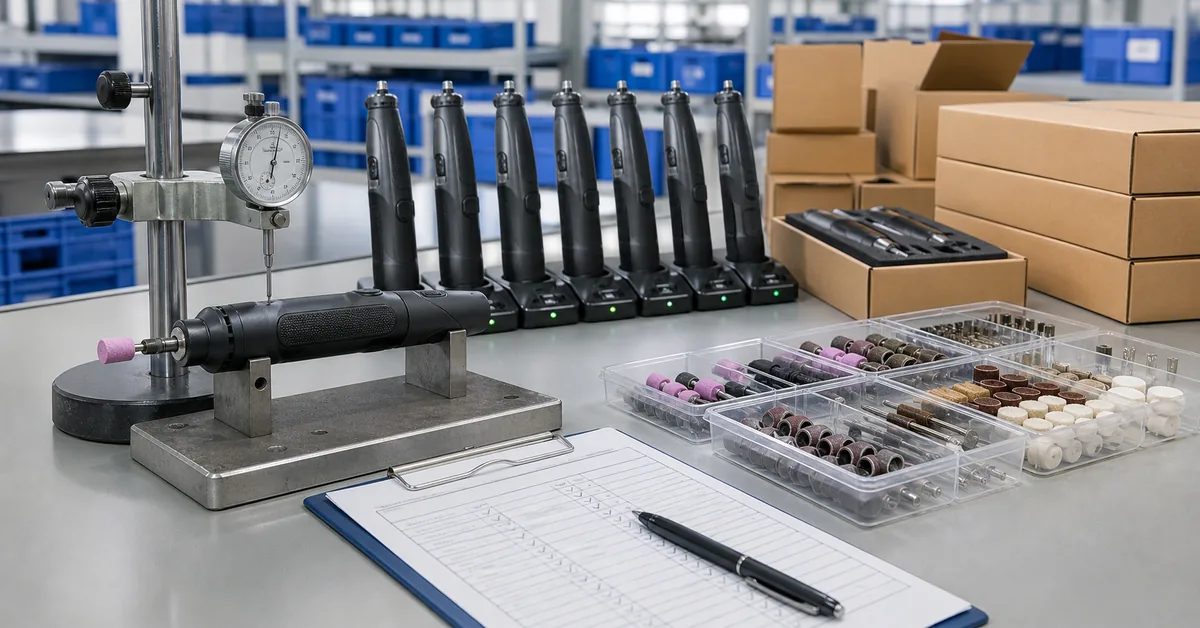
Electric Rotary Tool Vibration Testing: Fewer Returns for US Private-Label Sellers
Returns from rough finishing, shaky accessory heads, or noisy operation can damage a US rotary tool listing faster than a weak product photo. For Amazon sellers, independent-store brands, and repair tool distributors, vibration is not only a comfort issue. It affects finishing control, accessory wear, perceived quality, review language, and repeat-order confidence.
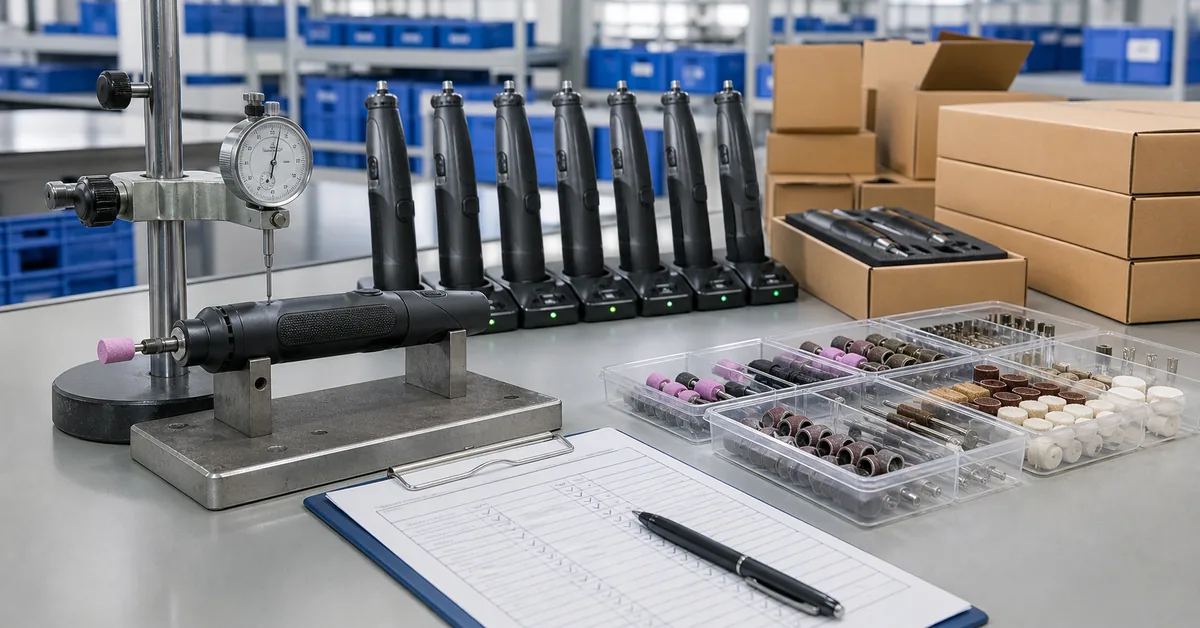
Electric rotary tool vibration testing gives buyers a practical way to check whether a compact rotary tool pen can repeat the approved sample in mass production. ToolQeen uses product configuration review, accessory matching, in-process checks, final function testing, packaging verification, and pre-shipment sampling to help private-label and wholesale buyers reduce avoidable complaints before bulk replenishment.
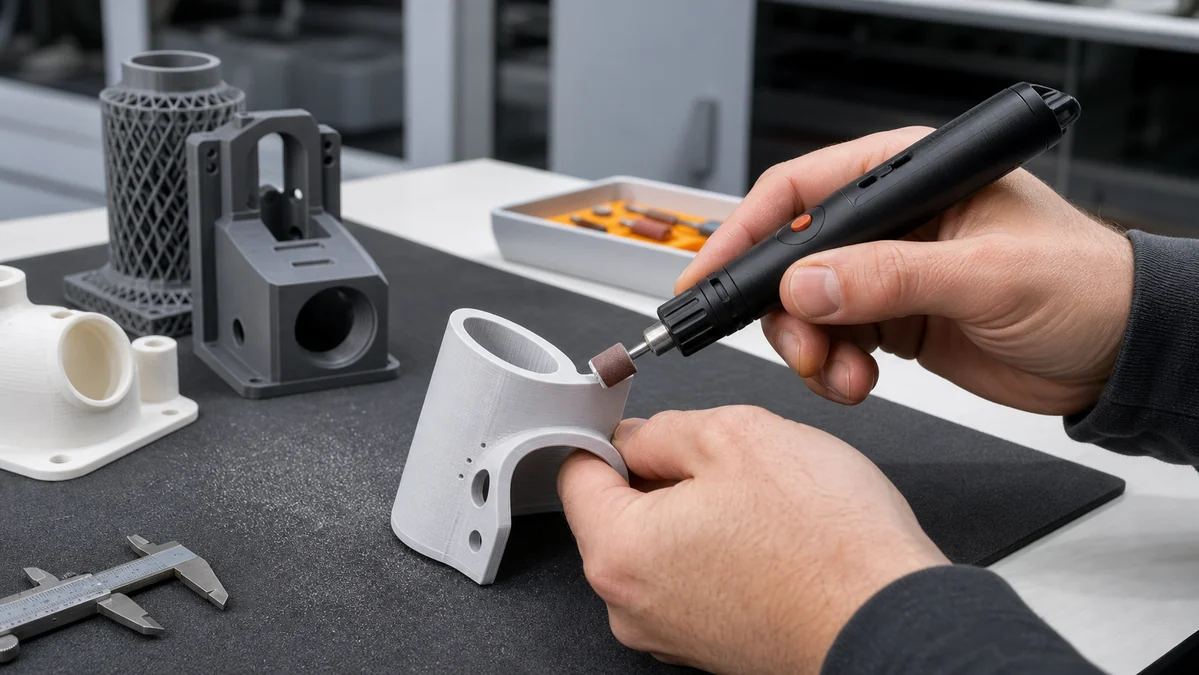
Industrial design matters here because a lightweight pen-style rotary tool depends on motor balance, collet fit, accessory concentricity, housing alignment, battery placement, and grip control. A tool that looks compact in a listing still needs stable rotation when used on phone parts, plastic trimming, model finishing, jewelry touch-up, or small repair work.
US buyers work with ToolQeen when they need a factory that understands product feel, QC paperwork, OEM/private-label packaging, MOQ planning, and replenishment timing together. ToolQeen's precision tool range includes electric rotary tool pens, electric grinder pens, electric screwdrivers, repair tool kits, and OEM/ODM configurations for e-commerce sellers, repair shops, distributors, and tool brands.
Quick Answer
Electric rotary tool vibration testing checks whether the tool, collet, motor, accessory heads, and assembled kit can run smoothly enough for detail repair and finishing work. US buyers should confirm vibration behavior, runout, accessory balance, charging stability, QC records, MOQ, lead time, packaging, and private-label requirements before approving bulk orders. A supplier with written testing stages and repeat-batch control is safer than one that only compares RPM and accessory count.
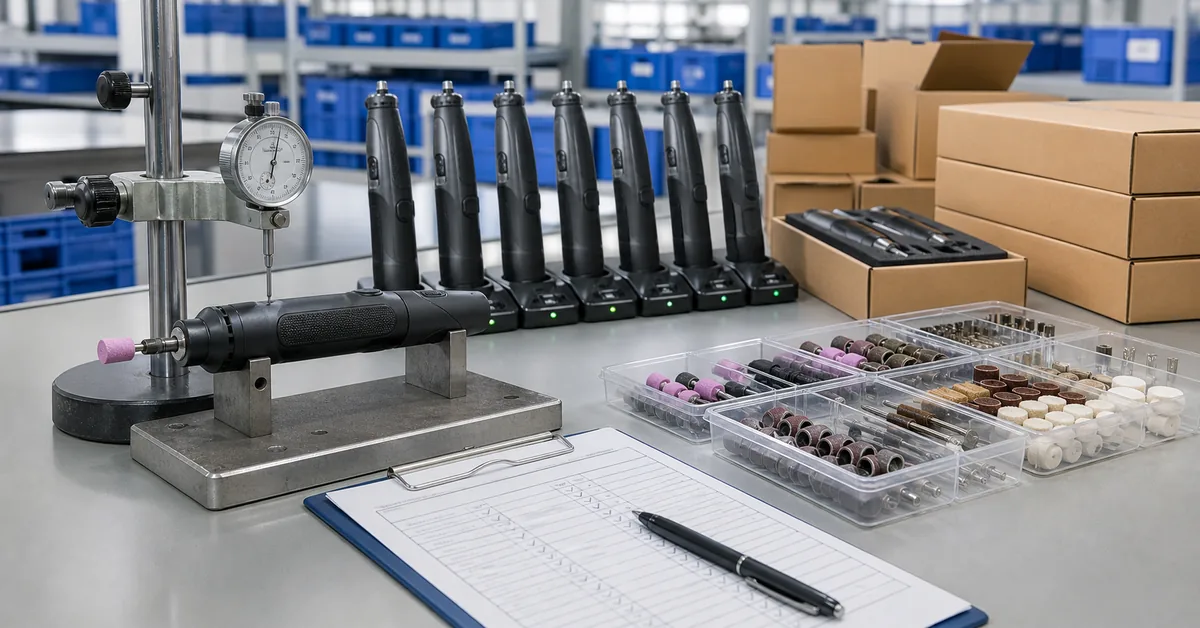
Definition: What Is Electric Rotary Tool Vibration Testing?
Electric rotary tool vibration testing is the process of checking whether a rotary tool pen runs smoothly during actual accessory use. It can include visual rotation checks, tactile vibration checks, noise review, collet grip inspection, accessory shank fit, runout observation, charging confirmation, and final sample comparison against the approved buyer standard.
For B2B buyers, the definition should also include packaging and shipment control. A tool may pass a no-load function check but still cause returns if the accessory tray is loose, the wrong grinding heads are packed, the charger cable is inconsistent, the retail insert shifts during transit, or the manual does not match the actual kit.
Technical Explanation: Why Vibration Creates Returns
Compact rotary tools operate at high speed, so small mismatches become visible quickly. A slightly loose collet, uneven accessory head, misaligned shaft, or imbalanced motor can create wobble. The user feels that wobble as poor control, rough finishing, higher noise, or a tool that seems cheaper than the listing promised.
Motor and shaft balance
The motor and shaft need stable alignment so the accessory rotates consistently. If the internal assembly is not controlled, vibration may increase as speed rises, especially when buyers test polishing wheels, sanding drums, or grinding stones.
Collet grip and accessory shank fit
A rotary tool pen depends on the connection between the collet and accessory shank. ToolQeen rotary tool pen configurations commonly support compact accessory sets for electronics repair, model making, jewelry touch-up, trimming, polishing, and engraving work. The accessory set should be reviewed as part of the tool, not as an afterthought.
Speed settings and user control
Some ToolQeen electric grinder pen references include compact pen-style dimensions around 136 mm x 18 mm, a lightweight body around 59 g, high-speed operation up to 30,000 rpm, USB-C charging, a 600 mAh battery, and 5-level digital speed control. Those specifications are useful only when the tool remains controllable during real detail work.
Factory Insight: What ToolQeen Checks Before Bulk Orders
ToolQeen is Shenzhen ToolQeen Technology Co., Ltd., a Shenzhen precision tool manufacturer founded in 2016. The company supports B2B buyers through design, mold development, injection molding, CNC machining, metal stamping, assembly, testing, packaging, and shipment coordination. That manufacturing chain matters because vibration control is affected by multiple parts, not one isolated specification.
When a buyer discusses a rotary tool program, ToolQeen reviews the target market, expected quantity, accessory layout, charging requirements, logo needs, color direction, packaging style, and shipment schedule. Buyers can review the broader product range on the ToolQeen products page and company background on the ToolQeen manufacturing page.
Real Manufacturing Data Buyers Can Use
Useful supplier data should help buyers plan samples, launch timing, and repeat supply. ToolQeen's general B2B proof points include OEM MOQ from 500 pcs, ODM MOQ from 1,000 pcs, sample lead time around 3-5 days for standard projects, standard production lead time around 10-15 days, and custom order lead time around 15-25 days depending on configuration and packaging scope.
For electric tool programs, buyers should ask which data applies to the exact SKU. A rotary tool pen with standard packaging and existing accessories is different from a private-label kit with custom color, logo printing, instruction inserts, barcode labels, accessory substitutions, and DDP shipment planning for US replenishment.
Reference data for a rotary tool program
- Sample timing: normally 3-5 days for standard configurations.
- OEM MOQ: from 500 pcs for practical private-label projects.
- ODM MOQ: from 1,000 pcs when deeper product or kit changes are required.
- Production timing: around 10-15 days for standard orders and 15-25 days for custom projects.
- Inspection focus: speed behavior, vibration feel, accessory count, charging, packaging, labels, and final random sampling.
- Shipping terms: FOB, EXW, CIF, and DDP can be discussed according to buyer needs.
Quality Control Process for Vibration and Packaging
A serious QC process should connect the approved sample to repeat production. For rotary tool buyers, the most important question is not whether one sample looks good on a desk. The important question is whether the factory can repeat the same running feel, accessory fit, packaging structure, and carton accuracy across a bulk order.
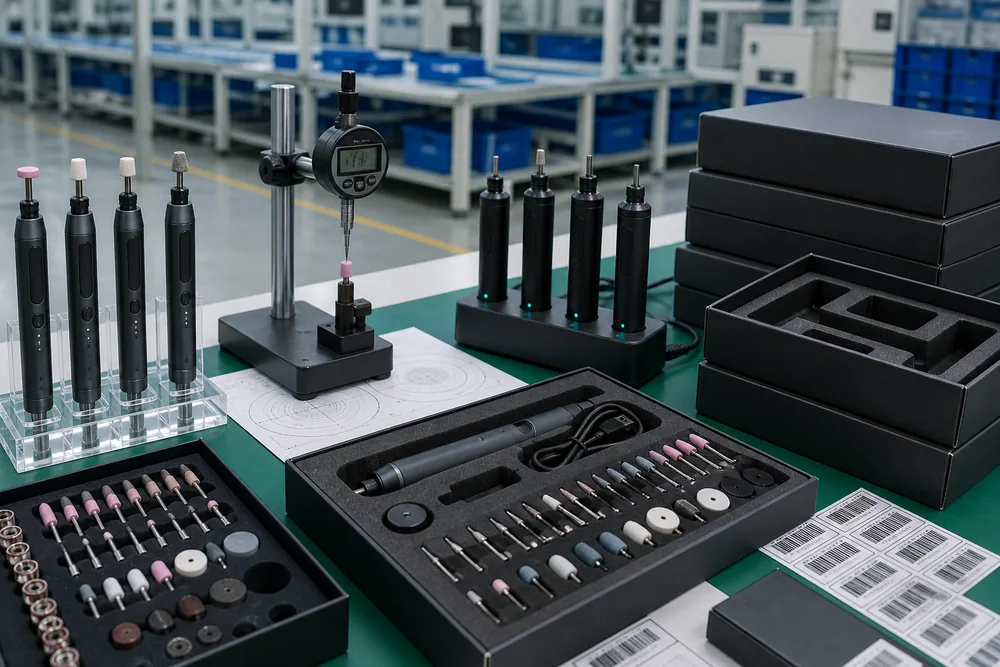
IQC: incoming parts inspection
Incoming inspection should cover motors, PCBs, battery cells, charging ports, plastic parts, metal parts, collets, accessory heads, trays, cables, and packaging materials. Poor incoming parts can create vibration or packaging complaints that are difficult to fix later.
IPQC: in-process control
During assembly, operators should monitor shaft alignment, housing fit, button feel, charging contact, accessory matching, and appearance. For buyers, IPQC is important because it reduces the chance that a good pilot sample becomes a weaker mass-production batch.
FQC: final function and running checks
Final inspection should include power-on behavior, speed level switching, vibration feel, noise review, charging confirmation, accessory fit, appearance, and package completeness. A factory should be able to explain which checks are 100% function checks and which are sampling checks.
Reliability and aging review
Continuous running, heat behavior, battery charging, drop handling, and life-cycle checks help buyers understand whether the tool is ready for repair shops and e-commerce customers. For measurement credibility, buyers can use resources such as the NIST metrology overview as a general reference for why repeatable measurement and calibration discipline matter in quality programs.
Pre-shipment inspection
Before shipment, packaging should be checked for insert fit, labels, barcodes, carton marks, accessory counts, and visual consistency. US sellers should treat packaging as part of the product because retail unboxing affects conversion, review sentiment, and return risk.
What US Sellers Should Ask Before Private-Label Orders
Can the supplier test with the actual accessory mix?
Vibration behavior changes with different grinding heads, sanding drums, polishing wheels, and drilling accessories. The supplier should test the configuration the buyer will actually sell, not a simplified demo kit.
Can packaging be reviewed before mass production?
Private-label packaging should be confirmed at sample stage. Buyers should review logo position, color, insert layout, manual language, barcode placement, carton label, and accessory tray protection before the first bulk PO.
Can the factory support Amazon and independent-store expectations?
US e-commerce buyers need product photos, packaging consistency, clean accessory layout, low complaint risk, and stable replenishment. A supplier that understands listing trust can help buyers avoid weak reviews caused by confusing kits or inconsistent user experience.
Comparison: RPM Claims vs Vibration Testing
| Buyer Check | RPM-Only Sourcing | Vibration Testing Approach |
|---|---|---|
| Product feel | Assumes high speed means better value. | Checks whether speed stays controllable with accessories. |
| Accessory quality | Counts pieces without checking fit. | Reviews shank fit, tray layout, and use-case matching. |
| Returns | Finds problems after customer reviews appear. | Finds weak vibration, noise, or package issues before shipment. |
| OEM launch | Approves logo only. | Confirms logo, packaging, QC checklist, sample, MOQ, and lead time together. |
Application Scenarios for US Buyers
Amazon and independent-store sellers
For online sellers, vibration complaints often appear as "hard to control," "feels cheap," or "accessories wobble." A better QC brief reduces the chance that negative reviews pull down conversion after the launch period.
Repair shop distributors
Repair shops need efficient tools for phones, laptops, small electronics, model parts, and fine finishing work. A stable rotary tool pen can help technicians work faster without using a bulky tool on small parts.
Private-label tool brands
Private-label buyers need product differentiation without creating avoidable complexity. ToolQeen can help compare accessory layouts, packaging plans, sample timing, MOQ, and QC requirements before a branded rotary tool program moves into bulk production.
Reference Case: Private-Label Repair Tool Launch
A US repair tool seller preparing a compact rotary tool listing may start with a simple request: a pen-style tool, multiple grinding heads, USB-C charging, logo packaging, and a first replenishment order that can scale if reviews are stable. The risk is that the buyer approves a nice-looking sample but does not define the vibration check, accessory tray layout, or packaging drop risk before mass production.
A stronger launch process asks the factory to confirm the exact accessory list, run sample checks at different speed levels, review collet grip with the supplied accessory shanks, and pack the sample in the same insert style planned for retail. The buyer then compares sample feedback with listing claims, user instructions, packaging photos, and expected repair scenarios. This process is slower than approving a catalog SKU, but it reduces the chance that customers complain about wobble, weak accessories, loose trays, or unclear use instructions after launch.
For ToolQeen buyers, the practical result is a cleaner first order conversation. Instead of asking only for price, the buyer can send the target market, sample quantity, packaging goal, accessory mix, MOQ plan, and review-risk concerns. That gives the factory enough detail to prepare a realistic quotation and a QC path that supports repeat orders.
FAQ
What should buyers check before bulk orders?
Buyers should check vibration behavior, runout, speed switching, accessory fit, charging, battery performance, packaging, barcode labels, QC records, MOQ, lead time, and the exact sample approved for production.
What is the MOQ for OEM rotary tool projects?
ToolQeen's general OEM MOQ starts from 500 pcs. ODM projects that require deeper product, tooling, or configuration changes usually start from 1,000 pcs.
How long do samples and production take?
Standard samples usually take around 3-5 days. Standard production is commonly around 10-15 days, while custom packaging or configuration projects may take around 15-25 days depending on the order scope.
Can packaging be customized for US e-commerce?
Yes. Buyers can discuss private-label packaging, logo placement, box design, instruction inserts, accessory trays, barcode labels, carton marks, and shipment needs for Amazon or independent-store replenishment.
How can buyers reduce return risk?
Buyers should approve the actual accessory mix, request vibration and function checks, confirm packaging before mass production, review the QC process, and avoid changing the kit after sample approval without a new inspection plan.
Which documents should US buyers request?
Depending on the product and channel, buyers may request CE, FCC, RoHS, battery-related documents, product specifications, inspection records, packaging artwork confirmation, and shipment documentation.
CTA: Prepare a Safer Electric Rotary Tool Order
If you are building a private-label rotary tool pen, repair tool bundle, Amazon tool listing, or wholesale replenishment program, send ToolQeen your target market, accessory list, expected quantity, packaging needs, sample requirements, and desired lead time. ToolQeen can help compare configurations, confirm MOQ, review vibration and QC points, and prepare OEM/private-label details before bulk production.
To evaluate the supplier behind the product, read more about ToolQeen manufacturing capability. To compare related precision tool products for your next kit, browse ToolQeen precision tool products.