
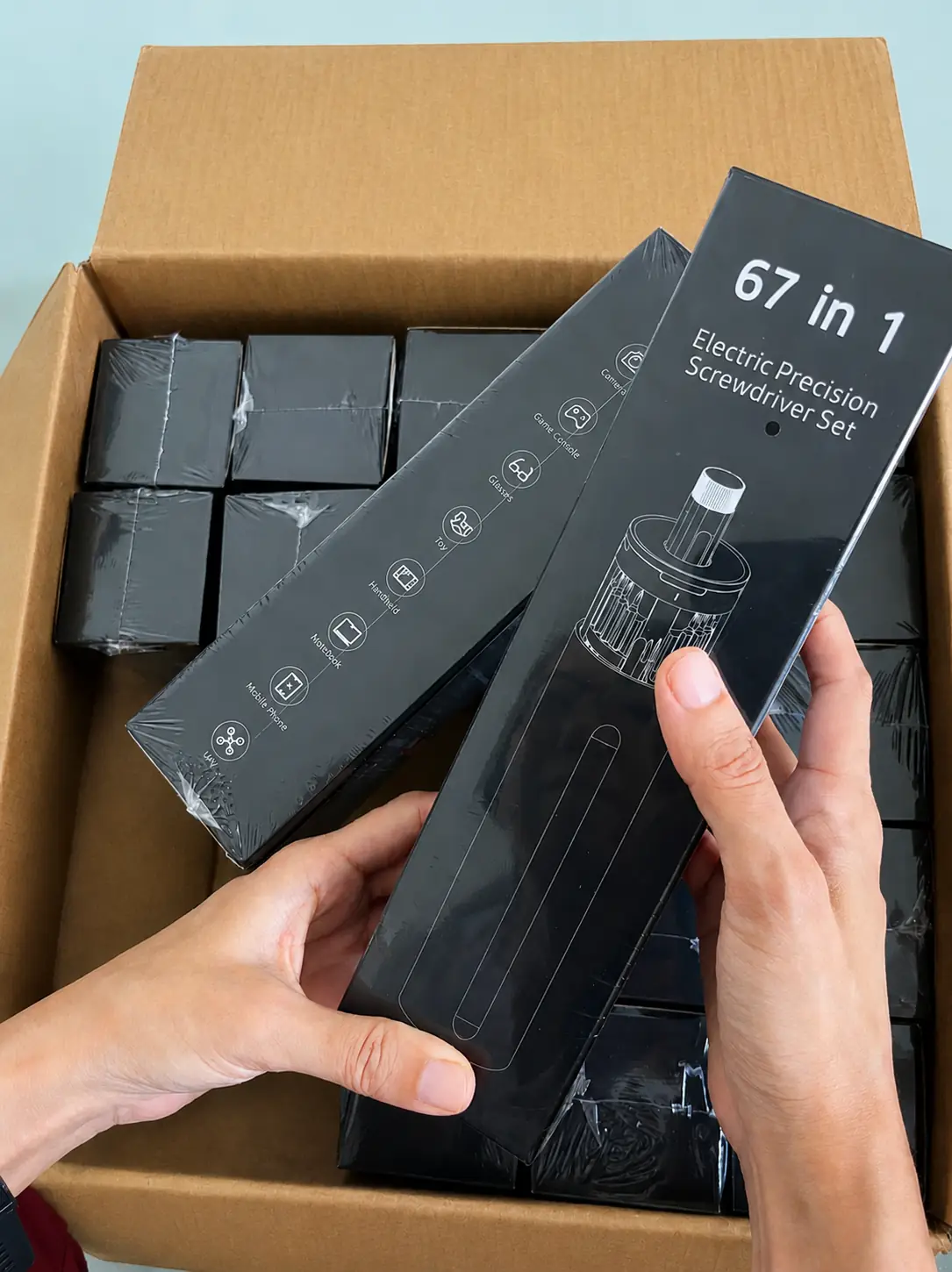
How can I reduce the unit cost of a screwdriver set without reducing quality?
You can reduce the unit cost of a screwdriver set by simplifying the configuration, increasing order quantity, optimizing packaging, and keeping critical quality components unchanged.
We recommend:
Remove unnecessary bits: keep the most useful Phillips, Torx, Hex, Pentalobe, Tri-point, and Slotted sizes instead of adding duplicate or rarely used bits
Reduce accessory count: remove low-value accessories that do not improve the main repair function
Use a simpler case: compact plastic or standard cases can reduce cost compared with custom aluminum or complex molded cases
Standardize packaging: use existing box sizes, trays, manuals, and labels instead of developing completely new packaging
Increase order quantity: larger production runs reduce material, setup, assembly, and packaging cost per unit
Use existing product platforms: customizing logo, color, and bit combination is usually more economical than developing a completely new structure
Optimize bit material by application: use S2 for critical precision bits and consider CR-V where professional-grade hardness is not necessary
Keep standard battery, motor, gearbox, and PCB: changing core components usually adds development, testing, and sourcing costs
Reduce cosmetic processes: simpler anodizing, printing, or surface finishes can lower cost without affecting function
Optimize carton size and weight: smaller packaging can reduce both material cost and international freight cost
The important point is to reduce cost from configuration and packaging first, not from critical performance parts.
For electric screwdriver sets, we recommend keeping the motor, gearbox, battery, PCB, torque performance, runout, and key precision bits at the approved quality level.
For ToolQeen OEM projects, we can help buyers adjust the piece count, bit combination, materials, accessories, case, and packaging to reach a target price while keeping the main product performance and quality standard unchanged.