
How are electric screwdrivers tested before shipment?
Electric screwdrivers should be tested before shipment for appearance, function, torque, speed, runout, battery performance, motor and gearbox condition, accessories, and packaging.
We recommend checking:
Appearance: scratches, dents, color, logo, coating, and assembly quality
Forward/reverse operation: confirm both directions work correctly
Torque: verify each torque level and check repeatability
Automatic stop: confirm the screwdriver stops correctly at the designed torque condition
Speed: check RPM and speed stability
Runout: inspect for excessive bit or shaft wobble
Motor: check noise, vibration, current, temperature rise, and operating stability
Gearbox: check backlash, abnormal noise, slipping, and smooth transmission
Battery: voltage, charging, runtime, battery model, and protection functions
USB-C charging: confirm connector fit, charging current, cable, and charging indicator
Buttons, display, and LED: verify all controls and indicators
Bits: check quantity, type, material, hardness, tip accuracy, and magnetic performance
Aging test: confirm performance remains stable after repeated operation
Accessories: verify cables, extension shafts, manuals, and other included parts
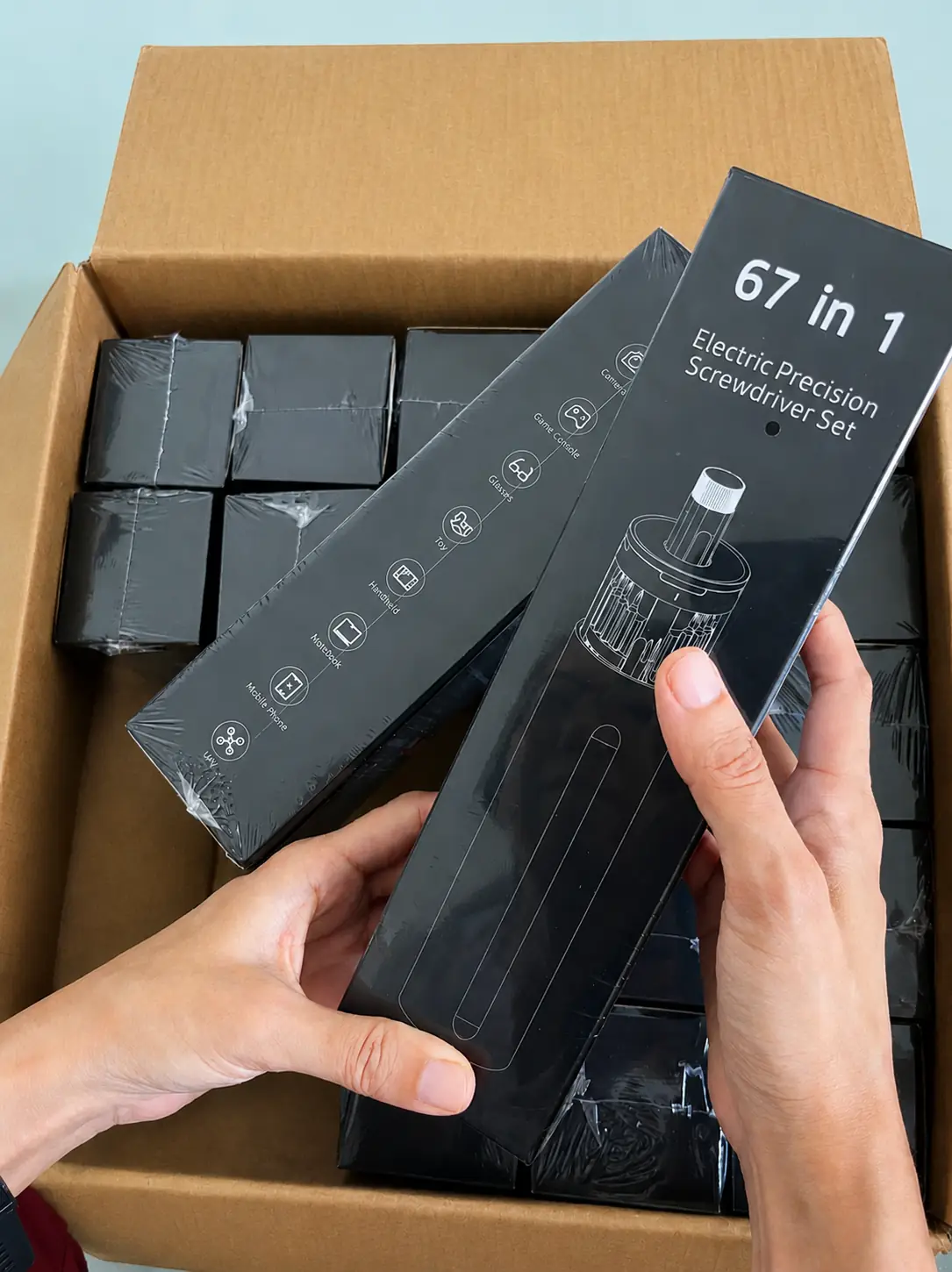
Packaging: check case, inserts, labels, barcode, retail box, and outer carton
Quantity: confirm total units, cartons, accessories, and spare parts
For ToolQeen multi-stage precision electric screwdrivers, torque testing should include 0.05, 0.15, 0.25, and 0.35 N·m, together with automatic-stop, runout, battery, and post-aging checks.
For OEM orders, the finished goods should be compared with the approved golden sample, final specification, BOM, packaging artwork, and QC standard before shipment approval.