
Rotary Tool Technical Knowledge
Rotary Tool Sample Plan for Wooden Puzzle Edge Finishing
Build a rotary tool sample plan for wooden puzzle edge finishing that preserves mating fit, checks visible damage and records the accepted accessory setup.
Quick Answer
A rotary tool sample plan for wooden puzzle edge finishing should use representative blanks, the actual edge profile and a defined acceptance view. Record the tool, accessory, interface, work-holding method and visible result together. Begin with the workshop's controlled method, stop for unstable work holding, loss of control, burning, tearing or geometry change, and recheck the setup whenever the material, coating, edge design or packed accessory configuration changes.
Buyer Takeaways
- Use representative wood, coating and edge geometry in the sample.
- Define the acceptable edge and fit before testing tools.
- Record the accessory, interface, handling method and visible result together.
- Keep product-safety and compliance approval separate from tool-sample approval.
Define the wooden puzzle sample before choosing a tool
Start with the exact finishing task: removing a small machining witness, softening a defined edge or correcting a bounded rough area before the next approved process. Name the wood or wood-based material, coating state, thickness range, edge profile, fit relationship and cosmetic face that must remain unchanged. A rotary tool sample plan for wooden puzzle edge finishing is meaningful only when the blank resembles the real component.
Define work holding, personal protection, dust control and the workshop instruction before the trial. Do not treat an acceptable result on one offcut as evidence for every material, coating or puzzle geometry. Product safety, age grading, coating compliance and final toy acceptance require their own controlled evidence and are not established by a rotary-tool sample.
Choose hand finishing or a rotary trial by the actual defect
Describe the defect before assigning a powered tool. A small accessible rough area may be suited to a controlled hand-finishing trial; an internal curve may justify evaluating a rotary accessory when access makes another approach awkward. Dremel's detail-sanding guidance distinguishes light hand sanding from detailed rotary work and emphasizes securing the workpiece. That guidance does not prove that a Dremel accessory fits a ToolQeen pen.
Keep the mating geometry protected while evaluating the method. For an illustrative trial, use a spare piece with a protruding tab and a matching recess, then compare their fit before and after the same limited operation. The purchasing question is whether the named defect can be addressed without changing acceptance of the pair. Do not turn that example into a dimensional tolerance, a preferred abrasive grade or a production result.
Technical Explanation
Why a smooth-looking edge can still fail the sample
Cosmetic appearance is only one acceptance point. Edge rounding, coating disturbance or a small geometry change can affect how adjacent puzzle pieces fit.
- Define the target edge profile before the trial.
- Inspect both the visible surface and the mating relationship.
- Use the same blank and acceptance view for every candidate.
Buyer Comparison
Match the observation to the sample decision
| Observation | What to examine | Disposition to define before testing |
|---|---|---|
| Rough edge remains | Fibers or the named machining witness | Further approved finishing trial or reject |
| Finish looks smooth but fit changes | Mating tab, recess or reference gauge | Reject the setup for this geometry |
| Coating edge is disturbed | Cosmetic face and coating boundary | Hold for the product acceptance owner |
| Accessory or blank becomes unstable | Mounting interface and work holding | Stop the trial and correct the setup |
Match the accessory and interface to the named edge task
Pair each candidate finishing point or abrasive with the exact rotary-pen interface before a powered trial. The sample sheet should carry its reference, shank size or other identifying feature, intended edge operation and the tool body used. Seat and secure it as directed by the tool maker, then make the first pass on an approved extra blank that matches the production edge.
Reject that setup when the mounted item moves, the blank cannot be held safely, the operator loses control, fibers tear, the surface burns or the edge leaves its defined geometry. Kit contents earn approval one documented edge operation at a time; unused pieces remain unverified even when they are included in the commercial case.
Inspect edge quality, fit and unintended change
View the finished edge under the same lighting and magnification used for the buyer's normal inspection. Check the intended edge profile, visible fibers, surface marks, coating disturbance, corner shape and any fit with an adjacent piece. Use a gauge or mating sample when the edge has a dimensional relationship; visual smoothness alone does not prove that fit was preserved.
Compare candidates with the same blank, edge area, handling method and inspection points. The record should describe what was observed. Do not claim universal removal rate, surface quality, accessory life or material compatibility when those properties were not measured under a defined method.
Retain an untreated comparison piece or a recorded starting condition. Separate loose fibers, scratches and unwanted edge rounding in the inspection record, because they lead to different corrective decisions. Record a result as accepted, rejected or awaiting clarification against the agreed criteria; avoid a vague score such as “looks good.” Where the product uses a controlled reference or dimensional gauge, name its revision and the decision it supports.
Freeze the sample setup and define reapproval triggers
Record the accepted tool, accessory, interface, representative blank, edge task, work-holding method and inspection points as one bounded configuration. If the buyer plans a packaged kit, reconcile the case positions, accessory references, labels and instructions with the exact setup used in the sample.
Repeat affected checks after a change to the material, coating, thickness, edge design, fit requirement, tool platform, accessory, interface, holding method or workshop instruction. This prevents a narrow finishing approval from drifting into a broader material or product claim over subsequent orders.
Sources and scope
Dremel detail sanding guide https://www.dremel.com/us/en/projects/project-plans/detail-sanding--a-beginners-guide General selection, work holding and sanding considerations; not ToolQeen accessory compatibility or a puzzle test result.
ToolQeen quality evidence path https://www.toolqeen.com/quality First-party guidance on identifiable sample configurations, methods and approval decisions.
Project Flow
Wooden puzzle edge sample flow
- 01
Define
Name the blank, edge task, fit relationship and acceptance view.
- 02
Configure
Record the tool, accessory, interface and work-holding method.
- 03
Trial
Use the workshop's controlled method on a representative extra blank.
- 04
Inspect
Check edge profile, fibers, marks, coating and mating fit.
- 05
Freeze
Keep the approved setup, pack-out and change triggers together.
Things Buyers Should Check
Things Buyers Should Check
- ✓Name the representative material and coating state.
- ✓Define edge geometry and fit acceptance before the trial.
- ✓Record the accessory and interface used for every sample.
- ✓Inspect unintended surface and geometry changes.
- ✓Separate tool approval from final product compliance.
Practical tool
Wooden puzzle edge sample record
Set acceptance conditions with the product owner before the sample trial.
Blank or part reference, material and coating state: [identify]
Feature being finished and mating reference: [define]
Original condition or untreated comparison: [retain]
Tool and accessory references: [record]
Verified mounting interface and accessory instructions: [attach]
Workshop work holding and dust-control procedure: [identify]
Acceptance view, gauge or reference revision: [state]
Observed edge, surface and fit: [record separately]
Disposition and approval owner: [accepted / rejected / clarification]
Changes that require another trial: [define]
Frequently Asked Questions
Frequently Asked Questions
Should the buyer specify a universal abrasive grade?
No. Define the material, coating, defect and acceptance result, then evaluate the accessory under its instructions. A grade chosen for one blank is not a validated setting for every puzzle component.
Can a Dremel sanding reference establish ToolQeen accessory compatibility?
No. It supports general sanding considerations. Verify the mounting interface, accessory instructions and operating limits for the actual pen and accessory.
What if the edge looks better but the puzzle pair no longer fits?
Reject the setup for that feature against the agreed fit criteria. Cosmetic improvement cannot override a controlled mating requirement.
Does an accepted edge-finishing trial approve the puzzle for sale?
No. The trial addresses a defined tooling operation. Finished-product acceptance and any applicable market requirements remain separate decisions for the responsible product owner.
How should a retained reference be used when different operators evaluate samples?
Give each operator the same identified reference, inspection conditions and acceptance criteria, then record their observations separately. Resolve disagreement with the product acceptance owner before approving the setup; agreement on one sample does not establish production-process capability.
Final Buyer Recommendation
Compare the observed defect, edge condition and mating fit before approving a tool setup. Keep the untreated reference, accessory identification and acceptance owner in the sample record so the next trial can be compared with the same product requirement.
Related Products
Related Products
106 Multi-function Rotary Tool Pen
Cordless pen-style rotary tool for engraving, polishing, grinding and detail work.
View product ↗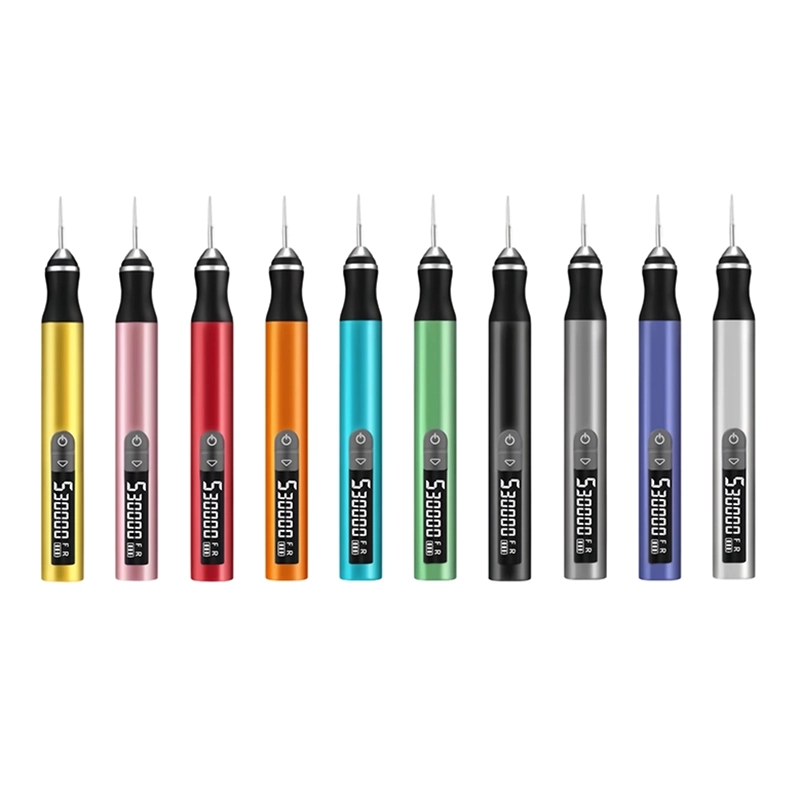
H102 Cordless Electric Engraving Pen
Cordless pen-style rotary tool for engraving, polishing, grinding and detail work.
View product ↗