
Electronics repair tools
How to Build an Electronics Maintenance Tools Kit for B2B Teams
Build an electronics maintenance tools kit covering fastener access, ESD-sensitive work, bit coverage, documentation and replacement control for repair teams, refurbishers and service buyers.
Quick Answer
Electronics maintenance tools should be planned from the devices and fasteners a team actually services. Map phone, laptop, camera, game-console and small-appliance jobs to profiles, sizes, access limits, ESD handling, lighting and storage needs. Then choose a compact, balanced or extended kit, document replacement parts and approve the final bit list and pack-out before a wholesale or private-label order.
Buyer Takeaways
- Build a device-to-fastener matrix before choosing piece count.
- Prioritize usable coverage, access and bit fit over a large but duplicated assortment.
- Document ESD, storage, replacement and cleaning requirements for the service workflow.
- Approve the exact bit list, case and artwork before a wholesale or private-label run.
Map maintenance jobs before counting pieces
List the devices, assemblies and fastener families a team services. Record profile, size, recess depth, thread condition and access. This matrix shows whether a kit needs compact coverage for phones, broader coverage for laptops or a mixed set for refurbishment benches.
Choose bits, handles and accessories for the workflow
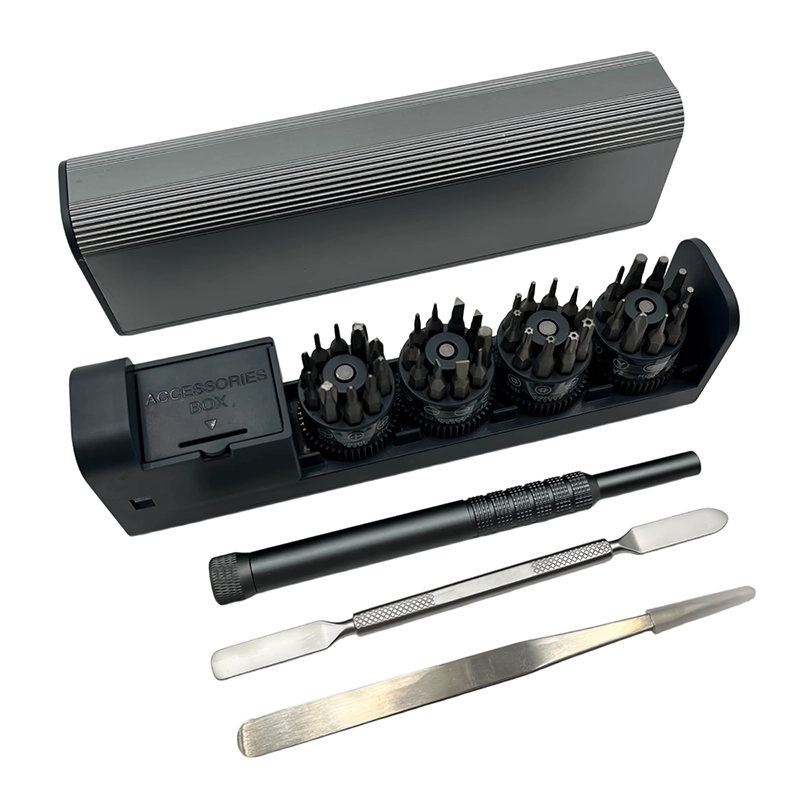
Select bit material and hardness, handle ergonomics, extensions, tweezers, opening tools, magnetizer and storage from real tasks. A useful electronics maintenance tools kit reduces changeover time without adding duplicate profiles that inflate piece count but do not improve coverage.
Technical Explanation
Coverage beats headline piece count
A kit with fewer unique, well-matched profiles can cover more real repairs than a larger set filled with duplicates.
- Map devices to fastener profiles.
- Check access and recess depth.
- Track wear and replacement separately from the original piece count.
Design a controlled bench and replacement process
Define where tools are stored, how ESD-sensitive work is handled, how missing or worn bits are replaced and how the kit is cleaned. A service manager can then standardize the same configuration across benches and track the exceptions that need a different tool.
Approve the set for wholesale or private label
Request a line-by-line packing list, actual product photos, sample units and packaging drawings. Confirm the bit list, logo, color, case, language and replacement plan before bulk production. Keep the approved sample as the reference for incoming inspection and replenishment.
Applications
Applications
Refurbishment benches
Repeatable phone, laptop and game-console repairs with controlled storage.
Technical service teams
Shared kits that need clear replenishment and replacement rules.
Things Buyers Should Check
Things Buyers Should Check
- ✓List devices and fastener profiles.
- ✓Separate unique bits from duplicates.
- ✓Confirm access, extensions and storage.
- ✓Define ESD and cleaning workflow.
- ✓Approve sample and packing list.
- ✓Set replacement and replenishment ownership.
Frequently Asked Questions
Frequently Asked Questions
How many pieces should an electronics maintenance kit contain?
There is no universal count. Start with the device-to-fastener matrix, then include the unique profiles, access tools and storage items that a team can use. Ask for a line-by-line packing list.
Should electronics teams choose manual or electric tools?
Use manual tools where tactile control and delicate finishing matter; use a precision electric screwdriver for repeatable work when the joint and torque window have been validated. Many teams use both.
What bit materials are common for electronics repair?
S2 and CR-V are common choices, but hardness, tip accuracy, fit and wear matter more than the label alone. Match material and profile to the fasteners and replacement plan.
How can a service team control missing bits?
Use a defined storage layout, a signed replenishment list and a replacement rule that identifies the profile and size. Separating accessories from driving bits makes audits faster.
Can an electronics maintenance kit be private labeled?
Yes. A private-label brief should define the bit list, case, artwork, colors, languages, target markets, sample approval and replenishment expectations before production.
Final Buyer Recommendation
Share your device matrix and required piece count with the RFQ. Approve the line-by-line packing list and sample before requesting a private-label production run.
Related Products
Related Products
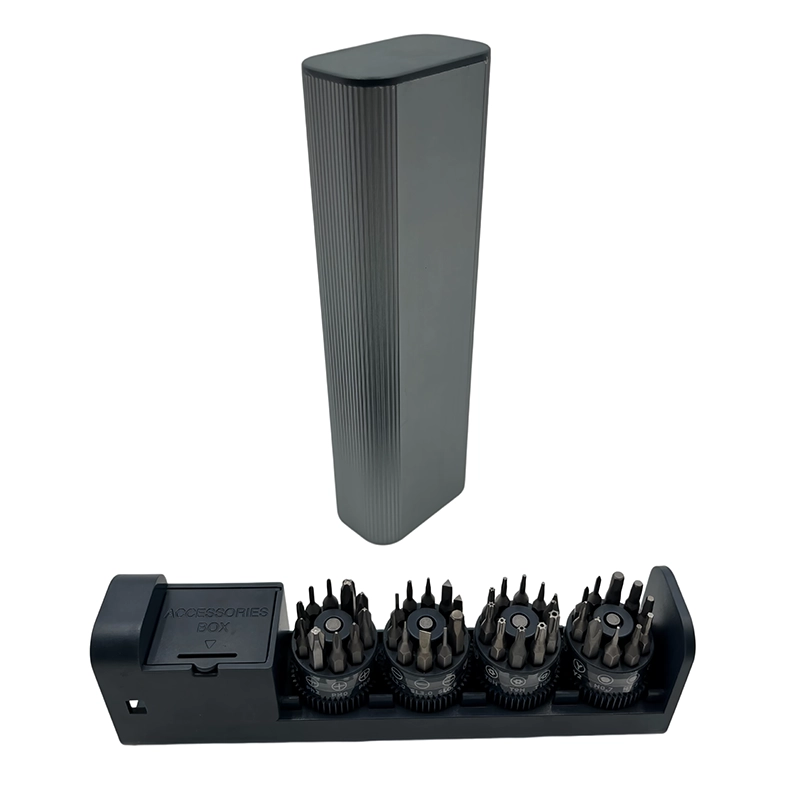
44-in-1 Manual Precision Screwdriver Set
Manual precision repair kit for electronics maintenance, workshops and retail ranges.
View product ↗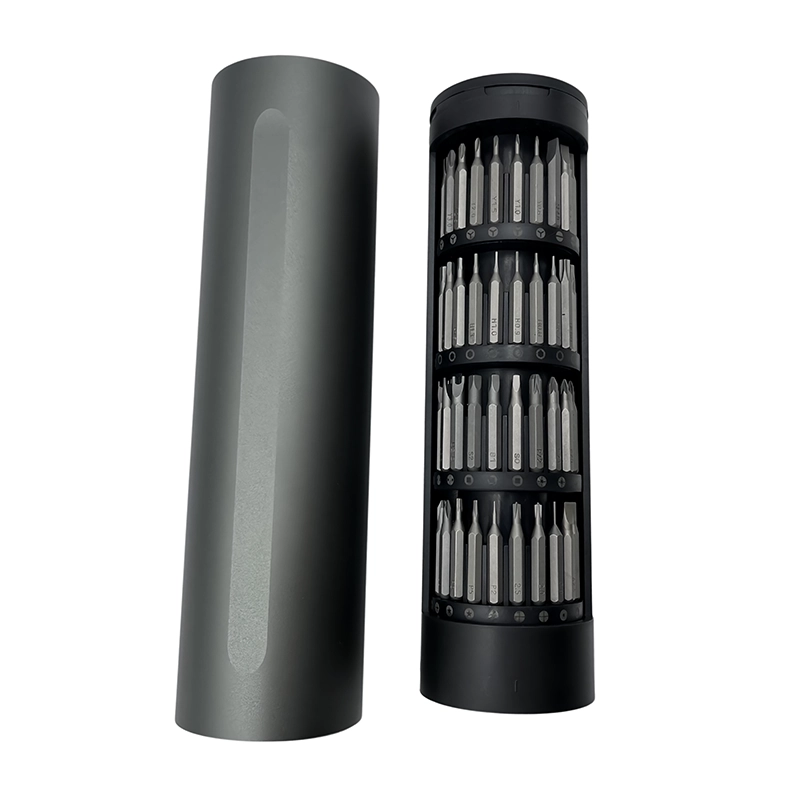
67-in-1 Electric Precision Screwdriver Set
Rechargeable precision system for smartphones, laptops, cameras and small electronics.
View product ↗