Manual tools
S2 vs CR-V Screwdriver Bits: Which Is Better for Precision Repair Tools?
S2 vs CR-V screwdriver bits affect durability, reviews, and returns. See how US tool brands, repair shops, and e-commerce sellers choose bits before bulk orders.
Published 2026-07-02 · Reviewed by the ToolQeen product and quality team
For US tool brands, Amazon sellers, and repair shop suppliers, the wrong screwdriver bit material can quietly turn into bad reviews, stripped screws, higher returns, and weaker repeat orders. The debate around S2 vs CR-V screwdriver bits is not just a material question. It is a product positioning decision that affects durability, kit price, customer trust, and how confidently a buyer can scale a precision repair tool line.
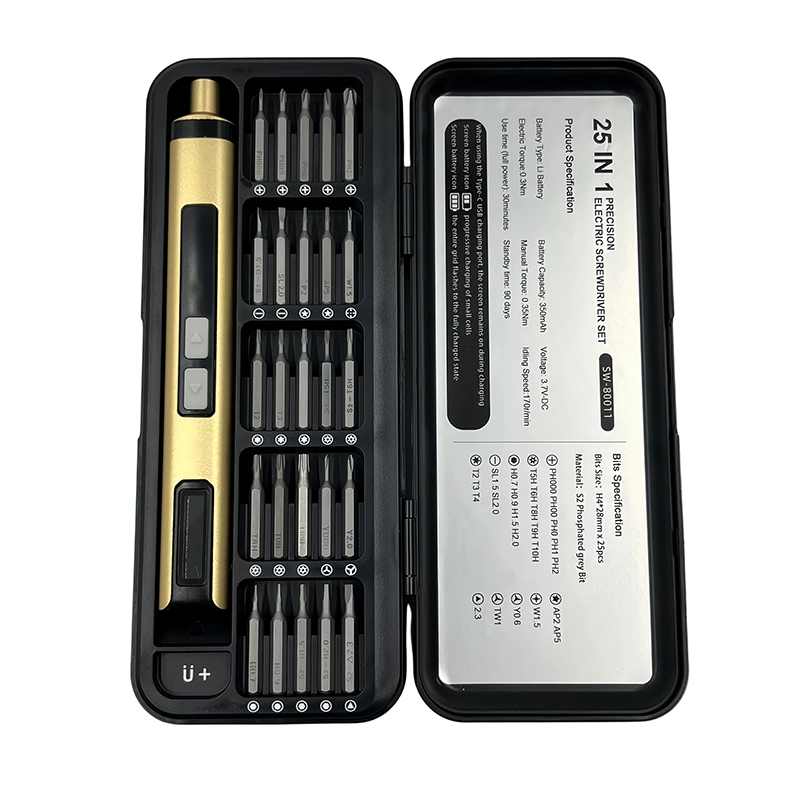
ToolQeen looks at bit material from a practical manufacturing angle. A screwdriver bit must match the target customer, the repair scenario, the torque level, the handle or electric screwdriver design, and the expected retail price. That is why we evaluate bit hardness, toughness, tip accuracy, surface finish, storage layout, and batch inspection together before recommending a configuration for OEM or wholesale orders.
Quick Answer
For most precision electronics repair kits, S2 screwdriver bits are usually the better choice when buyers want stronger durability, better tip retention, and a more premium product image. CR-V bits can still work for lower-cost general repair kits, but for phone repair, laptop repair, e-commerce reviews, and private-label tool sets, S2 vs CR-V screwdriver bits often comes down to whether the buyer prioritizes long-term quality or entry-level pricing.
Why Bit Material Becomes a Business Problem
A screwdriver bit is a small part of a tool kit, but it often carries the largest part of the customer's frustration. When the tip wears too fast, slips inside a screw, or damages a tiny fastener, the buyer does not blame the steel grade. They blame the whole kit. For e-commerce sellers, that can mean refund requests and negative reviews. For distributors, it can mean slower replenishment because dealers lose confidence.
This is especially important in precision repair markets. Phone screws, laptop screws, game console screws, camera screws, and small appliance fasteners require clean engagement. A bit that is too soft can round quickly. A bit that is too brittle can chip. A good supplier needs to balance wear resistance, toughness, machining accuracy, and heat treatment, not simply print "premium steel" on the package.
Material Basics: S2 and CR-V Are Not Built for the Same Buyer Expectation
S2 is commonly used in higher-grade screwdriver bits because it is associated with strong toughness and good resistance to repeated fastening stress. In practical repair kits, buyers often choose S2 when they want a premium feel, longer service life, and stronger claims for professional repair use. CR-V, or chrome vanadium steel, is widely used in hand tools and general-purpose screwdriver sets. It can be a reasonable choice for value-focused kits, household tools, and entry-level repair bundles.
The tradeoff is that CR-V bits may not hold up as well in demanding precision repair environments if the heat treatment and tip accuracy are not tightly controlled.
Standards and Compatibility Still Matter
Material is only one part of the decision. For interchangeable bits, dimensional compatibility matters as much as steel grade. ISO 1173 is widely referenced for screwdriver bit drive-end dimensions, and buyers should think about bit shank compatibility when building repair kits, electric screwdriver sets, and replaceable bit systems. A good material will not save the product if the shank fit, bit length, or storage design is wrong.
For electrical and electronic repair tool products, export-minded buyers should also pay attention to compliance expectations. The European Commission's RoHS Directive is a useful reference when buyers think about restricted substances in electrical and electronic equipment supply chains. Even for US-focused sales, cleaner compliance documentation helps private-label brands sell across more channels later.
S2 vs CR-V Screwdriver Bits: A Buyer-Focused Comparison
Factor S2 Bits CR-V Bits Best fit Precision repair, professional kits, premium OEM tool sets General repair, household use, value-focused kits Buyer perception More professional and higher grade Familiar and cost-friendly Durability positioning Stronger selling point for repeat use Depends heavily on heat treatment and use case Best sales channel Amazon, independent stores, repair tool distributors, private label Mass-market kits, promotional tool sets, entry-level bundles Main risk Higher cost if buyer only competes on price Higher complaint risk if used in demanding repair tasks
When S2 Bits Are the Better Choice
S2 bits are usually the stronger option when the product is sold as a precision repair kit, an electronics repair tool set, or a professional screwdriver kit for repeat users. US buyers selling to phone repair shops, laptop repair technicians, game console repair stores, and serious DIY customers should be careful about using a low-grade bit just to reduce the first cost. For online sellers, S2 also gives the product page a clearer value story.
It supports stronger claims around durability, professional repair use, and tip performance. That matters when a shopper compares two similar kits and one product gives a more credible explanation of the bit material, use case, and quality control.
When CR-V Bits Still Make Sense
CR-V should not be dismissed completely. It can be a useful material for lower-cost tool kits, promotional sets, household repair tools, and general-purpose screwdriver bundles where the customer is not doing daily precision repair work. If the target buyer wants a practical, affordable kit for occasional use, CR-V may support a better price point. The risk begins when CR-V is used in a product that is marketed as professional precision repair but not built for that workload.
In that case, the product promise and the actual user experience are no longer aligned. That mismatch is exactly where bad reviews usually start.
How ToolQeen Helps Buyers Choose the Right Bit Configuration
ToolQeen does not recommend a material in isolation. For OEM and wholesale projects, our team first looks at target market, product price range, repair scenario, bit count, handle type, packaging, and expected customer use. A premium kit for electronics repair may use S2 bits with a clearer layout and stronger packaging. A promotional or entry-level set may use a more cost-controlled configuration while still protecting basic usability.
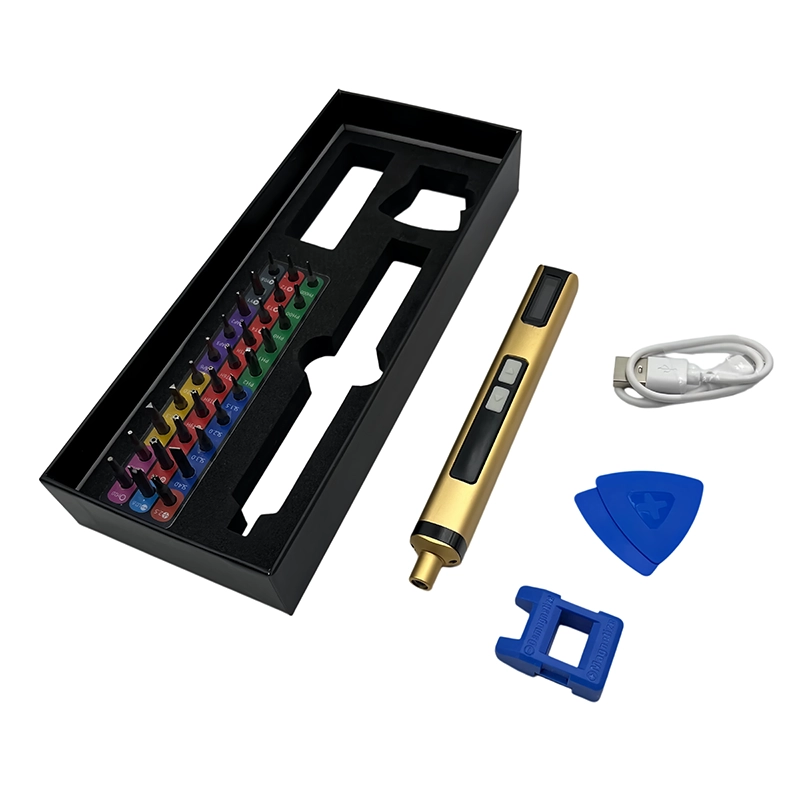
Our factory process supports bit selection, storage layout, tool kit configuration, logo customization, retail packaging, and final inspection. Incoming materials, tip shape, appearance, accessory completeness, and packaging are checked before shipment so buyers can reduce avoidable complaints after the product reaches the market.
US Market Scenario: Private Label Kits Need a Clear Material Story
A US private-label seller may source a precision screwdriver kit for phone repair and list it beside dozens of similar products. If the product only says "multi-bit screwdriver set," it is easy to look generic. If the listing explains S2 bit material, practical bit types, storage layout, repair scenarios, and QC checks, the buyer has a stronger reason to click and a stronger reason to trust the product. This is where S2 vs CR-V screwdriver bits becomes a conversion issue.
S2 can help justify a professional positioning, while CR-V may help keep a lower entry price. The better choice depends on the seller's target review quality, return tolerance, and brand positioning.
Selection Advice Before Bulk Orders
1. Test the Bit Tip, Not Only the Steel Name Ask for samples and test common screws used in phones, laptops, glasses, toys, and small electronics. Check whether the bit fits cleanly, slips easily, or leaves visible wear after repeated use. 2. Match the Material to the Product Promise If the kit is positioned for professional electronics repair, S2 is usually easier to defend. If the kit is positioned as an affordable household tool, CR-V may be acceptable when quality is controlled.
3. Review Packaging and Bit Layout A good bit set should be easy to understand at a glance. Clear labeling, organized storage, and a logical bit sequence help reduce customer confusion and improve perceived value. 4. Confirm QC and Repeat-Batch Stability For B2B buyers, one good sample is not enough. Ask how the supplier controls incoming material, tip machining, heat treatment consistency, appearance, and final packing before shipment.
FAQ
Are S2 screwdriver bits always better than CR-V bits? Not always. S2 is generally better for professional precision repair and higher-value kits, while CR-V can be suitable for cost-focused general repair tools. The right choice depends on the target market, price point, and expected workload. Which material is better for phone and laptop repair kits? For phone repair, laptop repair, and other precision electronics work, S2 is usually the stronger choice because buyers expect better tip durability and cleaner screw engagement.
Can ToolQeen customize screwdriver bit sets for private-label brands? Yes. ToolQeen supports OEM and ODM tool kit projects, including bit material selection, bit count, handle design, logo, color, packaging, manuals, and retail-ready configurations for importers and e-commerce sellers. What should buyers check before placing a bulk order? Buyers should check sample performance, bit fit, material claims, packaging, MOQ, lead time, quality inspection process, and whether the supplier can keep the same configuration stable across repeat orders.
Summary: Choose the Bit Material That Protects Your Brand
The choice between S2 vs CR-V screwdriver bits should not be made by price alone. For US repair shops, e-commerce sellers, and private-label tool brands, the better decision is the one that protects product reviews, reduces returns, and supports the product's real use case. S2 is usually better for precision repair and premium positioning, while CR-V can work for general-purpose value kits. ToolQeen helps buyers compare materials, configure repair tool kits, prepare samples, and build OEM/ODM products for long-term sales.
To understand our manufacturing capability, visit About ToolQeen. To explore screwdriver sets, repair tools, and precision tool categories, visit ToolQeen Products.
Technical review
Checked against current ToolQeen product and factory materials.
Use this guide to prepare better sourcing questions. Confirm final specifications, quantities, documents and lead times for the selected model and market.
Related product platforms