Electric screwdriver
OEM Precision Electric Screwdriver Supplier: Lower CE/RoHS Risk for EU Importers
CE/RoHS risk? OEM precision electric screwdriver supplier buyers should check QC, MOQ, lead time, packaging, OEM samples, and batch consistency.
Published 2026-07-27 · Reviewed by the ToolQeen product and quality team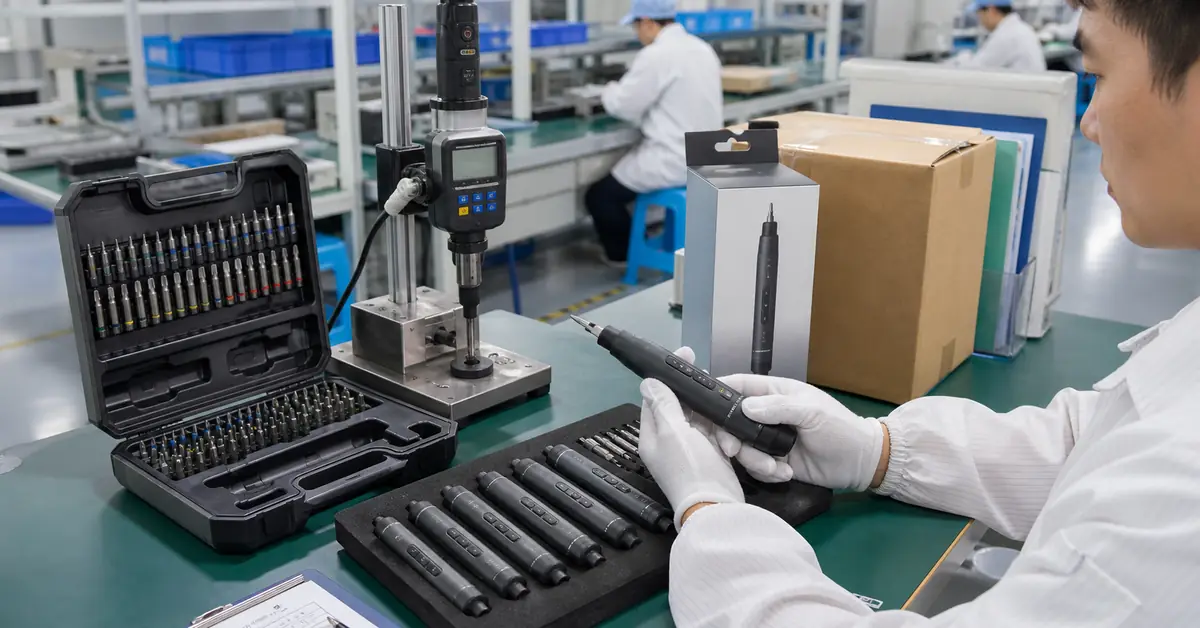
European importers do not lose money only when a precision screwdriver fails in use. They also lose margin when CE/RoHS documents are unclear, packaging does not match the approved sample, repeat batches feel different, or distributors face after-sales questions they cannot answer. For an importer, tool brand, or repair-tool distributor, choosing an OEM precision electric screwdriver supplier is therefore a risk-control decision as much as a product-sourcing decision.
ToolQeen supports this type of sourcing project through OEM/ODM communication, sample confirmation, torque checking, packaging planning, and repeat-batch inspection. The goal is simple: help EU buyers build a screwdriver program that is easier to import, easier to sell, and easier to reorder without avoidable quality disputes. OEM electric screwdriver sample review, torque checking, packaging confirmation, and export-order preparation for EU buyers.
Quick Answer
An OEM precision electric screwdriver supplier should help EU importers verify torque stability, bit configuration, CE/RoHS document readiness, MOQ, lead time, packaging, and batch consistency before bulk orders. Buyers should not approve production from product photos alone; they should request samples, QC checkpoints, packaging files, and repeat-order control details. This reduces import risk, after-sales complaints, and distributor uncertainty.
Definition: What an OEM Precision Electric Screwdriver Supplier Does
An OEM precision electric screwdriver supplier manufactures or configures powered screwdriver products according to a buyer's target market, product positioning, branding, packaging, accessory layout, and order quantity. For Europe, the supplier role usually extends beyond assembly. The factory must help the buyer confirm electrical safety expectations, RoHS-related material control, labeling, user manual clarity, packaging consistency, and production records that support importer due diligence.
In practical terms, OEM work may include logo application, color direction, retail box design, bit set selection, charging cable choice, instruction manual content, carton label format, and product configuration. ODM work goes further by adapting product structure, kit layout, appearance, or feature direction for a specific brand program. ToolQeen handles both OEM and ODM discussions for precision screwdriver and repair tool categories, with normal OEM MOQ around 500 pcs and ODM MOQ around 1,000 pcs depending on configuration.
Technical Explanation: Why EU Buyers Should Check More Than Torque Numbers
Torque is one of the most visible specifications on an electric screwdriver, but it is not the only technical risk. A tool can meet a simple torque claim during a single test and still create returns if torque output changes after repeated use, if the bit fit is poor, if the battery drops quickly, or if the charging port feels weak. EU importers need repeatable performance because distributors often judge the supplier by the second and third order, not only by the first sample.
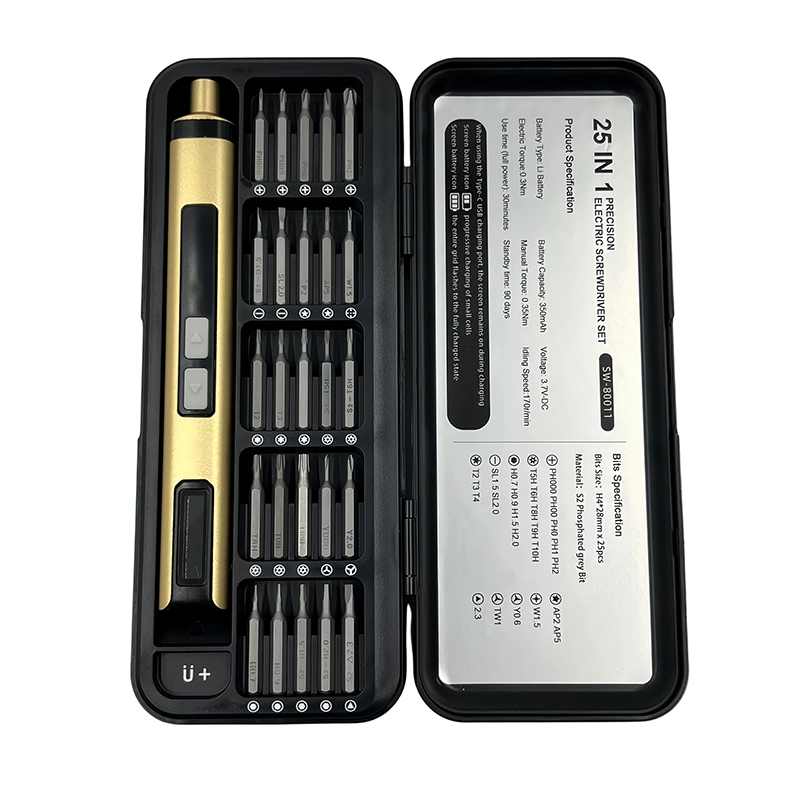
Torque Stability Across Repeated Use For electronics repair and precision assembly, unstable torque can strip small screws, damage plastic housings, or slow repair work. Buyers should ask how torque is checked during production, whether sampled units are tested after assembly, and whether the approved sample represents the same motor and gearbox direction used in mass production. S2 Bits, Bit Fit, and Accessory Consistency S2 bits are often preferred for precision repair kits because buyers expect stronger wear resistance than low-grade alternatives.
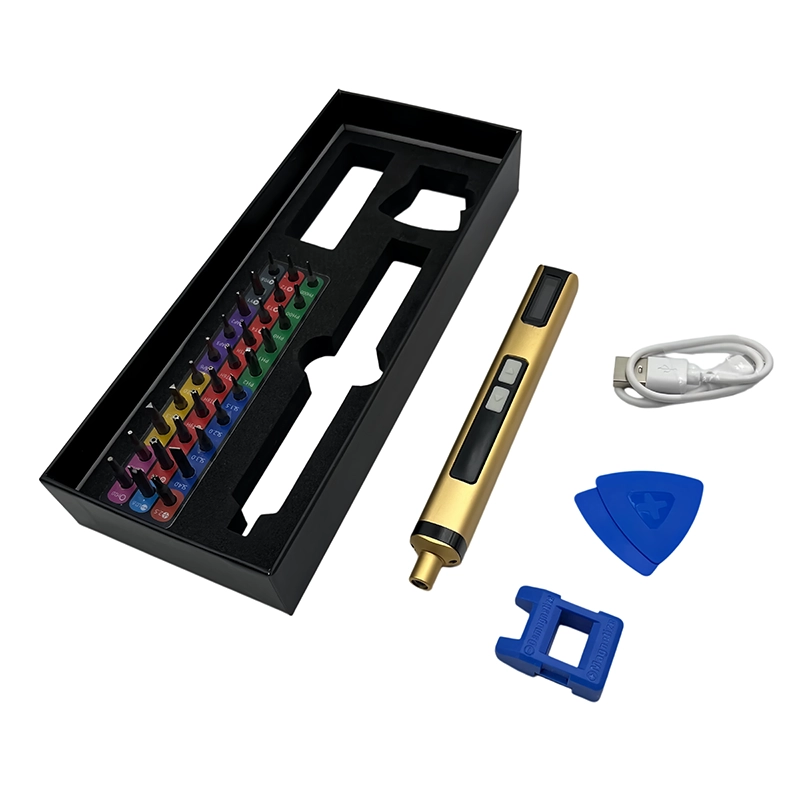
However, material naming alone is not enough. The bit length, magnetic fit, head accuracy, coating, tray layout, and accessory count must stay consistent. A distributor can handle a reasonable MOQ discussion; it is much harder to handle customer complaints caused by missing bits or poor screw engagement. Battery, Charging, and User Experience Small electric screwdrivers are judged by feel. Button response, LED alignment, charging behavior, storage case fit, and noise level all influence buyer confidence.
These details are especially important for European e-commerce sellers and repair-tool distributors because after-sales questions can become a real operating cost.
CE/RoHS and Importer Risk Control
European buyers should treat compliance as part of supplier selection. The European Commission explains that the RoHS Directive restricts hazardous substances in electrical and electronic equipment, while CE marking is used when products covered by EU rules meet applicable requirements. Buyers can review official guidance through the European Commission RoHS Directive page and the Your Europe CE marking guidance. For an importer, the practical question is not whether a supplier writes "CE/RoHS" in a quotation.
The question is whether the supplier can support the buyer's document review, material control, label consistency, manual language planning, packaging records, and product change communication. If the battery, PCB, motor, charger cable, or packaging structure changes between orders, the buyer needs to know before goods ship. ToolQeen's recommendation is to keep a simple compliance file for each OEM project: approved sample photos, product specification, packaging artwork, instruction manual version, requested certificate copies, carton label format, and final inspection notes.
This gives importers and distributors a clearer basis for internal review and after-sales communication.
Factory Insight: How ToolQeen Handles OEM/ODM Projects
ToolQeen is Shenzhen ToolQeen Technology Co., Ltd., a Shenzhen-based precision tool manufacturer founded in 2016. The company focuses on mini electric screwdrivers, precision electric screwdrivers, electric rotary tool pens, rotary grinder pens, ratchet screwdriver sets, and manual precision screwdriver sets for global B2B buyers. The factory supports OEM, ODM, private label, wholesale, factory-direct supply, custom packaging, QC documentation, and distributor-ready production.
The normal project flow starts with requirement communication. Buyers share the target market, expected quantity, product style, torque needs, bit configuration, packaging direction, and shipping requirement. ToolQeen then provides a practical solution and quotation, normally within 24 hours for clear projects. Standard samples are usually prepared in 3-5 days, while standard production often takes 10-15 days and custom orders may take 15-25 days depending on packaging, materials, and quantity.
For buyers comparing suppliers, this workflow matters because it separates a catalog seller from a production partner. A factory that asks about target market, sales channel, package format, and after-sales risk is more likely to help the buyer avoid weak repeat orders.
Real Manufacturing Data for Buyer Planning
Reliable sourcing depends on numbers, not only claims. ToolQeen's electric screwdriver production capacity is typically around 3,000-5,000 units per day, with monthly capacity around 80,000-120,000 units depending on model mix and production schedule. This gives European buyers a practical basis for planning distributor replenishment, seasonal orders, and phased private-label launches. For a first OEM electric screwdriver order, many importers prefer to start with a controlled MOQ and expand after market feedback.
A common path is to approve standard samples, run packaging confirmation, complete a first batch, gather distributor feedback, then adjust the bit layout, manual, carton label, or retail packaging before larger repeat orders. This is often safer than over-customizing the first order and discovering late that the target channel needs a different accessory mix. Buyer Planning Point ToolQeen Reference Why It Matters in Europe OEM MOQ Around 500 pcs Supports lower-risk private-label testing before larger distribution orders.
ODM MOQ Around 1,000 pcs Useful when the buyer needs deeper structure, appearance, or kit changes. Sample lead time 3-5 days for standard projects Helps buyers verify torque feel, packaging, and accessory layout early. Standard production 10-15 days Supports predictable replenishment planning for distributors. Custom production 15-25 days Allows time for packaging, logo, manual, and configuration control.
Quality Control Process Buyers Should Request
A serious OEM precision electric screwdriver supplier should make QC visible before the buyer pays for bulk production. ToolQeen uses a five-stage quality control direction that covers incoming materials, in-process assembly, final testing, reliability checking, and pre-shipment inspection. This process helps reduce surprises between the approved sample and the delivered batch. Batch inspection for electric screwdriver function, torque behavior, accessory count, charging, and packaging consistency.
IQC: Incoming Material Inspection Incoming inspection should cover motors, batteries, PCBs, S2 bits, plastic parts, metal parts, and packaging materials. This is where many repeat-batch problems begin. If a supplier changes a component without communication, the buyer may receive a product that looks similar but behaves differently. IPQC: In-Process Control During assembly, the factory should monitor torque calibration, bit fit, button feel, charging contact, and housing assembly.
For OEM projects, IPQC should also check logo placement, color direction, and accessory layout against the approved sample. FQC and Reliability Checks Final QC should include function testing, torque checking, appearance inspection, charging test, noise observation, and accessory count. Reliability or aging checks can include continuous run testing, drop checks, high/low temperature direction, and life-cycle sampling where relevant.
Pre-Shipment Inspection Before shipment, buyers should request checks on packaging integrity, labels, barcodes, carton marks, instruction manual version, and final random sampling. For European importers, packaging and manual clarity are not small details; they affect compliance review, customer trust, and after-sales communication.
OEM Packaging and Distributor-Ready Supply
Many electric screwdriver projects fail commercially because the product works but the package does not sell. A distributor may need a compact retail box, a clear bit map, a manual in the right languages, a barcode label, a carton label, or a bundle that fits shelf and online listing requirements. Packaging should be confirmed before mass production, not corrected after goods are finished. ToolQeen can support logo, color direction, gift box, retail packaging, instruction insert, accessory configuration, and export carton planning.
Buyers can review the broader product range on ToolQeen Products and compare manufacturing background on About ToolQeen before preparing an OEM inquiry.
Supplier Comparison Checklist for EU Importers
Before choosing an OEM precision electric screwdriver supplier, EU buyers should compare factories with the same questions. Can the supplier explain torque checking instead of only sending a catalog? Can they support CE/RoHS document review? Can they keep the same bit layout and packaging across repeat orders? Can they provide sample timing, MOQ, lead time, and QC checkpoints in writing? Compliance readiness: Ask for CE/RoHS-related support, label consistency, and product-change communication.
Sample control: Confirm torque feel, charging behavior, bit set, packaging, and manual before bulk production. Batch consistency: Request inspection steps for motors, batteries, PCBs, bits, assembly, and pre-shipment packaging. OEM practicality: Check whether logo, color, retail box, barcode, carton label, and instruction insert are realistic for the MOQ. Long-term supply: Confirm capacity, lead time, reorder stability, and after-sales communication before distributor rollout.
Buyer FAQ
What should EU buyers check before choosing an OEM precision electric screwdriver supplier? Buyers should check CE/RoHS document readiness, torque stability, S2 bit quality, battery and charging behavior, sample approval, packaging consistency, MOQ, lead time, QC process, and repeat-batch control. The goal is to reduce import risk and after-sales uncertainty before scaling orders. What is ToolQeen's MOQ for OEM and ODM electric screwdriver projects?
ToolQeen's general OEM MOQ is around 500 pcs, while ODM projects usually start around 1,000 pcs. The final MOQ depends on model, logo method, accessory configuration, packaging complexity, and whether structural changes are required. How long do samples and production usually take? Standard samples are usually prepared in 3-5 days. Standard mass production often takes 10-15 days, while custom projects may take 15-25 days depending on artwork confirmation, material preparation, order quantity, and production schedule.
Can ToolQeen support private-label packaging for European distributors? Yes. ToolQeen can support logo, color direction, retail box, gift packaging, instruction insert, barcode label, carton label, and accessory layout planning for qualified B2B orders. Buyers should confirm packaging files before production to reduce rework and delivery risk. Which QC records are useful before shipment? Useful records include torque check results, charging and function testing, appearance inspection, accessory count, packaging print check, label/barcode check, carton inspection, and final random sampling.
These records help buyers align expectations before goods leave the factory. Why does CE/RoHS readiness matter for electric screwdriver imports? Electric screwdrivers include electrical and electronic components, so EU buyers often need to review CE/RoHS-related requirements, product labels, documentation, and material control. Clear supplier communication helps importers reduce compliance and distributor-risk questions.
Can buyers start with a standard model before deeper ODM customization? Yes. Many buyers start with a standard model, confirm torque feel and packaging, collect distributor feedback, then move into deeper ODM changes after the first order proves demand. This approach can reduce launch risk and improve repeat-order planning.
Inquiry CTA: Prepare a Lower-Risk OEM Electric Screwdriver Order
If you are sourcing for an EU tool brand, importer, distributor, or repair-tool channel, send ToolQeen your target market, expected quantity, preferred torque direction, bit configuration, packaging idea, CE/RoHS document needs, and delivery window. ToolQeen can help compare standard samples, OEM packaging options, MOQ, lead time, and QC checkpoints before you commit to a bulk order. To review company capability, visit Shenzhen ToolQeen Technology Co., Ltd..
To compare product categories for your next sourcing plan, browse ToolQeen precision tool products.
Final Buying Recommendation
The best OEM precision electric screwdriver supplier for Europe is not simply the lowest quotation. It is the factory that helps the buyer control CE/RoHS readiness, torque behavior, S2 bit fit, packaging consistency, MOQ, lead time, and repeat-batch quality. For importers and distributors, these checks reduce after-sales risk, protect long-term supply, and make private-label electric screwdriver programs easier to scale.
Technical review
Checked against current ToolQeen product and factory materials.
Use this guide to prepare better sourcing questions. Confirm final specifications, quantities, documents and lead times for the selected model and market.
Related product platforms