Electric screwdriver
Private Label Electric Screwdriver: How Tool Brands Build Market-Ready Repair Kits
Source a private label electric screwdriver with custom branding, S2 bits, OEM packaging, sample testing, QC, MOQ planning, and bulk order support.
Published 2026-07-11 · Reviewed by the ToolQeen product and quality team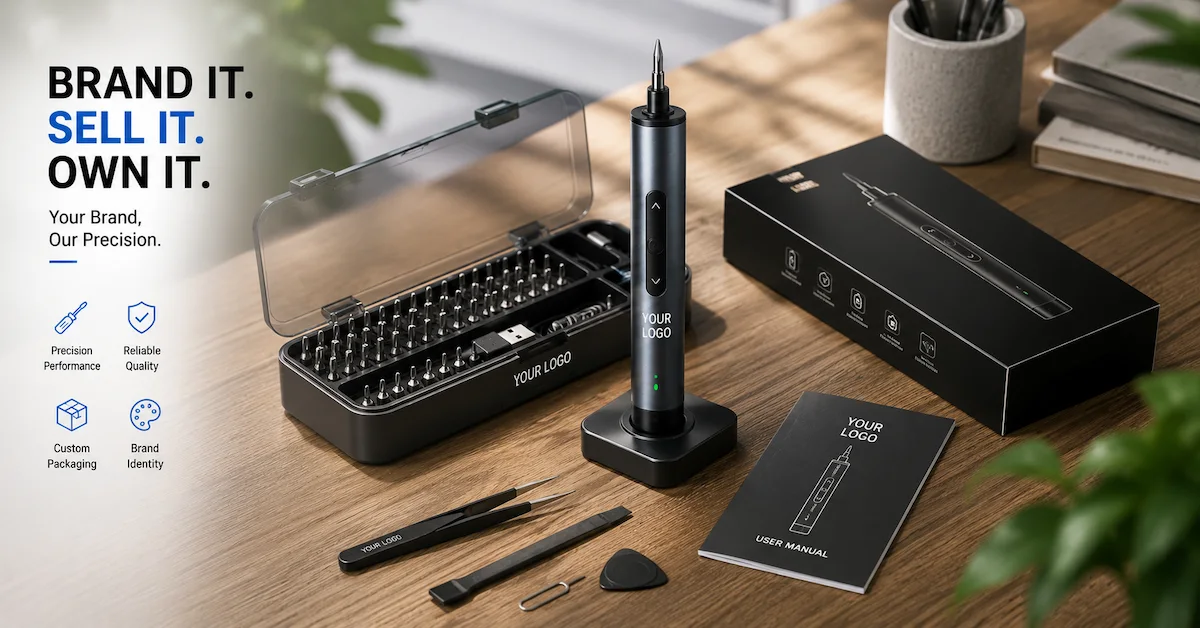
A private label electric screwdriver allows distributors, repair tool brands, Amazon sellers, and electronics suppliers to sell a proven product under their own name. Instead of investing heavily in a completely new design, buyers can customize the logo, packaging, manual, accessories, color, and market positioning. However, private labeling is not simply printing a logo on an existing tool. Buyers still need to verify torque stability, bit quality, battery performance, packaging strength, production consistency, and after-sales support.
ToolQeen supports private-label repair tool projects through electric screwdriver production, precision repair tool kits, custom logo service, packaging customization, sample requests, and bulk order support. Buyers can review ToolQeen’s manufacturing background on the About Us page.
Quick Answer
The best private label electric screwdriver should combine reliable product performance with market-ready customization. Buyers should verify stable torque, S2 steel bits, magnetic hold, battery runtime, Type-C charging, storage layout, retail packaging, logo quality, MOQ, lead time, and factory QC before approving bulk production.
Why Private Label Electric Screwdrivers Fit B2B Sales Channels
Private-label products help buyers create a recognizable repair tool line without starting from an empty product concept. This model is especially useful for: Tool distributors expanding their catalog Amazon and Shopify sellers Electronics repair supply companies Phone and laptop repair chains Regional wholesalers Hardware retailers Corporate gift suppliers Emerging repair tool brands A well-prepared private-label product can include branded retail packaging, product manuals, barcodes, SKU labels, custom accessory layouts, and export cartons.
Buyers can browse ToolQeen’s Products page to compare electric screwdrivers, precision repair kits, rotary tools, manual tools, and ratchet tools. Recommended For Buyers with an established sales channel Brands that need a faster product launch Distributors seeking repeat-order stability Sellers requiring customized packaging Companies building a repair tool series Buyers that can test samples before production Not Recommended For Buyers needing only a few retail units Heavy construction tool projects High-torque impact fastening Buyers unwilling to confirm packaging details Projects without a clear target customer
What Can Be Customized for a Private Label Project?
Product Branding Common branding options include: Laser-engraved logo Silk-printed logo Branded storage case Custom product color Product model number Brand identification label Logo placement should be confirmed on the physical sample, not only through a digital mockup. Buyers should check logo size, alignment, durability, and contrast against the screwdriver body. Retail Packaging Packaging customization may include: Printed retail box Branded inner tray Product specification label Barcode and SKU label User manual Warranty card Market-specific language Export carton marks For Amazon and retail channels, packaging must protect the tool while clearly presenting product features and included accessories.
Accessory Configuration Private-label buyers can often adjust: Number of screwdriver bits Bit types Extended bits Tweezers Pry tools Magnetizer and demagnetizer Charging cable Storage case layout The accessory combination should match the target customer rather than simply maximizing the number of pieces.
How to Choose a Private Label Electric Screwdriver Supplier
A buyer should evaluate both the product and the supplier’s private-label process. Product Checklist Is torque suitable for electronics repair? Is RPM stable under normal use? Are the bits made from S2 steel or equivalent material? Does the bit fit reduce slipping and wobbling? Is magnetic hold strong enough for tiny screws? Is the battery suitable for daily repair work? Does the tool support Type-C charging? Is the storage case organized and durable?
Is the screwdriver comfortable during repeated use? Can the product pass real repair testing? Private Label Sourcing Checklist Can the supplier provide a branded sample? What is the MOQ for customized orders? Can the logo method be selected? Can packaging artwork be reviewed before printing? Are barcode and SKU labels supported? Can manuals be produced in different languages? Is packaging drop testing available? What is the production lead time?
Can future orders use the same specifications? Is final inspection completed before shipment?
Recommended Product: 67-in-1 Electric Precision Screwdriver Set
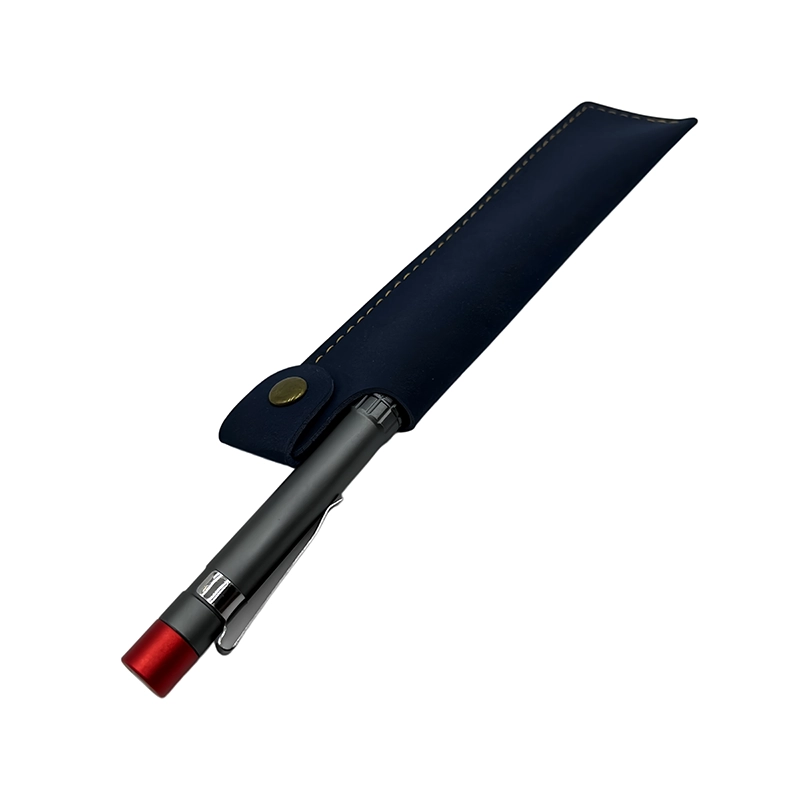
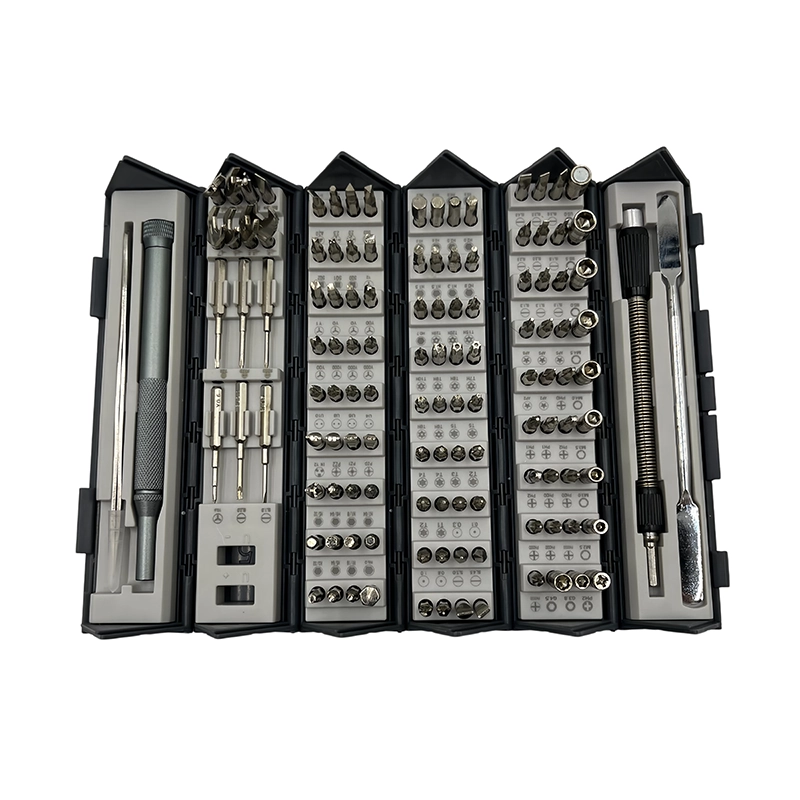
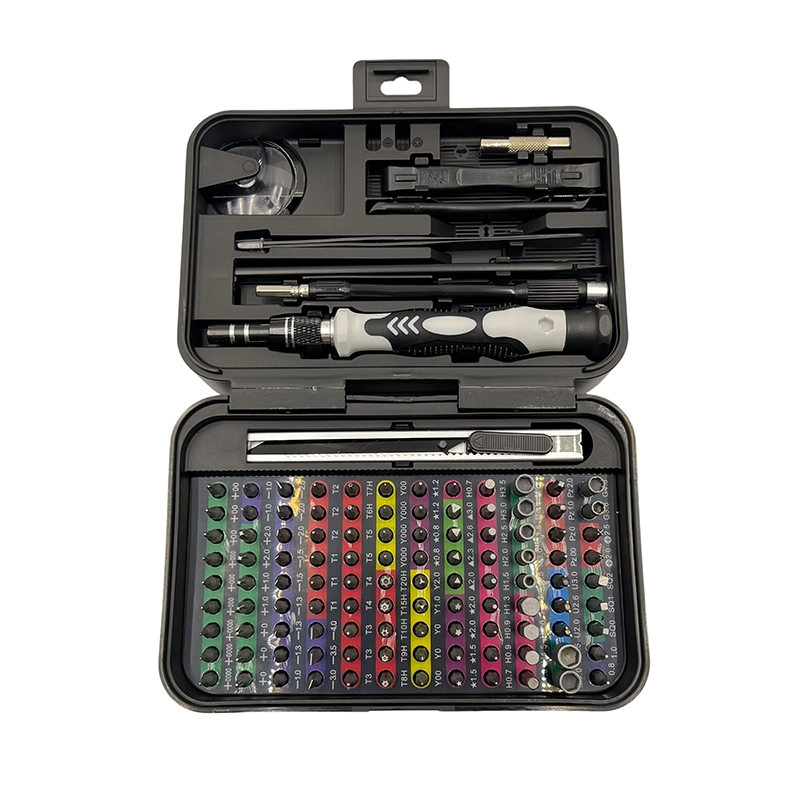
ToolQeen’s 67-in-1 Electric Precision Screwdriver Set is a suitable base product for private-label repair tool projects. It is designed for: Smartphone repair Laptop and PC maintenance PCB repair Camera and drone servicing Watch and precision instrument work Small electronics assembly The kit combines an electric screwdriver, manual operation support, S2 steel bits, organized storage, magnetic bit handling, LED lighting, and a compact case.
Private-label buyers can discuss: Logo placement Product color Retail packaging Manual design Bit configuration Accessory selection Barcode and label requirements Export carton packaging
Generic Product vs Private Label vs ODM
Item Generic Product Private Label Product ODM Product Branding Supplier brand or unbranded Buyer’s brand Buyer’s brand Product Structure Existing Mostly existing Can be redesigned Packaging Standard Customized Fully developed Logo Limited Customized Customized Accessory Layout Usually fixed Adjustable Highly adjustable Development Time Short Medium Longer MOQ Usually lower Medium Usually higher Best For Trial sales Brand launches New product development Private labeling is often the practical middle option.
It provides stronger brand control than a generic product while requiring less development time than a full ODM project.
Factory Qualification Comparison
Audit Point Reliable Private Label Supplier Higher-Risk Supplier Sample Process Provides branded sample approval Uses photos only Logo Confirmation Checks position and durability Prints without physical approval Bit Quality Specifies and inspects material Material is unclear Torque QC Tests product consistency No clear calibration process Battery Testing Checks charging and runtime Only powers the tool on Packaging Reviews tray, box, and cartons Focuses only on appearance Repeat Orders Maintains approved specifications Changes parts without notice Communication Uses clear confirmation records Relies on verbal agreement
Pros and Cons of Private Label Electric Screwdrivers
Pros Faster product launch than ODM development Stronger brand identity than generic sourcing Custom packaging for retail and e-commerce Flexible accessory combinations Suitable for repeat wholesale orders Lower development risk than a completely new tool Cons Product structure may remain similar to existing models MOQ is higher than standard unbranded orders Packaging artwork requires careful approval Logo quality must be tested Buyers still need to verify product performance Market differentiation depends on branding and configuration
Common Buying Mistakes
Mistake 1: Focusing Only on the Logo A good logo cannot compensate for unstable torque, weak bits, poor battery life, or damaged packaging. Product performance must be approved first. Mistake 2: Using Too Many Accessories A larger piece count does not always create more value. Unnecessary accessories increase cost, packaging size, and customer confusion. Mistake 3: Skipping a Branded Sample A standard sample cannot fully confirm logo quality, packaging color, manual layout, labels, or accessory placement.
A branded pre-production sample reduces approval risk. Mistake 4: Ignoring E-Commerce Packaging Amazon and Shopify products face repeated handling during warehousing and delivery. Retail boxes and inner trays must protect the tool and keep every accessory in place. Mistake 5: Not Planning Future Reorders Before launching a branded product, confirm whether the supplier can maintain the same motor, battery, bits, accessories, packaging, and appearance in future production.
Private Label Production Process
Step 1: Define the Target Market Confirm whether the product will serve repair shops, online consumers, distributors, hardware stores, or industrial users. Step 2: Select the Base Product Choose the screwdriver model, torque type, battery design, bit quantity, storage case, and accessory configuration. Step 3: Confirm Branding Details Provide the logo file, packaging requirements, manual language, product labels, barcode information, and carton marks.
Step 4: Approve the Sample Test the screwdriver, logo, packaging, accessories, charging function, torque, and user experience. Step 5: Begin Mass Production The approved sample and specification sheet should become the production standard. Step 6: Complete Final Inspection Check product function, appearance, accessories, packaging, labels, and export cartons before shipment.
ToolQeen Private Label Support
ToolQeen supports branded electric screwdriver and repair tool projects through: Custom logo service Packaging customization Product color options Bit configuration Accessory selection Manual and label design Sample requests Bulk order support Export packaging support Buyers can submit brand details, target market, quantity, and packaging requirements through the Contact Us page.
Key Takeaways
Private labeling provides a faster route to launching a branded repair tool. Product quality must be checked before logo and packaging approval. Torque stability, S2 bits, battery performance, and storage design remain essential. A branded sample should be approved before bulk production. Packaging must match retail, distributor, or e-commerce requirements. ToolQeen supports private-label electric screwdriver projects from sample confirmation to bulk delivery.
FAQ
1. What is a private label electric screwdriver? A private-label electric screwdriver is an existing or lightly customized product sold under the buyer’s brand. The manufacturer produces the tool while the buyer controls branding, packaging, manuals, labels, accessory configuration, and market positioning. It offers a faster launch path than developing a completely new ODM product. 2. What can be customized on a private-label screwdriver?
Buyers can usually customize the logo, housing color, retail box, storage case, manual, barcode, SKU label, bit configuration, charging cable, and accessory layout. Available options depend on the product model, order quantity, production process, and packaging requirements agreed with the supplier. 3. Is private labeling the same as OEM manufacturing? The terms sometimes overlap, but private labeling usually starts with an existing product that receives buyer branding and packaging.
OEM projects may include more specification changes. ODM manufacturing goes further by involving the supplier in product design, engineering, prototyping, and structural development. 4. Should buyers request a branded sample? Yes. A branded sample allows buyers to inspect logo placement, print durability, packaging color, manual layout, accessory organization, barcode labels, and overall presentation. It should also be tested for torque, bit fit, charging performance, battery runtime, and real repair use before mass production.
5. Can ToolQeen produce private-label repair tool kits? Yes. ToolQeen supports custom logos, packaging, manuals, labels, product colors, bit configurations, accessory combinations, sample confirmation, and bulk order production. Buyers can use an existing precision screwdriver model as the foundation for a branded repair tool kit for retail or distribution. 6. How can private-label buyers reduce quality complaints? Buyers should test product samples, confirm S2 bit quality, inspect torque stability, verify battery performance, approve packaging, and document every specification before production.
Final inspection should compare the shipment against the approved sample, accessory list, artwork, labels, and carton requirements. 7. What should Amazon sellers confirm before ordering? Amazon sellers should confirm packaging dimensions, barcode location, user manual clarity, accessory security, retail box durability, product consistency, and return risks. Common complaints include missing bits, damaged cases, weak batteries, unstable torque, incorrect labels, and unclear product instructions.
8. What information is needed for a quotation? Buyers should provide the selected product model, estimated quantity, target market, logo file, packaging type, accessory requirements, manual language, barcode needs, and delivery destination. Clear information helps the supplier calculate MOQ, sample requirements, production lead time, packaging cost, and shipping preparation accurately. For more sourcing and customization information, visit ToolQeen’s FAQ page.
Conclusion
A private label electric screwdriver gives repair tool brands, distributors, and e-commerce sellers a practical way to launch a branded product with less development risk. Success depends on more than appearance. Buyers must verify torque stability, S2 bit quality, battery performance, accessory organization, packaging strength, and repeat-order consistency. ToolQeen supports private-label electric screwdriver projects with product selection, logo customization, packaging development, sample confirmation, quality control, and bulk manufacturing.
Contact ToolQeen to discuss your brand, target market, expected quantity, and packaging requirements.
Technical review
Checked against current ToolQeen product and factory materials.
Use this guide to prepare better sourcing questions. Confirm final specifications, quantities, documents and lead times for the selected model and market.
Related product platforms