Electric screwdriver
Custom Electric Screwdriver Kit: How B2B Buyers Configure a Market-Ready Repair Set
Learn how to source a custom electric screwdriver kit with suitable torque, S2 bits, packaging, sample testing, QC, MOQ, and bulk order support.
Published 2026-07-11 · Reviewed by the ToolQeen product and quality team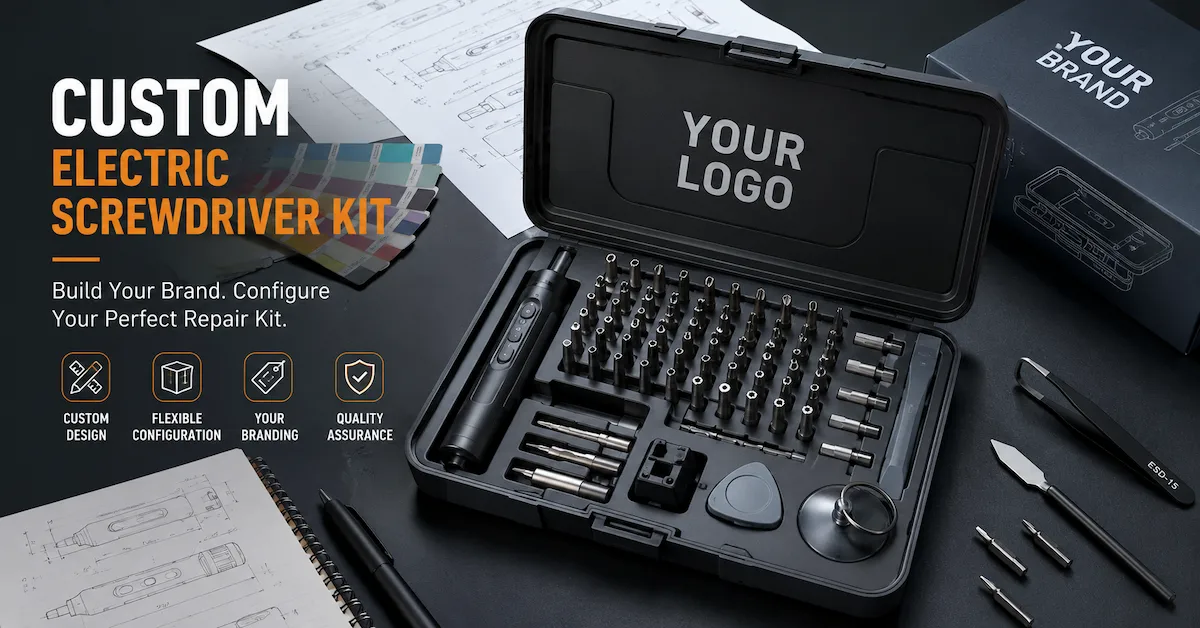
A custom electric screwdriver kit should not be created by adding more bits to a standard box. For tool brands, repair tool distributors, Amazon sellers, electronics suppliers, and service chains, a successful kit must match a defined customer, application, price point, packaging format, and sales channel. A phone repair technician needs different accessories from a household DIY user. An e-commerce seller needs stronger inner packaging than a repair shop distributor.
A professional tool brand may prioritize torque control and bit accuracy, while a promotional buyer may prioritize compact size and cost. ToolQeen supports electric screwdriver production, precision repair tool kits, custom logo service, accessory configuration, packaging customization, sample requests, and bulk manufacturing. Buyers can learn more about the company’s production and engineering background on the About Us page.
Quick Answer
To build a reliable custom electric screwdriver kit, define the target user first. Then confirm torque range, RPM, battery capacity, charging method, bit material, bit types, accessories, storage case, branding, retail packaging, barcode requirements, testing standards, MOQ, and lead time. A physical sample should be approved before mass production.
What Does “Custom” Actually Mean?
Custom electric screwdriver projects generally fall into three levels. Level 1: Branding Customization This is suitable for buyers who want a faster launch using an existing product platform. Typical options include: Laser-engraved logo Silk-printed logo Custom retail box Branded manual Barcode and SKU labels Custom carton marks Branded storage case This approach usually requires less development time because the screwdriver structure and main specifications remain unchanged.
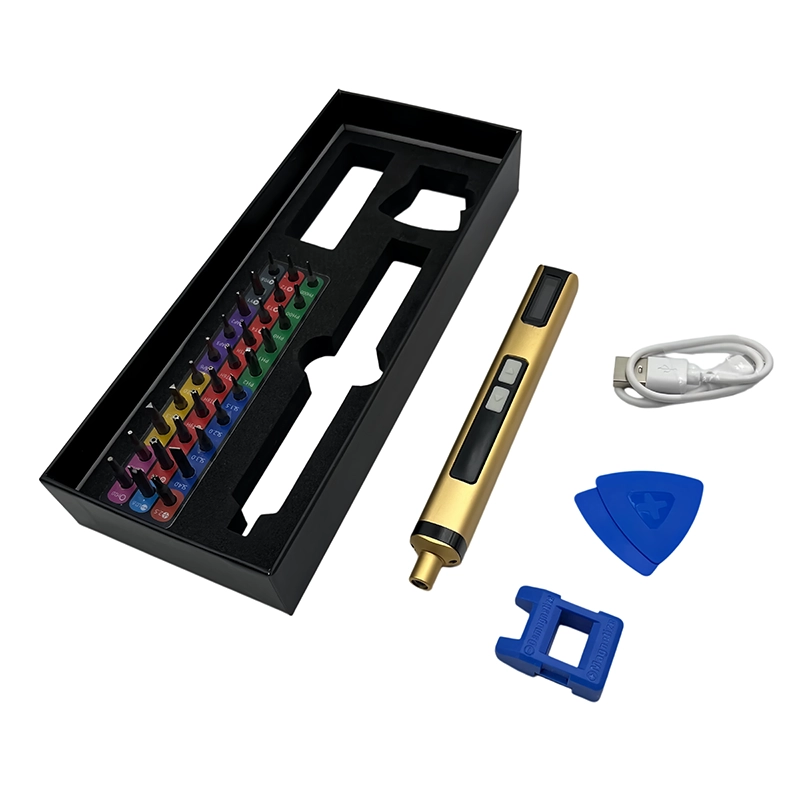
Level 2: Kit Configuration Customization This level changes what is included in the package. Buyers may adjust: Number of bits Bit types Extended bits Tweezers Pry tools Opening picks Magnetizer and demagnetizer Charging cable Storage layout Inner tray structure This is often the most practical option for distributors and private-label brands because it creates product differentiation without requiring an entirely new tool.
Level 3: Product Engineering Customization This involves deeper product development. Possible changes include: Torque settings RPM Battery capacity Button layout Housing shape Product color LED design Charging interface Motor system Storage mechanism New mold development This type of project is closer to ODM development and normally requires more engineering review, testing, tooling, time, and investment.
Start With the Target Customer
The same screwdriver kit cannot serve every market equally well. Smartphone Repair Shops Recommended features: Low, stable torque Pentalobe, Phillips, Torx, and Tri-point bits Anti-static tweezers Opening picks Pry tools Magnetic bit storage Compact case Laptop and PC Service Centers Recommended features: Phillips and Torx bits Extended bits Manual backup torque Strong magnetic hold Larger bit range Durable case Longer working time Camera, Drone, and Watch Repair Recommended features: High-precision bit fit Small Torx and Hex sizes Controlled low torque Fine tweezers Low shaft wobble Clear LED lighting E-Commerce Consumers Recommended features: Clear bit labels Easy-to-understand packaging Secure inner tray Type-C charging Simple manual Compact carton Retail-ready appearance Industrial and Professional Buyers Recommended features: Defined torque tolerance Repeatable performance Battery aging tests Tool lifespan testing Clear production records Stable repeat-order specifications
Build a Buyer Specification Sheet
Before asking for a quotation, buyers should prepare a written specification sheet. Screwdriver Requirements Confirm: Electric torque range Manual torque requirement RPM Forward and reverse controls Motor type Shaft runout limit Noise requirement LED lighting Housing material Product weight Ergonomic requirements Battery and Charging Requirements Confirm: Battery capacity Expected runtime Charging time Charging cycles Type-C interface Charging cable length Battery protection Charging indicator Bit Requirements Confirm: Material Hardness rating Short and extended bit quantities Phillips sizes Slotted sizes Torx sizes Security Torx sizes Hex sizes Pentalobe sizes Tri-point sizes Special bit requirements Packaging Requirements Confirm: Storage case material Tray layout Retail box dimensions Packaging artwork Manual language Barcode SKU label Warranty card Export carton marks Drop-test requirement A complete specification sheet reduces misunderstandings during sample development and mass production.
Recommended Base Product: 67-in-1 Electric Precision Screwdriver Set
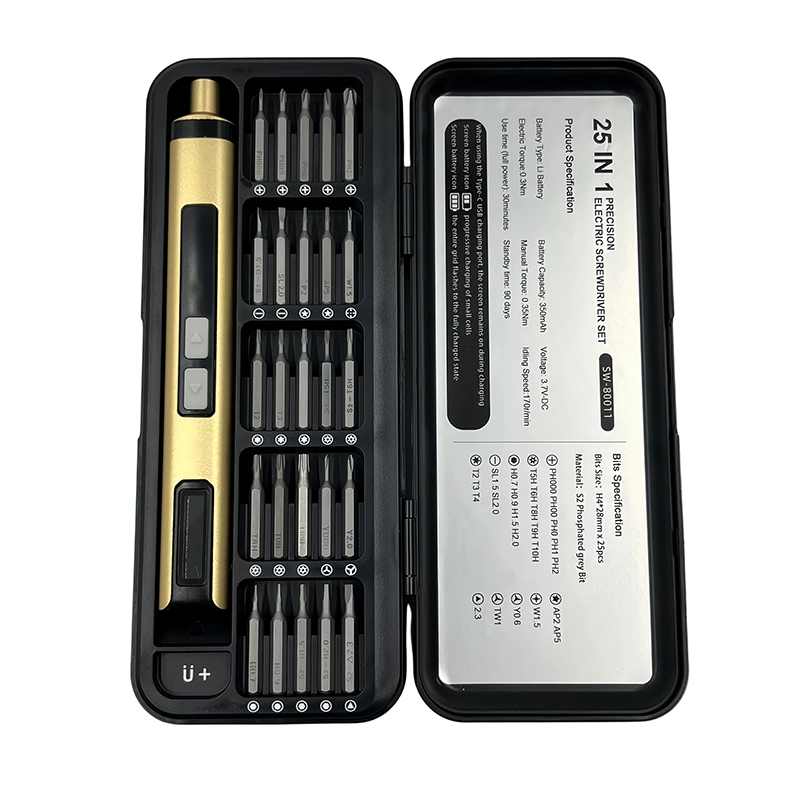
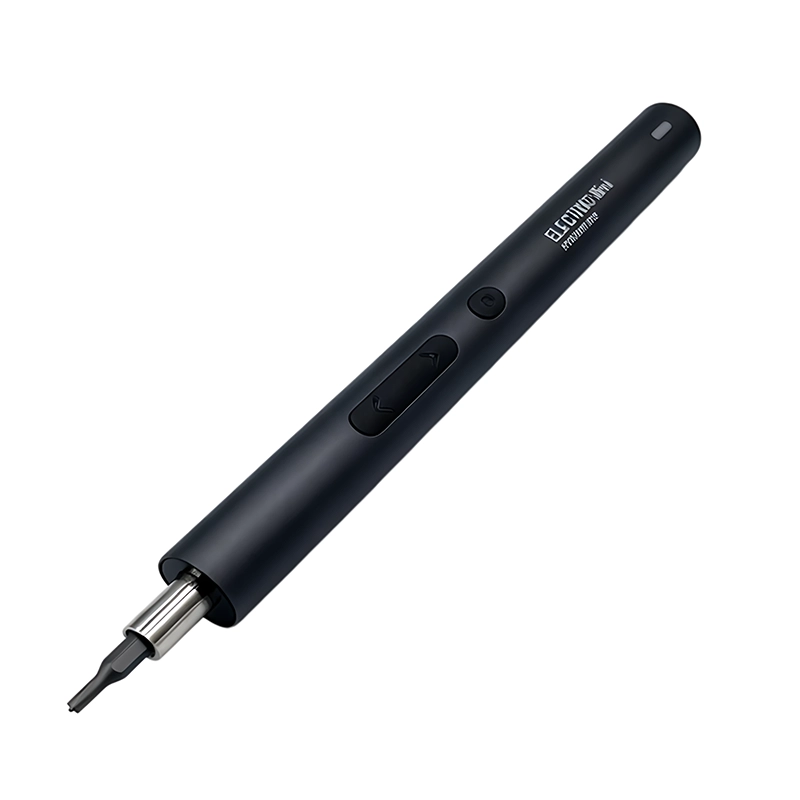
ToolQeen’s 67-in-1 Electric Precision Screwdriver Set is a suitable base platform for a professional custom electric screwdriver kit. The product combines: Electric and manual operation Adjustable precision torque S2 steel bits Short and extended bit options Anti-static tweezers Metal pry bar Magnetizer and demagnetizer Type-C charging LED lighting Organized storage It is suitable for smartphone repair, laptop maintenance, PCB assembly, camera servicing, drone repair, small electronic equipment, and professional technicians.
Buyers can discuss changes to branding, packaging, color, bit configuration, accessories, manuals, labels, and cartons.
How to Choose the Right Bit Configuration
A high piece count does not automatically create a better kit. The correct bit range should be based on the products customers actually repair. Target Application Priority Bit Types Useful Accessories Smartphone repair Pentalobe, Phillips, Tri-point, Torx Picks, tweezers, pry bar Laptop repair Phillips, Torx, Hex Extended bits, magnetizer Camera repair Small Phillips, Torx, Hex Fine tweezers, LED light Drone repair Hex, Torx, Phillips Extended bits, parts tray Watch repair Micro Phillips, Slotted, special bits Fine tweezers, low torque General electronics Mixed precision bits Pry tools, magnetizer, storage case Buyers should test the proposed bits on real screws before approving the final configuration.
Standard Kit vs Configured Kit vs Full ODM
Item Standard Kit Configured Custom Kit Full ODM Kit Logo Standard or unbranded Buyer branding Buyer branding Bit Selection Fixed Adjustable Fully developed Accessories Fixed Adjustable Fully developed Packaging Standard Customized Newly designed Torque and RPM Existing Limited changes Can be redesigned Housing Structure Existing Existing New structure possible Development Time Short Medium Longer Investment Lower Medium Higher Best For Trial orders Brands and distributors New product development For many B2B buyers, a configured custom kit provides the best balance between differentiation, cost, lead time, and sourcing risk.
Cost Drivers Buyers Should Understand
The quotation for a custom electric screwdriver kit depends on more than order quantity. Important cost drivers include: Screwdriver model Motor and torque system Battery capacity S2 bit quantity Extended bits Accessories Case material Inner tray complexity Logo method Product color Packaging printing Manual languages Barcode and labels Certifications Inspection requirements Export carton specifications Removing low-value accessories may sometimes improve both product usability and cost control.
Sample Approval Checklist
A sample should be tested as a complete retail product. Product Performance Check: Torque stability Forward and reverse operation RPM consistency Shaft wobble Motor noise Button response LED function Manual operation Charging function Battery runtime Bit and Accessory Quality Check: Bit hardness Screw fit Surface finishing Magnetic hold Extended bit straightness Tweezer alignment Pry tool strength Accessory completeness Branding and Packaging Check: Logo position Logo durability Packaging color Printed specifications Manual accuracy Barcode readability SKU label placement Inner tray security Retail box strength Carton markings The approved sample and signed specification sheet should become the production reference.
Quality Control Workflow
A reliable factory should control quality throughout production rather than only checking finished cartons. Incoming Quality Control Inspect: Motors Batteries PCBs S2 bits Plastic parts Aluminum components Charging cables Packaging materials In-Process Quality Control Monitor: Assembly accuracy Torque calibration Button installation Motor operation Charging connections Case assembly Accessory placement Final Product Inspection Test: Torque RPM Noise Charging Battery performance Forward and reverse control Appearance Complete accessories Reliability Testing Depending on the project, testing may include: Continuous operation Battery aging Drop testing Charging cycle testing High- and low-temperature testing Screwdriver lifespan testing Packaging transportation testing Pre-Shipment Inspection Verify: Quantity Packaging integrity Labels Barcodes Manuals Carton marks Accessory list Random product performance
Supplier Audit Checklist
Before selecting a factory, ask: Does the factory manufacture electric screwdrivers directly? Can it explain its torque calibration process? Can it provide a complete sample? Can it customize the bit configuration? Can it create retail packaging? Can it support multilingual manuals? Are batteries aging-tested? Are finished units function-tested? Are packaging and barcodes inspected? Can approved specifications be maintained for repeat orders?
Is the production lead time clearly documented? Can the supplier support future product extensions?
Reliable Factory vs Higher-Risk Supplier
Audit Area Reliable Factory Higher-Risk Supplier Requirements Uses written specification sheet Relies on informal messages Sample Provides complete approval sample Provides product only Torque QC Has calibration and testing Gives no clear process Bit Quality Specifies material and hardness Uses unclear materials Battery QC Tests charging and aging Performs basic power-on check Packaging Verifies tray, labels, and cartons Focuses only on box appearance Repeat Orders Locks approved specifications May substitute components Communication Documents each approval stage Handles changes verbally
Pros and Cons of a Custom Electric Screwdriver Kit
Pros Better fit for the target customer Stronger brand differentiation Flexible bit selection Custom packaging and manuals Higher perceived retail value Suitable for multiple sales channels Easier product-line expansion Better control over accessory relevance Cons Higher MOQ than standard products More approval steps Longer sample process Packaging artwork requires careful review Excessive customization may increase costs Poor specifications can cause production errors Full engineering changes require more development time
Common Buying Mistakes
Mistake 1: Starting Without a Clear Target User Without a defined customer, buyers often add too many accessories and create an expensive, unfocused kit. Mistake 2: Selecting Bits Only by Quantity A smaller set of useful, accurate bits can provide more value than a large set containing rarely used sizes. Mistake 3: Approving a Product Without Packaging The sample should include the actual tray, case, manual, box, labels, and accessories.
Mistake 4: Ignoring Battery Aging A battery may work during a short test but perform poorly after repeated charging and daily use. Mistake 5: Failing to Document Specifications Verbal confirmation is not enough. Materials, dimensions, colors, accessories, artwork, and test requirements should be recorded. Mistake 6: Not Planning Repeat Orders Buyers should confirm how motors, batteries, bits, cases, and packaging will remain consistent for future production.
Recommended Applications
A custom electric screwdriver kit can be developed for: Smartphone repair Laptop and tablet maintenance PCB assembly Camera servicing Drone repair Watch maintenance Game console repair Smart home device servicing Electronics refurbishment Industrial precision assembly Private-label retail E-commerce tool brands
Key Takeaways
A custom kit should begin with the target customer and repair application. Useful bit selection matters more than maximum piece count. Torque, battery, accessories, storage, and packaging must be tested together. A complete branded sample should be approved before production. Written specifications help protect repeat-order consistency. ToolQeen supports product configuration, logo customization, packaging, QC, and bulk production.
FAQ
1. What can be customized in an electric screwdriver kit? Buyers can customize the logo, housing color, torque settings, bit combination, accessories, storage case, retail box, manual, barcode, SKU label, charging cable, and export carton. The available customization level depends on the product platform, order quantity, tooling needs, and technical feasibility. 2. How many bits should a custom screwdriver kit contain?
There is no ideal number for every market. A phone repair kit may need specialized Pentalobe and Tri-point bits, while laptop or drone kits need more Torx and Hex sizes. Buyers should prioritize real application compatibility rather than using a high piece count as the main selling point. 3. Are S2 steel bits suitable for professional repair kits? S2 steel bits are widely used in professional precision tool kits because they provide good hardness, wear resistance, and screw fit.
Buyers should still confirm the hardness specification, machining accuracy, surface treatment, magnetic performance, and compatibility with the actual screws used by target customers. 4. Should buyers request a complete branded sample? Yes. The sample should include the final screwdriver, bits, accessories, logo, storage case, inner tray, retail box, manual, labels, barcode, and charging cable. Testing only the screwdriver body cannot identify packaging, accessory-security, branding, or shipment-related risks before mass production.
5. How is a custom kit different from a private-label kit? A private-label kit usually uses an existing product with custom branding and packaging. A custom kit may also change the bit configuration, accessories, case structure, product specifications, color, torque settings, or charging system. Full structural changes move the project closer to ODM development. 6. What quality tests should buyers request? Buyers should request torque accuracy, RPM stability, motor noise, shaft runout, charging, battery aging, bit hardness, accessory checks, assembly inspection, continuous operation, drop testing, packaging integrity, barcode verification, and pre-shipment sampling.
The final test plan should reflect the intended application and market. 7. What information is needed for an accurate quotation? Provide the target application, expected quantity, screwdriver model, torque requirements, bit list, accessories, logo file, product color, packaging type, manual language, barcode needs, testing standard, certifications, delivery destination, and required schedule. Clear specifications reduce quotation changes and development delays.
8. Can ToolQeen support custom electric screwdriver kits? Yes. ToolQeen supports logo customization, product colors, packaging design, bit configuration, accessories, manuals, labels, sample development, torque and battery testing, bulk manufacturing, and export packaging. Buyers can use an existing precision screwdriver platform or discuss a deeper ODM development project. For more sourcing and customization questions, visit ToolQeen’s FAQ page.
Conclusion
A custom electric screwdriver kit should solve a specific buyer problem instead of simply containing more components. The strongest projects combine appropriate torque, accurate S2 bits, relevant accessories, secure storage, channel-ready packaging, and a documented quality-control plan. ToolQeen can support custom electric screwdriver kit projects from product configuration and branded samples to packaging development, quality inspection, and bulk production.
Submit your target market, desired configuration, quantity, and branding requirements through the Contact Us page.
Technical review
Checked against current ToolQeen product and factory materials.
Use this guide to prepare better sourcing questions. Confirm final specifications, quantities, documents and lead times for the selected model and market.
Related product platforms